Marrakech vs Chefchaouen: Which to Choose?
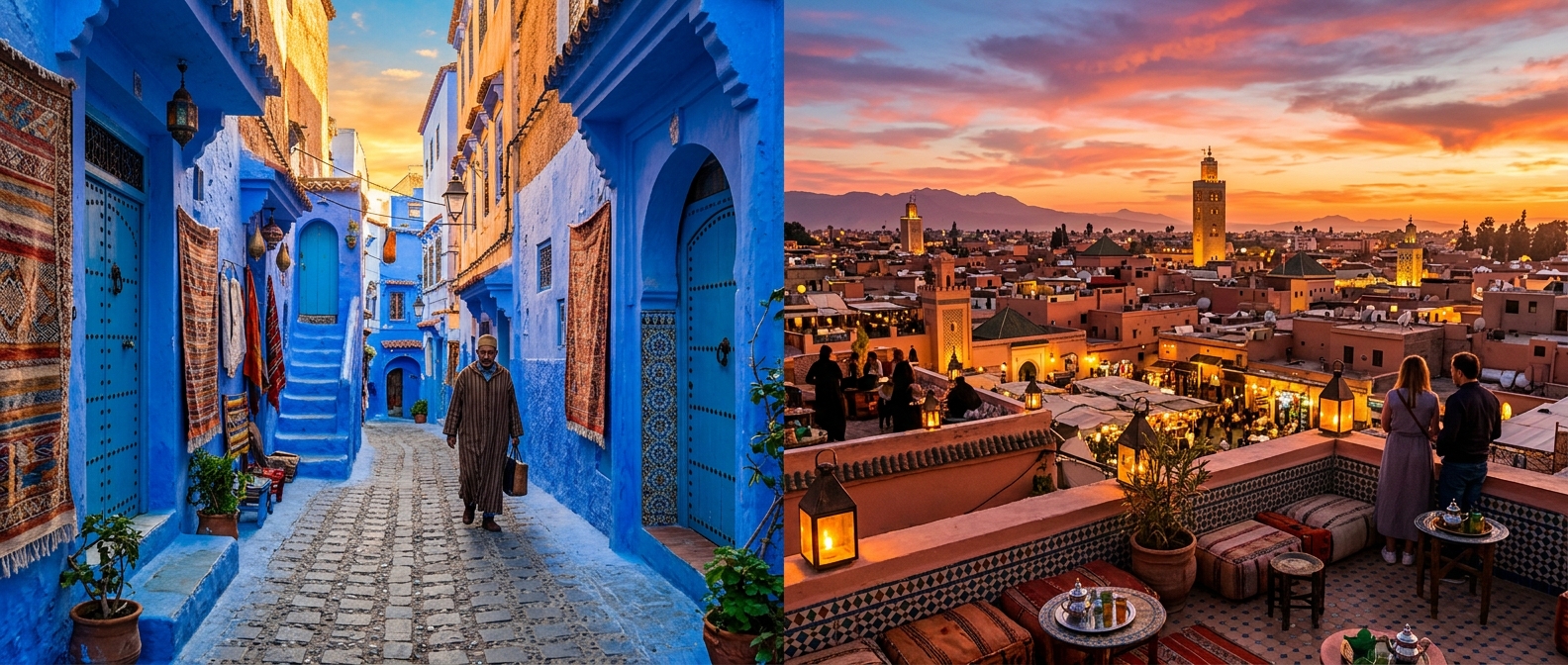
Two Different Worlds
Marrakech is a sprawling imperial city of nearly a million people, famous for its red walls, chaotic souks and the spectacle of Jemaa el-Fnaa square. It is intense, crowded and full of sensory overload, which many travelers love.
Chefchaouen is a small town of about 40,000 people tucked into the Rif Mountains of northern Morocco. Its old medina is painted in countless shades of blue, creating a calm, dreamlike atmosphere that draws photographers and travelers seeking quiet.
What to See and Do
In Marrakech you can spend days exploring palaces, gardens, museums, tanneries and souks, then take excursions to the Sahara, the Atlas Mountains or Essaouira. Nightlife, rooftop dining and hammams round out the experience.
Chefchaouen is mostly about wandering its blue streets, photographing doorways and staircases, visiting the Kasbah and Outa el Hammam square, and hiking to the Spanish Mosque viewpoint or the nearby Akchour waterfalls in Talassemtane National Park.
Pace and Atmosphere
Marrakech is high-energy and can be exhausting, with persistent vendors, motorbikes weaving through alleys and constant activity from dawn into the night.
Chefchaouen is the opposite: peaceful, walkable and laid-back. It is the kind of place to slow down, sip mint tea on a terrace and unwind, especially appealing after the intensity of Marrakech or Fez.
Climate and Setting
Marrakech sits near the desert and gets extremely hot in summer, often exceeding 38 to 40 degrees Celsius, while winters are mild and pleasant.
Chefchaouen, at around 600 meters in the Rif Mountains, is noticeably cooler and greener, with comfortable summers and cold, sometimes snowy, winters. The mountain setting makes it a refreshing contrast to lowland Morocco.
Getting There
Marrakech is highly accessible, with a major international airport and direct train links to Casablanca, Rabat and Fez.
Chefchaouen has no airport or train station. Travelers usually arrive by bus or grand taxi from Tangier (about 2 hours), Fez (about 4 hours) or Tetouan. This relative remoteness keeps it less crowded but requires more planning.
How Long to Stay
Marrakech easily fills three to five days, especially if you add desert or mountain excursions. There is always more to see.
Chefchaouen is small and can be enjoyed in one to two days, often as a stop between Tangier, Fez and the north. Many travelers pair it with a broader northern Morocco loop rather than visiting it alone.
Which One Fits You
Pick Marrakech if you want the full Moroccan spectacle, shopping, nightlife and access to the desert and Atlas. It is the better single base for an action-packed trip.
Pick Chefchaouen if you crave calm, scenery, photography and mountain air. Ideally, combine them: many travelers visit both as part of a larger Morocco itinerary, since they complement rather than compete with each other.
| Factor | Marrakech | Chefchaouen |
|---|---|---|
| Size | Large city (~900,000) | Small town (~40,000) |
| Vibe | Busy, intense, touristy | Calm, scenic, relaxed |
| Setting | Near desert, hot | Rif Mountains, cooler |
| Main draw | Souks, palaces, nightlife | Blue-painted medina |
| Access | Airport + trains | Buses/taxis only |
| Ideal stay | 3-5 days | 1-2 days |
Comparison
FAQ
How do I get from Marrakech to Chefchaouen?
There is no direct route. Most travelers take a long bus or fly to Tangier or Fez, then continue by bus or grand taxi. Total travel from Marrakech can take a full day.
Why is Chefchaouen painted blue?
Theories vary, including Jewish heritage, keeping mosquitoes away and providing cooling shade. Today the blue is largely maintained for its beauty and tourism appeal.
Is Chefchaouen worth visiting?
Yes, especially for photography, relaxation and mountain scenery. It is a highlight of northern Morocco, though small enough to see in a day or two.
Can I do both in one trip?
Yes. Many itineraries combine Marrakech with the north, using Fez or Tangier as a connecting point to reach Chefchaouen.
Loved this? Useful? React below — your feedback helps other readers.