Marrakech Travel Guide: Top Things to Do
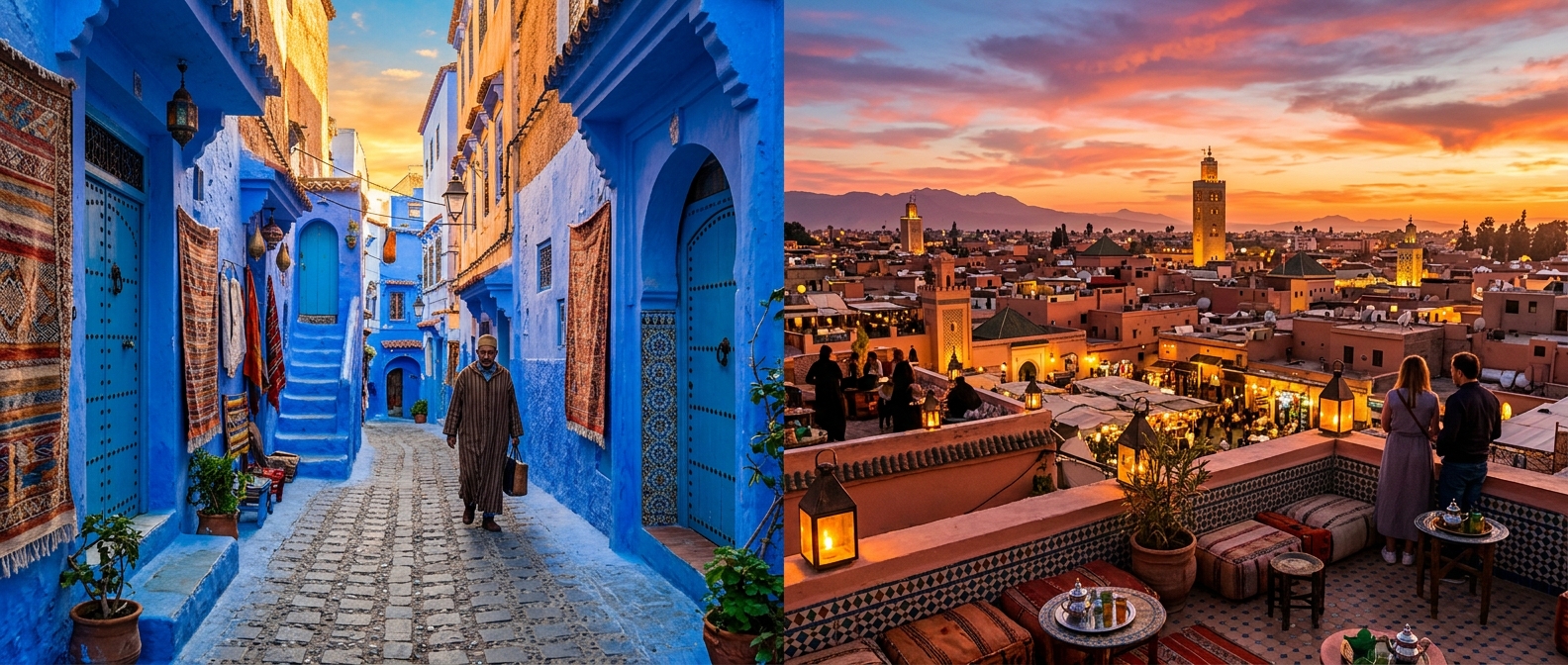
The Medina and Jemaa el-Fnaa
The heart of Marrakech is its UNESCO-listed medina, centered on Jemaa el-Fnaa, a vast square that transforms each evening into an open-air theatre of food stalls, musicians and storytellers. By day it's calmer, ringed by cafe terraces with rooftop views of the Koutoubia Mosque minaret, the city's tallest landmark.
Radiating from the square are the souks, a maze of covered markets selling leather, lanterns, spices, ceramics and textiles. Bargaining is expected, and it's easy to spend hours wandering; using your hotel or a landmark as a reference point helps with navigation.
Palaces, Tombs and Gardens
Bahia Palace showcases 19th-century Moroccan craftsmanship with carved cedar ceilings, zellige tilework and tranquil courtyards. The nearby Saadian Tombs, sealed for centuries and rediscovered in 1917, hold ornate marble mausoleums. El Badi Palace, now a grand ruin, hints at the city's former splendor.
On the western edge of the city, the Majorelle Garden, restored by Yves Saint Laurent, is a serene botanical retreat of cobalt-blue buildings and exotic plants, with the adjacent Yves Saint Laurent Museum and Berber Museum.
Where to Stay and Eat
Staying in a riad, a traditional house built around a central courtyard, is one of the defining Marrakech experiences. Many sit deep in the medina, offering quiet escape from the bustle just steps from the souks. The Gueliz district, the modern new town, offers contemporary hotels, restaurants and boutiques.
For food, sample tagine, couscous and grilled meats, plus the local specialty tanjia, a slow-cooked lamb dish. Rooftop restaurants and the evening food stalls of Jemaa el-Fnaa are memorable, and mint tea is a constant ritual.
Day Trips and Practical Tips
Marrakech is an excellent base for excursions. The Atlas Mountains and the Ourika Valley are about an hour away, the Agafay rocky desert offers camel rides and camps near the city, and Essaouira on the coast is a popular day trip about two and a half hours west.
Dress modestly out of respect for local customs, carry small cash for the souks, and use official petit taxis with the meter or an agreed fare. The best months to visit are spring and autumn, as summer can be extremely hot.
| Attraction | Type | Suggested Time |
|---|---|---|
| Jemaa el-Fnaa | Main square | 1-2 hours (best at dusk) |
| The Souks | Markets | 2-3 hours |
| Bahia Palace | Historic palace | 1 hour |
| Majorelle Garden | Garden & museum | 1.5 hours |
| Saadian Tombs | Mausoleum | 45 minutes |
Marrakech highlights and approximate visit times
FAQ
How many days should I spend in Marrakech?
Two to three days is ideal to cover the medina, palaces and gardens at a relaxed pace, with time for a hammam or a rooftop dinner. Add an extra day if you want a side trip to the Atlas Mountains or Essaouira.
Is it worth staying in a riad in Marrakech?
Yes. Riads offer an authentic, peaceful experience inside the historic medina, with courtyards, traditional decor and personal service. They are often better value and more atmospheric than chain hotels.
Do you need to bargain in the Marrakech souks?
Bargaining is part of the culture in the souks and expected for most goods. Stay friendly, start below the asking price, and be prepared to walk away to reach a fair deal.
Loved this? Useful? React below — your feedback helps other readers.