The History of Marrakech
An Almoravid Foundation
Marrakech was founded around 1070 by the Almoravids, a Berber dynasty from the Sahara, as a base from which to control trade and territory across the region. Its position near the foot of the Atlas Mountains gave access to both mountain resources and desert caravan routes.
The Almoravids built the city's first walls and established the irrigation systems, including underground channels known as khettara, that allowed gardens and palm groves to flourish in an arid setting. The city's distinctive red earthen walls gave rise to its nickname, the Red City.
Almohad Grandeur
In the twelfth century the Almohads captured Marrakech and made it the capital of a vast empire stretching across North Africa and into Spain. They built the Koutoubia Mosque, whose towering minaret remains the city's most famous landmark.
The Almohad period brought monumental architecture and extensive gardens, including the Menara and Agdal gardens, fed by sophisticated water systems. Marrakech became one of the great cities of the western Islamic world during this era.
Saadian Splendor
After periods of decline, Marrakech regained prominence under the Saadian dynasty in the sixteenth century. The Saadians enriched the city with monuments such as the El Badi Palace and the richly decorated Saadian Tombs, financed partly by trans-Saharan gold and the sugar trade.
The Saadian Tombs, rediscovered in the early twentieth century, preserve some of the finest examples of Moroccan decorative craftsmanship, with marble, carved cedar, and zellige. This period marked another cultural high point for the city.
Jemaa el-Fnaa and the Medina
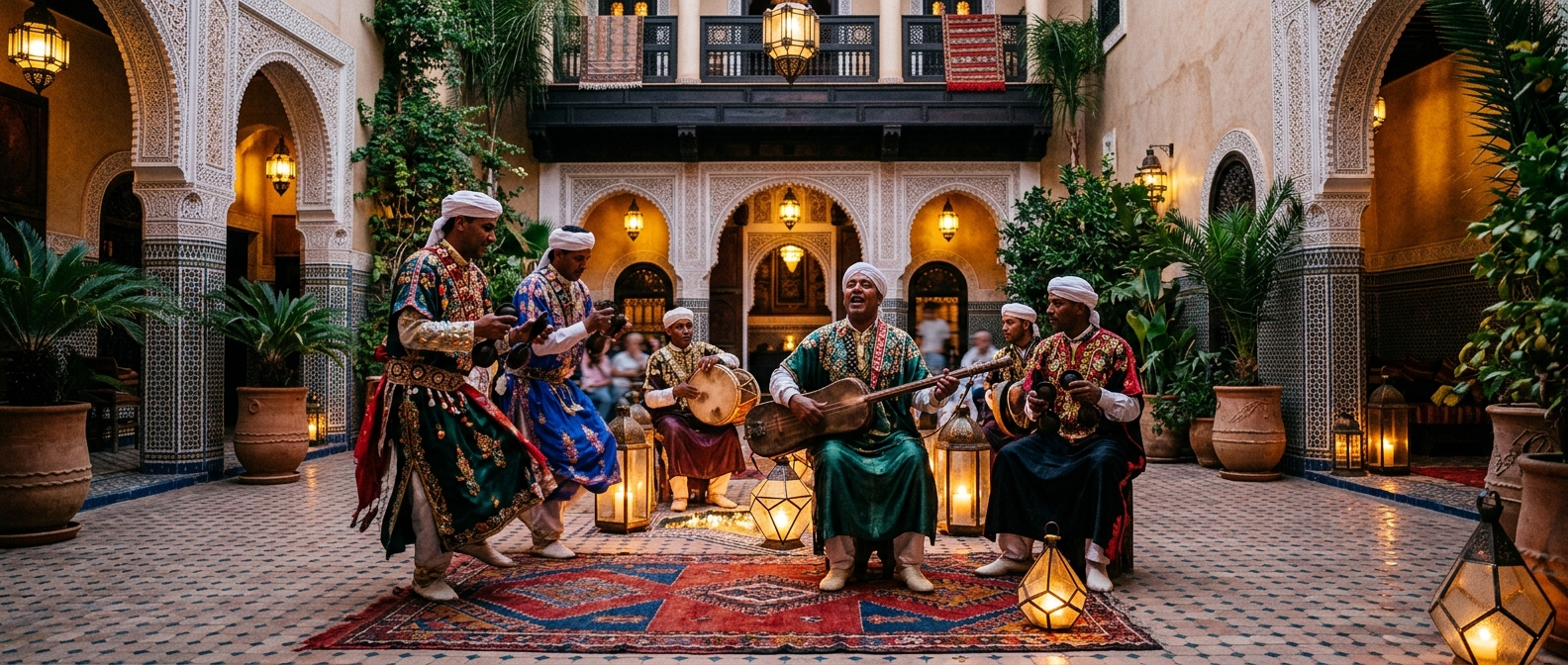
At the heart of the medina lies Jemaa el-Fnaa, a vast square that has served as a marketplace and gathering place for centuries. Famous for its storytellers, musicians, and food stalls, it embodies the living cultural life of the city.
UNESCO recognized the cultural space of Jemaa el-Fnaa as a Masterpiece of the Oral and Intangible Heritage of Humanity, acknowledging its traditions of performance and storytelling. The surrounding souks remain a bustling center of trade and craft.
Gardens and Water
Water and gardens are central to Marrakech's identity. The historic khettara and the large reservoirs of the Menara and Agdal gardens allowed the city to sustain orchards and ornamental landscapes despite the dry climate.
These gardens served practical, agricultural, and symbolic purposes, providing food, recreation, and a vision of paradise. The tradition of garden-making continues to shape the city, from historic royal grounds to later creations such as the celebrated Majorelle Garden.
Modern Marrakech
During the twentieth century, the French protectorate built a new district, the Gueliz, outside the medina walls, introducing wide avenues and modern buildings. After independence, Marrakech grew rapidly into a major economic and tourist center.
The medina of Marrakech was inscribed as a UNESCO World Heritage Site in 1985. Today the city balances its role as a global tourist destination with the preservation of its historic monuments, gardens, and craft traditions.
Marrakech as an Imperial City
Marrakech is one of Morocco's four imperial cities, alongside Fez, Meknes, and Rabat, each having served as a capital under different dynasties. Its long history as a seat of power left a dense legacy of palaces, mosques, gardens, and walls.
This accumulated heritage, combined with its vibrant present-day life, makes Marrakech one of the most visited cities in Africa and a powerful symbol of Morocco's history and culture.
| Dynasty | Period | Key legacy |
|---|---|---|
| Almoravids | From around 1070 | City founding and walls |
| Almohads | 12th century | Koutoubia Mosque and gardens |
| Saadians | 16th century | El Badi Palace and Saadian Tombs |
| French protectorate | 20th century | Gueliz district |
Dynasties that shaped Marrakech
FAQ
When was Marrakech founded?
Marrakech was founded around 1070 by the Almoravid dynasty as a Saharan trading and imperial capital near the Atlas Mountains.
Why is Marrakech called the Red City?
Its nickname comes from the reddish color of its earthen walls and many of its buildings, made from the local pink-red clay.
What is Jemaa el-Fnaa?
It is the vast central square of Marrakech, famed for storytellers, musicians, and food stalls, recognized by UNESCO for its intangible cultural heritage.
Loved this? Useful? React below — your feedback helps other readers.