Marrakchi Cuisine: Marrakech Food
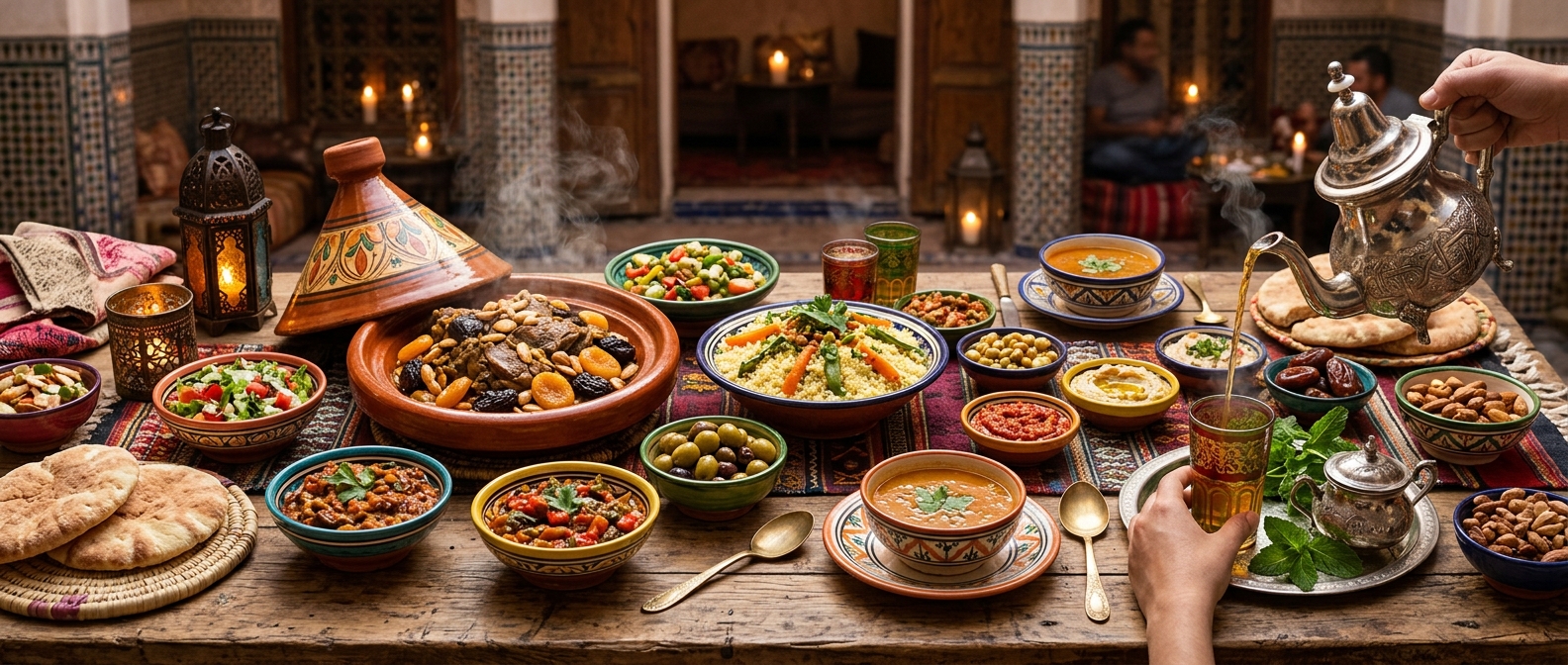
The Spirit of Marrakchi Food
Marrakech sits at the crossroads of the Atlas Mountains, the plains and the desert routes, and its cuisine reflects that meeting point. Marrakchi food is earthier and more robust than the refined Fassi tradition, built around slow cooking, smoke and generous portions.
It is a city famous for its energy, and its food matches: communal, festive and made for sharing. From the workers' lunch of tangia to the spectacle of mechoui and the chaos of the night market, eating in Marrakech is an event.
Tangia: The Bachelor's Dish
Tangia (also spelled tanjia) is the dish most associated with Marrakech. Named after the clay urn it is cooked in, it is a Marrakchi institution traditionally prepared by men, earning it the nickname the bachelor's dish.
Chunks of lamb or beef are layered with preserved lemon, garlic, cumin, saffron and a spoon of smen, sealed in the pot and left to cook slowly for hours in the embers of a hammam furnace (farnatchi). The result is meltingly tender, deeply spiced meat that needs no fork to fall apart.
Mechoui and Grilled Meats
Mechoui, a whole lamb slow-roasted in a clay pit oven until the skin crisps and the meat turns silky, is Marrakech celebration food at its finest. Vendors carve it to order, seasoned simply with salt and cumin so the flavor of the lamb shines.
The city also loves brochettes, kefta skewers and grilled offal. The smell of charcoal grills drifting through the souks is part of the Marrakech experience, and a plate of grilled meat with bread and cumin-salt is a perfect quick meal.
Jemaa el-Fna: The Great Open-Air Kitchen
As dusk falls, the famous Jemaa el-Fna square transforms into a vast open-air food court. Dozens of numbered stalls fire up grills, soup cauldrons and frying pans under strings of lights, drawing locals and travelers alike.
Here you can eat harira soup with dates, snail broth (babbouche) sold by the bowl, sheep's head (boulfaf and tete de mouton), merguez sausages, fried fish and sweet mint tea, all amid the noise of musicians and storytellers. It is street food as living heritage.
Sweet and Refreshing Marrakchi Specialties
Marrakech has a sweet tooth. Sellou (also called sfouf), a dense, energy-rich mix of toasted flour, almonds, sesame and honey, is a Marrakchi favorite, especially during Ramadan and celebrations.
The city is also famous for fresh orange juice stalls lining Jemaa el-Fna, and for cooling treats that counter the desert heat. Mint tea remains the constant companion to every meal and every business deal in the souks.
Where Berber and Saharan Flavors Meet
Because Marrakech is the gateway to the High Atlas and the south, its markets carry Berber and Saharan ingredients: argan oil and amlou from the Souss, dates from the oases, and the herb and spice stalls of the medina.
This blend gives Marrakchi cooking its distinctive layered warmth. A single Marrakech meal can move from a smoky tangia to an almond-rich pastry to a glass of saffron-tinged tea, summarizing the crossroads character of the city.
| Dish | Description | Best eaten |
|---|---|---|
| Tangia | Clay-pot slow-cooked spiced lamb or beef | Hammam furnace, lunch |
| Mechoui | Whole pit-roasted lamb | Celebrations, souk stalls |
| Harira | Tomato, lentil and chickpea soup | Jemaa el-Fna, evening |
| Babbouche | Spiced snail broth | Night market stalls |
| Sellou | Toasted flour, almonds, honey sweet | Ramadan, with tea |
Marrakech signature dishes and where to find them
FAQ
What is tangia and why is it called the bachelor's dish?
Tangia is a Marrakchi specialty of spiced meat slow-cooked in a clay urn in hammam furnace embers. It is called the bachelor's dish because it was traditionally prepared by working men who dropped the sealed pot at the furnace and collected it cooked hours later.
Is the food at Jemaa el-Fna safe to eat?
The busiest stalls with high turnover and freshly cooked, hot food are generally the safest choice. Pick a crowded vendor, watch the food being cooked, and stick to hot, grilled or boiled items.
How is Marrakchi cuisine different from Fassi cuisine?
Marrakchi food is earthier and smokier, built around slow-roasted and grilled meats like tangia and mechoui, while Fassi cuisine is more refined and elaborate, known for delicate sweet-savory dishes like pastilla.
Loved this? Useful? React below — your feedback helps other readers.