Who Is Issa Diop? The Stoppage-Time Header That Saved Morocco vs the Netherlands at World Cup 2026
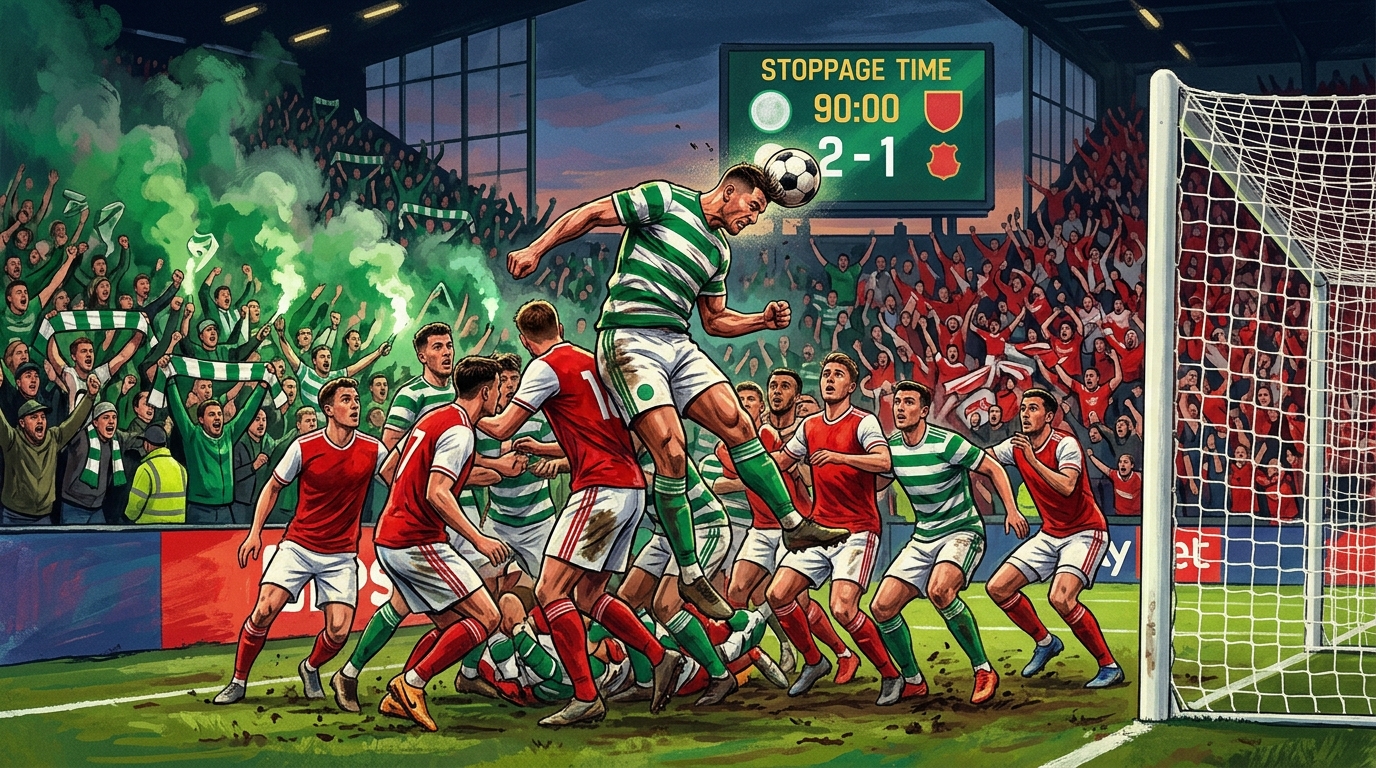
The 91st Minute: How One Header Rewrote a World Cup Night
For roughly twenty minutes, the Netherlands had been a team in control of its own future. Cody Gakpo's goal midway through the second half had nudged the Dutch in front, and as the clock ticked into the first minute of stoppage time at the Estadio BBVA in Monterrey, the equation looked brutally simple for Morocco: score now or fly home. The Atlas Lions, fourth at the 2022 World Cup and dreaming of more, were ninety seconds from the kind of early exit that would have been remembered as a collapse rather than a campaign.
Then Chemsdine Talbi whipped a ball into the penalty area, and the night belonged to a man almost nobody outside English football had expected to be there. Issa Diop, a centre-back with three months of Morocco caps to his name, climbed above the Dutch defence, met the cross flush with his forehead and steered a header beyond Netherlands goalkeeper Bart Verbruggen. The net rippled. The Moroccan bench emptied. And a match that had been drifting toward a Dutch celebration was suddenly, violently, alive again.
It was the 91st minute. It was Diop's first senior international goal. And it was the moment that would carry Morocco into extra time, into a penalty shootout, and ultimately into the Round of 16. In a tournament already studded with upsets, few single moments would prove as consequential, or as improbable, as the towering header of a defender who, until very recently, had been a France youth international with no obvious path to a World Cup at all.
This is the story of that header, the match it transformed, and the man who scored it, a profile of Issa Diop: where he came from, the clubs that shaped him, the decision that brought him to Morocco, and why his 91st-minute leap has become the defining image of the Atlas Lions' 2026 knockout run so far.
The Build-Up: Talbi's Cross and the Last Roll of the Dice
Goals in the dying seconds of knockout football rarely arrive from nowhere. They are usually the product of accumulated pressure, of a team throwing bodies forward and structure to the wind because there is no longer anything to lose. Morocco's equalizer fit that pattern. With the Netherlands sitting deeper to protect their lead and Verbruggen producing save after save, Mohamed Ouahbi's side had been pouring numbers into the Dutch box, and Diop, ordinarily a defender whose job is to prevent exactly this kind of chaos, had drifted forward into it.
The delivery came from Chemsdine Talbi, one of the younger, more direct attacking options Ouahbi had turned to as the match wore on. His cross was not a hopeful punt; it was clipped with pace into the danger zone between the penalty spot and the six-yard box, the area where a tall, aggressive centre-back is at his most dangerous and a back-pedalling defence is at its most vulnerable. Diop attacked it the way he had attacked everything all night, with conviction.
Standing at well over six feet and built for aerial duels, Diop had spent the previous hour wrestling with Dutch forward Brian Brobbey in a physical, bruising contest. That same physicality is what made him a threat at the other end. As the cross came in, he timed his run, rose above the Dutch markers and generated the kind of power on the header that goalkeepers cannot react to. Verbruggen, who had been the Netherlands' best player for much of the night, had no answer this time.
It was, in a sense, a goal Morocco had earned through sheer persistence and a goal the Netherlands had invited through their retreat. But it was also a goal that required a specific player to be in a specific place at a specific moment, willing to gamble his defensive responsibilities on one last surge forward. That player was a man who had not even been part of the Morocco setup a year earlier.
What It Meant: From Elimination to Extra Time
To understand the magnitude of Diop's header, you have to understand the stakes. This was the Round of 32, the new expanded format's first knockout hurdle in a 48-team World Cup, and Morocco arrived as one of the tournament favourites among the non-European, non-South-American contenders. They were the team that had broken African football's glass ceiling in 2022, reaching the semi-finals and finishing fourth, and the expectation back home was not merely to compete but to go deep again.
A defeat to the Netherlands in the Round of 32 would have been a genuine disappointment, the kind of result that prompts inquests rather than parades. The Dutch are a serious football nation with serious players, but Morocco had been built and sold to its supporters as a side capable of beating exactly these opponents. Trailing 1-0 with the match in its 91st minute, the Atlas Lions were staring at that disappointment squarely in the face.
Diop's equalizer did not just rescue a point in a league game; in knockout football there are no points, only survival. It dragged the contest into thirty additional minutes and then, when those produced no winner, into the lottery of penalties. It converted a near-certain exit into a fresh chance. Momentum in sport is often dismissed as a myth, but anyone who watched the Moroccan players sprint to celebrate and the Dutch players sink to their haunches understood instinctively that the psychological balance of the night had flipped in an instant.
For a squad carrying the weight of 2022, that flip mattered enormously. A team that had been clinging on for survival suddenly believed again, and the Netherlands, who had been ninety seconds from the next round, now had to find the will to go again with the emotional wind knocked out of them. By the time the shootout arrived, the script had already been rewritten, and the man holding the pen was a defender wearing the red of his ancestors' country for the first time at a World Cup.
The Shootout: Bounou's Save and Saibari's Nerve
Extra time in Monterrey settled nothing. Both sides had chances, both sides had moments, and after 120 minutes the score remained 1-1. The match would be decided where so many of Morocco's most famous nights have been decided: from twelve yards. And at that, the Atlas Lions have built a reputation as specialists. In 2022, goalkeeper Yassine Bounou was the hero of a shootout win over Spain, and here he was again, gloves on, ready to define another tournament.
The shootout swung on a single save. With the sequence balanced, Bounou guessed correctly and kept out the Netherlands' fourth penalty from Crysencio Summerville, the kind of intervention that turns a goalkeeper into a national treasure all over again. It left Morocco needing one more kick to win, and the responsibility fell to Ismael Saibari, the attacking midfielder who has become one of the bright young pieces of this Moroccan generation.
Saibari did not flinch. He stepped up and drove home the decisive spot-kick, sealing a 3-2 shootout victory and sending the Netherlands out of the World Cup. The final whistle, when it came, released the kind of joy that only knockout football can produce, a release made all the sweeter by how close it had come to being despair instead. Verbruggen had been heroic for the Dutch all night; Bounou had been decisive for Morocco when it mattered most.
But none of it, not the shootout, not Bounou's save, not Saibari's winner, would have happened without the 91st minute. The penalties were the climax, yet the equalizer was the plot twist that made the climax possible. In the days that followed, as Morocco's supporters relived a night that had everything, one truth kept surfacing: the entire sequence of heroics had been unlocked by Issa Diop's header. Which raised, for many fans around the world, an obvious and pressing question. Who, exactly, is Issa Diop?
Who Is Issa Diop? The Unlikely Hero in Full
Issa Diop is a 29-year-old centre-back who, at club level, plays in the Premier League for Fulham, and who at international level represents Morocco. His full name is Issa Laye Lucas Jean Diop, and he was born on 9 January 1997. To the followers of English football he is a familiar figure, a powerful, physically imposing defender who has spent the better part of a decade in the Premier League. To much of the global football audience tuning into a Morocco World Cup match, however, he was a relative unknown, which is part of what made his moment so striking.
Diop's defining physical attributes are exactly the ones that produced the goal: height, strength and aerial dominance. He is a defender built in the classic centre-back mould, comfortable in the air, robust in the duel, and capable of dealing with the most physical of opposing forwards. Those qualities have made him a Premier League regular for years, and they made him, on the night against the Netherlands, both Morocco's last line of defence and, improbably, its match-saving attacker.
What makes his story unusual is not the goal alone but the journey that placed him on that pitch in a Morocco shirt. Diop was born in France, came through the French system, and represented France at youth level. For most of his career, the assumption was that if he ever played senior international football, it would be for Les Bleus. Instead, in the spring of 2026, he made a decision that would change the trajectory of his career and, as it turned out, of Morocco's World Cup, choosing the country of his heritage over the country of his birth.
The result is one of the more remarkable individual narratives of the tournament: a defender who had no Morocco caps a year ago, who switched allegiance just months before the World Cup, and who then scored the most important goal of the Atlas Lions' campaign. To appreciate how he got here, you have to go back to where it all began, in the south of France.
Born in Toulouse: The Roots of a Defender
Issa Diop was born in Toulouse, in the Haute-Garonne department of southern France, on 9 January 1997. Toulouse is France's fourth-largest city, a place with deep sporting traditions and a football club, Toulouse FC, that has long served as a development ground for talent in the region. It was here, in his hometown, that Diop's relationship with the game began and where he would take his first steps as a professional.
Like so many of the players who have come to define modern Morocco, Diop is a product of the European diaspora. France is home to one of the largest Moroccan-heritage communities in the world, and its football academies have produced a steady stream of players eligible to represent both nations. Diop's name itself reflects a multicultural French identity, and his eventual choice to play for Morocco placed him within a long and increasingly celebrated tradition of dual-national footballers reconnecting with their family origins.
For a young defender growing up in Toulouse, the pathway was clear: the local club's academy was one of the most respected talent factories in French football, known for trusting young players and giving them senior minutes earlier than many of its rivals. Diop entered that system and worked his way through its ranks, developing the physical and technical foundations that would carry him to the Premier League and, eventually, to a World Cup knockout match in Mexico.
The Toulouse upbringing matters because it shaped both the footballer and the choice. Diop was, by birth and by football education, French. His emergence as a Morocco international was not the product of a player born and raised in the country, but of a player born in France who chose to align his international future with his heritage. That distinction sits at the heart of his story and at the heart of the modern Moroccan national team.
The Toulouse Breakthrough: A Teenager in the Senior Side
Diop made his senior debut for Toulouse during the 2015-16 season, breaking into the first team as a teenager. For a centre-back, that is young; defending at the highest level typically rewards experience and game intelligence, qualities that take time to develop. That Toulouse trusted him so early was a marker of the talent the club saw in him and of the physical maturity he already possessed.
From the moment he established himself, Diop looked the part of a modern central defender: tall, mobile for his size, dominant in the air and unafraid of physical confrontation. He quickly became a fixture in the Toulouse back line, accumulating Ligue 1 experience against some of the most dangerous attackers in French football while still in his late teens and early twenties.
The trajectory was steep and impressive. Within a couple of seasons of his debut, Diop had gone from promising academy graduate to one of the most highly rated young defenders in France, the kind of player whose performances begin to attract attention from bigger clubs at home and abroad. In a position where reputations are usually built slowly, Diop's rose fast.
His rise at Toulouse was crowned by a responsibility that few players so young are ever handed, the captaincy of the club. It was a sign of how completely he had won the trust of his coaches and teammates, and it foreshadowed the leadership qualities that Morocco would come to value more than a decade later as he organised their defence against the Netherlands.
Captain at 20: Leadership Before His Time
In 2017, Toulouse made Diop their captain. He was twenty years old. To be named skipper of a senior professional club at that age is extraordinary, a recognition not only of footballing ability but of character, composure and the respect of the dressing room. For a centre-back, leadership is part of the job description, organising the line, communicating constantly, setting the tone for the team's defensive shape, and Diop was being entrusted with all of it before he had reached an age at which many players are still finding their feet.
The captaincy says something important about who Diop is as a footballer. He is not merely a physical specimen who wins headers; he is a defender who reads the game, marshals those around him and carries himself with the authority that the best central defenders possess. Those are precisely the attributes that Morocco's coaching staff would later identify when they brought him into a squad full of established names and asked him to slot into a high-pressure World Cup environment almost immediately.
It is worth pausing on the symmetry. The player who, in 2017, was leading a Ligue 1 side as its youngest captain would, in 2026, be the man holding a World Cup defence together against the physicality of Dutch forwards before stepping up to win the match at the other end. The leadership was not a new quality acquired late; it had been there from the very beginning of his senior career.
By the time he left Toulouse, Diop had transformed himself from academy prospect into a captain and a coveted asset. The next step would take him out of France entirely and into one of the most demanding leagues in world football, where his reputation, and his price tag, would climb to new heights.
The West Ham Move: A Club-Record Fee
In 2018, Issa Diop left Toulouse for West Ham United, signing for the Premier League club for what was a record fee in West Ham's history at the time. The transfer was a statement of intent both from the club, which was investing heavily in a young centre-back it believed could anchor its defence for years, and from the player, who was backing himself to succeed in one of the toughest leagues in the world while still only twenty-one.
The size of the fee underlined just how highly Diop was rated across Europe. Premier League clubs do not break their transfer records lightly, and certainly not for unproven talents. West Ham's willingness to do so reflected the consensus that had built up around Diop during his Toulouse years: here was a defender with the physical tools, the temperament and the ceiling to become a top-flight mainstay.
The move also represented a significant cultural and footballing transition. English football is famously physical, fast and unforgiving, a different test entirely from Ligue 1. For a young defender, adapting to the relentless aerial bombardment and end-to-end intensity of the Premier League is one of the hardest adjustments in the sport. Diop, with his aerial strength and physical presence, was in many ways built for it.
His arrival in London began the chapter of his career that would make him a recognisable figure to English football audiences and lay the groundwork for the Premier League pedigree he would bring to Morocco's World Cup squad. Over the seasons that followed, Diop would accumulate the kind of top-flight experience that gives a national team confidence in a player, even one who joined the setup at the eleventh hour.
The Premier League Years at West Ham
Across his time at West Ham United, Diop made 121 appearances and scored eight goals before his eventual move. Those numbers tell the story of a defender who became a genuine Premier League regular, not a squad filler but a player trusted to take the field repeatedly in England's top division against the best attackers in the world. For a centre-back, eight goals is a respectable return, much of it the product of exactly the aerial threat from set-pieces that he would later unleash on the Netherlands.
Diop's West Ham years were not without their ups and downs, as is the case for almost any defender adapting to the Premier League. Centre-backs are judged on their mistakes as much as their successes, and the relentless scrutiny of English football tested him. But the overall picture is of a player who held down a place in a competitive Premier League side for several seasons, gaining the kind of experience that cannot be manufactured.
It was during these years that Diop developed the resilience and game management that would serve Morocco so well. Marshalling a defence against Premier League forwards week in and week out is among the most demanding tasks in football, and surviving it, even thriving in it, builds the sort of competitive hardness that shows up in the 119th minute of a World Cup knockout match when legs are heavy and the margins are tiny.
The 121 appearances also reframe how we should think about Diop's sudden emergence for Morocco. He was not a rookie thrust into the deep end; he was a seasoned Premier League professional with years of elite football behind him. What was new was the shirt, not the level. When Ouahbi placed him at the heart of Morocco's defence against the Dutch, he was deploying a player who had already proven himself in one of the world's most demanding environments.
The Fulham Chapter: Settling in West London
On 10 August 2022, Diop transferred permanently to Fulham, signing a five-year contract for an undisclosed fee. The move took him across London but kept him in the Premier League, joining a Fulham side that had re-established itself in the top flight and was building a squad capable of staying there. For Diop, it was a chance to continue his Premier League career at a club where he could become a key figure in the defence.
Fulham have, in recent seasons, grown into a stable and respected Premier League outfit, and Diop's continued presence in their back line is a testament to his durability and quality. Holding down a regular role at a Premier League club approaching and into your late twenties is the hallmark of a defender at the peak of his physical and tactical powers, the stage of a centre-back's career when experience and athleticism intersect most productively.
The five-year contract Fulham handed him signalled their belief in his long-term value, and his consistent involvement since has justified it. By the time the 2026 World Cup arrived, Diop was a settled, experienced Premier League centre-back, the kind of player whose week-in, week-out reliability makes him an attractive option for any international side looking to shore up its defence with proven quality.
It was as a Fulham player, then, that Diop entered Morocco's orbit, and it was the Premier League sharpness honed in west London that he brought to Monterrey. When he rose to head home that equalizer, he did so as a footballer in the prime of a long top-flight career, not as a flash in the pan but as a defender whose moment had finally, and dramatically, arrived on the international stage.
France Youth International: The Road Not Taken
For much of his life, Issa Diop's international future appeared to lie with France. He represented Les Bleus throughout the youth setup, making his first appearance for the France Under-16 side as far back as 2013 and progressing through the various age groups. He was, in every footballing sense, a product of the French development system, and he wore the French shirt at the level where future senior internationals are first identified.
France's youth teams are among the most talent-rich in world football, a reflection of the country's vast and diverse pool of players. To represent France at youth level is itself a significant achievement, an indication that a player is considered among the best of his generation in one of the sport's superpowers. Diop earned that recognition repeatedly, which is exactly why his eventual decision carried such weight.
The complication for many dual-eligible players is that France's senior side is so deep, particularly in defence, that breaking through is exceptionally difficult. A player can be excellent and still find the path to senior caps blocked by an embarrassment of riches. For years, Diop sat in that limbo: good enough to be a France youth international, but never capped at senior level, and therefore still eligible, under FIFA's rules, to switch his allegiance to another country he qualified for.
That eligibility, born of his heritage, gave him a choice that not every footballer gets to make. He could keep waiting for a France senior call that might never come, or he could commit his international future to Morocco, the country of his roots, and pursue the World Cup dream that way. In the spring of 2026, he made his decision, and the consequences would ripple all the way to a header in Monterrey.
Choosing Morocco: The 2026 Allegiance Switch
On 19 March 2026, it was announced that Diop had been selected for the Morocco national team for the first time, the formal beginning of his international life as an Atlas Lion. The decision to switch from France, the country of his birth and his youth football, to Morocco, the country of his heritage, was a profound one, and it placed him firmly within a movement that has reshaped Moroccan football over the past decade.
For players like Diop, the choice is rarely simple. It involves identity, family, ambition and pragmatism all at once. Morocco offered him something France realistically could not: a clear route to senior international football and, crucially, a place at a World Cup with a team that had just reached the semi-finals. It also offered a connection to his roots, the chance to represent the country of his ancestry on the sport's biggest stage.
The timing was remarkable. Diop committed to Morocco only months before the World Cup, a window so narrow that few would have predicted he could go from new call-up to match-winner in a single tournament cycle. Yet that is precisely what happened. His decision, made in March, would be vindicated in the most spectacular fashion possible in June, with a knockout-stage header that kept Morocco's campaign alive.
In choosing Morocco, Diop joined a squad already defined by exactly this kind of story, a team built substantially from the European diaspora, full of players who, like him, were born and raised abroad but chose the Atlas Lions. Far from being an outlier, Diop's switch was a continuation of the very identity that has powered Morocco's rise to the top of African and global football.
FIFA Clearance and the Whirlwind Call-Up Timeline
The mechanics of an international switch are governed by FIFA's eligibility rules, and Diop's case moved with notable speed. Having been announced as a Morocco selection on 19 March 2026, his request to change his association from France to Morocco was approved by FIFA roughly a week later, around 26 March. Because he had only ever represented France at youth level and had never been capped by the French senior side in a competitive fixture that would tie him permanently, he remained free to make the move.
Once cleared, the path opened quickly. Diop was integrated into Mohamed Ouahbi's plans, and on 26 May 2026 he was named in Morocco's 26-man squad for the 2026 FIFA World Cup. From first selection to World Cup squad member, the entire process unfolded over the span of roughly two months, an extraordinarily compressed timeline for a player to go from outsider to tournament participant.
The speed of it all underscores how much Morocco wanted him. A national team does not fast-track a defender into a World Cup squad unless it is convinced he can contribute immediately. Ouahbi and his staff clearly saw in Diop a ready-made solution, a physically dominant, Premier League-tested centre-back who could add steel and aerial authority to an already strong defensive unit.
What no one could have scripted was how dramatically that bet would pay off. A player who had been a Morocco international for barely three months when the World Cup began would, in the Round of 32, score the goal that defined the team's tournament. The whirlwind timeline that brought him to the squad makes the header against the Netherlands not just a great moment but an almost unbelievable one, a debut-season international goal of the highest possible stakes.
Diop's Role Under Mohamed Ouahbi
Within Mohamed Ouahbi's Morocco, Diop quickly established himself as a central figure in the defence rather than a peripheral squad addition. His role against the Netherlands was demanding and physical: he was tasked with handling Dutch forward Brian Brobbey, a powerful and direct striker, and with anchoring a back line under sustained pressure as the match wore on. He did so for the full 120 minutes, a marathon shift that spoke to both his fitness and his importance to the team.
Ouahbi's decision to lean on a recently switched player in the heat of a World Cup knockout match was a calculated act of trust. International managers are often cautious with new additions, particularly defenders, where understanding and chemistry across the back line are vital. That Diop was trusted with such a central role so soon suggests he integrated rapidly and that the coaching staff valued his Premier League experience and leadership.
His performance against the Netherlands justified the faith completely. Beyond the goal, Diop competed for aerial balls, defended crosses and helped Morocco maintain their shape against an opponent intent on using physical forwards to break them down. The header was the headline, but the underlying display was that of a defender doing his core job to a high standard across an exhausting two hours of football.
It is a measure of how well he performed that he was named Man of the Match, sometimes styled as the Superior Player of the Match. For a defender to claim that honour, he generally has to be exceptional at both ends, and Diop was. He defended like the seasoned Premier League centre-back he is and attacked the decisive set-piece moment like a striker. Under Ouahbi, he has gone from new face to indispensable in the space of a single tournament.
The Diaspora Squad: Morocco's European-Born Core
Issa Diop's story is not an exception within the Morocco squad; it is the rule. The modern Atlas Lions are built to a significant degree from players born and raised in Europe who were eligible to represent other nations and chose Morocco instead. Goalkeeper Yassine Bounou, striker Youssef En-Nesyri, attacking midfielder Brahim Diaz and defenders and midfielders such as Sofyan Amrabat, Noussair Mazraoui and Nayef Aguerd form a spine of dual-national talent, complemented by players developed within Morocco's own academies.
This blend has been the engine of Morocco's rise. Brahim Diaz, for instance, came through the Spanish system and was once a Spain youth international before committing to Morocco, a journey that closely mirrors Diop's own switch from France. Players raised in the Netherlands, Spain, France, Belgium and beyond have brought elite European club experience back to the national team, fusing it with the talent emerging at home to create one of the deepest squads Africa has ever produced.
The numbers behind this are striking. A large proportion of Morocco's recent squads have been made up of players born outside the country, drawn from the enormous Moroccan diaspora spread across Western Europe. Rather than weakening national identity, this has arguably strengthened the team's connection with Moroccans everywhere, turning the Atlas Lions into a symbol for a global community that stretches far beyond the country's borders.
Diop slotting in among these players, and then producing the defining goal of the knockout round, is the diaspora model working exactly as intended. He is a Premier League defender, born in Toulouse, who reconnected with his heritage and immediately repaid that choice with a moment of national significance. In doing so, he became the latest, and perhaps most dramatic, example of why Morocco's embrace of its diaspora has made it a force in world football.
Why Dual Nationality Defines Modern Morocco
The dual-nationality storyline is central to understanding not just Issa Diop but the entire Moroccan project. For generations, the children of Moroccan emigrants grew up in European cities, learned their football in European academies, and faced a choice when their talent matured: represent the country where they were born, or the country of their parents and grandparents. Increasingly, and to spectacular effect, many have chosen Morocco.
This is partly a story of opportunity and partly a story of identity. For some players, the senior teams of European nations are simply too crowded to break into, making Morocco the more realistic route to international football and a World Cup. But for many, the choice is also deeply personal, a way of honouring family, heritage and a homeland that, while not where they were raised, remains central to who they are. Morocco's football federation has worked hard to make that choice attractive and to welcome these players as fully their own.
The coach himself embodies the diaspora narrative. Mohamed Ouahbi was born in Belgium to a Moroccan family with roots in Nador, meaning the man leading the team understands intimately the experience of belonging to two worlds. That shared understanding helps bind a squad whose members have arrived from across Europe, and it gives the national team a coherence that critics once doubted such a mixed group could achieve. Ouahbi has consistently defended his dual-national players, framing their decision to represent Morocco as a source of pride rather than a point of debate.
Diop's header gave that whole philosophy its most cinematic vindication. A France-born, France-youth-capped defender, cleared to play for Morocco only months earlier, rose in stoppage time of a World Cup knockout match to save the nation of his ancestry. If anyone needed proof that Morocco's diaspora strategy was not merely a clever way to assemble a squad but a genuine wellspring of passion and performance, the 91st minute in Monterrey provided it in the most emphatic terms imaginable.
Mohamed Ouahbi and the New Era of the Atlas Lions
Standing behind Diop's moment is the man who selected him: head coach Mohamed Ouahbi. Born on 7 September 1976 in Belgium, with family roots in the northern Moroccan city of Nador, Ouahbi took charge of the national team in 2026, succeeding Walid Regragui, the coach who had led Morocco to their historic semi-final in 2022. Following such an act was never going to be easy; the bar Regragui set was extraordinarily high, and the expectations on Ouahbi were immediate and intense.
Ouahbi's task was to maintain Morocco's status as the standard-bearer for African football while putting his own stamp on the team. Part of that has involved refreshing the squad, integrating new players, and, as Diop's rapid call-up shows, being willing to fast-track quality wherever he found it. His openness to diaspora talent and his readiness to trust a newcomer in a knockout match reflect a coach confident in his own judgement.
The decision to bring Diop in and then to deploy him in such a pivotal role looks, in hindsight, like a masterstroke, but it was a genuine risk at the time. Ouahbi staked a measure of his own credibility on a defender with barely any international experience, and the gamble was rewarded with a Man of the Match performance and a match-saving goal. For a coach still establishing himself in the role, that is the kind of validation that builds authority.
Ouahbi's Morocco now carries the dual burden of honouring 2022 and trying to surpass it. The win over the Netherlands, sealed by Diop's header and Bounou's save, is the first major statement of his tenure in the knockout rounds. Whether it becomes the foundation of another deep run or a high point in a shorter campaign will define how his era is remembered, but for one night in Monterrey, his vision and his selections were vindicated completely.
From the 2022 Semi-Final to 2026: The Weight of Expectation
Context is everything in understanding why Morocco's win felt so loaded with significance. In 2022, the Atlas Lions did what no African team had ever done, reaching the semi-finals of a World Cup and finishing fourth overall, beating Belgium, Spain and Portugal along the way before falling to eventual finalists France. That run transformed Morocco from a respected qualifier into a genuine global force and raised expectations to a level no African side had ever carried into a subsequent tournament.
Arriving at the 2026 World Cup, Morocco were therefore not underdogs but a team expected to contend. In the group stage they were drawn into Group C alongside five-time champions Brazil, plus Haiti and Scotland, and they advanced from it, finishing second behind Brazil on goal difference. Topping such a group or finishing immediately behind one of the tournament's giants confirmed their standing as one of the sides to watch.
That expectation cut both ways. It meant that a Round of 32 exit to the Netherlands would have been treated, fairly or not, as a failure to build on 2022. The pressure on the players and on Ouahbi was real, and it was precisely that pressure that made the final minutes against the Dutch so fraught. Morocco were not simply trying to win a match; they were trying to protect a legacy.
Diop's equalizer, in that light, was an act of preservation as much as triumph. It kept alive the possibility of matching or bettering 2022, and it spared Morocco the anguish of an early elimination that would have dominated the national conversation for years. For a country that has come to expect deep World Cup runs, the header in Monterrey was not just a goal; it was the safeguarding of a dream that an entire nation has invested in.
Man of the Match: The Full 120-Minute Shift
It would be easy to reduce Diop's night to a single header, but the Man of the Match award reflected far more than one moment. He played all 120 minutes of an exhausting, physical knockout match, and he did so while shouldering the defensive responsibility of containing the Netherlands' forwards. Against Brian Brobbey in particular, he was engaged in a relentless physical contest, the kind of attritional duel that wears a defender down over the course of two hours.
Throughout, Diop competed for aerial balls, defended crosses and helped keep Morocco organised as the Dutch tried to leverage the strength and movement of their attackers. Defending is a thankless art when it goes well; the absence of disaster is its own reward, and for long stretches Diop's job was simply to ensure that the Netherlands did not extend their lead or kill the game off. He did it with the composure of a player far more experienced at international level than his caps suggested.
Then there was the goal, the moment that elevated a strong defensive display into a legendary individual performance. To be the most physically dominant defender on the pitch and the scorer of the decisive equalizer is a rare double, and it is exactly the kind of two-way contribution that the Man of the Match honour, sometimes called the Superior Player of the Match, is designed to recognise. Diop earned it on merit at both ends.
For a player making his World Cup bow with a country he had represented for only a matter of months, to deliver a complete 120-minute performance under that kind of pressure is a statement of his quality and temperament. The header will be the image that endures, but those who watched the whole match know that Diop's award was for the entire shift, a defender doing his job superbly and then winning the game on top of it.
The Road Ahead: Canada in Houston on July 4
Victory over the Netherlands sends Morocco into the Round of 16, where they will face Canada on Saturday, 4 July, at NRG Stadium in Houston, Texas, with kick-off scheduled for around 1 p.m. Eastern Time. It is a fixture that pits the African standard-bearers against a Canadian side enjoying its own moment on home-adjacent soil at a World Cup hosted across North America.
For Morocco, the challenge is to keep the momentum generated by the dramatic win over the Dutch. Knockout football rewards teams that can ride emotional highs without succumbing to complacency, and the manner of the Netherlands victory, snatched at the death and sealed in a shootout, could either galvanise the Atlas Lions or leave them emotionally spent. How Ouahbi manages that balance in the days before Houston will be crucial.
Diop, fresh from his heroics, will once again be central to Morocco's plans. Canada possess attacking threats of their own, and the physical, aerial defending that Diop provided against the Netherlands will be just as valuable against a side that will fancy its chances of an upset. The defender who saved Morocco in the Round of 32 now has the opportunity to help carry them deeper into the tournament.
A win in Houston would take Morocco into the quarter-finals and keep alive the prospect of matching or surpassing the 2022 run. For Diop personally, it would extend a fairy tale that already defies belief, a France-born Premier League defender, three months into his Morocco career, going further and further in a World Cup with the country of his heritage. The header against the Netherlands opened the door; Canada represents the next threshold to cross.
What the Header Means for Issa Diop's Legacy
Some goals are remembered for their technical brilliance; others for their timing and consequence. Issa Diop's header against the Netherlands belongs firmly in the second category. It was not an outrageous strike or a moment of individual trickery, but a powerful, well-timed header that arrived at the precise instant Morocco needed it most, the 91st minute of a knockout match they were losing. In the calculus of importance, few goals at the 2026 World Cup will matter more.
For Diop, the goal rewrites his story. Before it, he was a solid, respected Premier League defender whose international career was a brand-new, almost experimental chapter. After it, he is the man who scored Morocco's stoppage-time equalizer against the Netherlands, a name etched into the country's World Cup folklore regardless of what comes next. First senior international goals are special for any player; one scored in a World Cup knockout match to save your nation is the stuff of legend.
There is a deeper resonance, too. Diop's moment validates the choice he made in the spring of 2026, the decision to leave behind his France youth past and commit to Morocco. Every player who switches allegiance does so hoping it will lead to moments like this, and very few are rewarded so quickly or so dramatically. Diop gambled on Morocco, and within months he had repaid the faith of a nation and a coach with a goal that will be replayed for years.
Whatever the rest of Morocco's 2026 campaign holds, the image of Diop rising in stoppage time in Monterrey is already secure in the tournament's memory. It captures so much of what makes this Morocco team compelling, the diaspora identity, the late-game resilience, the sense that this is a side that simply refuses to be beaten. And at the centre of it all stands a defender from Toulouse who chose Morocco, leapt highest when it mattered, and turned an ordinary corner of a World Cup night into history.
Frequently asked
Who scored Morocco's equalizer vs the Netherlands?
Centre-back Issa Diop scored Morocco's equalizer against the Netherlands, heading home in the 91st minute (first minute of second-half stoppage time) to cancel out Cody Gakpo's goal. It was Diop's first senior international goal for Morocco and forced extra time, leading to Morocco's 3-2 penalty shootout win in the World Cup 2026 Round of 32.
Who is Issa Diop?
Issa Diop is a 29-year-old professional footballer who plays as a centre-back for Premier League club Fulham and represents the Morocco national team. Born in France and a former France youth international, he switched his international allegiance to Morocco in March 2026 and scored the dramatic stoppage-time header against the Netherlands at the 2026 World Cup.
Where was Issa Diop born?
Issa Diop was born on 9 January 1997 in Toulouse, in the Haute-Garonne department of southern France. Although born and raised in France, he chose to represent Morocco, the country of his heritage, at international level, joining the large group of European-born players who form the core of the modern Moroccan squad.
What club does Issa Diop play for?
Issa Diop plays for Fulham in the English Premier League. He joined Fulham on 10 August 2022 on a five-year contract from West Ham United, where he had made 121 appearances and scored eight goals. Before West Ham, he began his career at his hometown club Toulouse in France.
Why does Issa Diop play for Morocco instead of France?
Diop was born in France and represented France at youth level, first appearing for the France Under-16s in 2013, but he was never capped by the French senior team. Eligible for Morocco through his heritage, he chose to switch his international allegiance. FIFA approved the switch in late March 2026, and he was named in Morocco's World Cup squad on 26 May 2026.
When did Issa Diop join the Morocco national team?
Diop was announced as a Morocco selection on 19 March 2026, and FIFA approved his switch from France to Morocco around 26 March 2026. He was then named in Morocco's 26-man squad for the 2026 FIFA World Cup on 26 May 2026, making his match-winning header against the Netherlands all the more remarkable given how recently he had joined the team.
What was the final score of Morocco vs the Netherlands at World Cup 2026?
The Round of 32 match in Monterrey finished 1-1 after extra time, with Cody Gakpo scoring for the Netherlands and Issa Diop equalizing in the 91st minute. Morocco then won the penalty shootout 3-2, with Yassine Bounou saving Crysencio Summerville's spot-kick and Ismael Saibari scoring the decisive penalty.
Who saved the penalty in the Morocco vs Netherlands shootout?
Morocco goalkeeper Yassine Bounou made the crucial save in the shootout, keeping out the Netherlands' fourth penalty from Crysencio Summerville. The save left Morocco needing one more kick, and Ismael Saibari converted the decisive penalty to seal a 3-2 shootout victory and send the Dutch home.
Was Issa Diop named Man of the Match against the Netherlands?
Yes. Issa Diop was named Man of the Match, sometimes styled as the Superior Player of the Match, for his performance against the Netherlands. He played the full 120 minutes, battled physically with Dutch forward Brian Brobbey, helped keep Morocco organised defensively, and scored the decisive 91st-minute equalizer.
Who is Morocco's coach at the 2026 World Cup?
Morocco are coached by Mohamed Ouahbi, who took charge in 2026, succeeding Walid Regragui. Ouahbi was born on 7 September 1976 in Belgium to a Moroccan family with roots in Nador, and he has been a strong advocate for the diaspora and dual-national players who make up much of Morocco's squad, including Issa Diop.
Who does Morocco play next after beating the Netherlands?
Morocco advance to the Round of 16, where they face Canada on Saturday, 4 July 2026, at NRG Stadium in Houston, Texas, with kick-off around 1 p.m. Eastern Time. A win would carry Morocco into the quarter-finals as they chase another deep run after their historic fourth-place finish at the 2022 World Cup.
How many caps does Issa Diop have for Morocco?
Diop only became eligible and was called up for Morocco in March 2026, so he is at the very start of his international career with the Atlas Lions, having joined the squad just months before the World Cup. His header against the Netherlands at the 2026 World Cup was his first senior international goal.