How Morocco Beat the Netherlands: The Tactical Breakdown of Ouahbi's Atlas Lions Masterclass
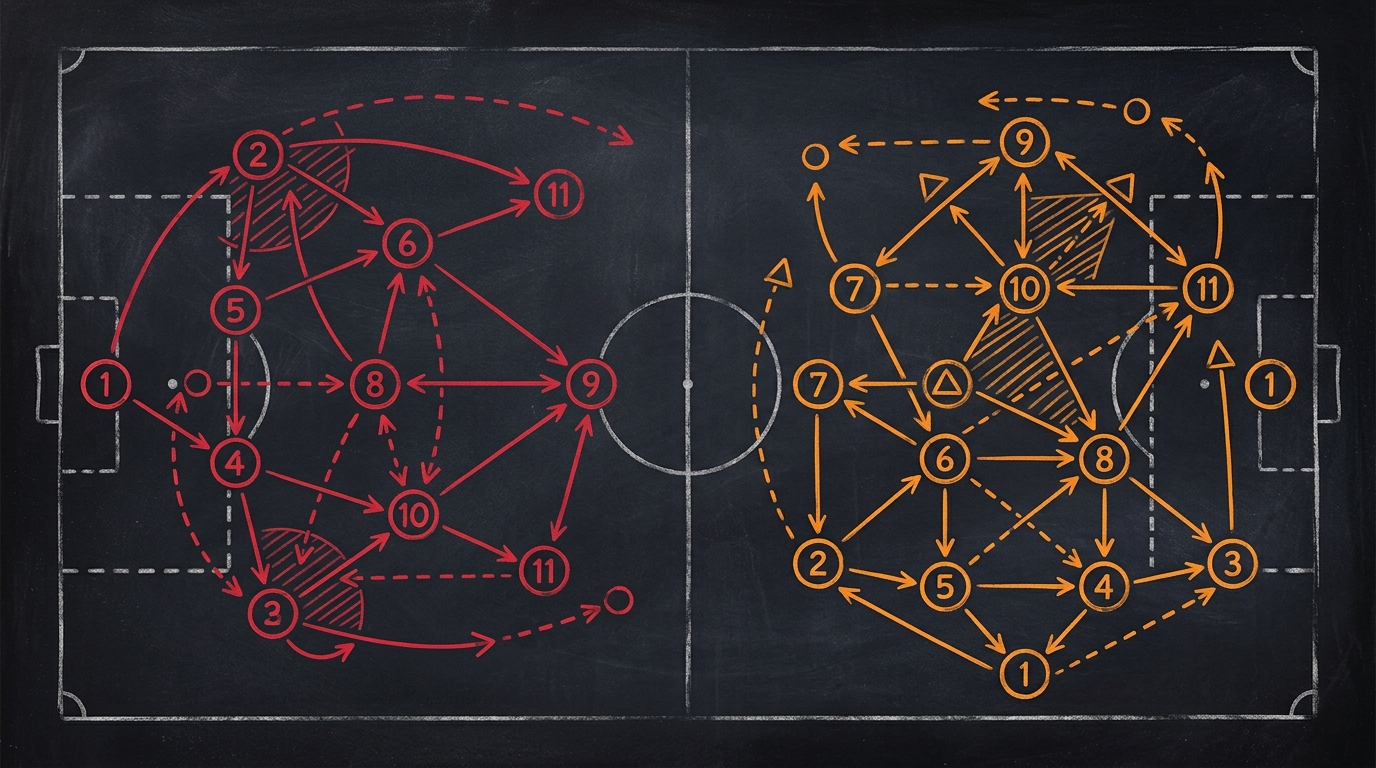
The Result, and Why the Tactics Deserve a Closer Look
On June 29, 2026, in the Round of 32 of the FIFA World Cup, Morocco eliminated the Netherlands in Monterrey after a 1-1 draw across 120 minutes and a 3-2 penalty shootout. Cody Gakpo gave Ronald Koeman's side the lead around the 72nd minute, Issa Diop headed home a stoppage-time equalizer in the 90+1 minute to force extra time, and the Atlas Lions then held their nerve in a shootout decided by goalkeeper Yassine Bounou's save from Crysencio Summerville and Ismael Saibari's decisive spot-kick. Those are the confirmed facts of the night.
What the scoreline does not capture is how Morocco actually engineered the win. This was not a smash-and-grab. It was a structured, disciplined performance under a coach who had been in the job only a matter of months, against a Dutch team that, on paper, dominated possession and territory for long stretches. The story of this match is a tactical one: shape, spacing, pressing triggers, game-state management, and the substitutions that flipped the night Morocco's way.
This article breaks down the systems on both sides, the head coaches' philosophies, the specific duels that mattered, and how the win reshapes Morocco's path through the bracket toward a last-16 meeting with Canada. Where something is established fact, it is presented as such. Where the explanation is interpretation of how and why those facts unfolded, it is clearly framed as analysis - the kind of reading any tactics writer offers when connecting the dots between formation sheets and outcomes.
Who Actually Coached Morocco: Ouahbi, Not Regragui
An important point of clarification, because there has been confusion around it: Morocco were not coached at this tournament by Walid Regragui, the man who led the Atlas Lions to the 2022 World Cup semi-finals. The team at the 2026 World Cup was managed by Mohamed Ouahbi, who replaced Regragui in the build-up to the tournament. Ouahbi took charge only around three months before the World Cup, making what he produced against a top European side all the more striking.
Ouahbi is not a household name in the way Regragui became after 2022, and his route to the job is unusual. Born in Schaerbeek, Belgium, he built his coaching reputation largely in youth development, including work associated with the RSC Anderlecht academy. His defining credential before the senior post was leading Morocco's under-20 side - the so-called Atlas Cubs - to the FIFA U-20 World Cup title at Chile 2025. That triumph established him as a coach who could organize a young group, instill an identity quickly, and win knockout football.
That background matters for understanding the Netherlands game. Ouahbi did not inherit a finished product; he inherited Regragui's golden generation and a compressed timeline, and he had to fuse experienced internationals with younger players he trusted. The version of Morocco that beat the Netherlands reflected both realities: a spine of proven names and a willingness to give big minutes to less-celebrated profiles in central midfield.
Ouahbi's Football Philosophy
By reputation, Ouahbi belongs to a generation of coaches who favor initiative. His teams are described as wanting to press high, recover possession quickly, and attack at speed. Tactically, across his career he has alternated between a 4-3-3 and a 3-4-3, with a stated emphasis on controlling space and dictating tempo. That is the blueprint he has spoken about and used at youth level and in the early phase of his senior tenure.
Against the Netherlands, however, the smart coach is the one who adapts the philosophy to the opponent and the stakes. This is where analysis comes in: faced with a Dutch team built to dominate the ball and overload wide areas, Ouahbi did not chase a high-press shootout for 90 minutes. He selected a 4-2-3-1, a shape that gave Morocco a double pivot to protect central spaces and clear reference points to defend the flanks. The proactive instincts were still visible in transition and in the willingness to push Hakimi forward, but the base structure was pragmatic.
That blend - proactive identity, pragmatic in-game choices - is arguably the most important takeaway of the night. Ouahbi proved he could park the maximalist version of his philosophy when survival and progression were on the line, while keeping enough of the attacking threat to punish the Dutch when the moment arrived. In knockout football, that flexibility is often the difference between coaches who advance and coaches who go home admired but eliminated.
Morocco's Formation: The 4-2-3-1 in Detail
Morocco lined up in a 4-2-3-1. The confirmed starting eleven was Yassine Bounou in goal; a back four of Achraf Hakimi at right-back, Issa Diop and Chadi Riad as the central pairing, and Noussair Mazraoui at left-back; a double pivot of Neil El Aynaoui and Ayyoub Bouaddi; an attacking band of Brahim Diaz, Azzedine Ounahi and Bilal El Khannouss; and Ismael Saibari leading the line.
The selection tells you a lot about the plan. Diop and Riad are physical, aerially strong central defenders, exactly the profile you want against a Dutch front line led by Brian Brobbey and supported by Gakpo and Summerville. Hakimi and Mazraoui are full-backs comfortable defending one-on-one but capable of joining attacks, which let Morocco keep width without committing extra bodies forward. The double pivot of El Aynaoui and the young Bouaddi was the screen in front of the back four, tasked with breaking up the Dutch midfield and protecting the half-spaces.
Ahead of them, the three of Brahim Diaz, Ounahi and El Khannouss offered ball-carrying, press resistance and creativity in the final third, with Saibari - Morocco's standout scorer from the group stage - as the focal point. It is a structure that can sit a little deeper and become a 4-4-1-1 or even a 4-5-1 out of possession, then spring forward through quick combinations and Hakimi's overlaps. That positional elasticity was central to how Morocco managed the game.
It is also worth noting the leadership distribution in this shape. With Hakimi as captain and a release valve on the right, Diop and Riad as the aerial command of the box, and Bounou marshalling from behind, Morocco had experienced voices at every vertical line of the pitch. That spine of decision-makers is what allows a deep block to hold its discipline for 90-plus minutes without individual lapses - the kind of structural maturity that does not appear on a formation graphic but decides tight knockout games. The 4-2-3-1 was not just a set of positions; it was a distribution of responsibility designed to keep eleven players reading the game the same way.
The Netherlands' 3-4-2-1 and What It Demanded
Ronald Koeman set the Netherlands up in a 3-4-2-1. The Dutch XI featured Bart Verbruggen in goal; a back three of Jan Paul van Hecke, Virgil van Dijk and Nathan Ake; wing-backs Denzel Dumfries and Micky van de Ven; a midfield two of Ryan Gravenberch and Frenkie de Jong; Crysencio Summerville and Cody Gakpo as the two attacking midfielders behind the striker; and Brian Brobbey up top.
That shape is built to dominate possession. The back three lets the wing-backs push high and wide to stretch the pitch, de Jong drops to orchestrate, and the two number tens - Gakpo and Summerville - look to occupy the half-spaces between an opponent's midfield and defense. Against a back four, the Dutch plan is to create wide overloads, pin the full-backs, and feed the central runners. Dumfries on the right was a particular threat, and the left side was a recognized avenue for the Netherlands to build their attacks.
For Morocco, the 3-4-2-1 posed a clear question: how do you defend two free-roaming tens and aggressive wing-backs without getting pulled apart? The answer, in analytical terms, lay in the double pivot tracking the tens, the full-backs staying disciplined against the wing-backs, and the wide forwards dropping to help when the Dutch built down the flanks. The match became, in large part, a contest between the Dutch desire to create those overloads and Morocco's structure to deny them.
Morocco's Defensive Shape and Out-of-Possession Plan
Out of possession, Morocco's organization was the foundation of everything. The base shape compressed into two banks that protected the center of the pitch first and dared the Netherlands to play around them rather than through them. The key principle in this kind of plan is denying the central channel - the area where Gakpo and Summerville most wanted to receive - and forcing the Dutch to circulate the ball in front of the block or out to the touchline.
When the Netherlands committed their wing-backs high, Morocco's wide forwards - El Khannouss and Brahim Diaz - dropped in to create temporary back sixes or to double up alongside Hakimi and Mazraoui. That is how a 4-2-3-1 turns into a 4-4-2 or 4-5-1 defensive block without losing its counterattacking outlets. The double pivot shuttled across to whichever side the ball went, and the ball-near central defender stepped to meet Brobbey while the far-side defender tucked in to guard against cutbacks.
Crucially, Morocco managed their pressing energy. Rather than press for 90 minutes, they picked moments: pressing triggers on a heavy Dutch touch, a backward pass, or a pass into a covered area. This selective pressing kept the team compact and reduced the spaces in behind that a high line would expose against Dutch runners. It is a low-risk, discipline-heavy approach, and it is precisely what allowed Morocco to keep the game at 0-0 for long stretches and stay in the contest until the decisive late moments.
Equally important was Morocco's rest defense - the way they positioned themselves while in possession to be ready for the moment they lost the ball. Against a Dutch side primed to counter-press and break quickly, leaving the wrong players upfield when possession turned over would have been fatal. Morocco kept at least one pivot and both center-backs anchored during their own attacks, so that any Dutch turnover ran into an organized first line of defense rather than open space. This is the unglamorous infrastructure of a successful underdog plan: not just how you defend when set, but how you avoid being caught in transition the other way.
How Morocco Contained Cody Gakpo
Gakpo did score - he gave the Netherlands the lead around the 72nd minute, so it would be wrong to claim Morocco shut him out entirely. But for most of the match, Morocco limited his influence in the most dangerous zones, and understanding how is central to the tactical story. Gakpo is at his most lethal arriving into the box from the left half-space or drifting inside onto his stronger foot. Morocco's plan was to make those arrivals as crowded and as contested as possible.
The mechanism was layered. Mazraoui, as the left-back, had primary responsibility for the Dutch threat down that flank, with El Khannouss tracking back to help and the ball-near pivot screening the pass into the half-space. When Gakpo drifted central, Diop and Riad passed him between them rather than letting one defender get dragged out of shape. The intention was to ensure that whenever Gakpo received in a promising area, he had a Moroccan body in front of him and cover behind.
That his goal still came is a reminder that elite forwards eventually find a yard. From an analytical view, the more telling number is how few clean looks Morocco conceded across 120 minutes relative to the Dutch volume of possession. Containing a player of Gakpo's quality is not about zero involvement; it is about reducing the frequency and quality of his chances - and on that measure Morocco largely succeeded, then responded immediately when he did break through.
The Midfield Battle: El Aynaoui and Bouaddi vs Gravenberch and de Jong
The double pivot of Neil El Aynaoui and Ayyoub Bouaddi was where the match was quietly won and lost. Against Gravenberch and de Jong - two of the most press-resistant, progressive midfielders in world football - Morocco needed a pair who could cover ground, screen passing lanes, and not get drawn into duels that opened the center. Trusting the young Bouaddi alongside El Aynaoui was a bold call by Ouahbi, and it paid off.
De Jong is the Dutch metronome; if he is allowed to drop, turn and pick passes unopposed, the Netherlands control the tempo and the Moroccan block gets stretched. Morocco's answer was a zonal denial of central passing lanes, with one pivot stepping to pressure and the other holding the screen, so that de Jong was frequently forced to recycle sideways or backward rather than thread balls into the tens. Gravenberch's driving runs through midfield were met by bodies in his path rather than open grass.
The half-spaces were the battleground. Gakpo and Summerville wanted to receive between Morocco's pivots and center-backs; the pivots' job was to occupy and pass on those runners, shuttling laterally to keep the spaces small. It is unglamorous, high-discipline work, and it is the reason the Dutch struggled to convert possession into the volume of high-quality central chances their shape is designed to generate. When Koeman later replaced de Jong with Marten de Roon, it changed the Dutch midfield profile but did not unlock Morocco's block.
The decision to bench Sofyan Amrabat - the defensive anchor who was so central to Morocco's 2022 run - and instead pair El Aynaoui with Bouaddi deserves emphasis, because it was a genuine statement of trust by Ouahbi. A double pivot offers a different kind of protection than a single holding midfielder: two players can split duties, with one stepping to press while the other guards the space, and they can cover more lateral ground against a team that switches play. Against the Netherlands' tendency to move the ball from flank to flank to find overloads, that lateral coverage was valuable. Keeping Amrabat in reserve also gave Ouahbi an experienced option to introduce if the game demanded a more conservative lock-down in the closing stages.
Hakimi's Role: Threat and Restraint
Achraf Hakimi is Morocco's most dangerous attacking weapon from defense, and he had already shown his scoring threat in the group stage with a goal from right-back. Against the Netherlands, his role was a balancing act: provide width and a transition outlet on the right, but not so recklessly that he left space behind for the Dutch left side to exploit. Reading how Ouahbi calibrated that balance is key to the tactical picture.
With Van de Ven operating as a left wing-back for the Dutch and Gakpo drifting in from the left, Hakimi's defensive responsibilities were real. The analytical reading is that Morocco asked him to time his forward bursts to moments of secure possession or clear counterattacks, rather than living permanently in the final third as he sometimes does at club level. When Morocco won the ball and broke, Hakimi was the release valve - carrying upfield, stretching the Dutch, and forcing them to retreat rather than swarm forward.
This restraint is itself a sign of the team's maturity under Ouahbi. In a tight knockout game, the temptation is to unleash your best attacker constantly; the discipline is to deploy him as a controlled threat who supports the structure. Hakimi's presence forced the Netherlands to account for him on every transition, which in turn discouraged their wing-backs from committing entirely forward. His influence was therefore felt even in phases when he was not on the ball - a classic example of a player shaping a match by the space he occupies and the fear he creates.
Saibari as the Lone Striker and the Transition Outlet
Ismael Saibari started as the central striker and was, by the numbers, Morocco's most important attacking player coming into the knockout: he had been their standout scorer in the group stage. In a single-striker system against a Dutch back three, his job was demanding - hold the ball under pressure, link play for the runners from midfield, and provide a finishing presence when chances arrived. He also had to lead the first line of any selective press.
Tactically, Saibari operated as the pivot point for Morocco's transitions. When the block won possession, the quickest route to relief was a pass into Saibari's feet or into the channel for him to chase, allowing the wide forwards and Hakimi to surge forward in support. Against three center-backs, isolating one of them in a footrace or a hold-up duel is the way a lone striker survives, and Morocco built their counterattacks around giving Saibari those situations.
His night did not end as a goalscorer in open play, but it ended in the most decisive way possible: stepping up to convert the winning penalty in the shootout. That is a fitting summary of his contribution - the player Morocco leaned on for goals throughout the tournament being the one with the composure to settle the tie from twelve yards. The structure around him was built to keep Morocco in the match; Saibari was the man entrusted to finish it.
The Left-Side Duel: Mazraoui, El Khannouss and the Dutch Right
If the Dutch had a preferred avenue, much of their threat funneled through wide overloads, with Denzel Dumfries an aggressive presence pushing up from right wing-back. That made Morocco's left side - Noussair Mazraoui at full-back, shielded by Bilal El Khannouss ahead of him - one of the most important duels on the pitch. Defending an attacking wing-back like Dumfries requires a two-man solution: the full-back cannot do it alone without being dragged out of the back line.
Mazraoui is well suited to this task. A full-back comfortable defending in tight areas and disciplined enough to stay in his lane, he was tasked with denying Dumfries the space to cross or combine, while El Khannouss tucked back to form a temporary double-team and cut the passing angle into the wide channel. When the Dutch tried to isolate Mazraoui one-on-one, Morocco's near-side pivot slid across to provide a third defender, turning a potential overload into a numbers-even or numbers-down situation for the attackers.
The trade-off, analytically, is that asking your wide forwards to track back so diligently reduces your own attacking width on the break. Morocco accepted that cost because shutting down the Dutch supply line was the priority, and they trusted Hakimi and Saibari to carry the transition threat instead. It is a recurring theme of the night: Ouahbi consistently chose defensive solidity over attacking ambition in the wide areas, confident that his counters and his set-piece threat would generate enough at the other end. The plan held, and the Dutch never turned their wide dominance into a flood of clear chances.
Bounou's Influence Beyond the Shootout
Yassine Bounou's penalty save from Summerville will headline his night, but his influence ran deeper than the shootout. A goalkeeper's value in a deep-block plan extends to command of the box on crosses, communication that keeps the back line aligned, and calm distribution that relieves pressure when the team is pinned. Against a Dutch side delivering balls into the area and forcing Morocco to defend their box repeatedly, that goalkeeping authority is a structural pillar, not a luxury.
There is also a psychological dimension that is hard to overstate. Bounou's heroics in the 2022 World Cup shootouts made him one of the most feared penalty goalkeepers in the world, and opposing takers know it. That reputation can subtly alter a taker's decision-making under pressure - the extra fraction of doubt that produces a poorer strike. While such effects can never be proven from a single shootout, the pattern of Morocco repeatedly thriving in spot-kick situations with Bounou in goal is striking enough to treat his presence as a genuine tactical asset.
For a team built to take games into the margins - to stay level, frustrate, and trust the late and decisive moments - having a goalkeeper who is elite in exactly those moments is the perfect complement. Morocco's whole approach is predicated on surviving until the fine details decide things, and Bounou is the player most likely to win those details. In that sense, he is not just the last line of the defensive plan; he is the closing argument of the entire strategy.
Set-Piece and Aerial Threat: Turning Defenders Into Scorers
Morocco's equalizer through Issa Diop was the clearest expression of a deliberate strategic asset: their aerial threat from crosses and dead-ball situations. With center-backs of the size and timing of Diop and Chadi Riad, plus a striker in Saibari and full-backs who can deliver, Morocco are dangerous whenever the ball goes into the box from wide. For an underdog game plan, this is gold, because it provides a route to goals that does not depend on out-passing a superior possession side.
The beauty of the approach is its low risk. Building patient possession against a team like the Netherlands invites turnovers and counters; winning the ball in the air from a cross or corner does not. It lets Morocco invest most of their energy in defending and transition, while keeping a high-value scoring threat in reserve for the moments they push numbers forward late in a half or chase a game. The Diop goal came in exactly such a moment, with Morocco committing bodies and a substitute delivering for an arriving center-back.
This is also why Morocco's set-piece coaching merits attention as the tournament continues. Teams that can reliably manufacture goals from dead balls and crosses have an answer to low blocks and a way to break deadlocks - precisely the kind of problem they may face against Canada and beyond. The Diop header was not a happy accident but the payoff of a profile Morocco have cultivated: defenders strong enough to keep them in matches at one end and decisive enough to win them at the other.
Press Resistance: Brahim Diaz and Ounahi Under Dutch Pressure
A deep block only works if the team can occasionally keep the ball when it wins it, rather than immediately surrendering possession and inviting a fresh wave of pressure. That is where Brahim Diaz and Azzedine Ounahi earned their selection. Both are technically secure under pressure, able to receive in tight areas, ride a challenge and either draw a foul or progress the ball. Against a Dutch side that counter-presses hard, those qualities are what bought Morocco breathing room.
When Morocco won possession in their own half, the first instinct was to find Saibari or to release Hakimi, but the secondary outlet was to play through the feet of Diaz and Ounahi, who could turn away from pressure and carry Morocco up the pitch. Even small spells of retained possession matter enormously for a team defending for long periods: they reset the defensive line, allow players to catch their breath, and push the game back toward the opposition half. Press resistance is, in effect, a form of defending by other means.
Ounahi in particular has the engine to contribute at both ends, dropping to help the pivots and then carrying the ball forward when the chance arises. Diaz's close control offered an escape valve on the right alongside Hakimi. Together they gave Morocco something many low blocks lack - the ability to keep the ball long enough to relieve pressure and occasionally launch a counter rather than constantly inviting the opponent back onto them. It is another example of selection serving the plan: every attacking pick also had a defensive or possession-retention justification.
Game-State Management: Staying in the Match Until 72 Minutes
For roughly 72 minutes, Morocco executed their plan: stay compact, deny central chances, frustrate the Dutch, and pick transition moments. Keeping a high-possession opponent scoreless for that long is not luck; it is the product of repeated correct decisions - when to step, when to drop, when to foul tactically, when to let the ball run out. Morocco's game-state discipline kept the match in a posture that suited them.
Then Gakpo struck. Going a goal down with under 20 minutes left is the moment that breaks many defensive game plans, because the chasing team is forced to abandon the structure that kept them alive. Here the tactical interest sharpens: how a team responds to conceding late often reveals more about its coaching than how it defends at 0-0. Morocco had to find a way to push for an equalizer without collapsing the discipline that had protected them.
Ouahbi's response was to change the personnel and the risk profile gradually rather than throwing everything forward in a panic. Morocco needed to commit more bodies to the attack and add fresh legs and a different threat, while still respecting the danger of Dutch counters. The way the equalizer eventually arrived - a substitute delivering for a center-back arriving in the box - was a direct product of that controlled escalation rather than a chaotic last-ditch heave.
The Equalizer: A Set-Piece-Style Strike from Issa Diop
The goal that forced extra time was scored by center-back Issa Diop in the 90+1 minute, a header that found the corner of the net after a cross from substitute Chemsdine Talbi. It was Diop's first senior international goal for Morocco, and it earned him the Player of the Match award. As a moment, it crystallized Morocco's whole approach: defend with everything, then win the game through an aerial weapon arriving from deep.
Whether this was a designed set-piece routine or open-play wide delivery, the principle is the same - Morocco's plan included winning the game in the air through their big defenders. With the clock in stoppage time and Morocco committing numbers forward, Diop pushed up into the box exactly as a center-back is coached to do when his team is chasing a goal late, and Talbi's delivery picked him out. The defender who had been Morocco's rock all night became the matchwinner at the other end.
From a tactical-design perspective, this is one of the most repeatable ways for an underdog to beat a stronger side: build a team strong enough at the back to stay in the match, then weaponize that same physical, aerially dominant defensive group as an attacking threat from crosses and dead balls. Morocco have leaned on this profile before, and against the Netherlands it delivered at the most important possible moment. Diop heading home was not a fluke; it was the system producing exactly the kind of goal it was built to produce.
The Substitutions That Swung It
Substitutions decided the texture of the final 20 minutes and extra time. For Morocco, the most consequential change was the introduction of Chemsdine Talbi, who provided the cross for Diop's equalizer. A fresh wide attacker arriving late to deliver into the box is a textbook chase-the-game move, and it produced the single most important assist of Morocco's night. Soufiane Rahimi also came on and nearly won it in extra time, denied only by a brilliant Verbruggen save in the 96th minute.
For the Netherlands, Koeman's changes did not have the same effect. Gakpo - the goalscorer - was substituted, with Justin Kluivert introduced, and de Jong was later replaced by Marten de Roon. Withdrawing the man who had just scored is always a gamble; it may have been managed for fitness or to freshen the press, but it removed the Dutch player most likely to add a second. De Roon for de Jong shifted the midfield toward control and physicality but reduced the creative spark that might have broken Morocco down in extra time.
The contrast in substitution outcomes is a key analytical thread. Morocco's bench changed the game in their favor: Talbi created the equalizer, Rahimi nearly won it. The Dutch bench did not produce a comparable intervention, and three of the players involved late - Kluivert and Timber among the substitutes, plus Summerville - would go on to miss or be saved in the shootout. In a match this fine, the relative impact of the two benches was arguably the decisive tactical variable.
Extra Time: Managing 30 More Minutes Without Cracking
Neither side found a winner across the additional 30 minutes, and managing extra time is its own discipline. After clawing back a stoppage-time equalizer, the psychological and physical temptation is to either push recklessly for a winner or to sink into a purely survival mode and invite pressure. Morocco did neither to excess: they kept their shape, continued to threaten on the break, and went closest through Rahimi, who burst through in the 96th minute only to be denied by Verbruggen.
That near-miss is tactically instructive. Even while protecting their equalizer, Morocco retained a genuine transition threat sharp enough to create a one-on-one with the goalkeeper. A team that had simply collapsed into a defensive shell would not have manufactured that chance. The balance Ouahbi struck - secure enough not to concede, dangerous enough to nearly win it - is exactly what coaches aim for in extra time and rarely achieve cleanly.
For the Netherlands, extra time exposed the limits of dominance without a cutting edge. Possession and territory mean little if they do not produce clear chances, and Morocco's block continued to deny the central looks the Dutch system is designed to create. By the time the whistle went for penalties, the momentum sat with Morocco: they had survived, nearly won it, and forced the Dutch into a lottery the favorites would have desperately wanted to avoid after leading with under 20 minutes to play.
Fatigue management was an under-appreciated layer of extra time. With 120 minutes in the legs and a shootout looming, Ouahbi had to weigh how much to chase a winner against the value of keeping his takers and his defensive structure intact. Morocco's late substitutions had already injected fresh legs into the most demanding running roles, which helped them stay compact rather than fraying open in the final 15 minutes when tired teams concede. Managing the body as carefully as the ball is part of why Morocco reached penalties with their organization, and their nerve, still intact.
The Penalty Shootout: Preparation Meets Nerve
Morocco won the shootout 3-2 in a chaotic sequence in which, by report, four efforts struck the woodwork. The Netherlands started well - Koopmeiners converted to give them an early advantage - but the tide turned through Dutch misses by Kluivert and Timber and a crucial save. Morocco themselves were not flawless: both El Aynaoui and Hakimi failed to convert, a reminder that even elite takers miss under this kind of pressure.
The decisive intervention was Yassine Bounou's save from Crysencio Summerville. With the shootout tied at 2-2 after four rounds, Bounou pushed Summerville's attempt away with his left hand, swinging the advantage to Morocco. Bounou's reputation as a penalty specialist is well established from Morocco's 2022 run, and his presence in goal is itself a tactical asset in any shootout - the kind of edge that does not show on a formation board but wins knockout ties.
Ismael Saibari then stepped up to blast home the winning kick. There is an element of preparation in all of this - the order of takers, the goalkeeper's homework on opposition tendencies, the composure drilled in training - but shootouts also turn on nerve and fine margins. Morocco had both the specialist goalkeeper and the cool finisher when it mattered. Having dragged the favorites to the brink through 120 minutes of organization, they completed the job from twelve yards.
Comparing Ouahbi's System to Regragui's 2022 Blueprint
It is natural to compare this performance to Morocco's celebrated 2022 World Cup run under Walid Regragui, when the Atlas Lions reached the semi-finals by eliminating Spain and Portugal. The two share a clear philosophical thread: a deep, disciplined defensive block, ruthless transition play, elite full-backs in Hakimi and Mazraoui, and a willingness to win ugly through resilience and set-piece or aerial threat. The DNA of defensive solidity plus counterattacking venom runs through both.
There are differences, too. Regragui's signature 2022 setup leaned heavily on Sofyan Amrabat as a single defensive anchor in a 4-3-3 that could become a back-four low block, with the team famously conceding almost nothing from open play. Ouahbi's choice against the Netherlands was a 4-2-3-1 with a double pivot of El Aynaoui and the young Bouaddi - notably with Amrabat starting on the bench - reflecting both a different structural preference and Ouahbi's faith in a newer generation. The principle of protecting the center was shared; the personnel and the exact shape were his own.
The continuity is the more striking point. Despite a change of head coach only months before the tournament, Morocco's competitive identity survived intact: organized, hard to beat, lethal in transition, and capable of winning knockout football through nerve and aerial power. That Ouahbi could take Regragui's golden generation, add his own structural tweaks and younger players, and beat a side of the Netherlands' quality, speaks to how deeply embedded that identity now is in Moroccan football.
The Road Here: Morocco's Group Stage Foundation
Morocco arrived in the Round of 32 in form and with confidence built over the group stage. They finished second in Group C with seven points, drawing with Brazil before beating Scotland and Haiti, and went into the knockout phase unbeaten - second only to Brazil on goal difference. That record matters tactically: a team that has already shown it can hold its shape against Brazil knows it can do the same against the Netherlands.
The group stage also established the attacking reference points carried into the Dutch match. Saibari was the standout scorer with three goals, and Hakimi contributed from right-back, underlining that Morocco's threat comes from multiple profiles - a central striker and an overlapping full-back, plus the creativity of the attacking band. Defensively, the group results showed a side comfortable defending leads and managing game states, exactly the qualities required against a possession-heavy opponent.
In other words, the Netherlands win was not a one-off ambush; it was the logical extension of a tournament-long approach. Ouahbi had spent the group stage drilling the structure, building cohesion in the double pivot, and identifying the matchups that worked. When the knockout rounds raised the stakes, Morocco simply executed a more refined version of what they had been doing all along - which is usually the hallmark of a team built to go deep.
What Worked, What Was Fortune, and Honest Caveats
In the interest of honest analysis, it is worth separating what Morocco controlled from what fell their way. The controllables were considerable: the defensive structure, the midfield discipline, the containment of Gakpo for long stretches, the calibration of Hakimi's threat, the substitution that produced the equalizer, and the goalkeeper who specializes in shootouts. Those are products of coaching and execution, not chance.
But fine margins were also involved, as they always are in a tie decided on penalties. Diop's equalizer came in the 90+1 minute - a moment later and Morocco are out. Rahimi's extra-time chance was saved by an excellent Verbruggen stop. In the shootout itself, four efforts reportedly hit the woodwork, Morocco missed two of their own kicks through El Aynaoui and Hakimi, and the tie ultimately hinged on a single Bounou save. A few centimeters in any of those moments and the result inverts.
Acknowledging that does not diminish Morocco's achievement; it contextualizes it. The tactical plan gave Morocco the platform to be in a position where those fine margins could fall for them - you cannot win a shootout you never reach, and you cannot equalize in stoppage time if you have already been broken down. Good tactics do not guarantee outcomes; they maximize the probability of being alive at the decisive moment. Morocco's did exactly that, and then their players delivered when the margins narrowed to nothing.
How This Sets Up the Canada Tie
The win sends Morocco into the last 16 against Canada, a fixture set for July 4. Tactically, the matchup profile is very different from the Netherlands test, and that is significant. Against the Dutch, Morocco were the side defending deeper and countering against superior possession. Against Canada - a co-host with its own attacking ambition but a lower pedigree than the Netherlands - Morocco may find themselves expected to take the initiative more often.
That shift will test the proactive side of Ouahbi's philosophy that he largely shelved against the Netherlands. If Canada sit deeper and look to counter Morocco's full-backs, the Atlas Lions will need to show they can break down a low block - a different challenge from absorbing and springing. The good news for Ouahbi is that his preferred 4-3-3 and 3-4-3 ideas, with their emphasis on controlling space and tempo, are well suited to dominating possession when required. He has the structural vocabulary to flip the script.
There are also continuity advantages to carry forward. The defensive resilience, the aerial threat from Diop and Riad on set pieces, Hakimi's transition menace, Saibari's finishing, and Bounou's shootout pedigree all remain assets regardless of who Morocco face. The Netherlands result proved this group can win a high-pressure knockout against a major nation. The Canada tie will reveal whether the same group can win when it is the favorite and must do the controlling - the next, and arguably harder, test of Ouahbi's young tenure.
The Bottom Line: A Coaching Win as Much as a Player Win
Strip the match to its essence and it reads as a triumph of organization, adaptation and nerve. Mohamed Ouahbi, only months into the job, took a Dutch side built to dominate the ball and rendered that dominance hollow by refusing to give them the central spaces they needed, by trusting a young double pivot to win the midfield battle, and by keeping his best weapon, Hakimi, as a controlled threat rather than a liability.
The decisive details were all on-plan in spirit: a center-back, Diop, heading home a late cross to force extra time; a substitute, Talbi, delivering that cross; a specialist goalkeeper, Bounou, saving the crucial penalty; and the team's leading scorer, Saibari, finishing the tie. Morocco built a structure designed to stay alive against a better-resourced opponent and to win through resilience and aerial power, and that is precisely how the night unfolded.
For Moroccan football, the broader meaning is reassuring continuity. The identity forged in 2022 - hard to beat, lethal in transition, fearless in knockouts - has survived a change of head coach and been adapted by a new voice with his own ideas. Beating the Netherlands was the proof of concept. Whether it becomes the start of another deep run now rests on how Ouahbi solves the very different puzzles the bracket throws up next, beginning with Canada.
Frequently asked
What formation did Morocco play vs the Netherlands?
Morocco lined up in a 4-2-3-1: Bounou in goal; Hakimi, Diop, Riad and Mazraoui across the back four; El Aynaoui and Bouaddi as the double pivot; Brahim Diaz, Ounahi and El Khannouss in the attacking band; and Saibari as the lone striker. Out of possession it compressed into a deeper 4-4-1-1 or 4-5-1 block to protect central spaces.
Who is Morocco's coach in 2026?
Morocco's head coach at the 2026 World Cup is Mohamed Ouahbi, who replaced Walid Regragui in the build-up to the tournament. Ouahbi previously led Morocco's under-20 side to the FIFA U-20 World Cup title at Chile 2025 and favors high pressing and quick attacking play, typically using a 4-3-3 or 3-4-3 - though he opted for a more pragmatic 4-2-3-1 against the Netherlands.
How did Morocco stop the Netherlands?
Morocco defended in a compact block that denied the central channel where Gakpo and Summerville wanted to receive, used a disciplined double pivot to break up the Dutch midfield, and kept their full-backs honest against the Dutch wing-backs. They pressed selectively rather than constantly, stayed organized, and threatened on transitions, limiting the volume and quality of the Netherlands' chances despite conceding the ball and territory.
What was the final score and how did Morocco win?
The match finished 1-1 after 120 minutes, and Morocco won 3-2 on penalties. Cody Gakpo put the Netherlands ahead around the 72nd minute, Issa Diop equalized with a header in the 90+1 minute, and after a goalless extra time Morocco won the shootout, with Bounou saving from Summerville and Saibari converting the decisive kick.
Who scored Morocco's equalizer against the Netherlands?
Center-back Issa Diop scored Morocco's equalizer with a header in the 90+1 minute, assisted by a cross from substitute Chemsdine Talbi. It was Diop's first senior international goal for Morocco, and he was named Player of the Match for his all-round performance.
Did Morocco use the same system as Walid Regragui's 2022 team?
Not exactly. Both share the same identity - a deep defensive block, lethal counterattacking, elite full-backs and aerial threat. But Regragui's 2022 side leaned on a 4-3-3 with Sofyan Amrabat as a single anchor, whereas Ouahbi used a 4-2-3-1 with a double pivot of El Aynaoui and the young Bouaddi, and Amrabat started on the bench. The principles carried over; the shape and personnel were Ouahbi's own.
What role did Achraf Hakimi play against the Netherlands?
Hakimi started at right-back and acted as a controlled attacking threat rather than a constant overlapping runner. He provided width and a transition outlet but timed his forward bursts to secure possession and clear counters, mindful of the space behind him against the Dutch left side. His presence forced the Netherlands to account for him on every transition. He did, however, miss his penalty in the shootout.
Why did the Netherlands lose despite dominating possession?
Possession without penetration is not enough. Morocco denied the central spaces the Dutch 3-4-2-1 is designed to exploit, so the Netherlands struggled to turn the ball into high-quality chances. Koeman's substitutions did not change the game in his favor - he even withdrew goalscorer Gakpo - while Morocco's bench produced the equalizer and a near-winner. In the shootout, Dutch misses and Bounou's save settled it.
What were the key substitutions in the match?
Morocco's introduction of Chemsdine Talbi was decisive - he crossed for Diop's equalizer - and Soufiane Rahimi nearly won it in extra time before a Verbruggen save. For the Netherlands, Koeman replaced goalscorer Gakpo with Justin Kluivert and later swapped Frenkie de Jong for Marten de Roon, but neither change produced the intervention the Dutch needed.
How did the penalty shootout unfold?
Morocco won 3-2 in a chaotic shootout reportedly featuring four efforts off the woodwork. Koopmeiners scored early for the Netherlands, but Kluivert and Timber missed, and goalkeeper Yassine Bounou saved Crysencio Summerville's attempt with the score level at 2-2. Morocco missed kicks from El Aynaoui and Hakimi, but Ismael Saibari converted the decisive penalty to send Morocco through.
Who does Morocco play next after beating the Netherlands?
Morocco advance to the last 16 to face co-hosts Canada, in a tie scheduled for July 4. The matchup will likely demand a more proactive approach from Ouahbi's side than the deep, counterattacking plan they used to beat the Netherlands, testing whether Morocco can dominate the ball and break down a lower-block opponent.
What does this win mean for Morocco at World Cup 2026?
It shows that the competitive identity built during the 2022 semi-final run - defensive resilience, transition threat and knockout nerve - has survived a change of head coach and been adapted by Mohamed Ouahbi with his own structural ideas and younger players. Beating a side of the Netherlands' quality is proof Morocco can again go deep, with the Canada tie the next test of their ambitions.