Henna in Morocco: The Meaning Behind the Patterns — It's Not Just for Weddings
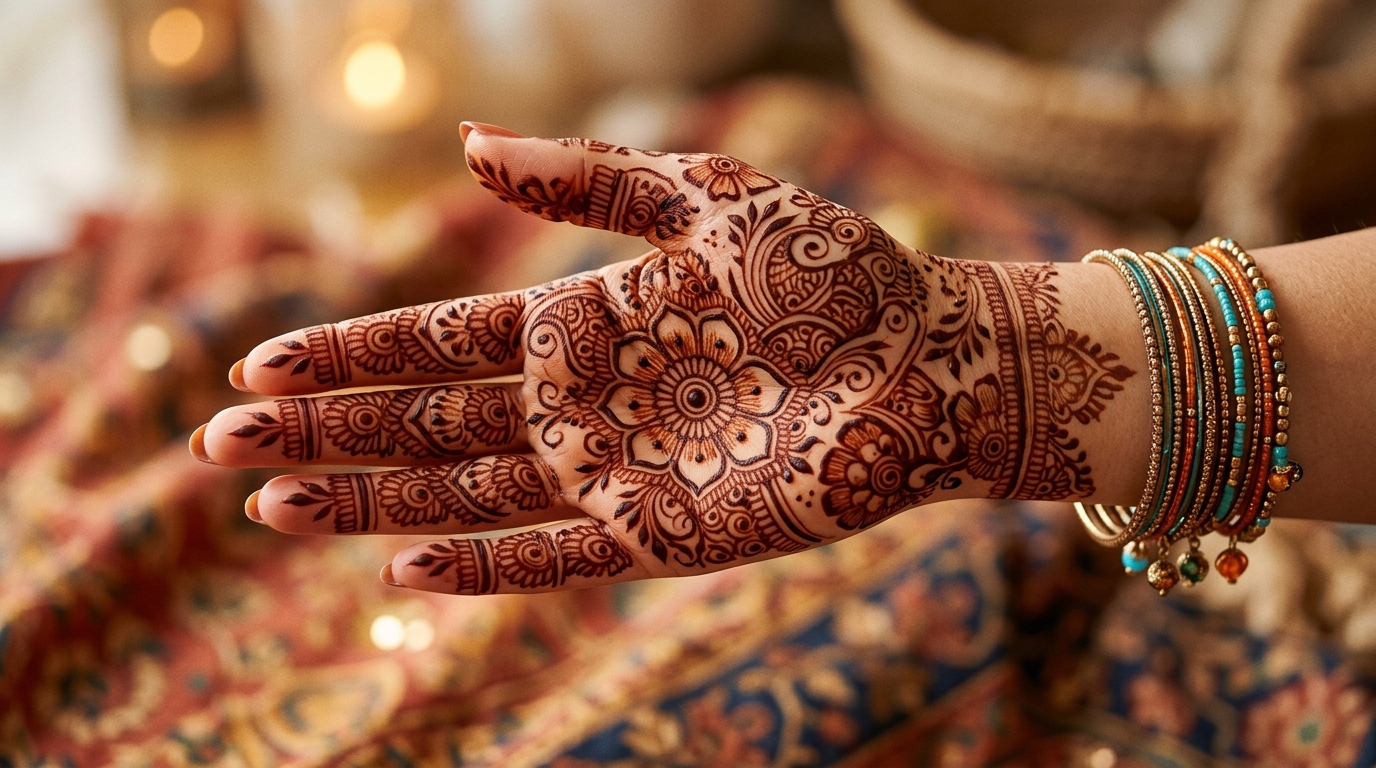
What henna actually is
Henna is a dye derived from the crushed, dried leaves of the henna plant (Lawsonia inermis), mixed into a paste with water and other ingredients such as lemon juice or tea to help the color set. Applied to skin, it stains the top layers a reddish-brown that darkens over a day or two and gradually fades over one to three weeks as the skin naturally exfoliates. The plant has been used for body art and hair dye across North Africa, the Middle East, and South Asia for thousands of years, well before it took on the specific religious and cultural meanings it carries in Morocco today.
In Morocco specifically, henna is deeply tied to two ideas that recur across almost every occasion it marks: joy and protection. Its warm color is associated with celebration and good fortune, while the act of applying it — often in a circular motion on the palm — is widely believed to guard the wearer against the evil eye and bad luck. Those two threads, celebration and protection, explain why henna shows up at so many different moments in Moroccan life rather than being reserved for one single event.
Traditional Moroccan henna designs also differ visibly from the elaborate floral and paisley patterns associated with South Asian mehndi. Moroccan and wider Amazigh (Berber) henna work tends toward bold geometric shapes — triangles, diamonds, dots, and lines — reflecting the same visual vocabulary found in Amazigh textiles, pottery, and jewelry.

The wedding henna everyone knows
It is true that henna is inseparable from the Moroccan wedding. In the days before the ceremony, the bride hosts (or attends) Laylat Al Henna, a henna night in which her hands and feet are decorated in intricate patterns, often by a professional neggafa (a traditional wedding attendant), while female relatives and friends gather to celebrate. The designs are meant to signify beauty, joy, and fertility, and the darker and richer the stain, tradition holds in various retellings, the more it augurs well for the marriage.
This same protective logic extends to Jewish Moroccan weddings, where a henna ceremony has been documented for centuries. One of the earliest written records of the practice comes from a communal regulation signed by rabbis in Fez in 1618, whose families had themselves resettled in Morocco after expulsion from Spain and Portugal. In the Jewish Moroccan version, the bride's mother or grandmother traditionally applies the henna in a circular shape first to the palms of the bride and groom, then to guests, with the dye said to protect the couple from the evil eye and bless them with health and fertility — a tradition that Moroccan Jewish communities carried with them into Israel, France, and elsewhere after emigration.
But treating henna as strictly a wedding custom misses most of how it actually functions in Moroccan daily and religious life, which is precisely why the tradition has survived so widely across generations, faiths, and regions of the country.


Marking a new life: henna at births
Henna also appears at the very start of life. During the aqeeqah, the customary celebration of a newborn, both mother and baby are traditionally adorned with a touch of henna as a sign of happiness and as a protective gesture. More specifically, at the sebou — the ceremony held roughly seven days after a Moroccan baby's birth to formally welcome the child into the community and often to announce its name — a small henna mark is placed on the newborn, and mothers commonly apply henna to themselves as part of the same rite.
The underlying belief mirrors the wedding usage: a vulnerable moment, in this case a newborn's fragile early days, is thought to benefit from henna's protective association against the evil eye and misfortune. This is not treated as separate folklore bolted onto the sebou — it is simply understood as part of how a Moroccan family marks and safeguards a new arrival, alongside prayers, sweets, and family gatherings.
Because the sebou is one of the most universally observed family rituals in Morocco, cutting across regions and social classes, the henna applied there is arguably one of the most common non-wedding uses of the custom, even though it rarely gets mentioned outside Morocco the way bridal henna does.
Henna for Eid and the Day of Ashura
Religious holidays bring henna out again, separate from any wedding or birth. On Eid al-Fitr, which marks the end of the fasting month of Ramadan, and on Eid al-Adha, many Moroccan women and girls apply decorative henna to mark the joy of the occasion — mothers will often paint simple patterns on children's hands as both decoration and, in popular belief, a form of protection for the child during the celebration.
A less internationally known observance is henna applied on the 10th of Muharram, known as Ashura. In Morocco, it is customary for women to apply henna on this day in the belief that doing so helps prevent sickness over the coming year and offers protection from the evil eye and harmful spirits — a belief that again ties the practice back to the same core idea of henna as a shield against misfortune, this time tied to the Islamic calendar rather than to a life event.
Together, Eid and Ashura henna show how the custom has become woven into the rhythm of the religious year itself, appearing at set calendar points independent of any family celebration.
The everyday, non-ceremonial side of henna
Perhaps the least discussed use of henna in Morocco is the most mundane: as a repeat-purchase beauty product. At public hammams and at home, henna is commonly used simply as a natural hair conditioner and colorant, applied the way many people elsewhere use a deep-conditioning hair mask, with no ceremonial meaning attached at all. Many Moroccan women also use henna to stain their fingertips or nails as a natural alternative to nail polish, a practice observed among Muslim women more broadly and rooted in the same plant, minus any ritual context.
Henna sellers and artists are also a constant, everyday presence in Moroccan public life — most visibly in squares like Jemaa el-Fnaa in Marrakech, where henna artists have long offered designs to both locals and visitors as an ordinary commercial service, not a religious or life-cycle rite. This everyday commercial henna culture exists in parallel with, and separately from, the ceremonial uses tied to weddings, births, and holidays.
Taken together, these everyday and semi-everyday uses are a reminder that henna in Morocco functions the way a favorite skincare ritual or a manicure habit might elsewhere: sometimes deeply meaningful, and sometimes simply a pleasant, familiar part of personal care.

Why the geometric patterns look the way they do
Anyone who has compared a Moroccan henna design to an Indian or Pakistani one will notice the difference immediately. Where South Asian mehndi tends toward dense floral vines and paisleys covering the whole hand, Amazigh-influenced Moroccan henna leans on geometry: repeated triangles, diamonds, dots, straight and zigzag lines, often left with more visible negative space. These motifs echo patterns found across Amazigh material culture, from woven rugs and pottery to silver jewelry.
That overlap is not a coincidence. Henna, in much of rural and Amazigh Morocco, has historically been understood as one more surface for the same protective and decorative symbolism found throughout the household — the idea that certain shapes and repetitions ward off harm is a thread that runs through jewelry (including the well-known khamsa, or hand-shaped amulet), textiles, and skin decoration alike.
Modern henna artists in Moroccan cities increasingly blend these traditional geometric elements with finer, lace-like linework influenced by Gulf and South Asian styles, particularly for wedding clients who want something more elaborate for photographs. But the older, purely geometric style remains the marker most associated with home-applied, everyday, and rural Moroccan henna, as distinct from the professional bridal versions seen in city salons.
Color also carries its own layer of meaning for many practitioners: a deep, dark stain is often taken as a good sign, sometimes read informally as a sign of a strong bond between a couple or good fortune for the wearer, while a paler stain is considered less auspicious. Because the final color depends heavily on paste quality, skin chemistry, and aftercare rather than any single controllable factor, this reading is treated more as folk belief and a fun topic of conversation among women applying henna together than as a strict rule anyone takes literally.
Frequently asked
Is henna only used at Moroccan weddings?
No. While bridal henna (Laylat Al Henna) is the best-known use, henna is also applied at births and the sebou naming ceremony, on Eid al-Fitr and Eid al-Adha, on the Day of Ashura, and simply as an everyday hair conditioner or nail stain with no ceremonial meaning at all.
What is henna made from?
Henna is a dye made from the dried, crushed leaves of the henna plant (Lawsonia inermis), mixed into a paste with water and often lemon juice or tea. It stains the skin a reddish-brown color that darkens over a day or two and fades naturally over one to three weeks.
What does henna symbolize in Moroccan culture?
Henna is broadly associated with joy, celebration, and protection against the evil eye and misfortune. These two themes — festivity and protection — explain why it appears at weddings, births, religious holidays, and other significant or vulnerable moments in a person's life.
What is Laylat Al Henna?
Laylat Al Henna, or Henna Night, is a pre-wedding ritual in which the Moroccan bride's hands and feet are decorated with intricate henna patterns, often by a professional neggafa, while female family and friends gather to celebrate ahead of the wedding ceremony.
Is henna used for babies in Morocco?
Yes. During the aqeeqah and especially the sebou — the ceremony held about seven days after birth — a newborn is typically marked with a small touch of henna, and the mother often applies henna as well, as a sign of celebration and a traditional form of protection.
Why do Moroccans apply henna on Ashura?
On the 10th of Muharram (Ashura), many Moroccan women apply henna in the belief that it helps guard against sickness in the year ahead and protects against the evil eye and harmful spirits, independent of any wedding or birth celebration.
Did Moroccan Jewish communities also use henna?
Yes. Jewish Moroccan weddings have featured henna ceremonies documented since at least 1618, when rabbis in Fez signed a communal regulation referencing the practice. The bride's mother or grandmother traditionally applied henna to the couple and guests for protection, luck, health, and fertility, a tradition Moroccan Jewish families carried abroad after emigration.
How is Moroccan henna different from Indian mehndi?
Moroccan and wider Amazigh henna designs favor bold geometric patterns — triangles, diamonds, dots, and lines — echoing motifs found in Amazigh textiles and jewelry, whereas South Asian mehndi is typically built around dense floral vines and paisley shapes covering more of the hand.
Do Moroccans use henna outside of ceremonies?
Yes. Henna is commonly used at hammams and at home simply as a natural hair conditioner and dye, and many women use it to stain fingertips or nails as an everyday alternative to nail polish, entirely separate from any religious or life-cycle ritual.
How long does henna last on skin?
A henna stain typically darkens over the first one to two days after application and then gradually fades over roughly one to three weeks as the skin naturally exfoliates, though this varies with skin type, care, and the strength of the paste used.
- Wikipedia — Henna ↗
- Palais Amani — The Henna Tradition and Its Cultural Significance in Morocco ↗
- MarocMama — What Is Henna and How Is It Used in Morocco? ↗
- Morocco Sahara Desert Tours — The Role of Henna in Amazigh (Berber) Culture ↗
- Bayt Al Fann — The Art of Henna in Muslim Cultures ↗
- Sephardic U — Moroccan Sephardic Wedding Traditions and Henna Ceremony ↗
Video via official YouTube embeds; photos via Wikimedia Commons under their stated licenses. All rights belong to the respective owners; 212 Daily claims no ownership.