Halal Food in Morocco
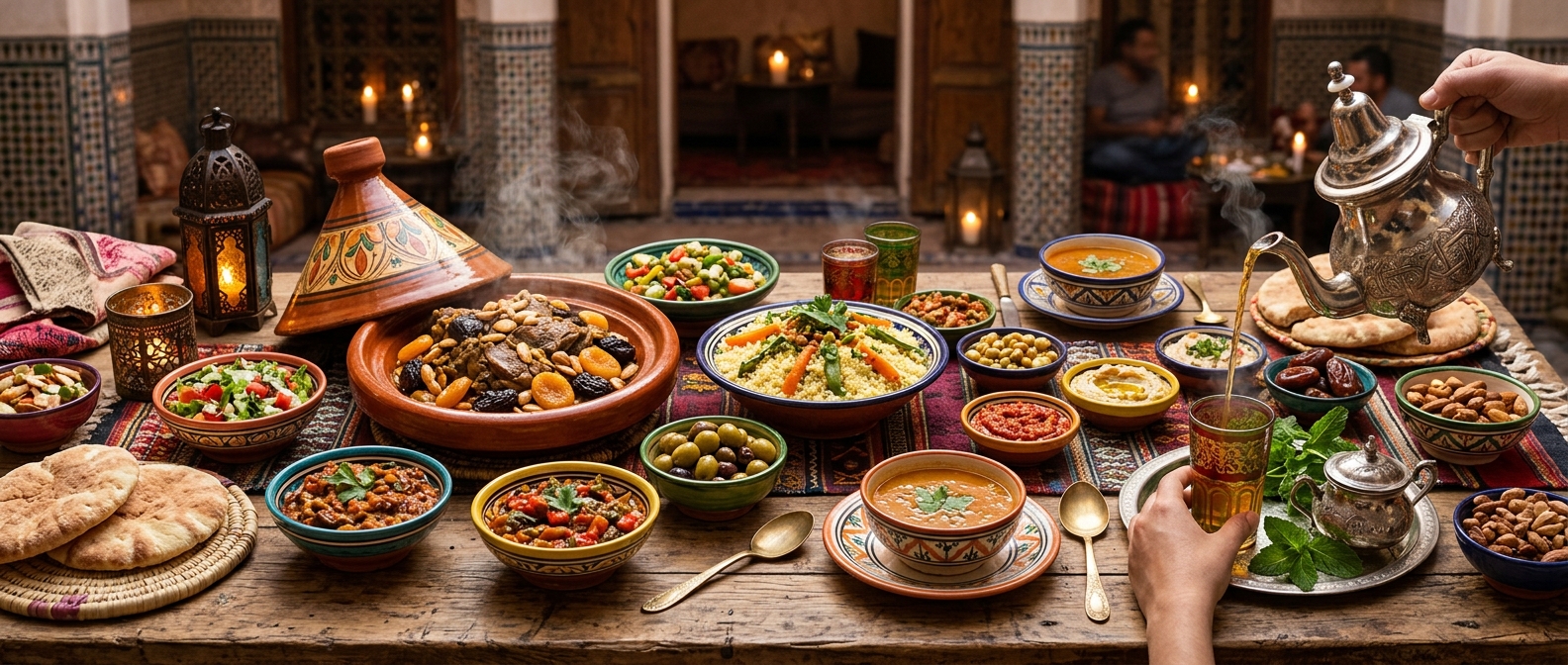
Morocco as a Halal Destination
As a predominantly Muslim country, Morocco offers one of the easiest environments for Muslim travellers seeking halal food. Islamic dietary norms shape the food supply, so meat sold and served is overwhelmingly halal by default, without the need to hunt for certification.
From street food and local eateries to hotels and restaurants, the standard offering aligns with halal requirements. This makes Morocco a relaxed destination for observant Muslims, who can enjoy the full range of the country's cuisine with confidence.
Meat and Slaughter Practices
Meat in Morocco, including lamb, beef, chicken, and goat, is generally slaughtered according to Islamic practice. Butchers, markets, and restaurants operate within a halal framework, and the concept is so standard that it is rarely advertised because it is simply assumed.
Popular dishes such as lamb or chicken tagine, kefta (meatballs), brochettes (grilled skewers), and meat couscous are all prepared with halal meat. Travellers do not usually need to ask whether meat is halal in ordinary establishments, as it is the norm.
Pork and Restricted Items
Pork is not part of mainstream Moroccan cuisine and is largely absent from everyday restaurants and markets. Where it exists, it is limited to specific outlets serving non-Muslim residents or certain tourist contexts, and it is not mixed into standard dishes.
Because pork is so uncommon, Muslim travellers rarely encounter it accidentally. As always, in international hotels or establishments catering heavily to foreign tourists, a quick check is reasonable, but the default Moroccan food landscape is free of pork.
Alcohol in Morocco
While the food is halal, alcohol does exist in Morocco, sold in licensed restaurants, bars, hotels, and some supermarkets, and the country produces its own wine and beer. However, it is not part of most local eateries and is consumed discreetly relative to Western norms.
Muslim travellers who avoid alcohol will find that the majority of restaurants, especially traditional and local ones, do not serve it. Alcohol is more visible in upscale hotels and tourist-oriented venues, so choosing local establishments keeps meals fully in line with halal expectations.
Eating Out as a Muslim Traveller
In practice, Muslim visitors can eat almost anywhere without concern. Local restaurants, food stalls, souks, and family-run eateries serve halal meals as a matter of course. Ramadan brings special considerations, with daytime fasting and lively evening meals after sunset.
If you have specific concerns in a particular international venue, it is fine to ask, but in the vast majority of cases it is unnecessary. The ubiquity of halal food is one of the conveniences of travelling in Morocco as a Muslim.
Practical Tips and Reassurance
Focus on traditional Moroccan restaurants and street food for an effortless halal experience, and reserve any questions for hotels or venues clearly aimed at international tourists. Markets selling fresh produce, bread, dairy, nuts, and fruit are entirely straightforward.
During Ramadan, plan around fasting hours, as many eateries adjust their schedules and the iftar meal after sunset is a special communal experience. Overall, Morocco requires very little effort from Muslim travellers to eat halal and well.
| Item | Status | Notes |
|---|---|---|
| Meat (lamb, beef, chicken) | Halal by default | Standard everywhere |
| Pork | Rare | Limited to specific outlets |
| Alcohol | Available but limited | Licensed venues, not most local eateries |
| Street food | Halal | Generally safe for Muslims |
| Local restaurants | Halal | No need to seek certification |
Halal considerations in Morocco
FAQ
Is all meat in Morocco halal?
Virtually all meat is halal by default, as Morocco is a Muslim-majority country, so travellers rarely need to ask or seek certification in ordinary establishments.
Is pork served in Morocco?
Pork is rare and not part of mainstream cuisine; where it exists it is limited to specific outlets and not mixed into standard dishes.
Can I find alcohol in Morocco?
Yes, in licensed restaurants, bars, hotels, and some supermarkets, but most traditional and local eateries do not serve it.
Loved this? Useful? React below — your feedback helps other readers.