Gluten-Free in Morocco
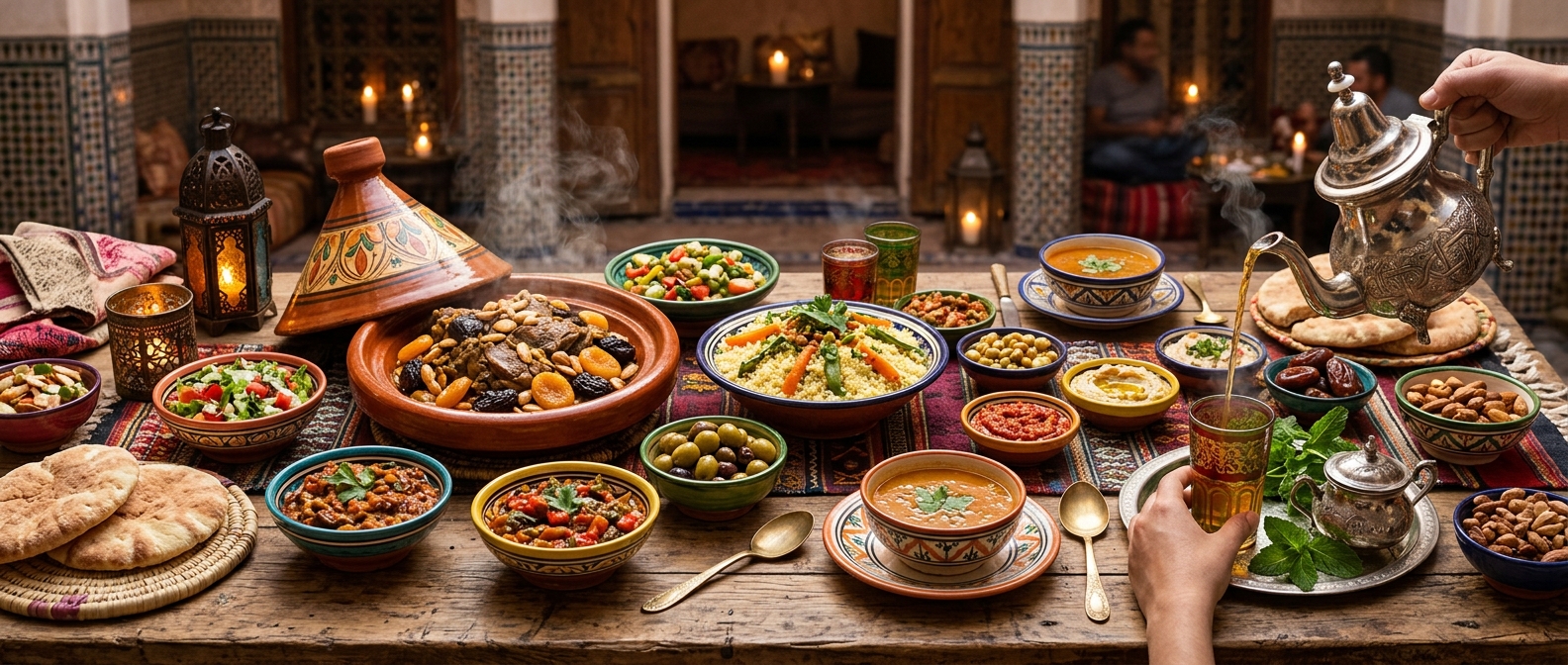
Gluten Awareness in Morocco
Gluten-free diets are not widely understood in Morocco, where wheat-based bread and semolina couscous are dietary staples eaten daily. Travellers with coeliac disease or gluten intolerance must therefore be proactive, ask detailed questions, and accept that mistakes can happen.
Because bread accompanies almost every meal and is often used as a utensil to scoop food, cross-contamination is a genuine concern. Planning ahead, carrying translation cards, and sticking to naturally gluten-free dishes greatly reduces risk.
Foods That Contain Gluten
The biggest sources of gluten are khobz and other breads, msemen, harcha and baghrir pancakes, and couscous, which is made from wheat semolina despite sometimes being mistaken for a gluten-free grain. Pastries and many sweets also contain wheat flour.
Hidden gluten can appear in thickened sauces, breaded or floured meats and fish, harira soup (often thickened with flour or containing vermicelli), and some spice blends or stocks. Fried foods may share oil with breaded items, adding contamination risk.
Naturally Gluten-Free Options
Many Moroccan dishes are naturally gluten-free if prepared carefully. Grilled meats and fish (without flour coatings), plain vegetable or meat tagines (without flour thickening), and rice dishes are good choices. Confirm that no flour, bread, or wheat-based stock is involved.
Salads such as zaalouk and taktouka, olives, plain cooked vegetables, eggs, fresh fruit, nuts, and freshly squeezed juices are generally safe. Tagines are often a reliable choice because they are slow-cooked stews of meat or vegetables and spices rather than flour-based dishes.
Cross-Contamination Concerns
Even naturally gluten-free dishes can be contaminated. Bread served alongside food, shared frying oil, the same utensils used for couscous and other dishes, and flour dust in busy kitchens all pose risks for those who are highly sensitive or coeliac.
Ask for your meal without bread on the plate, request that no flour be used in sauces, and consider eating at places that can prepare a dish from scratch. Communicating the seriousness of the condition, especially for coeliacs, is important.
Communicating Your Needs
A printed card in French and Arabic explaining gluten and coeliac disease is invaluable. Useful French phrases include sans gluten (gluten-free), sans farine (without flour), and sans pain (without bread). Explaining that couscous and bread contain wheat helps avoid misunderstandings.
Riads, higher-end restaurants, and tourist areas are more likely to understand and accommodate gluten-free requests. Cooking classes can also be arranged with gluten-free adaptations, giving control over ingredients and preparation.
Practical Travel Tips
Self-catering from markets is a safe strategy, with abundant fresh produce, rice, eggs, meat, fish, nuts, and fruit available. Bring gluten-free snacks from home for travel days and remote areas where options are limited.
Stay vigilant rather than assuming a dish is safe, and double-check at each meal. With preparation and clear communication, gluten-free travellers can enjoy Morocco's grilled dishes, tagines, salads, and abundant fruit while avoiding the wheat-heavy staples.
| Food | Contains gluten? | Notes |
|---|---|---|
| Couscous | Yes | Made from wheat semolina |
| Khobz bread | Yes | Wheat-based staple |
| Plain tagine | Usually no | Check for flour thickening |
| Grilled meat/fish | Usually no | Avoid flour coatings |
| Harira soup | Often yes | May contain flour or vermicelli |
Gluten in common Moroccan foods
FAQ
Is couscous gluten-free?
No, couscous is made from wheat semolina and contains gluten, despite sometimes being mistaken for a gluten-free grain.
What Moroccan dishes are naturally gluten-free?
Grilled meats and fish without flour coatings, plain tagines without flour thickening, rice, salads, eggs, fruit, and fresh juices are generally safe when prepared carefully.
How do I communicate a gluten-free diet?
Carry a printed card in French and Arabic and use phrases like sans gluten, sans farine, and sans pain, explaining that bread and couscous contain wheat.
Loved this? Useful? React below — your feedback helps other readers.