Boston Stadium Fan Guide: Everything You Need for France vs Morocco at Gillette Stadium
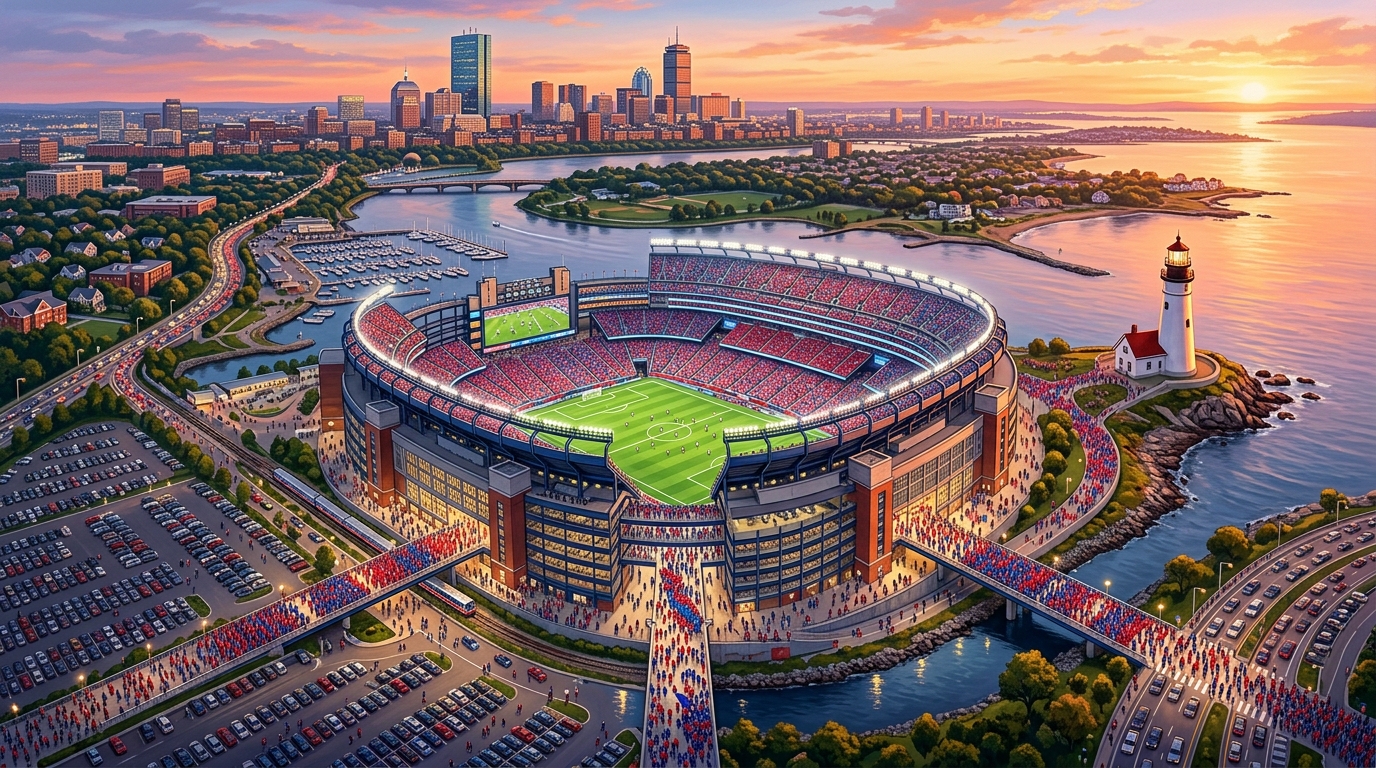
Boston Stadium, Gillette Stadium: one building, two names, one huge quarterfinal
Start with the naming confusion, because it trips up more fans than anything else in this guide. FIFA's host-city agreements require commercial sponsor names to disappear from World Cup venues for the length of the tournament, which is why Gillette Stadium — named for the razor company since it opened in 2002 — is officially "Boston Stadium" on every FIFA ticket, matchday graphic and stadium map you will encounter this July. Locals, cab drivers, hotel staff and the stadium's own year-round signage will keep calling it Gillette Stadium, and that is fine; it is the same seats, the same field, the same parking lots. Just don't let the rebrand confuse your GPS — the physical address is 1 Patriot Place, Foxborough, MA 02035, roughly 35 kilometers from Boston's downtown core, not anywhere in Boston itself.
Gillette Stadium is the long-time home of the Patriots and MLS side New England Revolution, and its World Cup role has been substantial: this Foxborough venue hosted seven matches across the tournament, from the group stage in mid-June through a round of 32 game and now the quarterfinal on July 9. Notably, France have already played twice on this exact field this summer — a group-stage win over Norway and a round-of-32 win over Sweden — so Les Bleus arrive with genuine local familiarity that Morocco, fresh off their round-of-16 demolition of Canada in Houston, do not share.
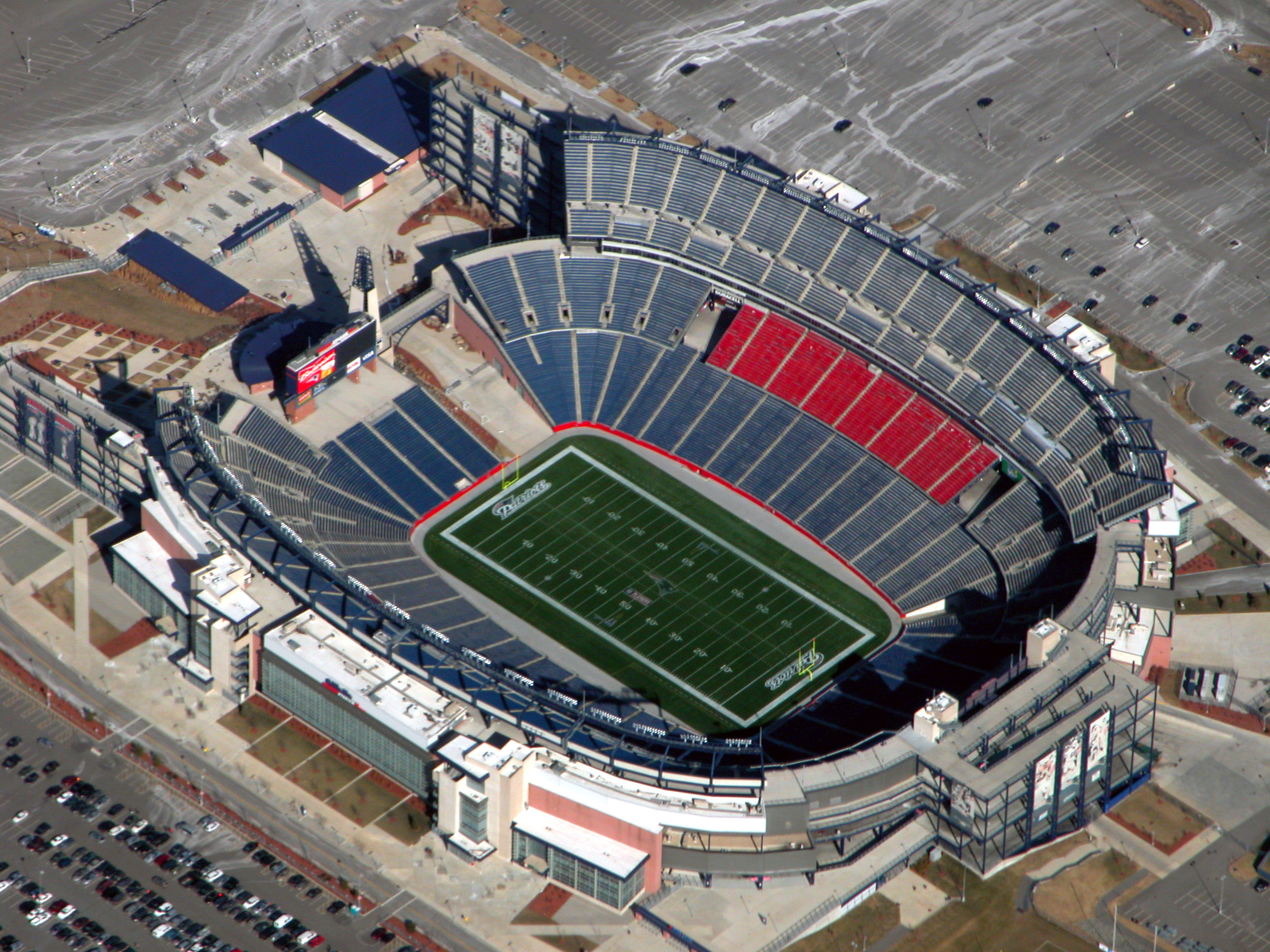
The stadium itself is a modern NFL venue retrofitted for soccer, best known among American sports fans for its 22-story lighthouse structure overlooking the field and its position inside Patriot Place, a sprawling retail-and-entertainment complex with restaurants, shops and a hotel that surrounds the stadium bowl. For World Cup matches, expect the wider Patriot Place footprint to function as a de facto fan zone — bars, big screens and vendors are concentrated there for hours before kickoff, and it is genuinely worth arriving early to eat and soak in the atmosphere rather than treating the stadium gates as your first stop of the day.
For a match with this much history behind it — the rematch of the 2022 semifinal, Morocco's push for a second straight semifinal, Didier Deschamps' final tournament in charge of France — the venue detail that matters most is simply this: Foxborough is not downtown Boston, it takes real planning to get to, and the single biggest mistake a traveling fan can make is treating it like an in-city stadium you can casually reach twenty minutes before kickoff.
Getting to Foxborough: the MBTA Boston Stadium Train
The single best way to reach Boston Stadium without a car is the purpose-built rail service the MBTA created for this tournament: the Boston Stadium Train, running on the Franklin/Foxboro Commuter Rail Line between Boston's South Station and Foxboro Station, which sits directly beside the stadium. For each match, including the July 9 quarterfinal, the MBTA is running 14 express trains nonstop between the two stations — no intermediate stops — with a total capacity built to move roughly 20,000 fans per match. The ride itself takes about an hour.
Two things are non-negotiable. First, a Boston Stadium Train ticket is a separate purchase from your match ticket, sold exclusively through the MBTA's mTicket app, and it must be bought in advance — the MBTA has said outright that sales close once capacity is reached, and tickets have been going on sale in phases ahead of each match rather than all at once. Second, and more strictly enforced: you cannot ride without a valid same-day World Cup match ticket. The MBTA has been explicit that passengers without one will not be allowed to board, and every rider — including children — needs their own train ticket. Official MBTA guidance puts the roundtrip fare between South Station and Boston Stadium at $80.
Boarding is staggered rather than a free-for-all. The MBTA organizes fans into boarding groups with scheduled check-in windows at South Station well ahead of kickoff, so a 4pm ET start means an early-afternoon departure for anyone in the earlier groups — plan on being at South Station hours before kickoff, not minutes. After the final whistle, return service begins roughly 30 minutes after the match ends, with trains departing Foxboro Station at short intervals as capacity allows. Extra MBTA staff are stationed on match days specifically to manage the crowd flow at both ends.
South Station itself is worth knowing before you arrive: it's Boston's main intercity rail and bus hub in the Financial District, reachable by the MBTA Red Line and Silver Line subway/bus routes as well as regional and Amtrak trains, so most visitors staying anywhere in central Boston, Cambridge or the Seaport can get to the stadium train without ever needing a car or a rideshare. If you're coming from Logan Airport or a hotel outside the downtown core, build in extra time to reach South Station itself before the stadium-train boarding window even opens.
Massachusetts state transportation officials have also flagged that regular commuter and subway service around Boston will see schedule adjustments and crowding on major match days, so even if your plan is simply to get to South Station, allow more time than you would on an ordinary Thursday afternoon.

Driving, parking and rideshare: what to actually expect
Gillette Stadium sits close to Interstate 95 and Interstate 495, and normally has one of the largest surface parking footprints of any NFL stadium in the country. For the World Cup, that footprint has been deliberately shrunk and controlled: reporting on the tournament's transportation plan puts official, FIFA-managed parking at roughly 5,000 spaces priced around $175 per vehicle, with several thousand more spots available in independent lots along Route 1 near the stadium. Only vehicles with a valid same-day match ticket in hand are being allowed into the managed lots, and fans should plan for 45 to 60 minutes just to exit the parking area once the match ends — a Thursday-evening quarterfinal with a full house is not a night to plan a quick getaway.
If you do drive, arrive with a large buffer before kickoff; road closures, security perimeters and single-file entry checks around Patriot Place will slow the final approach far more than the highway drive itself. Coming from downtown Boston, the trip can take well over an hour each way once match-day traffic and the expanded security zone are factored in, even though the same drive might take 40 minutes on a normal day.
Rideshare is an option but not a cheap or fast one on match days. Uber and Lyft have a designated pickup and drop-off zone in one of the stadium's outer lots, away from the main gates, and local car-service guides covering the tournament have estimated that a ride from downtown Boston that might normally cost $50-80 can surge well past $100-200 during a high-demand World Cup window, with wait times of 30-45 minutes reported as typical once tens of thousands of fans try to leave at once after the final whistle. Treat those figures as rough, demand-driven estimates rather than fixed prices — but budget both extra time and extra money if rideshare is your plan, especially for the return trip.
The practical takeaway from every official and local source covering this match is consistent: the MBTA Boston Stadium Train is the fastest, most predictable and most fan-friendly way in and out of Foxborough for this quarterfinal. Driving or rideshare are workable backups, but only if you build serious cushion into your schedule on both ends of the day.
Tickets: buy only through FIFA — and watch for scams
By the time you're reading this, the general public sales windows for this World Cup have largely closed. FIFA's major ticket lottery phases are done, and the only remaining official channels are FIFA's last-minute sales — first-come, first-served, when available — and the FIFA Resale/Exchange Marketplace, the sole authorized platform for fans reselling or exchanging tickets they already hold. For a marquee quarterfinal like France vs Morocco, expect very limited or no primary inventory left; the resale marketplace, where holders list their own tickets, is realistically your best remaining official avenue.
This is the single most important warning in this whole guide: buy only through FIFA.com/tickets or the official resale marketplace. Anything else — a link from social media, a "guaranteed seats" broker, a site that looks like FIFA's but isn't — carries real risk. FIFA itself has warned that tickets bought outside its official platforms can be cancelled outright and are not guaranteed to be honored at the gate, because some sellers list tickets they haven't actually purchased yet, and some double-sell the same seat to multiple buyers.
The threat isn't hypothetical or minor. The FBI's Internet Crime Complaint Center issued a public warning in the lead-up to this tournament that criminals were cloning official FIFA websites to harvest payment details and sell fake tickets outright, and flagged specific fraudulent domains impersonating FIFA's real ticketing pages. If a site's URL doesn't end in fifa.com, treat it with deep suspicion, and never wire money or pay via untraceable methods for a ticket from an individual seller you found outside the official marketplace.
One more detail specific to this tournament's resale rules: in the US and most of Canada, resellers can set their own price on the official marketplace, so even a legitimately resold ticket to a game of this magnitude may carry a significant markup over face value. That is expected and is not, by itself, a red flag — the red flag is buying from anywhere other than fifa.com.
Matchday rules: bag policy, security and what to leave at the hotel
Gillette Stadium runs a strict clear-bag policy year-round, and it applies in full for World Cup matches, layered with additional international-tournament security measures. The rule: bags must either be clear plastic, vinyl or PVC and no larger than roughly 12 x 6 x 12 inches — a one-gallon clear freezer bag meets the standard — or, if not clear, a small clutch-style bag no larger than about 4.5 x 6.5 inches. Small non-clear wallets and phone cases are fine; a normal backpack, tote bag, purse or camera bag is not, clear or otherwise, once it exceeds those dimensions.
If you show up with a bag that doesn't comply, don't panic — mobile lockers are available on-site for guests whose bags exceed the size limits, though relying on that option adds a line and a wait you'd rather avoid on a day when every minute before kickoff matters. The simplest plan is to travel that day with a small clear bag or no bag at all beyond what fits in your pockets, and to check the stadium's own bag-policy page in the days before the match in case World Cup-specific tweaks are published closer to kickoff. Medical supplies and documented dietary-need exceptions can be arranged in advance by contacting the stadium directly rather than being negotiated at the gate.
Expect enhanced security perimeters well beyond the stadium's normal footprint for this tournament: longer entry queues, managed arrival routes funneling fans through Patriot Place rather than straight to the gates, and standard prohibited-items rules that go beyond bags — outside food and drink, and notably refillable water bottles, have been flagged by local reporting as being turned away at World Cup entry checkpoints even where they might be tolerated at a normal Patriots game. Bring an empty reusable bottle only if you're certain it's allowed, or plan to buy water once inside.
Given the combination of the security perimeter, the clear-bag lanes and tens of thousands of fans converging on a single Thursday-afternoon kickoff, arriving at the stadium gates with anything less than 90 minutes to spare is a gamble. Combine that stadium-gate buffer with the transit buffer from the earlier sections, and a 4pm kickoff realistically means leaving central Boston by early-to-mid afternoon at the very latest — earlier if you want time to eat and soak in the Patriot Place atmosphere first.

Foxborough in July: what to wear, what to expect
New England summers surprise a lot of visitors who expect a cooler, more northern climate. Climate data for Foxborough puts a typical July day at an average high in the low-to-mid 80s Fahrenheit (roughly 28-30°C) and an overnight low around 63-65°F (17-18°C), with average humidity sitting around 70 percent through the month — warm, sticky, and noticeably more humid than a dry summer heat. There's roughly a one-in-four to one-in-three chance of rain on any given July day, so a compact umbrella or light rain layer is worth packing even if the forecast looks clear when you leave the hotel, though July is also, on average, the calmest and least windy month of the year in the area.
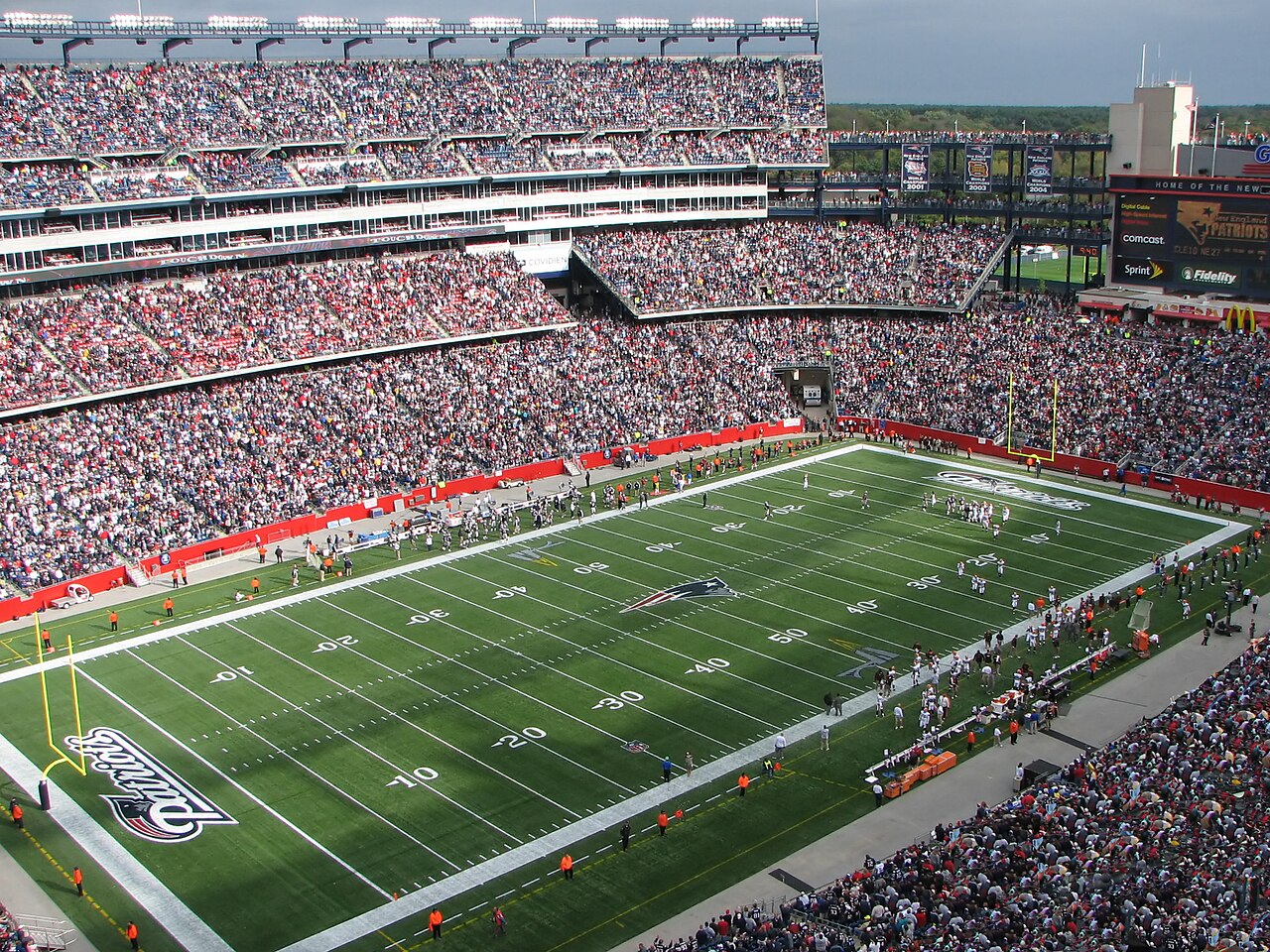
For a 4pm kickoff, that means arriving and settling into your seat during the hottest stretch of the afternoon, with the sun still high and full exposure likely for open seating areas before it begins to dip later in the match. Light, breathable clothing, sunscreen, a hat and water are far more useful than anything heavy — and remember the bag-policy limits above when deciding what you can actually bring in with you. Bring water bottles that are either empty or purchased inside, since full ones are commonly turned away at the gate.
If you're traveling from Morocco or a cooler European climate, note that Foxborough's July humidity can feel more taxing than the raw temperature numbers suggest, especially if you're walking a distance from parking or the train station and then standing in security lines. Pace yourself in the hours before kickoff, especially if you plan to be out celebrating or commiserating well into the humid evening after the final whistle.
Where to stay: Boston, Cambridge or closer to the stadium?
There is no meaningful hotel cluster immediately around Gillette Stadium itself beyond a handful of properties inside Patriot Place, so the overwhelming majority of visiting fans base themselves in Boston or Cambridge and use the Boston Stadium Train or a car for match day. That's a feature, not a bug: Boston's subway system, the T, connects Back Bay, Cambridge, the Seaport District and downtown reasonably well, and South Station — your gateway to Foxborough — sits right in the downtown core.
Back Bay is the classic choice for first-time visitors: walkable, close to Newbury Street's shopping and restaurants, and within reach of several of the city's best-known sights. The Seaport District has grown into one of Boston's busiest, newest neighborhoods, popular for its waterfront restaurants and modern hotels, while the North End puts you inside America's oldest residential neighborhood, dense with Italian cafes and restaurants along the Freedom Trail. Cambridge, just across the Charles River from downtown, is a strong alternative base with its own T access and generally easier pricing than central Boston hotels during a tournament this size.
If your budget is tighter, look slightly outside the core — Somerville, Brookline, or areas near Logan Airport tend to offer better rates while remaining on or near useful transit lines. Whichever neighborhood you choose, the honest advice repeated across nearly every Boston World Cup travel guide is the same: book as early as you possibly can, given how far in advance demand has been building for a tournament of this scale, and confirm your hotel's actual walking distance to a T stop rather than assuming proximity from a map.
Wherever you sleep, remember the logistics chain runs backward from kickoff: Foxboro Station, to the Boston Stadium Train, to South Station, to wherever your hotel sits on the T map. Choosing a hotel with an easy, direct route to South Station will save you more stress on July 9 than almost any other travel decision you make.

No ticket? Where to watch in Boston
If you're traveling to Boston without a match ticket, know before you go that the city's headline public viewing site, the official FIFA Fan Festival at City Hall Plaza, only ran for 16 days during the group stage — from June 12 through June 27 — drawing more than 155,000 visitors from over 100 countries before it closed. It has not reopened for the knockout rounds, so do not plan your trip around watching this quarterfinal there.
That doesn't mean Boston goes quiet for the knockout stage. City officials have run community watch parties in other neighborhoods through the tournament's later rounds, including gatherings in Dorchester, on Boston Common and in East Boston, with additional public viewing events planned around the semifinals and the final. Check the city's official World Cup information channels and local news listings in the days immediately before July 9 for the current schedule, since knockout-round watch-party locations have been added and adjusted as the tournament has progressed.
Beyond official programming, Boston's dense concentration of sports bars, Irish pubs and international restaurants means a very large match like this one will be shown widely regardless of any official fan zone. Neighborhoods with strong soccer-watching cultures — parts of Dorchester, East Boston, Cambridge's Central and Inman Squares — are a safer bet than assuming a random downtown bar will prioritize a quarterfinal over other sports on a Thursday afternoon. If you specifically want to watch among a pro-Morocco crowd, ask locally or check community and mosque social media in the run-up to kickoff; Moroccan and North African community groups have organized informal watch gatherings around this World Cup's biggest matches all tournament long.
Finding Morocco in Boston: the mosque, the community, the food
Greater Boston's Muslim community — estimated at roughly 80,000 to 100,000 people across Boston, Cambridge, Somerville, Quincy and Waltham — is anchored by the Islamic Society of Boston Cultural Center (ISBCC) at 100 Malcolm X Boulevard in Roxbury, the largest mosque in New England. Opened in 2009 after a long and at times contentious construction process, the ISBCC is a full cultural complex, not just a prayer hall: it includes a school, a café, social-service programs and a main hall built to hold more than 2,000 worshippers for Friday prayers. It is the natural gathering point for North African, Arab and broader Muslim communities across the region, and a logical place to look for community and camaraderie around a Morocco match, whether or not you practice the faith.
Roxbury more broadly, particularly around Nubian Square, functions as one of Boston's main halal food corridors, though it leans East African and Somali rather than specifically Moroccan — expect Eritrean and Ethiopian kitchens, halal butchers and community-run cafés such as Nubian Markets, a halal grocery and café built specifically to serve the neighborhood's African diaspora. Dorchester's Blue Hill Avenue carries a similar concentration of Somali and West African halal restaurants. These aren't Moroccan restaurants in the strict sense, but they are genuine hubs of Boston's wider Muslim and African immigrant community, and a reasonable place to find a warm, halal-friendly welcome before or after the match.
For Moroccan food specifically, look toward Boston Public Market downtown, where Moroccan-leaning vendors including Mo'Rockin Fusion and Tagine have served tagines, couscous and North African-spiced dishes to visitors and locals alike. A note of caution for anyone chasing an older recommendation: Cambridge's long-standing Moroccan-French institutions — Baraka Cuisine on Massachusetts Avenue, open for more than two decades, and the North African spot once known as Al Casbah — have both closed in recent memory, so don't build your itinerary around addresses you may have seen in older travel write-ups. Check current listings before you go, and treat the Public Market and the Roxbury/Dorchester halal corridor as your most reliable bets in July 2026.
None of this replaces the obvious move for genuinely home-style Moroccan cooking and community: ask around inside the ISBCC, in Moroccan and North African Facebook groups covering Greater Boston, or simply strike up a conversation with fellow Atlas Lions fans on the Boston Stadium Train. A World Cup quarterfinal against France is exactly the kind of occasion that pulls Boston's Moroccan diaspora out of the woodwork, and the warmest recommendations for where to eat and where to watch will come from people, not search results.
Matchday game plan: putting it all together
For a 4pm ET Thursday kickoff, here is the realistic shape of the day for a fan without a car. Buy your Boston Stadium Train ticket on the mTicket app as early as it's available and only after you already hold a valid match ticket — reservations are limited and sell out. Get to South Station with real cushion before your assigned boarding group's check-in window, since the group system is staggered across hours, not a single departure time. Expect the train ride itself to take about an hour, arriving directly at Foxboro Station beside the stadium, and budget another block of time to clear the enhanced security perimeter and bag checks before you even reach your seat — arrive at the gates with at least 90 minutes in hand.
Pack light: a small clear bag if you need one at all, sunscreen and water you're prepared to either finish before the gate or buy inside, and clothing suited to a humid mid-80s Foxborough afternoon that may cool only slightly by full time. If you're driving instead, add real time for the security-perimeter approach on top of the highway drive, and mentally write off 45 to 60 minutes just to exit parking afterward. If rideshare is your plan, budget both extra money and a real wait, especially for the trip home when tens of thousands of fans are all requesting cars from the same designated pickup lot at once.
Whatever the scoreline when the final whistle blows on this rematch of the 2022 semifinal, the trip back into Boston will be crowded and slow no matter which mode you choose — that is simply the reality of moving 65,000-plus people out of a stadium 22 miles from the city center. Build patience into the evening, and if you're staying in Boston or Cambridge, consider that the Moroccan and North African community gathering points described above may be exactly where you want to end up regardless of the result — for celebration if the Atlas Lions finally get their revenge, or for solidarity if they fall just short again.
Frequently asked
Is Boston Stadium the same as Gillette Stadium?
Yes. FIFA requires host venues to drop corporate sponsor names for the tournament, so Gillette Stadium in Foxborough, Massachusetts is officially called Boston Stadium for World Cup 2026. It is the same building, the same seats and the same field — home of the NFL's New England Patriots the rest of the year — located about 22 miles (35 km) from downtown Boston, not inside Boston itself.
What is the best way to get to Boston Stadium for France vs Morocco?
The MBTA's purpose-built Boston Stadium Train, running express on the Franklin/Foxboro Commuter Rail Line between Boston's South Station and Foxboro Station beside the stadium, is the recommended option. It's a roughly one-hour, nonstop ride, but you must already hold a valid same-day match ticket and buy a separate Boston Stadium Train ticket in advance through the MBTA's mTicket app — official MBTA pricing lists the roundtrip fare at $80.
Can I drive to Boston Stadium and park?
Yes, via I-95 or I-495, but parking is limited for the World Cup: roughly 5,000 FIFA-managed spaces priced around $175 per vehicle, plus several thousand more spots in independent lots along Route 1. Only vehicles with a valid same-day match ticket can enter the managed lots, and fans should expect 45-60 minutes just to exit after the match.
Where can I buy tickets for France vs Morocco?
Only through official FIFA channels: FIFA's last-minute sales phase when available, or the official FIFA Resale/Exchange Marketplace. FIFA and the FBI have both warned that tickets bought from unofficial resellers or cloned lookalike websites can be cancelled or fake, so avoid any site or seller outside fifa.com.
What is the bag policy at Boston Stadium (Gillette Stadium)?
Bags must be clear plastic, vinyl or PVC and no larger than about 12 x 6 x 12 inches (a one-gallon clear freezer bag qualifies), or a small non-clear clutch no larger than about 4.5 x 6.5 inches. Larger or non-compliant bags are not permitted, though mobile lockers are available on-site for bags that exceed the limits.
What is the weather like in Foxborough in July?
Typical July days bring highs in the low-to-mid 80s°F (around 28-30°C), overnight lows near 63-65°F (17-18°C), and average humidity around 70 percent. There's roughly a one-in-four to one-in-three chance of rain on any given day, though July is generally the calmest, least windy month of the year in the area.
Where should I stay for a game at Boston Stadium?
Most visiting fans base themselves in Boston or Cambridge and take the MBTA Boston Stadium Train to Foxborough, since there is no major hotel cluster immediately around the stadium itself. Back Bay, the Seaport District, the North End and Cambridge are the most commonly recommended neighborhoods, with Somerville, Brookline or areas near Logan Airport offering better value.
Is there still a FIFA Fan Festival in Boston for the quarterfinals?
No. The official FIFA Fan Festival at Boston's City Hall Plaza ran only during the group stage, from June 12 to June 27, and has since closed. For the knockout rounds, including this quarterfinal, the city has instead hosted community watch parties in neighborhoods such as Dorchester, Boston Common and East Boston, with more planned for later rounds.
Where can I find Morocco's community or Moroccan food in Boston?
The Islamic Society of Boston Cultural Center (ISBCC) in Roxbury, the largest mosque in New England, anchors Greater Boston's roughly 80,000-100,000-strong Muslim community. Boston Public Market has Moroccan-leaning food vendors, and Roxbury's Nubian Square and Dorchester's Blue Hill Avenue form the city's main halal food corridors, though these lean East African and Somali rather than specifically Moroccan. Some older Cambridge Moroccan restaurants have closed in recent years, so check current listings rather than older guides.
How early should I arrive for a 4pm kickoff at Boston Stadium?
Plan to be at Boston's South Station well before your assigned Boston Stadium Train boarding window, allow about an hour for the train ride, and arrive at the stadium gates at least 90 minutes before kickoff to clear enhanced World Cup security and bag checks. If driving, add extra time for the security perimeter around Patriot Place on top of the highway drive.
- MBTA — World Cup Guide ↗
- MBTA — Boston Stadium Trains schedules and info ↗
- MBTA — Service updates and mTicket availability for World Cup 2026 matches ↗
- Mass.gov — Transportation during the World Cup ↗
- Gillette Stadium — Bag Policy ↗
- FIFA — Boston Fan Festival ↗
- FIFA — Resale/Exchange Marketplace ↗
- Bay State Banner — Where to find great African food around Boston ↗
Video via official YouTube embeds; photos via Wikimedia Commons under their stated licenses. All rights belong to the respective owners; 212 Daily claims no ownership.