France vs Morocco: The Revenge Rematch — Full 2026 World Cup Quarterfinal Preview

A rematch four years in the making
There are fixtures, and then there are reckonings. France vs Morocco at Boston Stadium on Thursday, July 9 — kickoff 4pm ET, roughly 65,878 seats expected to be full and loud — belongs firmly in the second category. When the bracket resolved itself on Saturday night, with Morocco crushing Canada in Houston and France grinding past Paraguay in Philadelphia, the entire football world understood instantly what it had been given: the rematch of the Qatar 2022 semifinal, the most emotionally charged game of that entire tournament, now restaged with a place in the final four of the biggest World Cup ever played on the line.
For Morocco, the stakes could not be written any larger. In 2022 they became the first African and first Arab nation ever to reach a World Cup semifinal, a run that turned Walid Regragui's team into a global phenomenon and made the Atlas Lions the sentimental favorites of half the planet. France ended that dream 2-0 in Lusail. Now Morocco stand one win from doing it all over again — and this time the only thing standing between them and back-to-back semifinals is the exact same opponent that stopped them last time.
For France, the calculus is different but no less heavy. Les Bleus have reached the final of the last two World Cups, winning in 2018 and losing on penalties to Argentina in 2022. They have swept through this tournament with five wins from five, and Didier Deschamps — in what has long been confirmed as his final tournament after more than a decade in charge — is chasing one last deep run to close out the most decorated managerial reign in French football history.
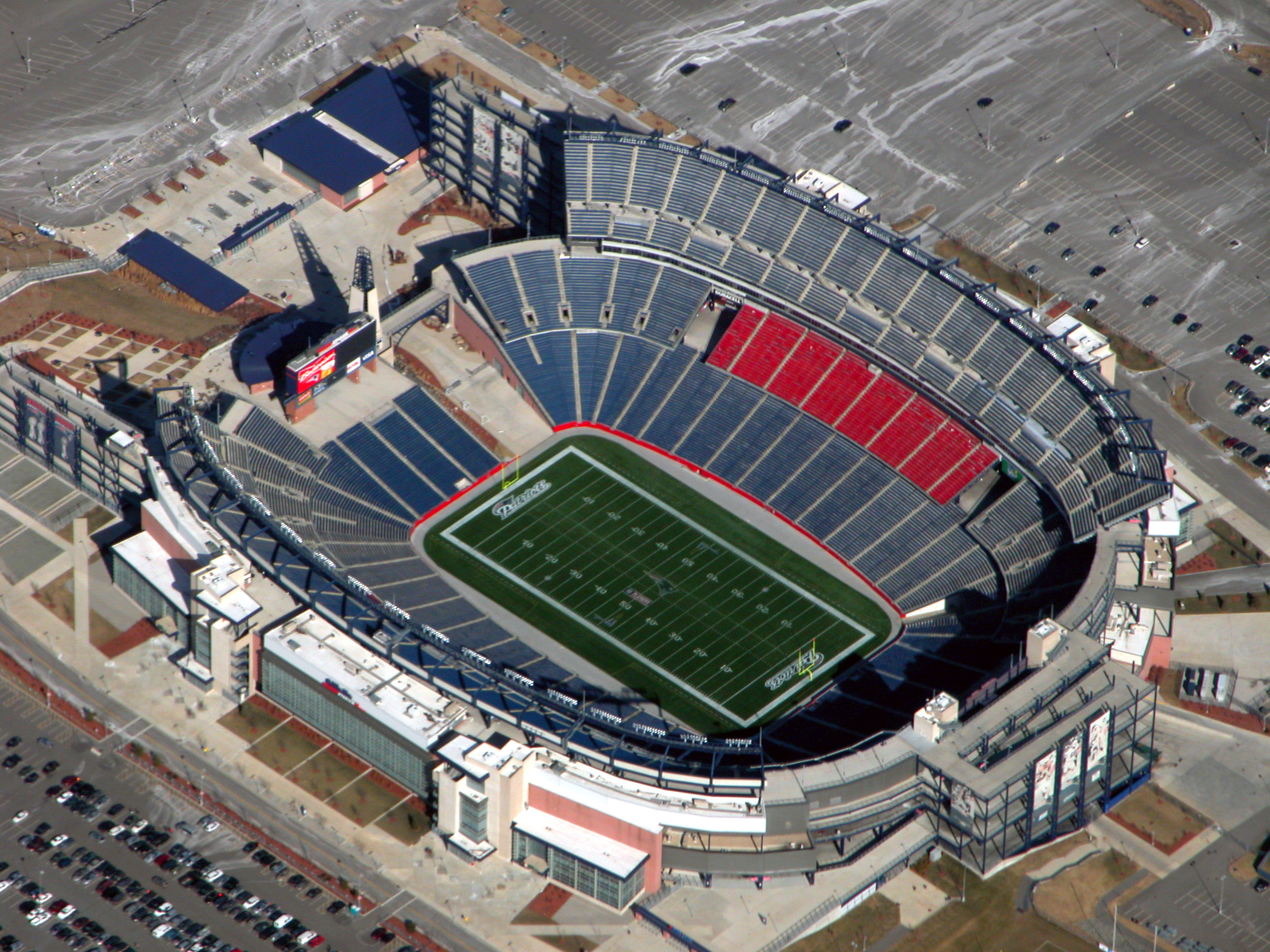
The setting adds its own spice. Boston Stadium — Gillette Stadium in Foxborough, Massachusetts, temporarily renamed for the tournament — has already hosted France twice this summer. Morocco, meanwhile, will arrive from Houston with the traveling red-and-green wall of support that has turned every one of their matches at this World Cup into a de facto home game. Foxborough on Thursday afternoon will not be neutral. It will be a battleground.
This preview breaks down everything: both teams' full routes to the quarterfinal, the team news, the individual duels that will decide it, the tactical picture, the history, the stakes and, finally, a prediction. Settle in. This is the big one.
How Morocco stormed to the quarterfinals
Morocco's road to Boston has been a test of every quality a champion team needs — composure against giants, patience against blocks, chaos management, penalty nerve and, finally, ruthlessness. Drawn into Group C alongside Brazil, Scotland and Haiti, the Atlas Lions opened on June 13 by going toe to toe with the five-time champions and earning a 1-1 draw with Brazil, a result that told the world immediately that the 2022 run was no one-off.
The second match, on June 19, brought a grittier kind of statement: a 1-0 win over a stubborn Scotland side that put bodies behind the ball for ninety minutes. Then came the strangest night of Morocco's group stage — a wild 4-2 win over Haiti on June 24 in which the underdogs twice took the lead before Morocco roared back, with Soufiane Rahimi striking the decisive blow in the 78th minute. Seven points from nine, unbeaten, second in the group only to Brazil on goal difference.
The round of 32, in this newly expanded 48-team format, delivered the kind of night that defines tournaments. Against the Netherlands on June 29, Morocco fell behind to a Cody Gakpo strike in the 72nd minute and stared elimination in the face deep into stoppage time. Then, in the 91st minute, the substitute Issa Diop rose to meet a cross and headed Morocco level, sending the Moroccan end into delirium. The shootout that followed belonged to two men: Yassine Bounou, the hero of the 2022 shootout against Spain, produced another decisive save, and Ismael Saibari calmly buried the winning kick for a 3-2 shootout triumph.
Then came Houston, and the most complete performance of Morocco's tournament. Against co-hosts Canada in the round of 16 on July 4, Morocco were simply on another level. Azzedine Ounahi — the elegant Girona midfielder who made his name on the world stage in Qatar — scored twice, opening the scoring in the 50th minute and doubling the lead in the 82nd. In stoppage time, Brahim Diaz slid a pass through for Rahimi to finish off a 3-0 win, an assist that gave Diaz his fourth of the tournament, a new record for an African player at a World Cup. Canada became the first of the three co-hosts to be eliminated, and Morocco became the first African nation ever to reach back-to-back World Cup quarterfinals.
Add it all up and the numbers are imposing: unbeaten in this tournament, unbeaten in 34 consecutive internationals overall, reigning Africa Cup of Nations champions, ranked seventh in the world by FIFA. This is not a plucky outsider on a hot streak. This is one of the best teams on the planet, arriving at exactly the right moment.
France's ruthless road to Boston
If Morocco's route has been an epic, France's has been an execution. Les Bleus have played five, won five, scored fourteen and conceded just two — and they have never conceded more than a single goal in any match this tournament. Drawn into Group I with Senegal, Iraq and Norway, they treated the group stage like a procession.
It began on June 16 in New York with a 3-1 win over Senegal, Kylian Mbappe announcing his tournament with a brace. On June 22 in Philadelphia, France beat Iraq 3-0, Mbappe scoring twice more. The group-stage finale on June 26 was played, notably, at Boston Stadium — the very venue for Thursday's quarterfinal — and France put four past Norway in a 4-1 win illuminated by an Ousmane Dembele first-half hat-trick.
The knockout rounds have shown both faces of this French side. In the round of 32 on June 30 — again at Boston Stadium — they dispatched Sweden 3-0 with the cold efficiency of a team that has been here many times before. Foxborough, in other words, has effectively become France's home ground this summer: Thursday will be their third match there in under two weeks, a logistical and psychological edge no one should dismiss.
But the round of 16 against Paraguay in Philadelphia on July 4 revealed something else: this France team can be frustrated. A stubborn, physical Paraguayan block held out for seventy minutes, limiting France to half-chances and dragging the game into the trenches. The breakthrough came only when Gomez brought down Desire Doue in the box and Mbappe converted the penalty in the 70th minute — his nineteenth career World Cup goal — for a 1-0 win. France became the first French side to win five consecutive matches at a single World Cup, but the template for how to trouble them was on full display.
That is the paradox Morocco must solve and exploit. France's front line — Mbappe flanked by the Champions League-winning PSG trio of Dembele, Doue and Bradley Barcola in various combinations — is arguably the most talented attacking unit in world football. But Paraguay proved that a disciplined, aggressive, compact team can make France look mortal for long stretches. Morocco are a far better version of that team, with far more quality on the ball.
Qatar 2022: the night that still burns
You cannot preview this match without going back to December 14, 2022, at Lusail Stadium. Morocco had just authored the most stunning run in World Cup history — topping a group containing Belgium and Croatia, knocking out Spain on penalties with Bounou as the hero, then beating Cristiano Ronaldo's Portugal 1-0 in the quarterfinal. They arrived in the semifinal as the first African and first Arab team ever to get that far, carrying the hopes of two continents and much of the wider football world.
France ended it in the cruelest way possible: early and late. Theo Hernandez volleyed Les Bleus ahead with an acrobatic finish after just five minutes, forcing Morocco to chase the game from the opening moments. The Atlas Lions responded magnificently — they dominated long stretches of possession, hit the frame of the goal through Jawad El Yamiq's overhead kick, and pinned France back in ways no other team managed in Qatar. But in the 79th minute, substitute Randal Kolo Muani scored with his first touch, just 44 seconds after coming on, sliding home at the far post after a deflected Mbappe run. It finished 2-0, and it did not remotely reflect how close the game had been.
What made the night unique was everything around the football. It was billed as a clash of intertwined histories — France and Morocco, colonizer and colonized, with millions of French citizens of Moroccan descent split down the middle, and Achraf Hakimi, born and raised in Madrid but Moroccan to the core, facing his PSG teammate Mbappe. The images of Moroccan players saluting their fans in defeat, and of Hakimi and Mbappe embracing at the final whistle, became some of the defining photographs of the tournament.
Morocco went on to lose the third-place match to Croatia and finished fourth — still, by a distance, the greatest World Cup finish by any African nation. France went on to the final and lost one of the greatest matches ever played, on penalties to Messi's Argentina.
Every Moroccan player who was on that pitch in Lusail — and nine members of the 2022 squad made the trip to North America — has lived with that scoreline for four years. Revenge is a dangerous word in football, and Morocco's camp has been careful with it. But nobody inside or outside the squad pretends this is just another quarterfinal. Lusail is the wound. Boston is the chance to close it.
Morocco team news: Ouahbi's fearless new generation
The single biggest difference between the Morocco of 2022 and the Morocco of 2026 sits on the bench. Walid Regragui, the architect of the Qatar miracle, resigned on March 5, 2026, closing a tenure of 49 matches with 36 wins, eight draws and five defeats. Into his place, just three months before the World Cup, stepped Mohamed Ouahbi — the Belgium-born, 49-year-old coach who had just delivered one of the great youth-football triumphs, guiding Morocco's under-20s to the 2025 FIFA U-20 World Cup title with a 2-0 win over Argentina in the final.
The appointment raised eyebrows at the time. It looks inspired now. Ouahbi has fused the spine of the 2022 golden generation with the fearless kids of his U-20 champions, and the blend has produced a team that defends with 2022 discipline but attacks with a freedom Regragui's sides rarely showed. Six goals in two knockout games — after years in which Morocco's brand was 1-0 — tells its own story.
The spine remains familiar. Yassine Bounou, now 35 and playing his club football at Al-Hilal, is still the undisputed number one, and his shootout heroics against the Netherlands showed the aura is fully intact. Captain Achraf Hakimi, who overcame a thigh injury suffered with PSG in late April that briefly threatened his tournament, has been every bit the world-class force at right back. Sofyan Amrabat still patrols the midfield with the same ferocity that made him a cult hero in Qatar.
Around them, the new wave has taken over. Azzedine Ounahi arrives in Boston as the man of the moment after his double against Canada. Brahim Diaz has been the tournament's most productive African creator with his record four assists. Soufiane Rahimi has goals against Haiti and Canada. Ismael Saibari — scorer of the decisive penalty against the Dutch — and the teenage prodigy Ayyoub Bouaddi, who made Ouahbi's final 26, embody the U-20 pipeline. Issa Diop, the header hero against the Netherlands, has given Morocco a genuine aerial weapon from the bench.
The concerns are minor but real. The Netherlands game went the full distance plus a shootout, and Morocco have had one less day than they would like to prepare for a French side that finished its round-of-16 tie in regulation. Managing the emotional load of a revenge rematch — keeping the occasion from playing the players — may be Ouahbi's biggest task of the week. But in terms of availability, Morocco approach the biggest game of this generation close to full strength.

France team news: Deschamps' last dance and a loaded attack
France arrive in Foxborough with an embarrassment of attacking riches and a manager on a farewell tour. Didier Deschamps, who has led Les Bleus to two World Cup finals and one title since 2012, is closing out his reign at this tournament, and his team has responded with the most efficient World Cup campaign of his era: five wins, fourteen goals scored, two conceded.
Kylian Mbappe is the sun around which everything orbits. Now his country's all-time leading scorer with 62 international goals after overtaking Olivier Giroud, the France captain has carried his club season straight into the summer: a brace against Senegal, two more against Iraq, and the nerveless penalty that broke Paraguay. His nineteenth World Cup goal moved him deeper into territory only the very greatest names in the history of this tournament have ever occupied — and Morocco, of all teams, know exactly what he can do to a knockout tie.
Behind and around him, the Champions League-winning PSG axis gives Deschamps options most coaches can only dream about. Ousmane Dembele — whose fitness was carefully managed after the club season, with Deschamps publicly weighing his selection before the tournament — announced himself emphatically with a first-half hat-trick against Norway. Desire Doue has been a constant menace between the lines and won the decisive penalty against Paraguay. Bradley Barcola adds pace on the opposite flank. Deschamps can rotate this front line and lose almost nothing.
The questions, such as they are, live at the back. William Saliba has been managing a persistent back problem — reports in France have suggested he may need surgical intervention after the tournament — though Deschamps has consistently dismissed fears over his availability, and the Arsenal defender has anchored a defense that has not conceded more than once in any game. How that back holds up against Morocco's movement, and against a fourth high-intensity match in under two weeks, is the quiet subplot of France's week.
The other question is rhythm against resistance. France have blown away every team that tried to play against them. The one team that refused — Paraguay — took them to the seventieth minute and required a penalty to be broken. Morocco will have watched that tape on loop. Deschamps knows it, which is why the tone from the French camp this week has been strikingly respectful: nobody in blue is treating this as anything other than the hardest match of their tournament so far.
Key battle: Hakimi vs Mbappe — teammates at war, again
Every great match has a duel at its heart, and this one has the most personal duel in world football: Achraf Hakimi against Kylian Mbappe. Close friends and long-time club teammates at Paris Saint-Germain, they occupy the same corridor of grass on opposite sides — Morocco's captain and marauding right back against the greatest forward of his generation, who does his most devastating work cutting in from the left.
In Qatar in 2022 the duel was a stalemate of mutual respect; Mbappe had a hand in both French goals but never fully escaped Hakimi, and the image of the two embracing afterward traveled the world. Four years on, both are at the peak of their powers. Hakimi has been arguably the best right back at this World Cup, defending stoutly while still providing the overlapping thrust that makes Morocco's right side their most dangerous avenue. Mbappe has been France's engine of inevitability, involved in nearly everything Les Bleus have created and scoring in every round so far.
The tactical tension is delicious. When Hakimi bombs forward, the space behind him is exactly the runway Mbappe lives for; every Moroccan attack down the right carries a built-in gamble. Ouahbi must decide how much license to give his captain. Cage Hakimi to contain Mbappe, and Morocco lose their best outlet. Release him, and every turnover becomes a potential French counterattack led by the fastest and most lethal transition player on earth.
Expect Morocco to solve this the way they solved it in Qatar: with structure around the duel. Amrabat shading to the right side in cover, the right-sided center back staying alert to the channel, and a winger tracking Mbappe's first ten meters. Morocco held Mbappe scoreless from open play in Lusail. Repeating that trick for ninety minutes in Foxborough, against a sharper Mbappe with better service, is the single most important defensive assignment of the match.
And at the other end, do not forget: Hakimi knows Mbappe's tells better than any defender alive, and Mbappe knows Hakimi's. Two friends, one corridor, a semifinal on the line. Football does not script things better than this.

Key battle: the midfield chessboard and the Bounou factor
If Hakimi vs Mbappe is the marquee duel, the match will more likely be decided in the middle third, where Morocco's blend of steel and silk meets a French midfield that has controlled every game it has played this summer. Sofyan Amrabat's job description is unchanged from Qatar: destroy everything, everywhere, and give the ball to someone more creative. Around him, Ounahi's ball-carrying has become Morocco's release valve — his ability to receive under pressure, glide past the first challenge and turn defense into attack in three touches is precisely the skill that hurts a high-pressing France.
Ounahi arrives in the form of his life. His double against Canada was not just two goals; it was a demonstration of the late-arriving runs into the box that Morocco's 2022 team almost never produced from midfield. France's midfielders will have been warned: lose Ounahi at the edge of the area at your peril. In Qatar, France's then-manager and staff famously admitted they had barely scouted him before he ran the semifinal's midfield for long stretches. There will be no surprise factor this time — which is its own kind of compliment.
Brahim Diaz operates in the spaces between midfield and attack, and his tournament-record four assists make him statistically the most dangerous creative player on either roster this summer. How France handle him — whether a midfielder tracks him, a center back steps out, or they simply concede him the ball in deep areas and defend the final pass — is Deschamps' biggest tactical decision of the week.
And then there is the last line. Yassine Bounou is more than a goalkeeper for this team; he is a psychological fortress. Spain in 2022, the Netherlands in 2026 — twice now, World Cup shootouts have ended with Bounou grinning and an entire nation losing its mind. If this quarterfinal is tight and cagey, as revenge rematches tend to be, the specter of penalties hangs over it. And no team on earth wants to face Morocco, and Bounou, from twelve yards.
France's counter-argument is simple: do not let it get that far. Their fourteen goals in five games have come from overwhelming midfields early, before games settle into patterns. The first twenty minutes in Foxborough — the phase in which Theo Hernandez broke Moroccan hearts in Lusail — will tell us everything about which team's plan is winning.
The tactical puzzle: how Morocco can beat France
Strip away the emotion and the history, and a clear tactical blueprint emerges from the five matches each team has played. France are devastating in transition and ruthless against open teams, but they have shown two vulnerabilities: a slight impatience against deep, disciplined blocks, and a defense that — while conceding little — has been genuinely stress-tested only once, by Paraguay's physicality.
Morocco, under Ouahbi, are uniquely equipped to attack both weaknesses at once. The 2022 DNA — compact 4-3-3 without the ball collapsing into a 4-1-4-1 low-to-mid block, Amrabat screening, fullbacks disciplined — gives them the defensive platform that frustrated Spain, Portugal and, for long stretches, France itself in Qatar. Morocco conceded once in open play in the entire 2022 tournament before the semifinal. The 2026 vintage has been more open, but the block remains elite when they choose to deploy it.
The difference now is what happens after the ball is won. The 2022 team escaped pressure through individual brilliance and hopeful running. The 2026 team escapes through structure: Ounahi dropping to receive, Diaz drifting into half-spaces, Rahimi attacking the channel behind the opposing left back, Hakimi timing his releases. Six goals in two knockout games against the Netherlands and Canada is not luck; it is a designed counterattacking machine hitting its stride.
The Paraguay tape is Morocco's cheat sheet. Paraguay showed that France's rhythm can be broken with aggressive duels and a refusal to chase the game — but Paraguay had no outlet, no player capable of making France's defenders backpedal, which is why the pressure eventually told. Morocco have four or five such players. If they combine Paraguayan discipline with their own transition quality, France will face something they have not yet faced this tournament: a team that can both absorb them and hurt them.
The danger, as ever against France, is a single early mistake. Concede in the first ten minutes, as Morocco did in Lusail, and the entire plan inverts: Morocco must open up, and open teams get eaten alive by Mbappe. The Atlas Lions' first job on Thursday is brutally simple — still be level at halftime. Every minute at 0-0 tilts the psychological scales toward the team with the wall of fans, the fresher legs in defense and the world's best shootout goalkeeper.
Boston Stadium: a home game 3,000 miles from Casablanca
The venue for this collision of history is Gillette Stadium in Foxborough, Massachusetts — rebranded Boston Stadium for the tournament — the longtime home of the NFL's New England Patriots, with a capacity of roughly 65,878 for this World Cup. It has been one of the tournament's showcase grounds, and Thursday's quarterfinal is its final match of the 2026 World Cup, guaranteeing an occasion soaked in finality even before the teams walk out.
On paper, France should feel at home: they have already played twice in Foxborough this summer, hammering Norway 4-1 there in the group stage and dispatching Sweden 3-0 in the round of 32. They know the dressing rooms, the sightlines, the turf, the wind patterns off the New England summer sky. In a tournament of constant travel, that familiarity is a genuine edge.
But if this World Cup has taught the world anything, it is that Morocco do not play away games. In Houston against Canada — the co-hosts, in their own country — the stadium was a sea of red. Moroccan support at this tournament draws on one of the largest and most passionate diasporas in world football: from Casablanca and Rabat via Paris, Brussels, Amsterdam and Montreal, and from Moroccan-American communities up and down the East Coast. New England's proximity to the great Moroccan hubs of the northeast means Thursday's crowd may be the most pro-Moroccan of the tournament so far.
Qatar 2022 offered the preview: nominally neutral stadiums that sounded like the Stade Mohammed V, every Moroccan touch roared, every opposition touch whistled. French players spoke afterward about the Lusail semifinal feeling like an away fixture. Four years later, expect the same wall of sound — the drums, the chants of Dima Maghrib, the whistles that descend on opposing goalkeepers — transplanted to a football-mad American summer.
The 4pm ET Thursday kickoff lands at 9pm in Morocco, prime time in Casablanca, Marrakech and Tangier, where public squares and cafes will overflow exactly as they did for the wins over Spain and Portugal in 2022 and over the Netherlands and Canada this summer. Whatever happens on the pitch, the occasion is already guaranteed: this will be one of the loudest, most emotionally saturated matches of the entire World Cup.
What is at stake: history for Africa, legacy for France
Zoom out from the ninety minutes, and the weight of this fixture becomes almost dizzying. For Morocco, victory would deliver a second consecutive World Cup semifinal — something no African nation has ever come close to achieving. The 2022 run could be filed, by skeptics, as a miracle: a perfect storm of spirit, tactics and destiny. A second semifinal, four years later, with a new coach and half a new team, would be something else entirely. It would be proof of a system, a golden era, a permanent seat at football's top table.
There is a bigger prize lurking behind that one. No African team has ever reached a World Cup final. Morocco came within two games of it in Qatar. Win on Thursday, and they are once again two games away — as reigning African champions, on a 34-match unbeaten run, with momentum, depth and the best tournament goalkeeper of his generation. Every African federation, every kid in Lagos, Dakar, Cairo and Abidjan, will be watching Foxborough with a rooting interest. Morocco carried a continent in 2022. They carry it again now.
For France, the stakes are about dynasty. Since 2018, Les Bleus have been the most consistently successful national team on earth: champions in Russia, finalists in Qatar, and now five wins from five in North America. A third consecutive final would be territory only the legendary Brazil sides of 1958-1970 have ever occupied in the modern era. Losing a quarterfinal to a team they beat four years ago — however good that team is — would register in France as a genuine failure.
And hovering over the French side of the equation is Deschamps' farewell. Every knockout match now carries sudden-death finality for the most successful coach in French history. His players have spoken all tournament about sending him out with a trophy. A quarterfinal exit in Boston would be a brutal final line on a glittering CV — and Morocco would take particular, historical satisfaction in writing it.
Rarely does a single quarterfinal hold this much: revenge, dynasty, continental history, a legend's farewell and a friendship — Hakimi and Mbappe — stretched across the fault line of all of it. Thursday is not just a match. It is an inflection point in the story of international football.
Prediction: can the Atlas Lions finally roar past Les Bleus?
The FIFA rankings say France by a nose: Les Bleus sit third in the world, behind only Argentina and Spain, while Morocco sit seventh — the highest ranking in African football history. The betting markets agree, installing France as favorites, as they were in 2022. Morocco have spent four years making a habit of ignoring both.
The head-to-head ledger supplies the final, uncomfortable number for Moroccan fans: Morocco have never beaten France in a senior international. Every previous meeting across the decades — friendlies and that one enormous semifinal — has ended in French wins or draws. Streaks like that exist right up until the day they do not. Morocco's entire tournament has been an argument that history is negotiable.
So, who wins? The honest answer is that this is the closest quarterfinal on the board, and anyone telling you otherwise is selling certainty they do not have. France have the tournament's best player, the deeper attacking rotation, familiarity with the venue and the psychological edge of Lusail. Morocco have the momentum, the crowd, the tournament's best defensive structure when they need it, a coach with nothing to lose and a squad that has been preparing for this exact fixture — spiritually, if not literally — for four years.
The shape of the game feels predictable: France with more of the ball in the opening half hour, Morocco compact and dangerous on the break, the temperature rising with every scoreless minute. The first goal is worth double in a fixture like this. If France score early, as in 2022, their transition game against a chasing Morocco could get ugly. If Morocco are level at the hour mark, the pressure inverts entirely — onto Deschamps, onto a French defense with a creaking Saliba, onto every blue shirt that remembers what Argentina's late chaos did to them in the 2022 final.
The X-factors: Ounahi's late runs against a French midfield that can be caught ball-watching; Diaz finding Rahimi behind the French left back; Dembele's chaos against Morocco's left side; and, looming over everything, Bounou and the possibility of penalties, where Morocco's record and aura give them a decisive edge.
Our call — and yes, the heart has a vote alongside the head at a Moroccan publication, but the head is fully on board: Morocco 1-1 France after ninety minutes, Morocco to advance on penalties, with Bounou writing the third shootout chapter of his World Cup legend. The unbeaten run reaches 35. The Atlas Lions reach back-to-back semifinals. And Lusail is finally, fully answered.
However it ends, be in front of a screen at 4pm ET on Thursday. Matches carrying this much history, this much talent and this much feeling come along a few times in a generation. Dima Maghrib.
Frequently asked
When and where is France vs Morocco in the 2026 World Cup?
The quarterfinal is on Thursday, July 9, 2026 at Boston Stadium (Gillette Stadium) in Foxborough, Massachusetts, with kickoff at 4pm ET. It is the final World Cup 2026 match hosted at the Foxborough venue, which holds roughly 65,878 fans.
What time is France vs Morocco in Morocco and Europe?
The 4pm ET kickoff corresponds to 9pm in Morocco and 10pm in France (CEST). It is prime evening viewing across North Africa and Europe.
How can I watch France vs Morocco in the United States?
The match airs on FOX in the United States, with streaming available on FOX One. Check local listings for pregame coverage, which is expected to be extensive for one of the tournament's marquee fixtures.
Have France and Morocco played each other at a World Cup before?
Once. France beat Morocco 2-0 in the Qatar 2022 semifinal, with goals from Theo Hernandez in the 5th minute and substitute Randal Kolo Muani in the 79th. It was the first World Cup meeting between the two nations.
Has Morocco ever beaten France?
No. Morocco have never beaten France in a senior international across their previous meetings, a mix of friendlies and the 2022 World Cup semifinal. Thursday in Boston is their biggest opportunity yet to end that streak.
How did Morocco reach the 2026 quarterfinals?
Morocco went unbeaten through Group C (1-1 vs Brazil, 1-0 vs Scotland, 4-2 vs Haiti), beat the Netherlands 3-2 on penalties after a 1-1 draw in the round of 32, then thrashed co-hosts Canada 3-0 in the round of 16 in Houston.
Who scored for Morocco against Canada?
Azzedine Ounahi scored twice, in the 50th and 82nd minutes, and Soufiane Rahimi added a third in stoppage time from a Brahim Diaz assist — Diaz's fourth assist of the tournament, a new World Cup record for an African player.
How did France reach the quarterfinal?
France won all five matches: 3-1 vs Senegal, 3-0 vs Iraq and 4-1 vs Norway in Group I, then 3-0 vs Sweden in the round of 32 and 1-0 vs Paraguay in the round of 16, the winner coming from a Kylian Mbappe penalty in the 70th minute.
Who is Morocco's coach at the 2026 World Cup?
Mohamed Ouahbi, the Belgium-born coach who won the 2025 FIFA U-20 World Cup with Morocco's youth team. He replaced Walid Regragui, the architect of the 2022 semifinal run, who resigned in March 2026 after 49 matches in charge.
What is Morocco's unbeaten run?
Morocco are unbeaten in 34 consecutive internationals heading into the quarterfinal, a run that includes an Africa Cup of Nations title and their entire 2026 World Cup campaign. They are ranked seventh in the world by FIFA, an African record.
What is at stake for Morocco in this match?
A win would make Morocco the first African nation ever to reach back-to-back World Cup semifinals, four years after they became the first African semifinalist in history at Qatar 2022. It would also be their first-ever victory over France, and would leave them two wins from a first African World Cup final.
Who is favored to win France vs Morocco?
France, ranked third in the world, are favorites with the bookmakers, as they were in 2022. But Morocco's 34-match unbeaten run, their elite defensive structure, their overwhelming fan support and Yassine Bounou's penalty-shootout record make this the most finely balanced quarterfinal of the tournament.
- FIFA — Paraguay v France 0-1, Round of 16 result and stats ↗
- Opta Analyst — Canada 0-3 Morocco stats, World Cup 2026 last 16 ↗
- BetMGM — France vs Morocco prediction, odds and match preview ↗
- Sky Sports — World Cup 2022: France 2-0 Morocco match report ↗
- Al Jazeera — Paraguay 0-1 France, FIFA World Cup 2026 last 16 as it happened ↗
- FIFA — Mohamed Ouahbi replaces Walid Regragui as Morocco coach ↗
Video via official YouTube embeds; photos via Wikimedia Commons under their stated licenses. All rights belong to the respective owners; 212 Daily claims no ownership.