France vs Morocco Prediction: World Cup 2026 Quarterfinal Odds, Stats and Score Predictions

Why this is the sharpest bet on the quarterfinal board
Every round of a World Cup produces one match that the betting markets and the neutral fans disagree on more than any other, and in this quarterfinal round that match is France vs Morocco. On paper the case for France is straightforward: five wins from five, 14 goals scored, only two conceded, a talisman in Kylian Mbappe with seven goals of his own this tournament, and a manager in Didier Deschamps who has never lost a World Cup knockout match to an African opponent. On paper the case for Morocco is just as real: unbeaten in 34 consecutive internationals, the meanest defensive record of any team left in the bracket outside France itself, a goalkeeper in Yassine Bounou who has already authored one World Cup shootout legend, and a fan base that has turned every Moroccan fixture at this tournament into a de facto home game.
The number that sportsbooks have settled on tells its own story. FanDuel Sportsbook, one of the regulated US books offering a full market on the fixture, has France at -175 to win in 90 minutes, Morocco at +550, and the draw at +280 — odds that imply France as roughly a 55-60 percent chance to win outright inside regulation, with the draw and Morocco splitting the rest. On the separate to-advance market, which accounts for extra time and penalties, France shorten further to -420 with Morocco out at +310, reflecting the market's view that Morocco's route to the semifinal likely runs through 120 minutes and a shootout rather than a stoppage-time smash-and-grab.
Prediction markets tell a similar but slightly less lopsided tale. Kalshi's contract on the match had France's regulation win priced at 62 percent, the draw at 25 percent, and Morocco's regulation win at just 15 percent — numbers that, when you fold in extra time and penalties, land Morocco's true chance of reaching the semifinal somewhere in the low-to-mid 20s. That is not a coin flip. But it is also not the blowout that a first glance at the group-stage goal difference might suggest, and the deeper you dig into how each team has actually produced those numbers, the more the gap narrows.
This piece is built to get past the headline price. We will walk through the full statistical head-to-head, break down France's attack and Morocco's defense in detail, explain exactly what the odds board is and is not telling you, flag the X-factors the market may be underpricing, and lay out three concrete scenarios for how Thursday unfolds — before landing on a final verdict.
The stat line: five games apiece, two very different stories
Start with the raw production. France have played five matches at this World Cup and won all five: 3-1 over Senegal, 3-0 over Iraq, 4-1 over Norway, 3-0 over Sweden in the round of 32, and 1-0 over Paraguay in the round of 16. That is 14 goals scored and only two conceded — a goal difference of plus-12 that is the best of any team remaining in the tournament. Averaged out, France are scoring 2.8 goals per match while conceding just 0.4.
Morocco's ledger reads differently but is, in its own way, just as impressive. Five matches, four wins and a draw: 1-1 with Brazil, 1-0 over Scotland, 4-2 over Haiti, a 1-1 draw with the Netherlands that Morocco won on penalties in the round of 32, and 3-0 over co-hosts Canada in the round of 16. That is 10 goals scored and four conceded in regulation and extra time — 2.0 scored per match, 0.8 conceded. Morocco have kept clean sheets in two of their five matches, against Scotland and Canada, both performances built on a compact mid-block that has been the foundation of this team since the run to the 2022 semifinal.
Put the two attacks side by side and France's is simply operating on a higher plane so far: more goals in the same number of games, against objectively tougher average opposition if you weight Senegal, Iraq, Norway, Sweden and Paraguay against Brazil, Scotland, Haiti, the Netherlands and Canada. But put the two defenses side by side and the picture flips. Morocco have conceded four times in five games; France have conceded twice. On a per-90 basis, though, Morocco's defense has actually been stress-tested far more often — by a Brazil front line, by a resilient Haiti side that scored twice, and by a Netherlands team that took them to the wire — while France's back line has faced fewer sustained spells of pressure and still leaked a goal against Norway and another against Sweden's underlying process, if not the scoreline.
The single stat that should worry French backers the most sits inside the Paraguay result. For more than 45 minutes in Philadelphia, a Paraguayan side with a fraction of Morocco's attacking quality did not allow France a single shot on target. Paraguay eventually lost 1-0 to a 70th-minute Mbappe penalty, won only because Desire Doue drew a foul in the box — not because France broke the block down in open play. Morocco, unlike Paraguay, do not need penalties to hurt teams that sit in; Ounahi, Diaz and Rahimi have combined for six goals in the last two knockout rounds alone. That is the fault line the stat sheet exposes and the one this preview keeps returning to.
One more number matters more than any single scoreline: rest. Both teams played their round-of-16 fixtures on the same day, July 4 — France beating Paraguay in Philadelphia, Morocco beating Canada in Houston. Both sides therefore arrive in Foxborough on identical rest, five days between matches, with no recovery-time edge for either camp. In a fixture already loaded with 2022 history, that is one variable the market does not have to worry about pricing — it is a genuinely level field.
France's attack: 14 goals, four names, and one blueprint for how to slow it down
France's attacking numbers are the best in the tournament for a reason: Didier Deschamps has, for the first time in his long reign, a front line deep enough that opposing coaches cannot simply plan around one player. Kylian Mbappe remains the sun everything orbits — seven goals so far this World Cup, a tally that matches Lionel Messi's total from the 2022 tournament, and now leading a France side as captain in what is confirmed as Deschamps' final campaign in charge. But behind him, the Champions League-winning PSG trio of Ousmane Dembele, Desire Doue and Bradley Barcola give France rotation and unpredictability that simply did not exist in earlier eras of Deschamps' France.
The group stage showed the ceiling. Mbappe scored twice against Senegal, twice more against Iraq, and Dembele put together a first-half hat-trick against Norway in a 4-1 win at the very stadium hosting Thursday's quarterfinal — meaning France walk into Boston Stadium having already scored four goals there this summer. The round of 32 win over Sweden, also in Foxborough, was a similarly comfortable 3-0. Four of France's five wins have come by at least two goals, the exception being the round of 16.
That exception is the tape Morocco's coaching staff will have watched most closely. Paraguay set up in a deep, physical low block and simply refused to engage. For more than 45 minutes France had no shot on target, no obvious rhythm and, by several accounts, a visibly frustrated bench. The eventual winner was a penalty won by Doue and converted by Mbappe in the 70th minute — a moment of individual quality breaking a stalemate, not a structural breakdown of Paraguay's defense. France won by 1-0 the ugly way, the way title-winning teams often have to at some point in a tournament.
The message for Morocco is not that France can be nullified — nobody has managed that yet — but that France's attack has a soft spot against teams willing to sit deep, stay compact, and refuse the track meet France's front four thrive in. Morocco, unlike Paraguay, do not have to choose between defending deep and threatening on the counter; they can do both, which is precisely what makes this such a live matchup rather than a formality.
The other live subplot in France's attack is fitness in the pivot behind it. Aurelien Tchouameni missed the Paraguay match with a groin issue, forcing Deschamps into midfield rotation at exactly the stage of the tournament when settled patterns matter most. If Tchouameni is not fully sharp on Thursday, the platform that lets Mbappe, Dembele and Doue play with freedom becomes shakier — and a shakier midfield platform is exactly the kind of opening Ounahi and Brahim Diaz have been built to exploit.

Morocco's defense: the clean-sheet machine and the Bounou insurance policy
If France's calling card is scoring, Morocco's is not conceding — and the way they have kept the number down matters more than the number itself. Four goals allowed in five matches, two clean sheets, and a goalkeeper who has already turned one World Cup shootout into personal legend. Yassine Bounou saved the decisive penalty against Spain in the 2022 round of 16 and was the last line again this summer when Morocco needed penalties to get past the Netherlands in the round of 32, after Cody Gakpo's 72nd-minute goal was cancelled out by a stoppage-time Issa Diop header. Twice now, in two different World Cups, Bounou has been the reason Morocco are still standing when a shootout ends.
The structure in front of him is the other half of the equation. Sofyan Amrabat's screening role in midfield, the discipline of the fullbacks, and a back line that does not overcommit have given Morocco a mid-to-low block that frustrated Spain and Portugal in 2022 and has done the same to Brazil and the Netherlands in 2026. The two goals Morocco allowed against Haiti came in a genuinely open, chaotic match that Morocco still won 4-2 — an outlier in an otherwise controlled defensive campaign, not a sign of a leaky base.
What makes this defense a live threat to France specifically is what happens after Morocco win the ball back. The 2022 vintage of this team escaped pressure through moments of individual brilliance. The 2026 vintage, under new coach Mohamed Ouahbi, escapes through structure: Azzedine Ounahi dropping to receive under pressure and driving forward, Brahim Diaz — the tournament's most productive African creator with four assists — drifting into the half-spaces, and Soufiane Rahimi timing his runs in behind the opposing back line. Six goals in the last two knockout matches combined is not a fluky spike; it is a designed counterattacking machine that has found its rhythm at the perfect moment.
The concern for Morocco, and the reason the market still prices them as clear underdogs, is that their toughest defensive test of the tournament is still ahead of them. Brazil, Haiti and even the Netherlands do not have the combination of pace, movement and finishing that Mbappe, Dembele and Doue bring in transition. Morocco conceded exactly one goal in open play across the entire 2022 tournament before running into France in the semifinal, where Theo Hernandez's early strike showed how quickly a moment of individual French quality can punch through even Morocco's best defensive shape. That is the one scar on an otherwise elite defensive resume, and it happened against this exact opponent.
Put simply: Morocco's defense is built to make France uncomfortable for long stretches, and Bounou gives them a safety net most teams left in this tournament do not have. Whether that is enough against the single most talented final third in the competition is the entire question Thursday is being played to answer.

Reading the board: what the real odds are actually saying
It helps to separate what the sportsbooks are pricing from what casual bettors assume they are pricing. FanDuel Sportsbook's 90-minute money line has France at -175, Morocco at +550, and the draw at +280. Converted to implied probability and adjusted for the house margin, that puts France's chance of winning in regulation at roughly 55-58 percent, the draw at around 24-26 percent, and a Morocco win in regulation at somewhere close to 14-16 percent. That is a significant favorite, but it is not the 80-20 or 85-15 split that raw goal-difference numbers (plus-12 versus plus-6) might lead a casual fan to assume.
The separate to-advance market — France -420, Morocco +310 — is where the real gap opens up, because it folds in extra time and penalties, and here the market is making an explicit statement: even if Morocco hang on for a draw, the house does not rate their chances in a shootout as high as their actual World Cup shootout history might suggest. That is a defensible position given France have never lost a World Cup shootout under Deschamps, but it also means anyone backing Morocco to advance is, in effect, betting against a market that is somewhat discounting Bounou's individual shootout pedigree.
The goals market adds useful color. The total is set at 2.5, priced close to even on both sides, with expert picks — including SportsLine's Martin Green, who carries an 18-7 record on World Cup selections this tournament — leaning toward the over. Green's reasoning lines up with the stat sheet: both teams have shown they can score in bunches (France's 14 goals, Morocco's 10), and a cagey 0-0 or 1-0 grind feels less likely than a match with goals at both ends, even if the final margin favors France. On the anytime scorer market, Mbappe is priced shortest of anyone in the match at odds around -105, reflecting both his current form and the fact that Morocco have never fully shut him out in 90 minutes across their history against France.
Squawka's editorial prediction, for context, landed on a 2-0 France win with Mbappe among the scorers — a script that would track closely with the Lusail semifinal four years ago. That is a reasonable base case given the data. But it is worth stating plainly what a 2-0 or 3-1 France scoreline actually requires: Morocco's defense, which has held four different opponents to one goal or fewer in five matches, would need to concede multiple goals for a second time this tournament (something that has only happened once, against Haiti, in a match Morocco still won going the other way).
Read the board as a whole and the honest analytical framing is this: France are appropriately favored given their superior attacking output and cleaner run to the quarterfinal, and a line in the -150 to -180 range for a 90-minute France win is a fair, defensible market price rather than an overreaction. But the gap between that price and a genuine coin-flip is not as wide as the tournament's most casual observers might assume, and the to-advance number specifically leans harder on France than the underlying data cleanly supports — precisely the kind of gap a stat-driven bettor should notice.
The X-factors the price may be missing
Betting lines are built primarily from form, goal difference and market money, and they are generally excellent at capturing those inputs. What they are worse at capturing are the human and situational variables that decide tight knockout football — and this fixture has more of those than almost any other quarterfinal on the board.
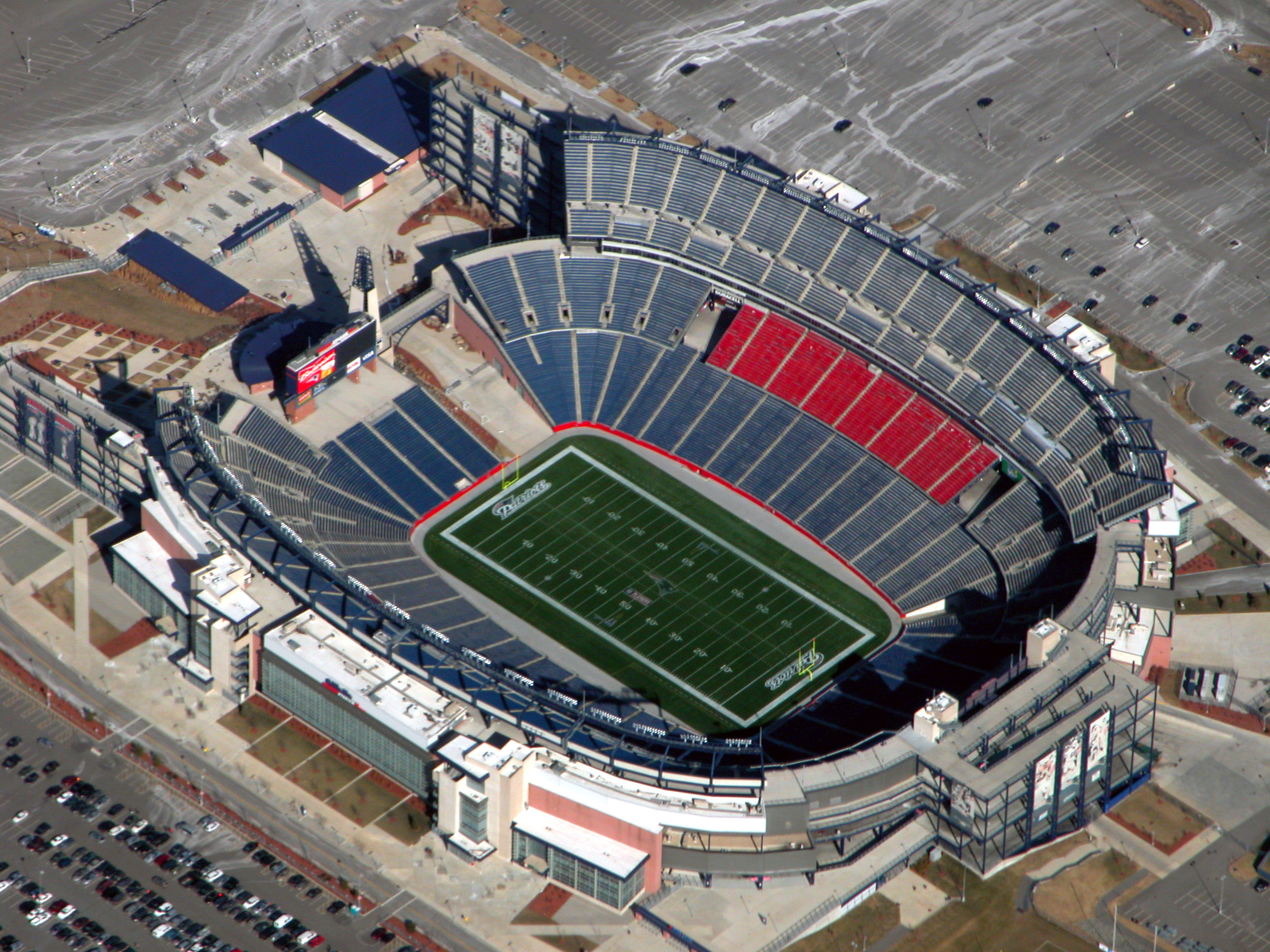
Start with the crowd. Boston Stadium hosted France twice already this summer, in the group-stage win over Norway and the round-of-32 win over Sweden, giving Les Bleus genuine on-field familiarity with the pitch and the tunnel. But Morocco's fan base has turned every single one of their matches this tournament into a de facto home game, most recently in Houston against co-host Canada, and New England sits close to some of the largest Moroccan diaspora communities in North America, filtered through Paris, Brussels, Amsterdam and Montreal as well as directly from Morocco. Expect Foxborough on Thursday to sound the way Lusail did in 2022 — like an away game for France, regardless of what a neutral venue technically means on paper.
Then there is Aurelien Tchouameni's fitness. He missed the Paraguay match with a groin issue, and while Deschamps has downplayed the severity, any lingering restriction on his ability to start or go 90 minutes forces changes to the exact midfield screen that lets France's front four play with freedom. Morocco's whole attacking approach — Ounahi driving from deep, Diaz operating between the lines — is built to exploit precisely the kind of midfield disruption a below-100-percent Tchouameni would create.
Rest is, refreshingly, a non-factor here rather than an edge for either side. Both teams played their round-of-16 matches on the same day, July 4, meaning both arrive in Foxborough on identical five-day turnarounds. Neither camp can point to a compressed recovery window as an excuse or an advantage — a rare instance in a congested 48-team World Cup schedule where the travel and rest calculus is a true wash.
Finally, there is the emotional weight sitting on each bench. For Deschamps, this is genuinely his last World Cup in charge, and every player in blue has spoken about wanting to send him out with one more deep run. For Morocco, nine players who were on the pitch in Lusail four years ago carry the specific memory of Theo Hernandez's early strike and Kolo Muani's 79th-minute sub goal breaking a semifinal Morocco had largely controlled territorially. Revenge is a dangerous word to lean on in football analysis, but motivation compounded by four years of waiting is a real, if unquantifiable, input — and it is not one FanDuel's algorithm is built to price.
Scenario one: France assert control early and the match never opens up
The base-case scenario, and the one closest to what the betting market is pricing, has France scoring first — likely inside the opening half hour, echoing Theo Hernandez's fifth-minute strike in Lusail. Against a France side with this much individual quality in the final third, an early goal changes Morocco's entire in-game calculus: instead of sitting in their preferred mid-block and picking counterattacking moments, Ouahbi's side would be forced to commit more numbers forward, opening exactly the kind of space Mbappe, Dembele and Doue are built to exploit in transition.
In this version of the match, France's superior squad depth and rotation options become decisive in the final 20 minutes, as fresh legs off the bench stretch a chasing Morocco side further. The most likely scoreline here is something in the 2-0 to 3-1 range for France, with Mbappe scoring given his tournament form and his -105 anytime-scorer price, and Morocco perhaps grabbing a consolation late if the game opens up as France manage a lead. This is the script Squawka's editorial prediction effectively backed, and it lines up cleanly with both the head-to-head history and France's superior attacking output across the tournament.
The case against this scenario actually playing out is Morocco's own defensive discipline in the biggest moments of this tournament. Against Brazil, against the Netherlands, and for long stretches against Canada, Morocco have shown they can go a full half or more without conceding a clear chance, even against elite opposition. If Morocco can replicate that discipline through the first 30 minutes on Thursday — the exact period when France have historically done their damage against them — this scenario collapses, and the game shifts toward scenario two.
Scenario two: Morocco replay the 2022 script, this time with a different ending
The second scenario is the one every Moroccan fan is hoping for and the one Morocco's own tournament history makes entirely plausible: a tight, low-event match built on Morocco's mid-block, patient buildup, and moments of individual quality from Ounahi, Diaz or Rahimi rather than sustained territorial control. In this version, Morocco absorb France's early pressure the way they absorbed it for long stretches even in the 2022 semifinal — where they hit the frame of the goal through Jawad El Yamiq's overhead kick and dominated large spells of possession despite losing 2-0 — and find a goal of their own before or after France's opener.
The most likely scoreline in this scenario is a 1-1 draw through 90 minutes, pushing the match into extra time and, given both teams' extra-time histories this tournament (Morocco's shootout win over the Netherlands, France having not yet needed extra time), potentially all the way to penalties. This is precisely the outcome our sister preview piece on this fixture landed on as its headline prediction, and the logic holds up under the numbers: Morocco's defense has been elite in low-event games, Bounou gives them a structural edge in a shootout that the to-advance odds may be underrating, and the emotional stakes of a revenge fixture tend to produce cagier, error-averse football from both benches rather than the open, high-scoring games France have produced against less battle-tested opposition.
The case against this scenario is discipline under sustained pressure. Morocco went the full 120 minutes plus a shootout against the Netherlands just five days before this match and playing from behind again would ask a lot of legs already tested to their limit in the round of 32. If Ounahi, Amrabat or the back line show any sign of fatigue in the final 20 minutes of normal time, France's superior squad depth becomes the difference-maker exactly when it matters most.

Scenario three: an open, high-scoring match with goals at both ends
The third scenario is the one the goals market is quietly leaning toward: a total over 2.5, with both attacks finding the net rather than one side grinding out a shutout. This is the SportsLine/Martin Green view, built on the observation that both teams have shown they can score in bunches — France's 14 goals across five matches, Morocco's 10 — and that a truly cagey, goalless-for-long-stretches match is actually the less statistically likely outcome given how open both sides' round-of-16 and group-stage matches were, Paraguay's defensive masterclass against France being the notable exception rather than the rule.
In this version, France's attacking quality eventually breaks through more than once, but Morocco's counterattacking structure — Ounahi's ball-carrying, Diaz's four-assist creativity, Rahimi's movement in behind — also produces at least one and possibly two goals of its own. A 3-2 or 3-1 France win, or even a wide-open 2-2 that pushes into extra time, would all satisfy this scenario, and all would represent a strong outcome for anyone who bet the over 2.5 goals line rather than trying to predict the exact winner.
The case against this scenario is simple: it requires Morocco's defense, the meanest unit left in the bracket outside France itself, to have an uncharacteristically loose night, something that has only happened once all tournament, against Haiti. Given how disciplined Morocco have been defensively against every other opponent, backing a genuinely open, high-event match is a bet on variance more than on either team's established pattern — reasonable as a goals-market play, riskier as a full match-outcome prediction.
Final verdict: what the numbers, the odds and the history actually point to
Strip away the emotion of the 2022 rematch narrative, and the data supports a specific, fairly narrow range of outcomes. France's attack is the best in the tournament by output, their round of 16 revealed a real if situational vulnerability against deep, disciplined defending, and their midfield platform carries a genuine fitness question mark around Tchouameni. Morocco's defense is the best in the tournament outside France's own, their counterattacking structure under new coach Mohamed Ouahbi is the most dangerous version of this team yet, and their goalkeeper has a shootout resume that no algorithm fully prices. Both sides arrive on identical rest. The crowd, on balance, tilts toward Morocco.
Given all of that, the market's -175 / +550 / +280 money line on FanDuel is a fair reflection of France's edge without being an overstatement of it, and the -420 to-advance number for France is the single figure on the board that looks most vulnerable to being too short, given how competitive Morocco were even in defeat in the 2022 semifinal and how much their shootout pedigree with Bounou has grown since. If there is value anywhere on this board for a numbers-driven bettor, it is less in picking a moneyline winner outright and more in the shape of the match: some combination of the over 2.5 goals total and Morocco's path to advancing via extra time or penalties, rather than a clean 90-minute win either way.
As for the actual scoreline: the weight of the statistical evidence — France's superior five-game output, their record against this exact opponent, home comfort at a stadium they have already scored four goals in this summer — favors a competitive France win, most likely somewhere in the 2-1 to 2-0 range across 90 or 120 minutes, with Mbappe involved in the outcome given his tournament form and market price. But the margin for error is thin enough, and Morocco's specific tools — Bounou, the counterattack, the crowd — sharp enough, that anyone treating this as a formality is not reading the same numbers this analysis just walked through.
Whatever the final whistle brings on Thursday at 4pm ET, both the stat sheet and the odds board agree on one thing: this is the tightest, best-matched contest of the entire quarterfinal round, four years of history compressed into ninety minutes, and worth watching regardless of which side of the number you land on.
Frequently asked
What are the odds for France vs Morocco in the 2026 World Cup quarterfinal?
On FanDuel Sportsbook's 90-minute money line, France are priced at -175, Morocco at +550, and the draw at +280. On the separate to-advance market, which includes extra time and penalties, France are -420 and Morocco +310. The over/under for total goals is set at 2.5.
Who is favored to win France vs Morocco?
France are the clear favorites according to sportsbooks and prediction markets alike. Kalshi's contract had France's regulation win at 62 percent, a draw at 25 percent, and a Morocco regulation win at 15 percent, reflecting France's superior five-game attacking output (14 goals scored, two conceded) against Morocco's still-strong but more frequently tested defense (10 goals scored, four conceded).
What is the best bet or prediction for France vs Morocco?
Expert predictions vary. Squawka's editorial pick backed a 2-0 France win with Mbappe among the scorers. SportsLine's Martin Green, who carries an 18-7 record on this tournament's picks, leaned toward the over 2.5 goals total. Statistically, France to win a competitive, low-margin match (2-1 or 2-0) is the base case, though Morocco's defensive record and Yassine Bounou's shootout pedigree make a draw-and-penalties outcome a live alternative.
How many goals have France and Morocco scored at the 2026 World Cup?
France have scored 14 goals in five matches and conceded just two, the best goal difference in the tournament (3-1 vs Senegal, 3-0 vs Iraq, 4-1 vs Norway, 3-0 vs Sweden, 1-0 vs Paraguay). Morocco have scored 10 goals in five matches and conceded four (1-1 vs Brazil, 1-0 vs Scotland, 4-2 vs Haiti, 1-1 vs Netherlands before a penalty-shootout win, 3-0 vs Canada).
How many clean sheets does Morocco have at this World Cup?
Morocco have kept two clean sheets in five matches, against Scotland (1-0) and Canada (3-0). They have conceded four goals total in the other three matches, including a 1-1 draw with Brazil and a 1-1 draw with the Netherlands that Morocco won on penalties.
Is Kylian Mbappe playing in France vs Morocco?
Yes, barring a last-minute setback. Mbappe has scored seven goals so far at this World Cup, a tally that matches Lionel Messi's total from the 2022 tournament, and is priced as the shortest anytime-goalscorer option on the board at around -105 odds.
Do both teams have equal rest before the quarterfinal?
Yes. Both France (beat Paraguay 1-0) and Morocco (beat Canada 3-0) played their round-of-16 matches on the same day, July 4, 2026, meaning both sides arrive in Foxborough on identical five-day rest with no scheduling advantage for either camp.
What is Aurelien Tchouameni's injury status?
Tchouameni missed France's round of 16 win over Paraguay with a groin issue. His fitness for the quarterfinal is one of the key X-factors: he anchors the midfield platform that allows Mbappe, Dembele and Doue to attack freely, and any restriction on his fitness plays directly into Morocco's counterattacking strengths through Ounahi and Brahim Diaz.
- FanDuel Sportsbook — France v Morocco odds, July 9 quarterfinal ↗
- CBS Sports / SportsLine — France vs Morocco odds, prediction, picks from an 18-7 expert ↗
- Squawka — France vs Morocco: World Cup 2026 quarterfinal prediction ↗
- FOX Sports — France vs Morocco prediction, odds, picks ↗
- ESPN — World Cup quarterfinals: how we got here, predictions, odds ↗
- Opta Analyst — Canada 0-3 Morocco stats, World Cup 2026 round of 16 ↗
- FIFA — Paraguay v France 0-1, round of 16 match centre and stats ↗
- YouTube (Betting Weekly Studios) — France vs. Morocco Predictions: odds, lines, props ↗
Video via official YouTube embeds; photos via Wikimedia Commons under their stated licenses. All rights belong to the respective owners; 212 Daily claims no ownership.