France vs Morocco: The Full Head-to-Head History Before the 2026 Quarterfinal
A rivalry with only six chapters
It is one of the strange facts of international football that France and Morocco, two countries linked by more shared history than almost any other pairing at this World Cup, have met on a senior football pitch only six times before Thursday's quarterfinal in Foxborough. Compare that to France's dozens of meetings with Spain, Italy, England or Germany, or Morocco's long-running rivalries with Algeria, Tunisia and Egypt, and the scarcity is striking. For decades, France and Morocco simply did not schedule each other very often — a mix of footballing calendars that rarely aligned, French reluctance in earlier decades to test itself against North African opposition outside of official competitions, and Morocco's own football priorities pointing toward continental and Arab competition rather than European friendlies.
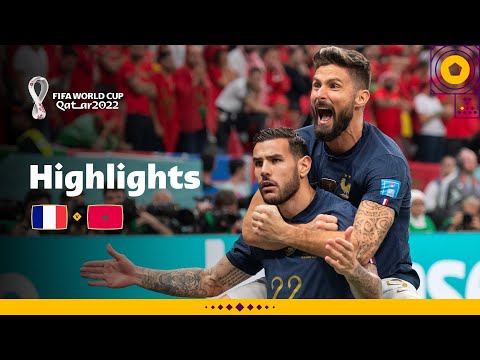
That changed permanently on December 14, 2022, when the two sides met for the first time in a competitive fixture that mattered more than all the previous friendlies combined: the World Cup semifinal in Lusail, Qatar. Everything before that night was prologue. Everything since has been shaped by it.
This piece lays out the full, verified head-to-head record — six matches, spanning 1988 to 2022 — and then goes deeper: into the 2022 semifinal itself, into the strange and little-remembered earlier meetings, into the colonial and migratory history that ties French and Moroccan football together at the level of players, families and identity, and into how both federations arrive at this rematch four years later.
The complete head-to-head record
Across the six confirmed meetings between the two nations, France have won four, Morocco have won one (via penalty shootout, after a draw), and there has been one draw in normal time. Here is every match in order.
February 5, 1988 — Tournoi de France: France 2-1 Morocco. The first-ever meeting between the two senior national teams, played as part of a mini-tournament hosted by the French federation. It was a low-profile friendly by modern standards, but it opened a fixture that would not resurface again for a decade.
May 29, 1998 — King Hassan II Cup, Casablanca: Morocco 2-2 France (Morocco won 6-5 on penalties). Played on Moroccan soil at the tournament named for the reigning monarch, this remains the single result Moroccan fans hold onto whenever the head-to-head record comes up. The match finished 2-2 after normal time, then went to a shootout that Morocco won 6-5 — with France's Vincent Candela missing the decisive spot kick. It is, to this day, the only time Morocco have gotten the better of France in any format.
January 20, 1999 — Friendly, Stade Vélodrome, Marseille: France 1-0 Morocco. Les Bleus, reigning World Cup champions at the time, restored order quickly, winning a tight friendly in Marseille — a city with one of the largest Moroccan-French communities in the country — courtesy of a Youri Djorkaeff goal.
June 6, 2000 — King Hassan II Cup: Morocco 1-5 France. The most one-sided result in the fixture's history. A France side stacked with the core of its 1998 World Cup and soon-to-be Euro 2000-winning squad — Thierry Henry, Youri Djorkaeff, Christophe Dugarry, Nicolas Anelka and Sylvain Wiltord all among the scorers — brushed Morocco aside 5-1. It remains by far the largest margin of victory either side has managed over the other.
November 16, 2007 — Friendly, Stade de France: France 2-2 Morocco. After a seven-year gap, the sides met again in Saint-Denis, just outside Paris, in front of a crowd that included a huge Moroccan-French following. Samir Nasri and Sidney Govou scored for France; Youssef Mokhtari and Tarik Sektioui replied for Morocco. It remains the only draw in normal time between the two nations.
December 14, 2022 — FIFA World Cup Semifinal, Lusail Stadium, Qatar: France 2-0 Morocco. The one that changed everything — covered in full detail below.
Add it up, and the ledger before Thursday's quarterfinal reads: six matches, France four wins, one draw, Morocco one win (on penalties). France have never lost to Morocco in normal time in a senior international, and Morocco have never beaten France in open play — their only victory came via the lottery of a penalty shootout in a mid-1990s regional tournament, not a World Cup or continental championship.
A note on sourcing, because the record is worth getting right: statistics services occasionally group the 1998 shootout result differently — some databases log it as a draw (reflecting the 2-2 scoreline after 90 minutes), others log it as a Morocco win (reflecting the outcome of the penalty competition, the way FIFA itself resolves knockout ties). Cross-referencing multiple football statistics archives and match-report outlets converges on the same six fixtures, the same scorelines and the same 4-1-1 breakdown when the shootout is credited as a Moroccan win, which is how it is most commonly presented and how this piece treats it.
1988-2000: two friendly powers testing each other
The early meetings between France and Morocco say as much about the eras they were played in as about the teams themselves. In 1988, France were a side rebuilding after the golden generation of Michel Platini had begun to wind down, still four years from qualifying for a major tournament again. Morocco, meanwhile, were the reigning standard-bearers of African football, having reached the World Cup in 1986 and topped their group ahead of England, Poland and Portugal — still, to date, one of the great overachievements by an African team at a World Cup. That first meeting in the Tournoi de France was a measuring stick for both.
The King Hassan II Cup meetings of 1998 and 2000 tell a more pointed story. The tournament, hosted in Morocco and named for its king, was designed partly as a showcase for Moroccan football on home soil and partly as a networking event for the Moroccan federation to test itself against major footballing nations without the stakes of a competitive fixture. Facing the reigning or soon-to-be world and European champions twice in three years — and beating them once, however it happened — was a significant marker for Moroccan football at the turn of the millennium, even if the 2000 rematch reasserted the gap between the sides in brutal fashion.
It's worth noting what these matches were not: they were not World Cup qualifiers, not competitive continental fixtures, and for large stretches they did not feature each side's full-strength squad. They were the kind of exhibition and preparation matches that shaped relationships between federations more than they shaped tables or trophies. But they mattered enormously in the moment, especially in Casablanca in 1998, where beating France — any France, in any format — in front of a home crowd carried real symbolic weight for a Moroccan football public.
The 2007 friendly at the Stade de France added a new texture: by then, the diaspora angle was undeniable. Playing in Saint-Denis, in a stadium a short drive from some of the largest Moroccan-French neighborhoods in the country, in front of a crowd that whistled the French anthem as loudly as it cheered on Morocco, previewed exactly the atmosphere that would define Qatar 2022 and, organizers expect, Thursday's rematch in Foxborough.
It is also worth flagging what did not happen in this window: no France vs Morocco meeting between 1988 and 2022 ever carried competitive stakes. There was no shared qualifying group — France plays its World Cup and European Championship qualifiers within UEFA, Morocco within CAF, so the sides were structurally kept apart outside of exhibition tournaments and scheduled friendlies. That is precisely why the 15-year gap between 2007 and the 2022 semifinal felt so seismic: two teams with a thin, mostly forgotten friendly history were suddenly thrown together with a World Cup final four on the line, and millions of fans on both sides discovering, almost in real time, that this had barely been a rivalry at all before it very suddenly became one of the most talked-about matches in the sport's history.
Lusail, December 14, 2022: the night that rewrote the fixture
Everything about the 2022 World Cup semifinal was historic before a ball was kicked. Morocco arrived having authored the most stunning run in the tournament's history: they topped a group containing Belgium and Croatia, beat Spain on penalties in the round of 16 with Yassine Bounou as the hero, and knocked out Cristiano Ronaldo's Portugal 1-0 in the quarterfinal. They were the first African team and the first Arab nation ever to reach a World Cup semifinal — a fact repeated so often that December that it had become a kind of incantation across the football world.
They were also missing key pieces. First-choice center back Nayef Aguerd did not start, still managing fitness issues, and Morocco lost the experienced Romain Saïss to injury early in the match, forcing defensive reshuffles against the run of play. It mattered almost immediately. In just the 5th minute, Theo Hernandez met a loose ball inside the box after Mbappé's shot was blocked, and scrambled home an acrobatic volley to put France ahead. It was the fastest possible gut-punch: Morocco, who had conceded only once in open play across the entire tournament before that point, were behind before they had settled into the game.
What followed was not capitulation — it was 85 minutes of some of the most defiant football of the tournament. With Saïss gone and Aguerd unavailable from the start, Morocco reorganized and went after the game. Jawad El Yamiq produced one of the images of the tournament, an audacious overhead kick that crashed off the post, agonizingly close to an equalizer that would have completely reshaped the match. Morocco controlled long stretches of possession and territory, pressed France into uncomfortable positions, and gave the French back line — for the first time all tournament — a genuinely torrid evening.
But football's cruelty has a way of punishing even brilliant performances that don't finish the job. In the 79th minute, France made a substitution: Randal Kolo Muani came on for his first involvement of the match. Forty-four seconds later, he had scored — sliding in at the far post to finish a move that began with a deflected Mbappé run, doubling France's lead and effectively ending Morocco's hopes in the same instant he entered the pitch. It remains one of the most efficient, and cruelest, substitute cameos in World Cup history.
France won 2-0, a scoreline that flattered them and understated how competitive the match had been. Morocco went on to lose the third-place match to Croatia and finished fourth overall — still, to this day, comfortably the best World Cup finish by any African nation in history. France advanced to the final and lost one of the greatest matches ever played, on penalties, to Lionel Messi's Argentina.
What elevated the night beyond the scoreline was everything wrapped around it. Achraf Hakimi, Morocco's captain, and Kylian Mbappé, France's talisman, were — and remain — club teammates at Paris Saint-Germain and close friends off the pitch. Images of the two embracing at the final whistle, and of Morocco's players turning to salute their traveling fans in defeat, became some of the defining photographs of the entire tournament. It was a match explicitly framed, in French and Moroccan media alike, as a collision of intertwined histories: colonizer and colonized, two peoples connected by more than a century of migration, and two teams that, on paper, had barely ever played each other.

Colonizer and colonized: the deeper history behind the fixture
No football rivalry exists in a vacuum, and few carry as much unspoken historical weight as France vs Morocco. From 1912 to 1956, Morocco existed as a French protectorate under the Treaty of Fez: the Moroccan sultan nominally retained his throne and institutions, but France controlled foreign policy, the military and economic development, installing a resident-general — first Hubert Lyautey — to oversee it all. The relationship was, by design, unequal. In 1953, France went so far as to exile Sultan Mohammed V to Madagascar in an effort to break the growing independence movement; it backfired spectacularly, turning the sultan into a unifying symbol of resistance. He returned in 1955, and full independence followed on April 7, 1956, when the Franco-Moroccan Joint Declaration formally ended the protectorate.
That 44-year colonial relationship reshaped Morocco's institutions, infrastructure, language and — inevitably — its sporting culture. French remains a working language of Moroccan administration and education to this day, and the football federations of both countries have always been aware of that shared, complicated inheritance. It is impossible to separate the emotional charge of a France-Morocco match from that history: for Moroccan fans, beating France carries a symbolic weight that facing, say, Portugal or Spain simply does not.
The other half of the story is migration, running in the opposite direction. Beginning in the 1960s and accelerating for decades afterward, hundreds of thousands of Moroccans emigrated to France for work, settling heavily in Paris, Marseille, Lyon and the industrial north. Today, France is home to one of the largest Moroccan diaspora communities in the world — commonly estimated at well over a million people of Moroccan origin — a population large enough that when the two teams have met, in 2007 and again in 2022, French stadiums have sounded like Moroccan home fixtures, with whistles for the French anthem and a wall of red-and-green support that unsettled French players by their own admission.
That migration has fed directly into both national team pools for decades, producing one of the more fascinating threads in international football: the same diaspora that fills French cities with Moroccan heritage also fills both France's and Morocco's senior squads, sometimes with players choosing one shirt over the other after years of recruitment battles between the two federations.
Shared blood, different shirts: the players caught between the two teams
The clearest embodiment of this dynamic is Achraf Hakimi himself. Born and raised in Madrid to Moroccan immigrant parents, developed entirely in Real Madrid's academy, Hakimi had a plausible path to Spain's national team. He chose Morocco instead, and by 2022 was captaining the side that reached a World Cup semifinal — becoming, in the process, one of the most recognizable footballers on the planet and a symbol of the modern Moroccan football project. His friendship with Mbappé, forged at PSG, turned that Lusail semifinal into personal theater layered on top of the historical one.
The traffic has flowed the other way too, repeatedly. Adil Rami, born in Bastia to Moroccan parents, held dual citizenship and was approached by Morocco boss Henri Michel ahead of the 2008 Africa Cup of Nations — an offer Rami turned down, choosing instead to pursue France, for whom he debuted in 2010 and later won the 2018 World Cup as a squad member. Younes Kaboul, born in eastern France to parents who had emigrated from Morocco, made the same choice, earning five caps and a goal for Les Bleus in 2011 rather than representing his parents' homeland. And as recently as 2018, Arsenal midfielder Mattéo Guendouzi — whose father is Moroccan — was personally approached by then-Morocco coach Hervé Renard about switching allegiance; Guendouzi ultimately committed to France, going on to reach the 2022 World Cup final with Les Bleus.
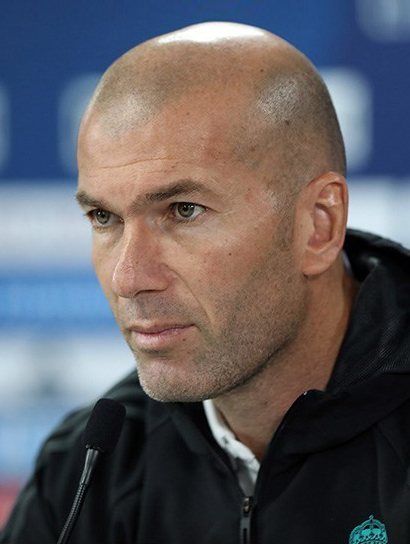
It is worth being precise here, because the two heritages are often conflated in casual conversation: Zinedine Zidane, France's greatest modern footballing icon, is not of Moroccan descent. His parents, Smaïl and Malika Zidane, emigrated to Marseille from the Kabylia region of Algeria — a Berber-speaking area in the country's north — arriving in France in 1953, before the Algerian War of Independence. Zidane has spoken with pride throughout his career about his Kabyle Algerian roots. The broader point, though, still stands: Zidane's career is part of the same larger story as Hakimi's, Rami's and Guendouzi's — generations of North African, or Maghrebi, immigration to France producing footballers who became era-defining figures for the French national team, alongside others (like Karim Benzema, also of Algerian descent) whose relationships with the federation have at times been fraught.
Morocco, for its part, has also pulled talent away from France's youth pipelines rather than the other way around — precisely the reverse of the Hakimi story. Marouane Chamakh, Sofiane Boufal, Amine Harit and Youssef El-Arabi all came through French football but ultimately built their senior international careers with Morocco rather than France. The recruitment battles run in both directions, and the same population of French-born, Moroccan-heritage players has, over two generations, stocked both benches in this fixture — which is part of why a match with only six previous meetings can feel, to the players involved, like the most personal fixture of the tournament.


Zidane, Kabylia and the wider Maghrebi thread in French football
It is tempting, whenever France and Morocco share a headline, to reach for Zinedine Zidane as shorthand for the connection — and the temptation is understandable, given how central he is to French football's global image and how often his North African roots are mentioned in the same breath as any Maghrebi football story. But the accurate version matters: Zidane's heritage runs through Algeria, specifically the Kabyle Berber region of Béjaïa, not Morocco. His father Smaïl worked as a warehouseman and night-shift security guard after settling in Marseille's La Castellane neighborhood, and Zidane has repeatedly credited that upbringing — tough, proud, unmistakably shaped by Kabyle identity — for the player and person he became.
That distinction doesn't diminish the wider point; if anything, it sharpens it. French football's modern history is inseparable from Maghrebi immigration in general, not just Moroccan immigration specifically. Algerian heritage runs through Zidane and Karim Benzema. Tunisian heritage runs through several more recent internationals. Moroccan heritage runs through Rami, Kaboul and Guendouzi, among others. Each thread is distinct, tied to different colonial histories, different waves of migration and different political relationships with Paris — Algeria's war of independence left scars that Morocco's comparatively negotiated exit from the protectorate did not. Lumping them together erases those differences.
What unites them is the outcome: a French national team that, for the last three decades, has fielded some of its most decisive players from families that trace back to North Africa, playing against opponents — Algeria in friendlies, Tunisia occasionally, and now Morocco in the biggest possible stage — who are, in a very literal sense, home to the extended families of some of their own squad members. Few fixtures in world football carry that particular texture, and few fanbases understand it as instinctively as France's and Morocco's do.
Two very different paths back to each other in 2026
Four years on from Lusail, both federations arrive at Boston Stadium having taken markedly different roads. Morocco's is a story of continuity and change at once: the emotional and tactical spine of the 2022 side — Yassine Bounou, Achraf Hakimi, Sofyan Amrabat — remains intact, but the architect of the Qatar miracle, Walid Regragui, resigned in March 2026 after 49 matches in charge, and the team is now led by Mohamed Ouahbi, fresh off winning the 2025 FIFA U-20 World Cup with Morocco's junior side. Morocco arrive in Foxborough unbeaten in 34 consecutive internationals, reigning Africa Cup of Nations champions, ranked seventh in the world — the highest in African football history — having demolished co-hosts Canada 3-0 in the round of 16 behind a Azzedine Ounahi brace and a Soufiane Rahimi finish.
France's road has been one of ruthless continuity under Didier Deschamps, now in the final tournament of his historic tenure. Les Bleus have won all five of their matches so far, scoring fourteen goals and conceding only two, with Kylian Mbappé — now France's all-time leading scorer and playing his club football at Real Madrid — driving nearly every important moment, including the penalty that dispatched Paraguay 1-0 in the round of 16.
The head-to-head record, on its own, favors France overwhelmingly: four wins to Morocco's one shootout win, and not a single defeat for Les Bleus in normal-time play across six meetings spanning 38 years. But records like that have been overturned before, and nothing about Morocco's 2022 run — or their form since — suggests a team that treats history as destiny. The two nations built this fixture's history slowly, six matches over thirty-eight years. On Thursday, in front of one of the loudest, most emotionally invested crowds of the entire tournament, they add a seventh chapter — and, for Morocco, a chance to finally answer the one result that has eluded them for nearly four decades: a win over France that isn't decided on penalties.
There is a wider context to weigh, too. No African nation has ever reached a World Cup final, and Morocco's 2022 semifinal remains the closest any African side has come. A repeat run to the final four — let alone further — would not just settle an old score against France; it would cement the idea that the 2022 breakthrough was the start of a genuine era for Moroccan football rather than a single golden generation's peak. For France, a nation that has reached the final in each of the last two World Cups and is playing out Didier Deschamps' farewell tournament, the calculus is almost the mirror image: a win extends arguably the most successful sustained run in the country's football history, while a loss would hand Morocco their first-ever victory over Les Bleus at the worst possible moment for French football to absorb it. Both framings can be true at once, which is a large part of why this particular rematch, built on a six-match history that barely qualifies as a rivalry on paper, has become one of the most anticipated fixtures of the entire 2026 World Cup.
Frequently asked
What is the head-to-head record between France and Morocco in football?
Before the 2026 World Cup quarterfinal, France and Morocco had met six times: France won four (1988, 1999, 2000, 2022), there was one draw in normal time (2007), and Morocco won once via penalty shootout after a 2-2 draw (1998). France have never lost to Morocco in normal time.
Has Morocco ever beaten France?
Yes, once — on May 29, 1998, at the King Hassan II Cup in Casablanca. The match finished 2-2 after normal time, and Morocco won the penalty shootout 6-5, with France's Vincent Candela missing the decisive kick. It remains Morocco's only victory over France in any format, and their only success came via a shootout rather than in open play.
What happened in the biggest France vs Morocco win?
The largest margin in the fixture's history came on June 6, 2000, at the King Hassan II Cup, when France won 5-1. Thierry Henry, Youri Djorkaeff, Christophe Dugarry, Nicolas Anelka and Sylvain Wiltord all scored for a France side built around its 1998 World Cup-winning core.
When did France and Morocco first play each other?
Their first meeting was on February 5, 1988, at the Tournoi de France, a friendly tournament hosted by the French federation. France won 2-1.
What happened in the 2022 World Cup semifinal between France and Morocco?
France won 2-0 in Lusail on December 14, 2022. Theo Hernandez volleyed France ahead in the 5th minute, and substitute Randal Kolo Muani scored just 44 seconds after coming on, in the 79th minute. Morocco, missing Nayef Aguerd from the start and losing Romain Saiss to injury early, still hit the post through Jawad El Yamiq's overhead kick and were competitive for the rest of the match. It was the first African and first Arab nation ever to reach a World Cup semifinal.
Is Zinedine Zidane of Moroccan descent?
No. Zidane's parents, Smail and Malika Zidane, emigrated to Marseille from the Kabylia region of Algeria in 1953. Zidane is of Algerian Kabyle Berber heritage, not Moroccan — a distinction often blurred in casual references to France's North African football connections.
Which France players are of Moroccan descent?
Adil Rami (2018 World Cup winner, born to Moroccan parents in Bastia), Younes Kaboul (five caps, born to Moroccan immigrant parents) and Mattéo Guendouzi (2022 World Cup finalist, whose father is Moroccan) are among the clearest documented examples of France internationals with Moroccan heritage who were courted by, or considered, Morocco before choosing Les Bleus.
What is the historical relationship between France and Morocco?
Morocco was a French protectorate from 1912 to 1956 under the Treaty of Fez, with France controlling foreign policy and the military while the sultan retained nominal sovereignty. Independence followed in 1956 after Sultan Mohammed V's exile and return became a unifying national cause. Large-scale Moroccan emigration to France began in the following decades, and today France is home to one of the largest Moroccan diaspora communities in the world.
Have France and Morocco met in a World Cup before 2026?
Yes, once — the December 14, 2022 semifinal in Qatar, which France won 2-0. That is the only competitive fixture between the two nations; every other meeting has been a friendly or a regional exhibition tournament like the King Hassan II Cup.
- Sports Mole — France vs. Morocco: head-to-head record and past meetings ↗
- SI.com — France vs. Morocco: complete head-to-head record ↗
- Sky Sports — World Cup 2022: France 2-0 Morocco match report ↗
- Wikipedia — French protectorate in Morocco ↗
- Wikipedia — Adil Rami ↗
- Morocco World News — Matteo Guendouzi rejects the Moroccan team once and for all ↗
- Wikipedia — Zinedine Zidane ↗
- Wikipedia — Achraf Hakimi ↗
Video via official YouTube embeds; photos via Wikimedia Commons under their stated licenses. All rights belong to the respective owners; 212 Daily claims no ownership.