Scouting France: The Strengths and Flaws Morocco Must Exploit in the Boston Quarterfinal
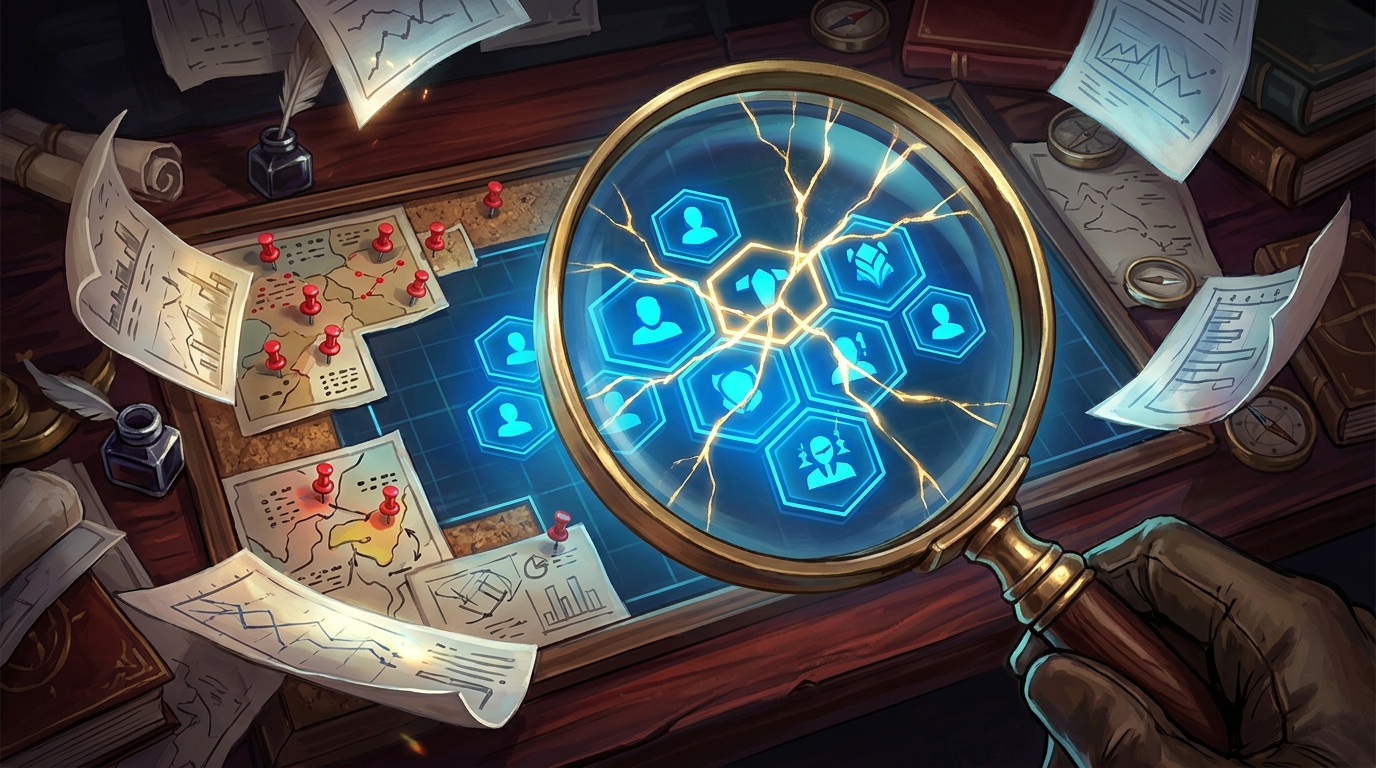
Reading the scouting file: five wins, one warning sign
Strip away the emotion of the Lusail rematch storyline for a moment and look only at the numbers. France have played five matches at this World Cup and won all five: 3-1 over Senegal, 3-0 over Iraq, 4-1 over Norway, 3-0 over Sweden, 1-0 over Paraguay. Fourteen goals scored, two conceded, never more than a single goal let in on any night. By any conventional measure, this is the most efficient knockout run of Deschamps' entire twelve-year reign, and it arrives at the exact moment he has confirmed will be his last tournament in charge.
But scouting reports are not built on scorelines alone, and anyone who has actually watched all five of those matches closely will tell you the same thing: France have not yet been forced to solve a problem. Senegal, Iraq, Norway and Sweden all, to varying degrees, tried to play with France rather than against them — pressing high, leaving space in behind, inviting the exact transition game that this squad is built to punish. Paraguay, in the round of 16, tried something different. They sat deep, compressed the space between their own lines, and simply refused to engage. For over an hour, it worked.
That one data point matters enormously for Morocco, because Mohamed Ouahbi's team is, structurally, the best version of a low, disciplined block that France have faced all summer — with the added, crucial difference that Morocco can actually hurt France on the counter in ways Paraguay never threatened to. Understanding France properly means holding two true things in your head at once: this is a devastatingly talented team that has scored freely all tournament, and it is also a team with a clearly diagnosed method for slowing it down. Both are real. Both matter on Thursday.
What follows is the full scouting breakdown: the attacking talent that makes France favorites, the defensive record and personnel behind it, the proven vulnerability against compact defending, the fragility in central midfield now that this generation's great orchestrator is gone, and finally, a clear answer to the only question that matters for Moroccan fans — where, specifically, does this team break?
The front four: Mbappe, Dembele, Olise and Barcola
Start with the obvious, because it is obvious for a reason. Kylian Mbappe, now captaining France and playing his club football at Real Madrid rather than PSG, has been the tournament's most destructive individual force. Seven goals in five matches has pulled him level with Lionel Messi at the top of the race for the Golden Boot, and his goal against Paraguay — the 70th-minute penalty that settled the round of 16 — was his nineteenth career World Cup goal and his eleventh in a knockout-round match, both records that stand alone in the history of this competition. Mbappe does not need space to create danger; he manufactures it, in behind a high line, in a half-yard of separation inside the box, from a standing start in a crowded penalty area. Every Moroccan defender on the pitch on Thursday will know exactly what he is capable of, because Achraf Hakimi has trained against him every day at club level for years.
Around him sits arguably the deepest attacking supporting cast at this entire World Cup. Ousmane Dembele arrives as the reigning Ballon d'Or winner and has been every bit as dangerous as that award suggests, capped by a first-half hat-trick against Norway in the group stage — a joyous, chaotic burst of individual quality that terrorized a Norwegian back line for forty-five minutes. Michael Olise, now the tournament's most productive creative outlet by several metrics, has quietly been as important to this run as anyone not named Mbappe; his pass set up the equalizer against Senegal, and Opta's advanced models rate him among the very best pure playmakers left in the draw. Bradley Barcola, still only in his early twenties, offers a different kind of threat entirely — searing pace in behind on the opposite side, the kind of runner who forces a back line to retreat ten extra yards just by standing on the shoulder of the last defender.
What makes this front line so difficult to plan for is the interchange. Deschamps does not ask these four players to stay in their lanes. Dembele drifts inside from the right, Olise pops up between the lines as a auxiliary playmaker as much as a winger, Barcola can play through the middle in a pinch, and Mbappe roams across the entire width of the final third looking for the one gap that ends the game. Morocco's back four and double pivot will spend Thursday afternoon being asked constant, uncomfortable positional questions, because no single marking scheme covers all four of these players at once.
The cumulative attacking data backs up the eye test. France have generated significantly more expected goals than Morocco across this tournament and lead the competition in direct attacks completed — the fast, vertical sequences that turn defensive transition into a goal in under ten seconds. This is precisely the version of France that has taken apart Senegal, Iraq, Norway and Sweden: quick, vertical, ruthless in the final third the moment space opens. It is also, not coincidentally, the version of France that a disciplined, compact, patient defense is built to frustrate — which is exactly what happened next.
There is also a physical dimension to this front four that scouting reports sometimes underrate. Dembele and Barcola both carry genuine top-end speed over the first ten to fifteen yards, which means a defensive line cannot simply sit off and absorb pressure the way it might against a slower, more positional attack; any hesitation in stepping to a ball carrier invites a run in behind that Morocco's center-backs will need to time perfectly rather than react to. Mbappe adds a third dimension again — the strength and balance to hold off a defender in a foot race rather than merely outrun him, which is why fouling him cleanly, rather than lunging, has become its own tactical sub-plot for every defense France have faced this summer. Managing that physical profile for ninety minutes, not just the moments when the ball is live in the final third, is its own quiet challenge for Morocco's back line.

Bench firepower: Doue, Cherki and Mateta waiting in the wings
Depth is where this France squad separates itself from almost every other team left in the draw, and it is a real problem for any opponent planning to defend for ninety minutes. Desire Doue, the PSG forward who has been a persistent menace between the lines all tournament, won the penalty that decided the Paraguay match with a driving run into the box in the 70th minute — precisely the kind of impact substitution or rotation option that turns a stalemate into a French win. Rayan Cherki offers a different profile again: a genuine improviser, comfortable running at set defensive shapes and capable of the kind of individual moment that a low block has no structural answer for. Jean-Philippe Mateta, a physical, aerially dominant target man, gives Deschamps an entirely different attacking silhouette to switch to if the ground game stalls — a look Morocco's compact center-back pairing has not really had to defend against yet this summer.
This matters specifically because of how the Paraguay game unfolded. France went into the last twenty-five minutes of a scoreless round-of-16 tie and simply had more good options to bring on than their opponent had energy to keep defending against. Doue's introduction, and his subsequent penalty, was not an accident; it was the depth of this squad doing exactly what it is built to do in a tight knockout match. Morocco's bench, while talented, does not have the same sheer number of match-defining attacking options to call on in the final half hour — which raises the stakes on Ouahbi's men getting the job done, or at least staying level, inside normal time.
For Morocco's coaching staff, the practical implication is blunt: containing France for sixty minutes is not the same as containing France for ninety. Deschamps has repeatedly shown at this tournament that he is willing to use his bench aggressively and early when a game is not being won comfortably, rather than waiting passively for a mistake. If Morocco's low-block plan is working at the hour mark, expect fresh legs and fresh attacking angles to arrive from the French bench within minutes — and expect the introduction of Doue, Cherki or Mateta to be the moment the whole complexion of the match can flip.
The back line: Saliba's fitness, Konate, Upamecano and the full-backs
France's defensive record at this World Cup is genuinely elite: two goals conceded in five matches, and never more than one in any single game. The spine of it is William Saliba, the Arsenal center-back widely regarded as the best young defender in world football — composed on the ball, dominant in the air, and rarely beaten in a footrace. But Saliba's tournament has not been entirely clean. He has been managing a persistent back issue throughout the campaign, serious enough that French reports have discussed the possibility of surgery once the World Cup is over, even as Deschamps has continued to select him and publicly played down concerns over his week-to-week availability. A center-back carrying that kind of physical load into a fourth high-intensity match in under two weeks is not a crisis for France, but it is a genuine variable — and variables are exactly what Morocco's front three should be probing for from the opening whistle.
Alongside Saliba, Deschamps has rotated between Ibrahima Konate and Dayot Upamecano, with Maxence Lacroix as further cover — a center-back pairing that, on paper, is as physically imposing and technically composed as almost any left in the tournament. Jules Koundé has been one of the standout right-backs of the whole World Cup, comfortable both defending in a back four and stepping into midfield to help France control possession in transition. On the left, Deschamps has options in Lucas Digne and Theo Hernandez — the latter still fresh in Moroccan memory as the man whose fifth-minute volley set the tone for the entire 2022 semifinal in Lusail. Malo Gusto and Lucas Hernandez provide further rotation depth. Mike Maignan starts in goal, France's undisputed number one since Euro 2024 and a serious, commanding presence in his own box.
Put together, this is not a defense with an obvious individual weak link — which is precisely why France have conceded so little. Where the vulnerability lives is structural rather than personal: a back line built and drilled for a high, aggressive line that squeezes space and invites transition duels is, by definition, a back line that is less comfortable holding a deep, patient defensive shape of its own when France do not have the ball for long stretches. Saliba's fitness question adds a layer of real uncertainty on top of that structural profile — not a guaranteed opening, but a genuine one worth Morocco's front line testing early and often, particularly with sustained direct running at his channel rather than one-off long balls he can read and clear.

The proven weakness: France against a deep, disciplined block
This is the single most important tactical fact in this entire preview, and it comes with hard evidence rather than speculation: France have a demonstrated, repeatable problem breaking down a team that refuses to chase the ball and instead sits compact behind it. The proof is the round of 16 against Paraguay in Philadelphia. France dominated the ball to an almost absurd degree — roughly 79 percent possession to Paraguay's 21 — and for well over forty-five minutes could not manufacture a single shot on target. Paraguay simply packed their own half, denied central passing lanes, and dared France to find a way through numbers rather than through the transition speed this team thrives on. For a stretch that spanned most of the first hour, France looked, in the words of more than one match reporter who covered it, human rather than unstoppable.
The pattern was not really about Paraguay's individual quality; France were comfortably the better team in every conventional sense and eventually won 1-0. It was about method. When forced to build patiently against a low block, France's transition from defense to attack was repeatedly interrupted rather than fluid, their final ball lacked the incisiveness that had torn open Senegal, Iraq, Norway and Sweden, and — tellingly — visible frustration crept into their play as the clock ticked past the hour mark without a breakthrough. The winning goal did not come from a sustained passage of open-play combination play at all; it came from a penalty, awarded after Desire Doue was fouled driving into the box in the 70th minute. Removed that single refereeing decision, and France's night against a compact defense looks considerably shakier.
The Senegal match, right at the start of the tournament, offers a smaller but related warning sign. Deschamps' side were, in the words of match reports from that night, miles off it in the first half — sluggish, disjointed, and actually second best for long spells, with Senegal hitting the post through Nicolas Jackson and Ismaila Sarr somehow failing to convert a golden chance from six yards in first-half stoppage time. France did not truly take control of that match until well into the second half, when fresher legs and rotation — Barcola's introduction, a driving Rabiot throughball — finally broke the game open. It was not a low-block performance from Senegal in the pure defensive sense, but it is further evidence of the same underlying theme: this France team can take an uncomfortably long time to find its rhythm against opposition that competes with it rather than simply trying to trade chances.
Put these two data points together and a clear picture emerges. France's devastating numbers this tournament — fourteen goals in five games, the most direct attacks completed of any team left in the draw — are overwhelmingly a product of games played at a tempo France controls. The moment an opponent removes that tempo, either by sitting deep and compact like Paraguay or by simply matching France's intensity and refusing to be bullied early like Senegal, this attack has to work far harder for far less reward. Morocco, under Ouahbi, have built exactly the kind of compact, disciplined defensive platform that produces this effect — and unlike Paraguay, they have the individual quality in Ounahi, Diaz and Rahimi to make France pay on the counter while they wait for the door to open.
It is also worth noting what did not happen against Paraguay, because it is instructive for Thursday. France did not respond to the stalemate by going route one, or by simply hammering crosses into the box and hoping Mbappe's aerial ability settled it — they kept trying to work the ball through central areas, patiently and then increasingly urgently, exactly the approach that Morocco's compact shape is designed to swallow. If Ouahbi's team can replicate that same central density without conceding the wide areas cheaply, France may once again find themselves searching for answers through the same narrow channel that took them the better part of an hour to solve against a considerably less talented Paraguay side.
Midfield without Griezmann: the Kone-Rabiot pivot and Tchouameni's fitness
If the low-block problem is France's tactical weakness, the personnel weakness sits one line further back, in central midfield — and it has a name attached to it that is impossible to avoid: Antoine Griezmann. For nearly a decade, Griezmann was the connective tissue of every good French team, the player who dropped deep to collect the ball under pressure, who slowed the game down when it needed slowing and sped it up when it needed speeding up, who gave Deschamps a genuine deep-lying creative orchestrator rather than simply a destroyer in the pivot. Since his international retirement, France have not found a like-for-like replacement — not because the talent pool is thin, but because that specific skill set, control of tempo through subtle, unhurried passing under pressure in deep and half-space areas, is rare by nature.
Aurelien Tchouameni was supposed to be the closest thing to an answer this tournament, the ball-progressing pivot who can both break up opposition attacks and start France's own with a clean, forward-thinking pass. But Tchouameni's route to Boston has been compromised. He picked up a groin and adductor issue in training on July 3, shortly after the round of 32 win over Sweden, and it kept him out of the Paraguay match entirely. He has since returned to partial training, but as of the build-up to the quarterfinal his availability from the opening whistle remained a genuine doubt rather than a formality — exactly the kind of uncertainty a team wants to avoid heading into the biggest match of its tournament so far.
In Tchouameni's enforced absence against Paraguay, Deschamps paired Manu Kone with Adrien Rabiot in the double pivot, and it is a reasonable bet that the same combination — or something close to it — lines up if Tchouameni is not risked from the start on Thursday. Kone and Rabiot are both excellent, high-energy, tactically disciplined midfielders in their own right. Neither of them, however, is a natural creative fulcrum in the Griezmann mould: their games are built around covering ground, winning duels and moving the ball efficiently rather than unlocking a stubborn defense with a single inspired pass through the lines.
This is precisely why the Paraguay match played out the way it did. With no Tchouameni, and no Griezmann-type presence to slow the game and pick a lock patiently, France's route through a compact defense became almost entirely reliant on individual moments from the front four rather than midfield construction — which is exactly the profile of attack that a well-organized, patient defensive block is built to survive. If Morocco can force this quarterfinal into the same kind of grinding, low-tempo, no-easy-transitions match that Paraguay forced, France's central midfield — whether it is Tchouameni-Rabiot or Kone-Rabiot on the day — is the single most exploitable link in the entire team.

Olise's rise and the limits of an advanced playmaker
It would be unfair to the current squad to suggest France have found no answer at all to the loss of Griezmann's creativity — because in Michael Olise, they may genuinely have found their best pure playmaker of the post-Griezmann era. Olise's numbers this tournament are outstanding: by several advanced metrics he has been rated among the single best creative players left in the draw, and his assist for Mbappe's equalizer against Senegal showed exactly the vision and technique that made Bayern Munich's move for him look shrewd within months of it happening.
But there is an important distinction between Olise's creativity and the kind Griezmann used to provide, and it matters enormously for how France cope with a low block. Olise operates predominantly in advanced, wide-to-central zones — the final third, between the opposition's midfield and defensive lines, where his end product does the damage. Griezmann's value was different: it was in build-up, in the deep and half-space areas where a team either finds a way to break defensive lines patiently or does not. Olise cannot be in both places at once, and neither can any other single player in this squad. The gap he cannot fill is precisely the gap that opened up against Paraguay: nobody dropping in to receive under pressure from two markers, slow the tempo, and thread a defense-splitting pass from deep rather than a final one.
For Morocco, the tactical implication is specific. Defending Olise in the final third — where he is at his most dangerous — is a job Ouahbi's back four and holding midfielders already understand, because it is a version of a threat Morocco have faced from talented wide creators all tournament. The bigger defensive discipline required of Morocco is further back: staying compact and patient through the middle of the pitch long enough that France's midfield, without a Griezmann-type conductor, is forced into the exact kind of low-reward, low-tempo possession that produced forty-five goalless minutes against Paraguay.

Deschamps' final tournament and the psychological subplot
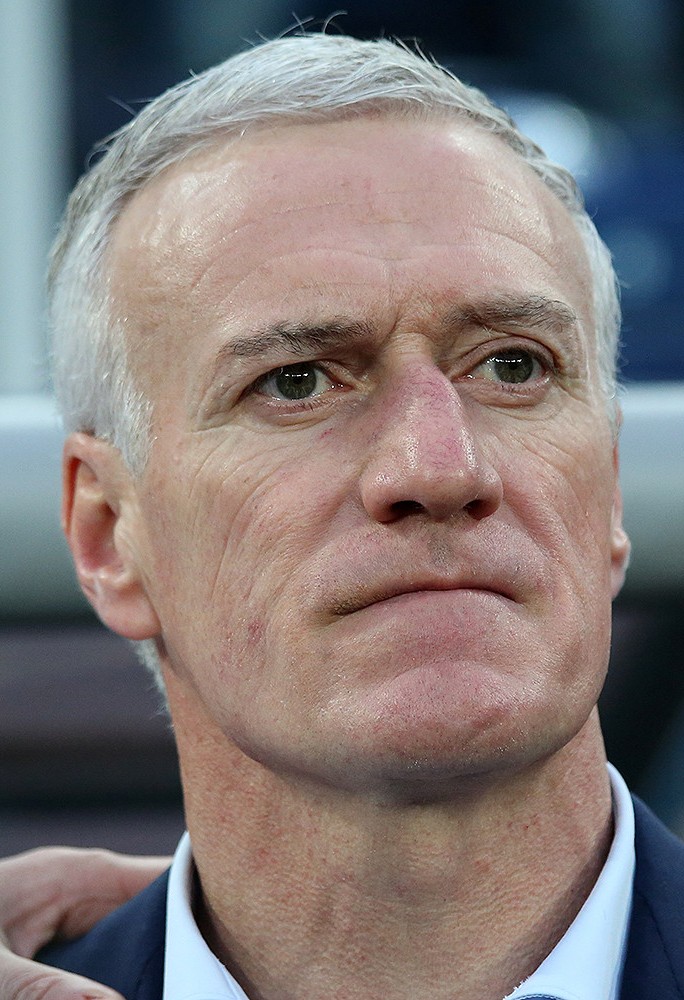
There is a human dimension to this scouting report that cannot be reduced to a stat sheet, and it may matter as much as anything on the pitch. Didier Deschamps announced back in January 2025 that this World Cup would be his last as France coach, closing out more than a decade in charge that has already delivered one title, in 2018, and a runner-up finish in 2022. Every match now carries a note of finality that did not exist for him at any previous tournament, and his players have spoken throughout this campaign about wanting to send him out with one final deep run, or better.
That context cuts both ways as a psychological factor. On one hand, a squad playing for a beloved, departing manager can find an extra gear of application and cohesion — the kind of intangible edge that has carried plenty of teams through knockout football before. On the other, the weight of a farewell tour, and the accumulated fatigue of five matches in a compressed World Cup schedule with essentially no rest, is a real load to carry into a quarterfinal against an opponent playing with nothing to lose and an entire continent's momentum behind them. France have looked the part of a hardened, battle-tested team all summer. They have not yet had to do it with genuine desperation in their own ranks, because they have not yet trailed in a knockout match.
Deschamps himself has been notably respectful in his public comments heading into this match, treating Morocco as clearly the toughest test of the tournament so far rather than a formality before a semifinal. That tone from the top of the camp is itself informative: this is not a French squad that considers the job against Morocco anything less than a genuine fight, and it suggests the coaching staff is well aware of exactly the vulnerabilities laid out in this report — the low-block problem, the midfield uncertainty, Saliba's fitness — even if none of it has been said explicitly in public.
Where Morocco's best route through France actually lies
Put the entire scouting file together and a specific, actionable plan emerges — not a hope, but a plan built on what France have actually shown across five matches. First: do not open the game up. Every French strength discussed in this report — Mbappe's runs in behind, Dembele and Barcola in transition, the direct-attack numbers that lead the tournament — depends on space and tempo that Morocco controls. Ouahbi's compact defensive platform, the same one that has conceded almost nothing in open play across this campaign, is the correct starting shape, and Sofyan Amrabat's screening role in front of the back line is the single most important individual defensive assignment on the pitch.
Second: attack the areas France's personnel report flags as uncertain. Saliba is managing a real physical issue and has not been tested by sustained, direct running from a fast, technical front line all tournament — Morocco's attackers, with their movement and combination play, are precisely built to ask that question repeatedly rather than once. If Tchouameni is absent or restricted, or even if he plays but is short of full sharpness, the Kone-Rabiot or Tchouameni-Rabiot pivot lacks the deep creative control that a patient Moroccan midfield, built around Amrabat's destruction and Ounahi's ball-carrying, can be organized to squeeze.
Third, and most important: be Paraguay with better players. Paraguay proved the blueprint — sit deep, deny central lanes, refuse to chase the game, and France's rhythm cracks. But Paraguay had almost no way to hurt France once they won the ball back, which is why France's pressure eventually told and the penalty arrived. Morocco do not have that problem. Ounahi's late midfield runs, Diaz's tournament-record creative output, Rahimi's movement in behind, Hakimi's timed overlaps — this is a compact defensive block with a genuine, repeatable counter-attacking weapon attached to it, which is a version of resistance nobody has yet shown France at this World Cup.
Fourth: survive the first twenty minutes. Every strength in this report compounds if France score early and Morocco are forced to chase; every weakness in this report compounds the longer the match stays goalless, because patience and frustration are directly connected to France's low-block problem and their midfield's lack of a calming influence. The Lusail lesson from 2022 — Theo Hernandez's fifth-minute volley flipping the entire complexion of that semifinal — is the one piece of history Morocco's back line cannot afford to repeat.
None of this guarantees anything. France remain, on pure individual quality, arguably the most dangerous team left in this World Cup, and their defensive record speaks for itself. But scouting reports are not about certainty; they are about where the door might open a crack. Against this specific French team, in this specific moment — Saliba's back, Tchouameni's groin, no Griezmann, a proven struggle against patient defending — that crack is real, and it is exactly where Morocco should be aiming every attacking thought on Thursday afternoon.
Frequently asked
What is France's biggest weakness heading into the Morocco quarterfinal?
France's clearest proven weakness is breaking down a deep, disciplined defensive block. Against Paraguay in the round of 16, France had roughly 79 percent possession but went more than 45 minutes without a shot on target, eventually needing a 70th-minute penalty to win 1-0. A compact, patient Morocco team is built to trigger the same problem.
Is Aurelien Tchouameni fit to play against Morocco?
Tchouameni's fitness was a genuine doubt heading into the quarterfinal. He suffered a groin and adductor issue in training on July 3, missed the round of 16 win over Paraguay entirely, and returned only to partial training afterward. If he is unavailable or eased in, Manu Kone is expected to partner Adrien Rabiot in central midfield, as he did against Paraguay.
Does William Saliba have an injury concern?
Saliba has been managing a persistent back issue throughout the tournament, serious enough that French reports have discussed possible surgery after the World Cup. Deschamps has continued to select him and downplayed concerns over his week-to-week availability, but the physical load is a real variable heading into a fourth high-intensity match in under two weeks.
Who are France's key attacking players at the 2026 World Cup?
Kylian Mbappe leads the line with seven goals, tied with Lionel Messi for the tournament's Golden Boot race. He is flanked by reigning Ballon d'Or winner Ousmane Dembele, creative outlet Michael Olise and pacey forward Bradley Barcola, with Desire Doue, Rayan Cherki and Jean-Philippe Mateta providing high-quality options from the bench.
Why is France's midfield considered a weak point without Antoine Griezmann?
Since Griezmann's international retirement, France have lacked a genuine deep-lying creative orchestrator who can control tempo and unlock organized defenses with patient passing. Current pivot options Aurelien Tchouameni, Manu Kone and Adrien Rabiot are excellent at ball-winning and progression but do not replicate that specific playmaking role, which showed against Paraguay's low block.
Who plays in France's defense against Morocco?
France's defensive options include center-backs William Saliba, Ibrahima Konate, Dayot Upamecano and Maxence Lacroix, right-back Jules Koundé, and left-back options Theo Hernandez and Lucas Digne, with Malo Gusto and Lucas Hernandez in reserve. Mike Maignan starts in goal.
How many goals has France scored and conceded at the 2026 World Cup?
France have scored 14 goals and conceded just 2 across five matches heading into the quarterfinal, never conceding more than one goal in any single game — one of the best defensive and attacking records left in the tournament.
Is this Didier Deschamps' last World Cup as France coach?
Yes. Deschamps announced in January 2025 that the 2026 World Cup would be his final tournament in charge of France, closing out a reign that has included the 2018 title and the 2022 final. His players have spoken about wanting to send him out with a deep run.
What is the evidence that France struggle against low blocks?
The clearest evidence is the round of 16 against Paraguay, where France dominated possession (roughly 79 percent) but could not create a clean shot on target for over 45 minutes against a deep, compact defense, winning 1-0 only via a late penalty. France were also notably sluggish in the first half of their opening group game against Senegal before finding their rhythm after halftime.
How should Morocco try to beat France based on this scouting report?
The blueprint is to stay compact and patient defensively rather than opening the game up, target Saliba's fitness and France's midfield pivot with sustained direct attacking, and use Morocco's own counter-attacking quality — Ounahi, Diaz and Rahimi — to punish France in the exact way a patient, disciplined block already has, but with a sharper attacking edge than Paraguay possessed.
- Sports Mole — France injury and suspension list, Tchouameni, Kone, Mbappe updates ↗
- Sports Mole — Is there any way to stop France at the 2026 World Cup? ↗
- News Articles — France's narrow escape: struggling against Paraguay's low block ↗
- The Ringer — Is this France's World Cup to lose? ↗
- Sky Sports — France 3-1 Senegal match report, Mbappe becomes France's leading scorer ↗
- Al Jazeera — Paraguay 0-1 France, FIFA World Cup 2026 last 16 as it happened ↗
- FIFA World Cup News — France World Cup 2026 squad, full 26-player list ↗
- FIFA — Paraguay v France 0-1, Round of 16 result and stats ↗
Video via official YouTube embeds; photos via Wikimedia Commons under their stated licenses. All rights belong to the respective owners; 212 Daily claims no ownership.