The Engine Room War: Inside the France vs Morocco Midfield Battle That Could Decide the Quarterfinal
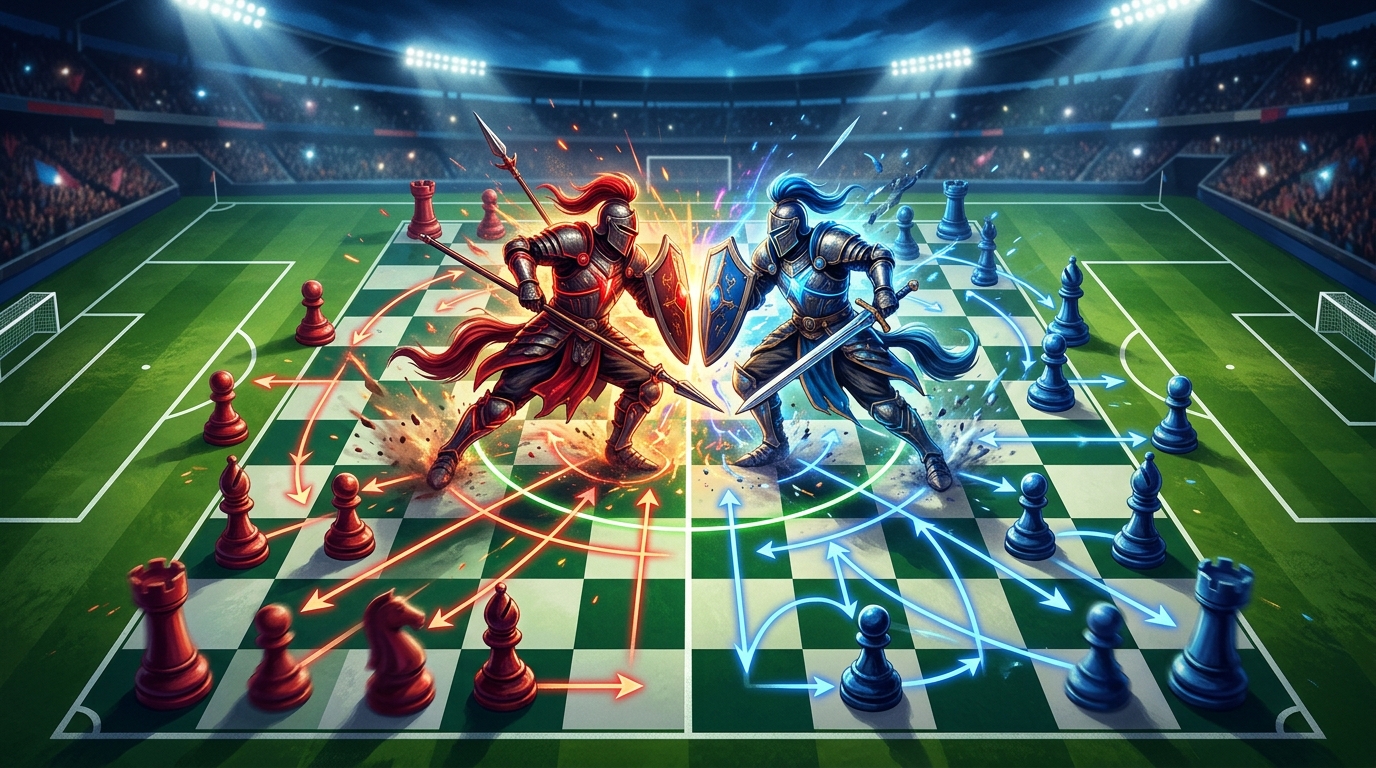
Why this quarterfinal will be won or lost in the middle third
Quarterfinals get sold on their glamour matchups, and this one has an obvious headline: Achraf Hakimi against Kylian Mbappe, two former Paris Saint-Germain teammates occupying the same patch of grass on opposite sides four years after their embrace at the final whistle in Lusail. It is a wonderful story. It is also not where Thursday's game at Boston Stadium in Foxborough is most likely to be decided.
Look instead at the evidence both teams left behind in the round of 16. Morocco dismantled co-hosts Canada 3-0 in Houston with a performance built from the middle of the pitch outward — Azzedine Ounahi scoring twice, Brahim Diaz pulling strings between the lines, Sofyan Amrabat shielding a back four that barely broke sweat. France, by contrast, needed a 70th-minute Kylian Mbappe penalty to beat Paraguay 1-0 in Philadelphia after more than forty-five minutes of exactly the kind of frustration that has quietly dogged this French team all tournament: unable to pass or carry their way through a deep, disciplined block, unable to manufacture clean chances in central areas, reduced to individual moments to break the deadlock. It happened against Senegal in the group stage too. It is not a one-off.
That is the tension this preview sets out to unpack. Morocco defend in a mid-to-low block about as well as any team left in this World Cup, and their route to goal depends on winning the ball in midfield and turning defense into attack in a handful of touches. France have the most talented front four in the tournament, but their ability to unlock a team that refuses to open up has been genuinely tested only once, and it very nearly cost them. If Morocco's midfield does its job on Thursday, France may spend another long afternoon staring at bodies behind the ball. If France's double pivot wins the territorial battle instead, Morocco could be dragged into exactly the track-meet chaos that suits the fastest, most clinical attack left in the competition.
So this is where we are going: Morocco's midfield shape and how Ouahbi wants it to win the ball; Ounahi's carrying and why it is the single most important individual skill in Morocco's transition game; the France pivot of Manu Kone and Adrien Rabiot, and the Aurelien Tchouameni fitness question hanging over Clairefontaine's team news all week; the deeper structural issue of a France side that has lacked a true creative orchestrator in central areas since Antoine Griezmann stepped away from international duty; the tempo battle both benches are quietly obsessing over; and, finally, a verdict on who wins the individual and collective fight in the engine room — and why that verdict may end up mattering more than anything Mbappe or Hakimi do in the wide channels.
It is also worth stating plainly why this angle deserves an entire preview of its own rather than a paragraph inside a bigger one. Quarterfinals at World Cups are rarely decided by the most famous names on the team sheet acting in isolation; they are decided by which side controls the number of meaningful touches its best players get, and that control is manufactured in midfield long before it shows up on a stat sheet as a shot or a goal. Mbappe scored once from open play in five matches before his Paraguay penalty — not because he lacks quality, but because good opponents have made it hard for France's midfield to feed him in space. Morocco's entire defensive and attacking identity, in turn, is a function of what Amrabat, Bouaddi and Ounahi do fifteen and twenty yards further back than the box. Ignore the middle third at your peril; it is where Thursday's result is actually going to be written.
Morocco's midfield shape: Amrabat's engine, Bouaddi's calm, and a designed ball-winning machine
Mohamed Ouahbi's Morocco set up in a 4-3-3 that looks, on first glance, like an evolution of Walid Regragui's 2022 blueprint: compact, disciplined, built to deny space before it tries to create it. The base of that midfield remains Sofyan Amrabat, the Real Betis anchor whose reputation as Morocco's destroyer-in-chief was forged in Qatar and has never really needed updating since. Amrabat's job description has not changed in four years — screen the back four, win the second ball, break up the opposition's first pass out of their own half, and do it over and over for ninety-plus minutes without switching off. He was rated 6.5 for exactly that kind of unglamorous, structurally vital shift against Canada, anchoring the midfield and helping Morocco to a clean sheet while Ounahi and Diaz took the headlines in front of him.
What is genuinely new is who Ouahbi trusts alongside him. Ayyoub Bouaddi, the 18-year-old midfielder who could easily have represented France at youth level before committing to Morocco, was thrown into the deep end on his World Cup debut against Brazil on June 13 — and responded by playing what observers on the ground called the conductor's role, at times making Casemiro, a player who has spent a decade being the defensive-midfield gold standard, chase shadows. That is an astonishing data point for a teenager in his first-ever senior tournament match, and it tells you everything about why Ouahbi, fresh off winning the FIFA U-20 World Cup with this exact profile of fearless kid, has built so much of his senior project around blending Bouaddi's poise with Amrabat's snarl rather than picking one over the other.
The result is a midfield with two very different destroyer profiles Ouahbi can call on depending on the opponent and the moment in the game: Amrabat's older-school physical disruption when Morocco need to slow a match down and win individual battles, Bouaddi's press-resistant composure when they need to keep the ball moving under pressure and start attacks rather than merely stop them. Ismael Saibari adds a third dimension entirely — a goal threat arriving from deeper positions, having opened the scoring against Brazil in the tournament opener and then calmly converted the winning penalty in the shootout against the Netherlands in the round of 32. Few teams left in this World Cup can rotate three such different midfield profiles without losing defensive solidity in the process.
Layer Ounahi and Brahim Diaz on top of that platform — one providing the ball-carrying that turns defense into attack, the other providing the vision that turns possession into chances — and you have a midfield unit built for exactly the kind of game Morocco are about to play: patient in possession, ruthless the instant the ball is won, and defensively organized enough that opponents have managed only a handful of clean sights of Yassine Bounou's goal in five matches. It is, in other words, a midfield built specifically to frustrate a team like France and then punish them for their frustration — which is precisely the profile Les Bleus have already looked uncomfortable against once this tournament.
There is also a quieter defensive function this midfield trio performs that rarely gets discussed outside Morocco's own dressing room: protecting Achraf Hakimi. Morocco's captain is at his most dangerous when he is allowed to bomb forward from right back, overlapping into the final third and combining with Ounahi or Diaz in the half-space. That license only exists because Amrabat and whichever partner starts alongside him — Bouaddi's discipline or Saibari's two-way running — are trusted to cover the channel Hakimi vacates. Ouahbi's midfield, in that sense, is not just an attacking mechanism; it is the insurance policy that lets Morocco's most important individual duel of the entire match, Hakimi against his old PSG roommate Mbappe, be fought on Morocco's terms rather than France's.

Ounahi's ball-carrying: the release valve that turns Morocco's defense into attack
If Amrabat and Bouaddi are the machine that wins the ball, Azzedine Ounahi is the mechanism that gets it somewhere dangerous before the opponent can reorganize. This is not a new story — four years ago in Qatar, France's own coaching staff later admitted they had barely scouted the then-22-year-old Angers midfielder before he spent large stretches of the Lusail semifinal running their engine room ragged, gliding past first challenges and dictating tempo against a team that had no real answer for him. There is no surprise factor left in 2026; every analyst on either side of this tie has watched the tape. That Ounahi is still doing it anyway, at a higher level, against better-prepared opponents, is the real story of his tournament.
The Canada performance was the clearest possible demonstration of what makes him so dangerous. His first goal, five minutes into the second half, was a classic Ounahi sequence — receive under pressure just outside the box, shift the ball past the first challenge with a single touch, and arrive late enough into the space that the defense had already shifted its attention elsewhere. His second, eight minutes from time, came from exactly the kind of driving carry from deep that turns a Moroccan defensive stop into a three-on-three break before Canada's back line could reset. Two goals from a central midfielder in a single knockout match is not incidental production. It is a coach's whole game plan working exactly as designed.
Why does this matter so specifically against France? Because Les Bleus' double pivot — whichever pairing of Manu Kone, Adrien Rabiot and an uncertain Aurelien Tchouameni takes the field — is built around ball-winning and physical control rather than footspeed in transition. Rabiot is 31 and, for all his continued effectiveness, is not going to out-sprint a driving Ounahi carry over thirty yards. Kone offers more mobility but is still, fundamentally, a disruptor rather than a covering sweeper. Every time Morocco wins the ball in a central area and Ounahi is on the move, France's pivot faces an uncomfortable choice: commit numbers to stop him and open space for Diaz or Rahimi in behind, or shepherd him wide and concede territory. Either way, the picture that so troubled Paraguay's low block — France camped in an opponent's half without a clear way through — flips entirely into a picture of Morocco surging forward with numbers, which is precisely the kind of chaos this Atlas Lions squad has thrived on all tournament.
There is a compounding effect, too. Brahim Diaz's tournament-record four assists for an African player have mostly come from combinations in the same central and half-space zones where Ounahi operates, meaning France's midfield cannot simply mark one of the two men and consider the problem solved — track Ounahi's carry too aggressively and Diaz finds the pocket behind; sit off to cover Diaz's passing lanes and Ounahi simply drives at the space himself. It is a two-man problem dressed up as a single individual threat, and solving it without help from deeper in the France structure will not be straightforward for whichever pivot Didier Deschamps trusts on Thursday afternoon.
None of this is theoretical for Ounahi personally. He arrived at his club, Girona, as a raw, occasionally erratic talent still learning to channel his carrying instincts into end product rather than turnovers; four years and one legendary World Cup run later, the double against Canada looked like a player who has fully closed that gap, choosing his moments to carry rather than doing it on reflex. That maturation matters enormously against a France side that will, at some point on Thursday, dare him to try to do too much alone. The 2022 version of Ounahi might have forced the issue. The 2026 version looks far more likely to pick the right pass or the right run and make the correct read under pressure — which is exactly the kind of margin that separates a good tournament from a legendary one.

France's Kone-Rabiot pivot and the Tchouameni fitness gamble
France's own midfield story this tournament has been one of enforced improvisation rather than settled selection. Didier Deschamps has rotated through three different combinations of Aurelien Tchouameni, Manu Kone and Adrien Rabiot across five matches, a double pivot sitting behind the frightening four-man attack of Michael Olise, Ousmane Dembele, Desire Doue and Mbappe. For most of the tournament, Tchouameni — the Real Madrid destroyer who has become one of the most complete defensive midfielders in the world — looked like the clear first-choice alongside Rabiot. Then the adductor and groin problem that had already cost him the group-stage win over Iraq flared up again in training before the Paraguay match, and this time the scans told a more serious story: a muscle tear in the left adductor and upper thigh.
The timeline that followed has been genuinely uncertain rather than a simple in-or-out call. The earliest medical estimates suggested a recovery window of only a few days, which would theoretically have had Tchouameni fit and available in time for the quarterfinal if France navigated Paraguay successfully. Later evaluations of the same injury painted a considerably less optimistic picture, describing the tear as significant enough that his involvement against Morocco has to be considered genuinely in doubt right up until team news is confirmed on Thursday. For a coaching staff that likes certainty in its spine, that is an uncomfortable position to be negotiating three days before the biggest match of the tournament so far.
Into the breach stepped Manu Kone, the AS Roma midfielder who had already been building a case for inclusion with strong performances in the group-stage wins over Iraq and Norway before starting alongside Rabiot against Paraguay. Kone brings a different physical profile to Tchouameni — more mobile and vertical in his carrying, still developing the positional discipline that comes with experience, but visibly growing into the responsibility with every match he has played this summer. Rabiot, for his part, remains exactly what he has always been for France at major tournaments: a tireless, aggressive, tactically intelligent operator who rarely produces a poor performance but whose legs, at 31 and four matches into a taxing knockout run, are a quieter variable nobody in the French camp will discuss openly this week.
The decision facing Deschamps by kickoff on Thursday is genuinely difficult. If Tchouameni is passed fit, does the manager restore his most balanced and battle-tested pivot option, even at the cost of breaking up a Kone-Rabiot pairing that got the job done against Paraguay? Or does continuity win out, with Kone retained on the logic that changing a winning pattern before the tournament's biggest game yet is its own kind of risk? Either way, France go into the midfield battle with a question mark that Morocco simply do not have to answer about their own spine — and against a Moroccan midfield built specifically to exploit hesitation and transition, that uncertainty could not be arriving at a worse moment.
It is worth remembering, too, that this is not a brand-new problem for France's midfield planning — Tchouameni's absence for the Iraq group match was the first sign that this exact injury could resurface at the worst possible time, and it duly has. Deschamps has spent the whole tournament quietly building a contingency plan around Kone precisely because of that risk, which is one reason the Roma midfielder has looked increasingly comfortable rather than like an emergency injection into the side. But contingency plans and first-choice plans are not the same thing three days before a quarterfinal against the reigning African champions, and every extra day of uncertainty over Tchouameni's status is a day France cannot spend rehearsing their preferred pivot combination on the training pitch at full intensity.

The missing No. 10: why France still hasn't solved the deep-block problem
There is a structural issue sitting underneath France's midfield selection dilemma that no amount of squad depth entirely fixes: since Antoine Griezmann's retirement from international duty, Les Bleus have not had a true creative orchestrator in central areas — a player whose job is to drop between the lines, drag a marker out of position, and combine his way through a low block rather than simply run at or around it. Griezmann filled that role across France's run to the 2018 title and the 2022 final, giving Deschamps' side a fixed axis to build moves through even when games slowed down and space disappeared. Nobody currently in this squad does that job in quite the same way.
What France have instead is a collection of brilliant individual attackers who prefer to create in transition or in one-on-one duels out wide. Dembele, Doue and Olise are all more comfortable receiving in space and driving at a defender than they are combining through traffic in central areas, and Mbappe's most dangerous work has always come running in behind rather than dropping deep to link play. It is a front four built to punish mistakes and exploit space, not to patiently dismantle a team that refuses to give any space away — and the double pivot behind them, whether it is Rabiot and Kone or Rabiot and Tchouameni, is built to win the ball and carry it forward rather than to unlock deep defenses through central passing combinations either.
That gap in the profile is exactly what Paraguay exposed for more than forty-five minutes in Philadelphia, and it is exactly what a stubborn Senegal side found in the first half of the group-stage opener as well. Both times, France eventually found a way through — a Dembele hat-trick against a Norway side that, in fairness, never set up as compactly as Paraguay did, and a single Mbappe penalty won by individual quality rather than a dismantled defensive structure against Paraguay. Both results papered over the same underlying issue: when the opposition sits in and refuses to engage, France's route through the middle third goes quiet.
Morocco, by any reasonable measure, defend a mid-to-low block better than Paraguay did. They have the organizational discipline that frustrated Spain and Portugal in Qatar, a goalkeeper in Yassine Bounou who thrives precisely in tight, low-event games, and a midfield trio built to deny central combinations before they start. If Morocco choose to sit in for large stretches on Thursday — and every signal from their tournament suggests they are entirely capable of doing so for as long as it takes — France may be staring at their sternest test yet of a problem they have not fully solved all summer.
Griezmann's old role is instructive precisely because of how understated it was. He rarely appeared on a highlight reel the way Mbappe or Dembele do, but his willingness to receive the ball facing his own goal, absorb a foul or a tight marker, and lay the ball off into a teammate running past him gave France a pressure-release valve in exactly the moments Paraguay denied them one. Nobody in the current squad reliably performs that specific job, which is why France's build-up against a set defense so often looks like four gifted individuals trying to solve the puzzle alone rather than a team solving it together. Morocco's midfield, by contrast, is built around exactly that kind of link play — Diaz dropping to receive, Ounahi offering an out-ball, Saibari arriving late — which is one more reason this particular matchup favors the Atlas Lions' approach to breaking down a stubborn defense more than it favors France's.
Controlling tempo: how each midfield wants to play the middle third
Strip away personnel and the tactical question becomes simple: which team gets to dictate the rhythm of the game? Morocco's preferred tempo is patient and compressed — circulate through Amrabat and Bouaddi, invite France's front four to commit to the press, then use a single Ounahi carry or a first-time pass into Diaz's half-space pocket to bypass three or four opponents in one movement. It is a tempo built to slow the match down into a series of individual duels rather than let it become an open, transitional track meet, because Morocco know exactly which version of this game favors them and which one favors Mbappe running at a retreating back line.
France's preferred tempo is close to the opposite: fast, vertical, and relentless, using Kone and Rabiot's ball-winning to spring Dembele, Doue and Mbappe into space before Morocco's block has time to reset, and using their fitness advantage — Sweden and Paraguay were both dispatched without needing extra time — to sustain that pressing intensity for longer than a Moroccan side that needed 120 minutes and a shootout against the Netherlands just ten days earlier. If France can win the ball high and release their front four in behind before Morocco settle into their defensive shape, this becomes exactly the kind of chaotic, high-event game that a deep, patient Moroccan approach is specifically designed to avoid.
The opening twenty minutes will matter enormously for exactly this reason, echoing the lesson of Lusail four years ago, when Theo Hernandez's early goal forced Morocco to abandon their preferred tempo and chase the game from almost the first whistle. If Morocco can stay compressed and organized through that opening spell without conceding, the psychological tempo of the match begins to tilt in their favor — every scoreless minute is a minute closer to the kind of tight, low-event, penalty-adjacent finish that this Moroccan generation has now twice navigated successfully at this World Cup. If France break the deadlock early instead, Morocco are forced into exactly the kind of expansive, committed posture that hands Kone, Rabiot and the front four the transitional spaces they are built to exploit.
There is a physical subplot running underneath all of this. Morocco's round of 32 shootout thriller against the Netherlands means Ouahbi's midfield three have had less recovery time and fewer full training sessions than their French counterparts across the same knockout window. Whether that shows up as heavier legs in the final twenty minutes — precisely when tempo battles are usually decided — is one of the quieter but most important subplots of the entire quarterfinal.
The atmosphere inside Boston Stadium will feed directly into this tempo fight as well. A Moroccan crowd that turned Houston into what felt like a home fixture for the co-hosts' opponents tends to raise the intensity of every Moroccan tackle and press by a notch, compressing the game further in exactly the way Ouahbi wants. France, conversely, have already played twice at this same venue this summer and know how to use a partisan atmosphere as fuel rather than let it rattle their rhythm — Deschamps' players have talked all week about treating the crowd noise as background rather than pressure. Whichever midfield manages the emotional tempo of the occasion as well as the tactical tempo of the ninety minutes may find that advantage compounding as the match wears on.

The individual duels: Amrabat and Bouaddi against Kone and Rabiot, Ounahi against France's cover
Break the collective battle down into its individual pieces and a series of fascinating micro-duels emerge. Amrabat against Rabiot is a clash of two battle-hardened destroyers who have built entire international careers on exactly the same unglamorous virtues — reading the game a half-second early, winning duels that do not show up on a highlight reel, and rarely putting a foot wrong positionally. Expect that particular contest to be close to a stalemate, two experienced professionals canceling each other out rather than either winning it outright.
Bouaddi against Kone is the more intriguing generational mirror: two young, athletic, increasingly important midfielders both still writing their first great tournament story in real time, both more comfortable driving forward with the ball than their veteran partners. Whoever wins that particular duel — whoever completes more progressive carries, wins more second balls in the transitional zone between defense and attack — may end up deciding which team gets to play more of the tempo it wants rather than the tempo it is forced into.
Then there is the Ounahi problem, which is really a France-wide problem rather than a single-marker assignment. Does Rabiot step out to track his runs into the box, thinning France's own central control at exactly the moment Morocco most want space to open up elsewhere? Does a center back step across to meet him, gambling that Diaz or Rahimi does not exploit the vacated space behind? Or do France simply accept the risk and trust their own attacking quality to outscore whatever Ounahi produces at the other end — the approach that, in fairness, worked for France in Lusail four years ago, even while Ounahi ran their midfield for long stretches of that game?
Diaz adds yet another layer that France's pivot, already stretched thin by the Tchouameni uncertainty, has to account for. If Kone is occupied tracking Ounahi's carries and Rabiot is locked into individual duels with Amrabat or Bouaddi, the space in which Diaz operates — the half-spaces just outside the widest point of a back four — becomes alarmingly open. Solving one problem in Morocco's midfield tends to open a door to the next one, which is precisely the kind of layered puzzle that has made facing this Moroccan generation so uncomfortable for every opponent they have met across two World Cups now.
And there is one more combination worth isolating: the right-sided triangle of Hakimi, Ounahi and Diaz, who between them can turn a single defensive stop into an overload down Morocco's strongest side of the pitch before France's pivot has recovered its shape. If Rabiot or Kone gets dragged toward that triangle to help numerically, it thins the coverage in the other half-space just as Saibari or a front-line runner arrives to exploit it. Ismael Saibari's own numbers this tournament — a goal against Brazil, a match-winning penalty against the Netherlands — are a reminder that Morocco's third midfielder is not just a defensive body making up the numbers; he is a live goal threat every time France's attention drifts fully toward Ounahi and Diaz.
Verdict: who wins the midfield battle, and why it decides the game
Add up the individual duels and the collective picture, and the midfield battle looks like the closest, most genuinely uncertain contest of the entire quarterfinal — which, given everything at stake around it, is exactly as it should be. On pure craft and ball progression, Morocco have the edge: Ounahi's carrying, Diaz's vision and Saibari's goal threat from deep positions give Ouahbi's side more ways to hurt an opponent from midfield areas than France's pivot, built primarily around ball-winning and physical control, can currently offer in return. On raw physical presence and duels won, it is close to even — Amrabat against Rabiot canceling out, Bouaddi against Kone the freshest and most compelling coin-flip on the entire team sheet.
Where France retain an edge is depth of options and the sheer talent waiting to receive the ball once it is won — Dembele, Doue, Olise and Mbappe can make a mediocre midfield performance look irrelevant with a single moment of individual brilliance, the way Mbappe's penalty did against Paraguay. But that same evidence is also the tell: France's front four bailed out an underwhelming midfield afternoon against Paraguay rather than a team playing through it, and Morocco's own front three — Diaz, Rahimi and whoever starts wide — are more than capable of doing the same thing if Ouahbi's midfield gives them even a sliver of the platform they gave the team against Canada.
The Tchouameni uncertainty is the single variable most likely to tip this battle definitively in one direction. If he is fit and Deschamps trusts him to start, France regain their most complete and experienced pivot option just as the games get hardest — a meaningful upgrade. If he is not, or if Deschamps sticks with the in-form Kone-Rabiot pairing regardless, France go into the biggest match of their tournament so far with a midfield that has not yet been fully tested by an opponent capable of consistently winning the ball high, carrying it at pace, and turning defense into attack in three touches — which is precisely what Morocco do better than anyone left in this World Cup.
That is why this battle matters more than its billing suggests. Win the midfield, and Morocco get to play the patient, compressed, transition-heavy game that has carried them to back-to-back World Cup quarterfinals and, four years ago, to the doorstep of a first African World Cup final. Lose it, and they are dragged into the open, high-tempo game that hands the initiative to the most dangerous front four left in the tournament. Hakimi and Mbappe will get the pre-match headlines on Thursday in Foxborough. Amrabat, Bouaddi, Ounahi, Kone and Rabiot may be the ones who actually decide whether Morocco or France walks away with a place in the semifinal.
There is a neat symmetry to how high the stakes have climbed for this specific unit on both sides. Four years ago in Lusail, it was Morocco's midfield that came closest to rewriting the story of that semifinal, dominating long stretches of the game even in defeat. Four years on, in Foxborough, a new generation of Moroccan midfielders — one teenager barely older than the gap between these two meetings, one Girona playmaker with everything still to prove on the biggest stage, and one veteran destroyer who has seen this exact story before — gets a second chance to finish what their predecessors started. France's midfield, patched together by injury and rotation just when it needed to be at its most settled, has to hold the line against all three of them at once. Whichever side wins that fight on Thursday afternoon will very likely be the side still standing in the final four.
Frequently asked
Who plays in Morocco's midfield at the 2026 World Cup?
Morocco's midfield is built around Sofyan Amrabat as the deep-lying anchor, with 18-year-old Ayyoub Bouaddi and Ismael Saibari rotating alongside him, and Azzedine Ounahi given license to carry the ball forward. Brahim Diaz operates just ahead in the half-spaces as the team's chief creator.
Who plays in France's midfield for the quarterfinal against Morocco?
France have used a double pivot of Manu Kone and Adrien Rabiot in recent matches after Aurelien Tchouameni was ruled out of the round of 16 win over Paraguay with a groin and adductor injury. Whether Tchouameni is fit enough to return for the quarterfinal remained uncertain in the days before kickoff.
Is Aurelien Tchouameni fit to play against Morocco?
Tchouameni suffered a recurrence of a groin and upper-thigh injury in training before the Paraguay match, with scans confirming a muscle tear. Early estimates suggested a short recovery window, but later evaluations described the injury as more significant, making his involvement against Morocco genuinely uncertain.
Why is Azzedine Ounahi so important to Morocco's midfield?
Ounahi's ability to receive the ball under pressure and carry it thirty yards past the first challenge turns Moroccan defensive stops into fast, numbers-up counterattacks. He scored twice against Canada in the round of 16 with exactly that kind of driving, late-arriving movement from midfield.
Does Sofyan Amrabat still start for Morocco at this World Cup?
Yes. Amrabat remains Morocco's midfield anchor, screening the back four and winning duels, and was rated among the more effective performers in the 3-0 round of 16 win over Canada for exactly that unglamorous, structurally important role.
Who is Ayyoub Bouaddi?
Bouaddi is an 18-year-old midfielder who could have represented France at youth level but chose Morocco. He started as a defensive midfielder on his World Cup debut against Brazil, controlling the game's tempo against opponents including Casemiro, and represents coach Mohamed Ouahbi's U-20-pipeline approach to squad building.
Why has France's attack struggled against deep, low-block defenses this tournament?
France have lacked a true creative orchestrator in central midfield since Antoine Griezmann's retirement from international duty, relying instead on individually brilliant wide attackers who prefer space to run into rather than combination play through a packed defense. That gap showed for more than 45 minutes against Paraguay's low block and in the first half against Senegal.
How does each team want to control the tempo of the match?
Morocco want a patient, compressed game built on circulating possession through Amrabat and Bouaddi before releasing Ounahi's carries or Brahim Diaz's passing. France want a fast, vertical game that uses Kone and Rabiot's ball-winning to spring their front four into space before Morocco's defensive block can reset.
Who wins the midfield battle between France and Morocco?
It is close to even on physical duels but leans toward Morocco on craft and ball progression, given Ounahi's carrying, Brahim Diaz's creativity and Ismael Saibari's goal threat from deep. France's advantage lies in the individual quality waiting to receive the ball once won, and in Tchouameni's potential return to fitness.
When and where is the France vs Morocco quarterfinal?
The 2026 World Cup quarterfinal between France and Morocco is scheduled for Thursday, July 9, at Boston Stadium (Gillette Stadium) in Foxborough, Massachusetts, with kickoff at 4pm ET.
- ESPN — France's Aurelien Tchouameni (groin injury) out vs Paraguay, could miss quarterfinals ↗
- FIFA — Manu Kone has become an increasingly important part of France's midfield puzzle ↗
- Yardbarker — World Cup chance for Roma's Kone as Tchouameni ruled out of Paraguay vs France ↗
- Squawka — Canada vs Morocco player ratings: Ounahi brace sends Morocco into the quarterfinals ↗
- VAVEL — Morocco player ratings vs Canada: Diaz shines as creative spark ↗
- FIFA — Ayyoub Bouaddi, a star on the rise for Morocco ↗
- Al Jazeera — Who is Ayyoub Bouaddi, the French teenager playing for Morocco? ↗
- Opta Analyst — Sofyan Amrabat international career profile ↗
Video via official YouTube embeds; photos via Wikimedia Commons under their stated licenses. All rights belong to the respective owners; 212 Daily claims no ownership.