France's Unstoppable Attack vs Morocco's Immovable Defense: The Number That Decides the Quarterfinal
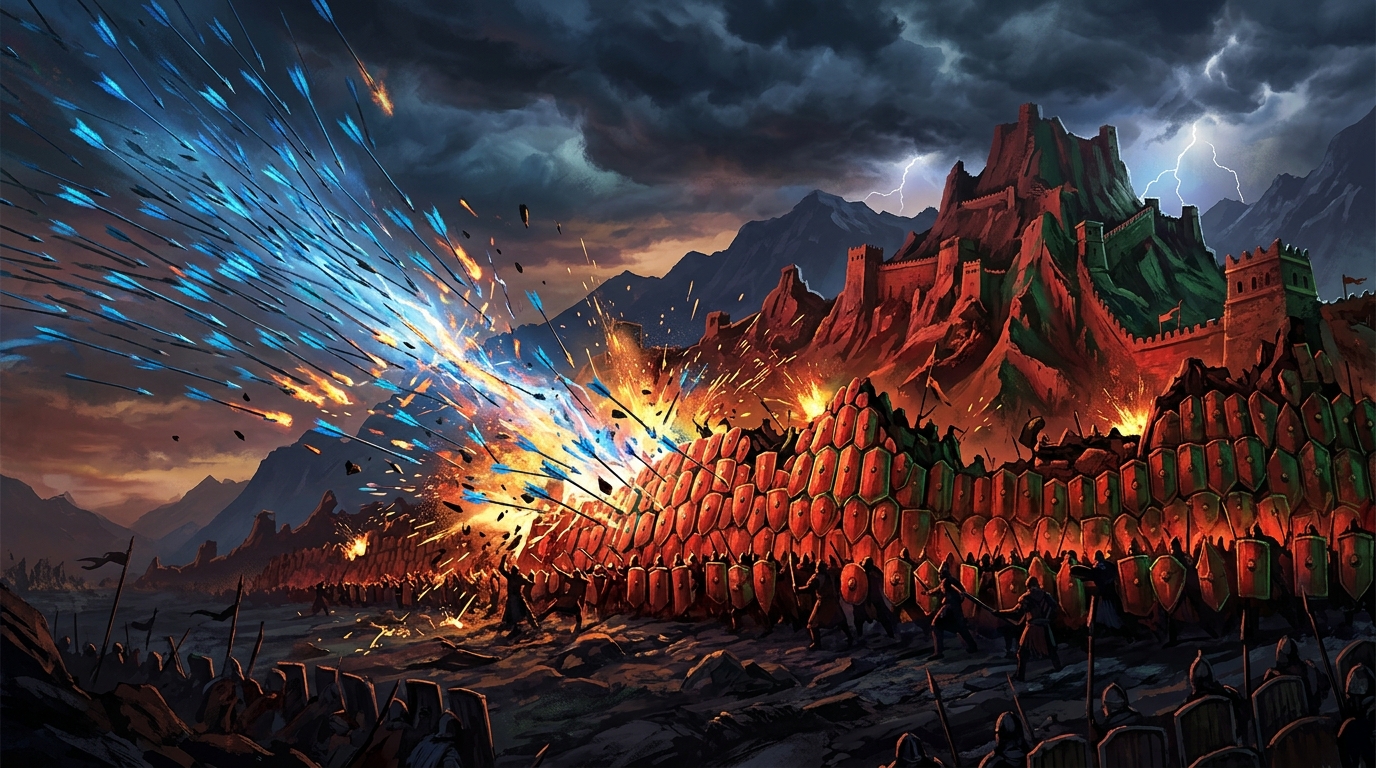
The tournament's defining collision: unstoppable force against immovable object
Every World Cup produces one matchup that functions as a pure tactical experiment, stripped of noise, where the question being asked is bigger than the two team names on the fixture card. Brazil against Italy in 1970 asked whether flowing attack could out-create a defense built like a fortress. Argentina against West Germany in 1990 asked the opposite question and got an uglier answer. Thursday in Foxborough asks it again, with a 2026 cast: can the tournament's most dangerous, deepest, most talented attacking unit be stopped by a defense that has conceded almost nothing to teams that, on paper, should have scored freely against it?
France's case is not in dispute. Fourteen goals in five matches is the best return of any team still competing for the trophy, delivered with a front line that reads like a fantasy draft: a Golden Boot contender at center forward, a reigning Ballon d'Or winner in support, a Premier League-quality wide threat on the other flank, and a bench that would start for most nations in the tournament. Didier Deschamps has more attacking talent at his disposal in the summer of 2026 than at any point in his reign, and the scoreline column proves he has been using it.
Morocco's case is quieter but, statistically, just as extreme. Four goals conceded across five matches is a number that belongs to a team that has faced weak opposition, except Morocco has faced Brazil, the Netherlands and co-hosts Canada in that stretch — three teams with genuine attacking pedigree, two of them among the most dangerous sides in the draw. Mohamed Ouahbi's Morocco have not simply avoided goals through luck or low-event, cagey football. They have built a specific defensive machine, and it has worked against three very different attacking problems already this summer.
This piece sets out to answer, as concretely as the evidence allows, what actually happens when those two profiles meet. It walks through the anatomy of France's attack — where the goals have come from, who creates them, how much shot volume backs up the output. It walks through Morocco's defensive structure in detail — the shape, the personnel, the specific mechanism that has neutralized elite forwards three times already. It looks at the sport's own history for precedent on whether disciplined structure beats individual brilliance in a single knockout match. And it ends with the honest version of a prediction: not who wins, but what has to go right, and for whom, for either result to happen.
Inside France's attack: 14 goals, five different ways to hurt you
Start with the raw number, because it is the loudest fact in this entire tournament: France have scored 14 goals in five games, an average of 2.8 per match, and they have done it against opposition of increasing quality — Senegal, Iraq and Norway in the group, Sweden and Paraguay in the knockout rounds. No other team remaining in the draw has matched that output, and the variety behind it is what makes it dangerous rather than a product of one hot night.
The goal sources tell the story of a team without a single point of failure. Kylian Mbappe has been the primary weapon, opening the tournament with a brace against Senegal, adding two more against Iraq, and settling the Paraguay tie from the penalty spot in the 70th minute — his nineteenth career World Cup goal and a total of seven for the tournament, tied with Lionel Messi at the top of the Golden Boot race. But Mbappe is not carrying this team alone the way stars sometimes must. Ousmane Dembele, the reigning Ballon d'Or winner, scored a first-half hat-trick against Norway that had nothing to do with Mbappe and everything to do with his own explosive change of direction inside the penalty area. That single half-hour is the clearest evidence in the entire tournament that France has a second, independent source of goals whenever the first one is shut down.
Behind the two headline scorers sits a supply chain that most nations would build an entire attack around as a single asset. Michael Olise provides width and end product from the right, capable of both crossing for the strikers and cutting inside onto his stronger foot to shoot himself. Bradley Barcola gives Deschamps a like-for-like pace outlet on the opposite flank, someone who can occupy a fullback simply by threatening the in-behind run. And the bench is arguably deeper than the attacking benches of teams that have already been eliminated: Desire Doue, whose driving run and drawn foul produced the Paraguay penalty; Rayan Cherki, a game-changing dribbler in tight spaces; and Jean-Philippe Mateta, a physical target-man option for when a game needs to be broken open in the final twenty minutes rather than the first seventy.
What that depth buys Deschamps is rotation without drop-off. He can rest Mbappe's legs for a half and lose almost nothing offensively. He can shift from a front three built for pace against a high line to one built for physicality and hold-up play against a team that sits deep, all without disturbing the spine of the side. Against a defense with obvious individual or system weaknesses, that flexibility is close to unstoppable — the attacking equivalent of holding every trump card in the deck.
It is also worth placing this attack in its own historical context rather than just this tournament's. Fourteen goals through five matches is the kind of scoring rate that recalls France's own 1998 and 2018 champion sides at their most ruthless, and it has been achieved despite Deschamps rotating personnel more than either of those title-winning squads needed to. Where the 1998 team leaned on set-piece efficiency and the 2018 team on transition speed, this vintage has scored through open play, penalties and dead-ball moments alike — a sign of a team with more than one way to break a game open, which is precisely what makes them so difficult to prepare for on a single afternoon of scouting.
The one caveat sits in shot data rather than goals. France's output has been front-loaded by moments of individual craft and one penalty rather than a relentless, sustained bombardment of shots on goal in every match. Against Senegal, France were slow into their rhythm before the goals arrived. Against Paraguay, the spell without a clear-cut chance stretched into the second half before Doue's run manufactured the penalty that decided it. The 14 goals are real and they are earned, but they have not all arrived through the same mechanism, and that matters enormously against a team built specifically to deny the mechanisms France likes best.

The blunt instrument: what happened the one time France faced a low block
For all of France's attacking riches, the tournament has already produced a genuine stress test, and the tape from it is the single most useful piece of evidence available to Morocco's coaching staff this week. Paraguay, in the round of 16 in Philadelphia on July 4, set up in a deep, physical, deliberately compact block and simply refused to engage with France on open terms. The result was more than 45 minutes of match time in which France did not manage a single shot on target — an eternity, in the context of a team that had been scoring at will against everyone else.
It was not that France stopped creating entirely. It was that every avenue they tried — crosses into a crowded box, combination play around the edge of the area, individual dribbles into bodies stacked deliberately deep — was met by a wall of Paraguayan defenders who had sacrificed any pretense of their own attacking ambition to make the game as unpleasant and low-event as possible. France's forwards, used to space opening up in behind high defensive lines, instead found themselves picking through a packed eighteen-yard box with no obvious gaps.
The breakthrough, when it came, did not arrive from a sustained passing move breaking the block down through patience. It arrived from an individual moment — Desire Doue driving at goal and drawing a foul in the box — that Paraguay's structure could contain everywhere except the one moment a defender lost his discipline under direct pressure. Mbappe converted the penalty in the 70th minute, and France were level in the tie for the first time in the entire match. The game finished 1-0. The scoreline flattered the gap between the two performances.
There was a smaller-scale version of the same story even earlier in the tournament. Against Senegal in the group stage, a side with genuine athletic quality but nowhere near Morocco's defensive coaching, France needed time to find their attacking rhythm before Mbappe's brace turned the game. Neither match proves France can be beaten by a low block. Both matches prove, unambiguously, that France can be visibly, measurably slowed by one — and that the eventual breakthrough has so far come from individual quality overriding structure rather than structure being passed through or pulled apart. That is precisely the version of this problem Morocco is built to present.

Inside Morocco's defense: four goals conceded, a system built by design
Morocco's defensive numbers, on inspection, are even more impressive than the headline suggests, because of who they were earned against. Four goals conceded across five matches breaks down as one against Brazil, two in the chaotic 4-2 win over Haiti, and one against the Netherlands in the round of 32 — with clean sheets kept against Scotland and, most recently, against co-hosts Canada in Houston. Two of Morocco's five World Cup opponents so far have failed to score against them at all. A third, Brazil, managed only a single goal despite being one of the most talented attacking sides at the tournament. This is not a low-event team that has been fortunate to avoid good opposition. It is a team that keeps performing the same defensive trick against different problems.
The trick has a specific shape. Under Mohamed Ouahbi, Morocco drops out of possession into a compact, zonal defensive block that prioritizes the central channels over the width — conceptually closer to a 1-4-4-2 than the free-flowing structure Morocco sometimes shows with the ball. The two centre-backs defend the penalty area itself with real aggression, stepping to meet strikers and challenging for crosses rather than sitting off and inviting shots. The full-backs, rather than chasing wide forwards up and down the touchline, tuck inward to protect the space between the centre-backs and the flank, accepting a certain amount of space out wide in exchange for never being isolated one-on-one in the most dangerous central zones.
Screening the back four is a dedicated defensive midfield anchor — Sofyan Amrabat's job description in this system has barely changed since he became a cult figure doing exactly this in Qatar. He sits in front of the centre-backs, breaks up passes into the space behind the front two, and absorbs an enormous defensive workload so that the players ahead of him do not have to abandon their attacking responsibilities to cover for him. It is, by design, one of the more physically taxing individual roles in the entire tournament, and Morocco have built their entire defensive platform around one player being willing and able to do it for ninety-plus minutes, match after match.
The final piece is the pressing shape of the front two, which is arguably the most tactically sophisticated part of the entire structure. Rather than pressing aggressively and evenly across the width of the pitch — which would open exactly the kind of central passing lanes elite attacks like France's are built to exploit — Morocco's forwards curve their pressing runs to deliberately funnel the opponent's build-up play away from the middle of the pitch and out toward the flanks. Force the ball wide, and Morocco's compact banks of four are waiting with numbers; the eventual cross into the box is dealt with by centre-backs who have been coached to attack it rather than defend it passively.
Behind all of it stands Yassine Bounou, now 35, playing the goalkeeping role of his life at a second consecutive World Cup. He is not merely a last line of defense in this system; he is a psychological weapon in his own right, the man whose shootout heroics against Spain in 2022 and against the Netherlands this summer have made him arguably the most feared penalty-taker's opponent in the sport. A defensive structure this disciplined, with a goalkeeper this proven under the most extreme pressure the game can produce, is precisely the kind of system that turns a knockout match into a war of attrition rather than an open shootout of chances.
What makes the system durable rather than fragile is discipline in the small, unglamorous details as much as the shape itself. Morocco have avoided the cheap fouls in dangerous areas that hand elite set-piece and penalty specialists free chances, and their centre-backs have generally won their individual aerial duels rather than relying on covering defenders to clean up mistakes. None of that shows up directly in a goals-conceded column, but it is exactly the kind of quiet professionalism that separates a defense which holds up for one good performance from one that holds up, match after match, against completely different attacking problems.

The proof: how Morocco defused Brazil, the Netherlands and Canada
A system is only as convincing as the evidence for it, and Morocco has already supplied three separate, genuinely different case studies this tournament. The first came on the opening night of the group stage, against Brazil — a five-time champion with as much individual attacking talent as almost anyone left in the draw. Rather than being overrun, Morocco matched Brazil for long stretches and walked away with a 1-1 draw, conceding only once to a team many expected to run up the scoreline. It was the first proof that Ouahbi's structure could hold against elite, unpredictable attacking talent rather than merely against functional, direct sides.
The second case study, against the Netherlands in the round of 32, is the most instructive of the three precisely because Morocco did not get everything right. Cody Gakpo broke the deadlock in the 72nd minute, and for nearly twenty minutes Morocco stared at elimination. But the underlying pattern of the match told its own story regardless of that goal: Morocco controlled roughly 70 percent of the possession and, more tellingly on the defensive side of the ledger, restricted the Netherlands to an expected-goals figure of just 0.23 for the match against Morocco's own 1.40 — a gulf that shows the goal conceded was closer to an aberration than a structural failure. Issa Diop's stoppage-time header salvaged extra time, and Bounou did the rest in the shootout. Even in Morocco's shakiest defensive performance of the tournament, the underlying numbers said the system had done its job.
The third case study, the most recent and arguably the most complete, came against co-hosts Canada in Houston on July 4. Playing in front of a hostile home crowd against a team with genuine pace and direct running threats, Morocco did not merely contain Canada — they shut them out entirely while scoring three of their own, with Azzedine Ounahi scoring twice and Soufiane Rahimi adding a third from a Brahim Diaz assist in stoppage time. A clean sheet against a co-host nation, on the road in every sense but the passport stamp, is the strongest single data point Morocco has produced all summer.
Line the three performances up and a clear pattern emerges. Morocco has now faced a possession-dominant elite attack (Brazil), a fast, direct, physically aggressive European side (the Netherlands), and a quick, transition-heavy co-host team playing for its own history (Canada) — three meaningfully different attacking profiles — and conceded a combined total of two goals across those three matches, keeping one outright clean sheet and controlling the underlying numbers in the other two. France represents a fourth, arguably hardest problem: a side that combines elite individual dribbling quality with genuine pace on both flanks and a support cast deep enough to rotate fresh legs into the same attacking patterns. But Morocco arrives at that test having already passed three previous versions of the exam.
None of that guarantees a fourth pass. Brazil, the Netherlands and Canada are not France, and no defensive system holds up against every conceivable attacking problem forever. But the argument that Morocco's defense is a product of facing weaker opposition simply does not survive contact with the fixture list. This is a system that has been tested by real attacking talent three times in five weeks and found a way to hold or nearly hold every time.

History's verdict: when a disciplined block has beaten star power at the World Cup
Football's own history offers Morocco something more valuable than confidence: precedent. The World Cup has a long, specific tradition of disciplined, well-organized underdogs beating or containing teams with vastly superior individual talent, and the pattern repeats often enough that it deserves to be treated as a real tactical phenomenon rather than a series of flukes.
The most famous case, and the one with the most obvious echo for Thursday, happened to France itself. At the 2002 World Cup, the reigning champions opened their title defense against Senegal, a team playing in its first-ever World Cup with no individual star to compare with France's Zinedine Zidane-led squad. Senegal defended in disciplined banks, absorbed pressure, and won 1-0 through Papa Bouba Diop, in one of the great upsets in the tournament's history. France never recovered their rhythm in that entire tournament and were eliminated in the group stage without scoring a single goal. It stands as the starkest reminder in the sport's history that individual star quality offers no guarantee against a well-drilled defensive block that refuses to be intimidated by reputation.
The pattern recurs across decades. In 1990, Cameroon opened the tournament by beating the defending champions Argentina — with Diego Maradona in his prime — 1-0, through Francois Omam-Biyik, playing much of the match with ten men and defending with a physicality and discipline that unsettled a team many assumed would win by three or four goals. In 2010, Switzerland beat a Spain side that would go on to win the entire tournament, 1-0, in the group stage, through Gelson Fernandes, using exactly the low-block, compact, deny-the-space approach that Morocco has built its own identity around. In each case, the underdog did not out-play the superior side. It refused to let the game be played on the superior side's terms at all.
And then there is Morocco's own history, which may be the most relevant precedent of all — because it is the same team, built by largely the same footballing culture, doing the same thing before. In Qatar in 2022, Morocco's low-and-mid block beat Spain on penalties in the round of 16 after a goalless 120 minutes in which Spain's possession-based approach was strangled almost entirely. In the quarterfinal, that same structure beat Portugal, and Cristiano Ronaldo, 1-0 through a Youssef En-Nesyri header — one of the great individual moments of that tournament, scored by a team that had barely allowed Portugal a clean sight of goal all match. Twice in one tournament, Morocco used exactly the defensive template described in this piece to beat teams built around some of the greatest individual attacking talents alive.
There is a fifth example worth adding, further down the fame ladder but no less relevant tactically: Costa Rica's run to the 2014 quarterfinals, in which a compact, low-event defensive shape topped a group containing Uruguay, Italy and England — three former champions — conceding just one goal in three group games, before eventually falling only on penalties in the last eight. It is another data point for the same conclusion: organized underdogs do not merely survive against star-studded opposition at the World Cup, they regularly advance past them, and they do it through defensive shape rather than matching their opponents' attacking talent player for player.
None of this is destiny. For every Senegal 2002 or Morocco 2022, there are knockout matches where the star-studded favorite simply has too much individual quality for any system to fully contain, and breaks through regardless — which is precisely the counter-argument the next section explores. But the historical record is clear on one point: a disciplined, well-coached defensive block, executed by players who believe in it, is one of the very few things in football capable of nullifying superior individual talent over ninety minutes. Morocco is not hoping to be the exception. It is trying to be the rule.
Where France can hurt Morocco anyway: the cracks in the block
For all the evidence in Morocco's favor, there is an honest counter-argument, and it starts with a simple fact: France has more individual attacking quality than any team Morocco has faced this tournament, and quite possibly more than any low block anywhere in the world has ever had to contain in a single match. Brazil, the Netherlands and Canada all had good, sometimes very good, attacking players. None of them had a front line with a reigning Ballon d'Or winner, a Golden Boot co-leader and two more players capable of starting for most World Cup squads, all available in the same ninety minutes with fresh legs to bring off the bench.
The specific danger is individual quality that does not need space to operate — the exact skill set that structural defending is worst equipped to handle. Dembele's hat-trick against Norway and Doue's foul-drawing run against Paraguay were both produced in tight quarters, against organized defenders, through pure individual craft rather than space created by a passing move. Morocco's full-backs tuck in to protect central areas, which is sound defensive logic against most attacks, but it also means isolating a full-back one-on-one against a dribbler of Dembele's or Barcola's quality in the wide channel is a live possibility, and elite one-on-one dribblers are precisely the players a tucked-in, conservative full-back is least equipped to stop cleanly.
There is also a fatigue dimension working against Morocco specifically. The Netherlands tie went to 120 minutes and penalties, meaning Morocco's outfield players, and Amrabat above all given his enormous defensive workload, have had less recovery time built into the tournament schedule than a French squad that closed out its round of 16 tie in ninety minutes. Whether that shows up as a half-second slower recovery run in the 75th minute, rather than the 15th, is exactly the kind of marginal factor that decides tight knockout matches.
And there is the matter of set pieces and moments of chaos, the great equalizer against any structured low block. Morocco's system is built to control the game's patterns — funneling play wide, protecting central zones, forcing errors under sustained pressure. It is less obviously built to control a single moment of pure disorder: a deflected shot, a mistimed clearance, a dead-ball delivery from a France squad with plenty of aerial and technical quality at set pieces. Theo Hernandez's opener in Lusail in 2022 arrived from exactly this kind of moment, an early goal that forced Morocco to chase the game against their own game plan. Repeat that in the opening minutes on Thursday, and every advantage described in this piece becomes far harder for Morocco to use.

How Thursday actually plays out: the scenarios, and what has to go right
Reduce everything above to its practical core, and the match hinges on a small number of concrete sub-battles that will decide which statistical profile bends first. The first and most important is simply the clock. Every scoreless minute that passes in Foxborough is a minute that favors Morocco, both tactically and psychologically. Morocco's system is built to control patient games; France's most efficient attacking sequences this tournament have generally come either from early rhythm against opponents who engage openly, or from a single moment of individual quality breaking a stalemate late. The longer the score stays level, the more the pressure to force something shifts onto the French bench.
The second sub-battle is the specific central zone where Amrabat, Morocco's centre-backs and France's front line will collide most often. Morocco's plan requires Amrabat to cover an enormous amount of ground, screening passes into Mbappe and Dembele dropping deep to link play, while the centre-backs stay disciplined enough not to be dragged out of position by decoy runs. If Amrabat is a half-step slow after 120 minutes against the Netherlands, or if France's rotating front line simply overloads that zone with fresher legs than Morocco can match late in the game, the entire defensive platform is put under a different kind of strain than it faced against Brazil, the Netherlands or Canada.
The third is the wide channels, where Morocco's tucked-in full-backs meet France's width. If Morocco's wide forwards win their individual pressing duels and force France's build-up away from the center, as the system is designed to do, the crosses that result play into the hands of centre-backs coached to attack the ball aggressively. If instead Dembele, Olise or Barcola can isolate a full-back in one-on-one space before the funnel takes effect, those duels become the most likely source of a French breakthrough that does not rely purely on individual improvisation in a crowded box.
For Morocco, what has to go right is almost entirely about discipline rather than heroics: stay compact without conceding an early goal the way they did against Lusail's opening minutes in 2022; keep Amrabat upright and effective for ninety-plus minutes; force France backward and sideways rather than allowing forward passes into the space between the lines; and trust that if the game does stay level, their platform — and Bounou behind it — gives them a real chance in the closing stages or in a shootout, an arena where their recent history is close to unmatched.
For France, what has to go right is patience allied to ruthlessness: avoid the frustration that crept into their body language for long stretches against Paraguay; keep probing the same areas — central overloads, wide isolation for the dribblers, quick combinations near the box — without abandoning the plan out of impatience; and trust that with this much individual quality on the pitch and on the bench, a moment will eventually arrive, the way Doue's run did against Paraguay, that a structure alone cannot defend forever.
Strip away everything else circling this fixture — the history, the crowd, the coach's farewell tour, the friendship across the touchline — and this is the honest tactical core of Thursday's quarterfinal. The tournament's best attack against one of its best defenses, with both sides holding a real, evidenced case for why their approach wins the day. Whichever number gives first, France's goals column or Morocco's clean sheets, will very likely decide who plays on for a place in the semifinal.
Frequently asked
How many goals has France scored at the 2026 World Cup?
France have scored 14 goals in five matches heading into the quarterfinal, an average of 2.8 per game, the best attacking return of any team remaining in the tournament. The goals have come from Kylian Mbappe (braces vs Senegal and Iraq, a penalty vs Paraguay), Ousmane Dembele (a first-half hat-trick vs Norway) and others across wins over Senegal (3-1), Iraq (3-0), Norway (4-1), Sweden (3-0) and Paraguay (1-0).
How many goals has Morocco conceded at the 2026 World Cup?
Morocco have conceded just four goals across five matches: one against Brazil (1-1 draw), two against Haiti (4-2 win), and one against the Netherlands (1-1 after 120 minutes, won on penalties). They kept clean sheets against Scotland (1-0) and co-hosts Canada (3-0).
What formation does Morocco defend in?
Out of possession, Morocco drops into a compact, zonal defensive shape closer to a 1-4-4-2, prioritizing central spaces. The centre-backs defend the box aggressively, the full-backs tuck inward rather than chase wide, a defensive midfield anchor (Sofyan Amrabat) screens the back line, and the front two curve their pressing to funnel opposition build-up play out to the flanks.
How did Morocco perform defensively against the Netherlands?
Morocco controlled roughly 70% possession against the Netherlands in the round of 32 and restricted them to an expected-goals figure of just 0.23 compared to Morocco's own 1.40, despite conceding a 72nd-minute Cody Gakpo goal. Issa Diop equalized in stoppage time and Morocco won 3-2 on penalties, with Yassine Bounou making a decisive save.
Has France struggled against a defensive low block this tournament?
Yes. Against Paraguay's deep, physical block in the round of 16, France went more than 45 minutes without a shot on target and did not break through until Kylian Mbappe converted a 70th-minute penalty won by Desire Doue. France also had a slow first half against Senegal before Mbappe's brace turned that match.
Who is Morocco's key defensive midfielder?
Sofyan Amrabat, who screens Morocco's back four in front of the centre-backs, breaking up passes into dangerous central areas and covering an enormous amount of ground so the players ahead of him can commit to attacking phases. He played a near-identical role in Morocco's 2022 semifinal run.
Has a low block ever beaten a star-studded attack at the World Cup before?
Repeatedly. Senegal beat defending champions France 1-0 at the 2002 World Cup with a disciplined block. Cameroon beat Diego Maradona's Argentina 1-0 in 1990. Switzerland beat eventual champions Spain 1-0 in 2010. And Morocco's own 2022 side beat Spain on penalties and Portugal 1-0 in the knockout rounds using a similar defensive template to the one deployed in 2026.
Who are France's main goal creators besides Kylian Mbappe?
Ousmane Dembele, the reigning Ballon d'Or winner, scored a hat-trick against Norway. Michael Olise and Bradley Barcola provide width and end product from the flanks, while Desire Doue, Rayan Cherki and Jean-Philippe Mateta add attacking depth off the bench, including Doue's foul-drawing run that produced the winning penalty against Paraguay.
What is Yassine Bounou's record in World Cup shootouts?
Yassine Bounou has been the hero of two World Cup penalty shootouts for Morocco: the 2022 round of 16 win over Spain and the 2026 round of 32 win over the Netherlands, where he saved a penalty before Ismael Saibari converted the winning kick.
What is the biggest risk for Morocco's defensive plan against France?
Conceding an early goal, as they did against France in the 2022 semifinal when Theo Hernandez scored in the 5th minute, would force Morocco to abandon their patient defensive setup and chase the game — playing directly into the hands of a France counter-attack led by Mbappe, Dembele and company.
- FIFA — Netherlands v Morocco 1-1 (PSO 2-3), Round of 32 result, stats and highlights ↗
- FIFA — Paraguay v France 0-1, Round of 16 match report and stats ↗
- Al Jazeera — Ounahi fires Morocco into World Cup quarterfinals with 3-0 win over Canada ↗
- Ekkono Coaching — Morocco at the FIFA World Cup: Compact Defense and Fast Attacks ↗
- Tactical Football Analysis — How To Coach Pressing Like Mohamed Ouahbi ↗
- FWC Times — Morocco's Playing Style at World Cup 2026: Tactical Analysis ↗
- Sky Sports — World Cup 2022: France 2-0 Morocco match report ↗
Video via official YouTube embeds; photos via Wikimedia Commons under their stated licenses. All rights belong to the respective owners; 212 Daily claims no ownership.