Fassi Cuisine: The Food of Fez
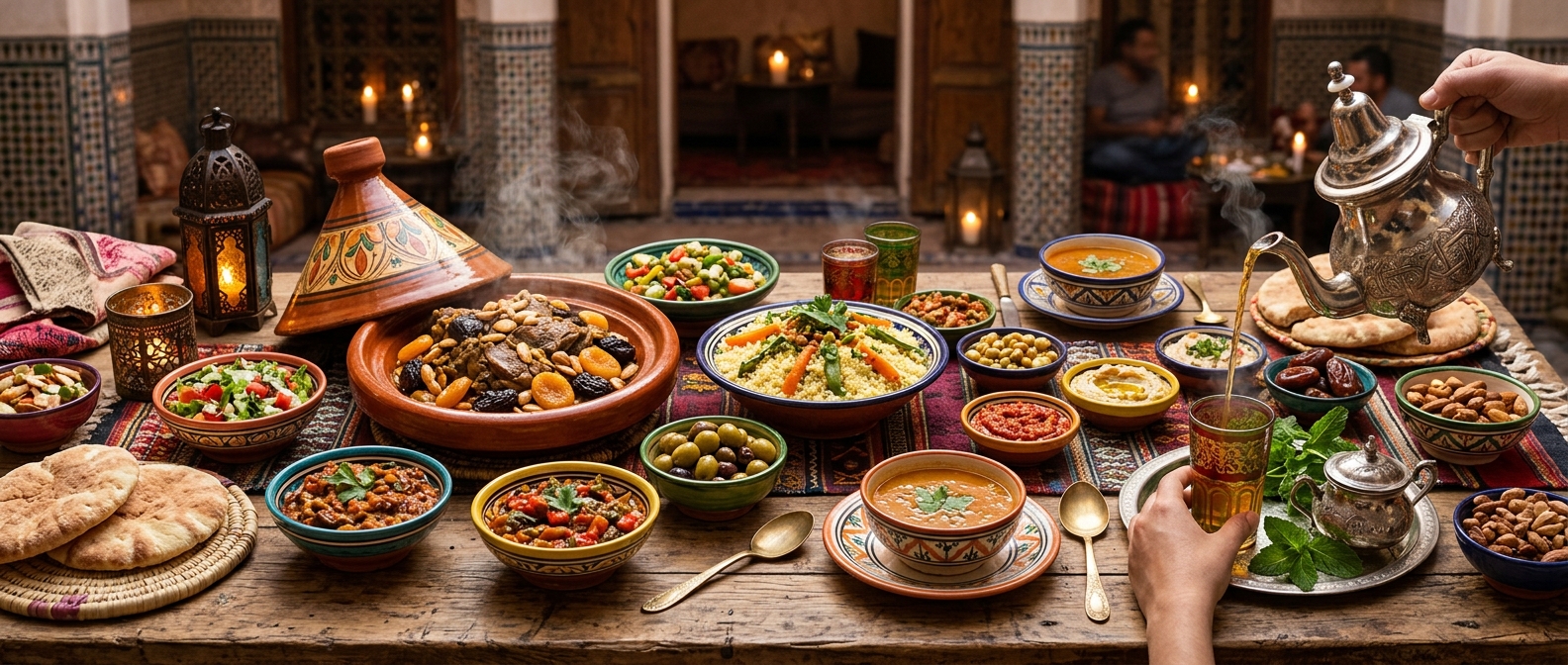
What Makes Fassi Cuisine Special
Fez (Fass in Darija) is widely regarded as the gastronomic heart of Morocco, and Fassi cuisine carries the prestige of centuries of imperial court cooking. The old medina families guarded their recipes closely, passing them through generations of women who measured spices by intuition rather than spoons.
What sets Fassi food apart is its complexity and the bold marriage of sweet and savory. Where coastal cooking leans simple and fresh, the Fassi table is layered, perfumed and unapologetically rich, reflecting a city that has long been a center of scholarship, trade and refinement.
Pastilla: The Crown of Fez
No dish embodies Fassi cuisine like pastilla (bastila or b'stilla). Traditionally made with pigeon, though pigeon is often replaced today by chicken, it layers warqa pastry leaves around shredded spiced meat, a fragrant almond-egg filling and a finishing dust of cinnamon and powdered sugar.
The contrast of crackling pastry, savory saffron-scented meat and sweet topping is pure Fez. A seafood version (pastilla bil hout) has become popular along the coast, but the meat pastilla remains the festive centerpiece for weddings and major celebrations.
Sweet and Savory Tagines
Fassi tagines push the sweet-savory style further than anywhere else. Mrouzia, a slow-cooked lamb tagine with raisins, almonds, honey and a heavy hand of ras el hanout, is the classic example, traditionally prepared for Eid al-Adha when meat is abundant.
Other beloved tagines include lamb with prunes and sesame (lham bel barkouk), chicken with preserved lemon and olives, and tagines crowned with caramelized onions in the tfaya style. Saffron (zafran) and smen, an aged fermented butter, give these dishes their signature depth.
Soups, Breads and Everyday Fassi Fare
Beyond banquet food, Fez has a rich repertoire of daily dishes. Harira, the tomato-lentil-chickpea soup, is prepared with particular care in Fassi homes, often served with chebakia and dates during Ramadan.
Fez is also known for its breads, including khobz baked in neighborhood communal ovens (ferran), and rghaif (msemen) folded with smen for breakfast. Trid, a dish of torn thin pastry layered with chicken and saffron broth, is another Fassi comfort specialty.
Spices, Smen and the Fassi Pantry
The Fassi pantry is the most complex in Morocco. Ras el hanout, a blend that can include dozens of spices, is the signature seasoning, and Fez attar shops still sell custom mixes ground to order.
Smen, a salted and aged butter sometimes matured for months or years, lends a funky umami richness prized in Fassi cooking. Preserved lemons (hamd mraqad), saffron, ginger, and orange blossom water round out a larder built for layered, perfumed dishes.
Sweets and Hospitality
Fassi pastry is legendary, from ghriba shortbread and kaab el ghzal (gazelle horns) filled with almond paste to the syrup-soaked, sesame-coated chebakia of Ramadan. These sweets accompany the ever-present mint tea (atay), poured from a height to crown the glass with foam.
Hospitality in Fez is a performance of generosity. A guest is greeted with tea, dates and an endless flow of food, and refusing seconds requires polite persistence. To eat in a Fassi home is to experience Moroccan cuisine at its most ceremonial.
| Dish | Main ingredients | Occasion |
|---|---|---|
| Pastilla | Warqa pastry, pigeon or chicken, almonds, cinnamon, sugar | Weddings, feasts |
| Mrouzia | Lamb, raisins, almonds, honey, ras el hanout | Eid al-Adha |
| Lham bel barkouk | Lamb, prunes, sesame, onions | Family gatherings |
| Trid | Torn pastry, chicken, saffron broth | Comfort meal |
| Chebakia | Sesame, honey, flower water, fried dough | Ramadan |
Signature Fassi dishes and their character
FAQ
Why is Fassi cuisine considered the best in Morocco?
Fez was an imperial capital and a center of learning and trade, so its families developed an exceptionally refined cooking style with Andalusian roots, complex spice blends and elaborate festive dishes like pastilla that are unmatched elsewhere.
What is the difference between pastilla and other Moroccan dishes?
Pastilla is unique for combining flaky warqa pastry with savory spiced meat and a sweet cinnamon-sugar topping, creating a sweet-savory contrast that defines the Fassi style of cooking.
What is smen and why do Fassi cooks use it?
Smen is a salted, aged butter, sometimes matured for months, that adds a strong, funky, umami richness to tagines and couscous. It is a hallmark of traditional Fassi cooking.
Loved this? Useful? React below — your feedback helps other readers.