Eid al-Fitr in Morocco
What Eid al-Fitr Means in Morocco
Eid al-Fitr, known locally as Eid el-Seghir (the "smaller feast"), celebrates the breaking of the month-long Ramadan fast. It is one of the two major Islamic holidays observed across Morocco, deeply woven into the country's social and spiritual life.
Because Islamic holidays follow the lunar Hijri calendar, the exact date shifts roughly eleven days earlier each year on the Gregorian calendar. In Morocco, the official start is confirmed by the Ministry of Islamic Affairs after the new crescent moon is sighted, so families often wait until the evening before to know whether Ramadan has ended.
The Morning of Eid
Eid begins early. Before sunrise, households pay the Zakat al-Fitr, a charitable donation given so that the poor can also share in the celebration. Men, women and children then dress in new or finest clothes, often freshly tailored djellabas and kaftans.
The centerpiece of the morning is the special Eid prayer, performed in congregation at mosques, large open squares (musalla) or stadiums shortly after sunrise. After the prayer, people exchange the greeting "Eid Mubarak" and visit family graves in some regions before returning home to eat.
Food and Sweet Traditions
After a month of fasting, the first daytime meal in weeks is a joyful affair. Tables overflow with msemen and harcha (Moroccan flatbreads), beghrir (honeycomb pancakes), and an abundance of mint tea poured from a height into small glasses.
Sweets dominate Eid. Households prepare trays of chebakia, sellou (a roasted-flour and almond paste), kaab el ghazal (gazelle horns) and ghriba cookies. Sharing these treats with visiting relatives and neighbors is central to the day, and exchanging plates of homemade sweets is a beloved custom.
Family Visits and Gifts
Eid al-Fitr is above all a family holiday. Younger relatives visit elders to pay respect, and children typically receive money or small gifts known as Eidiya from parents, grandparents and aunts and uncles.
Neighbors and friends call on one another throughout the day, and the streets fill with families in their finest dress. In many cities the festive atmosphere continues into the evening with outings, café visits and children playing in newly bought outfits.
Regional Variations Across Morocco
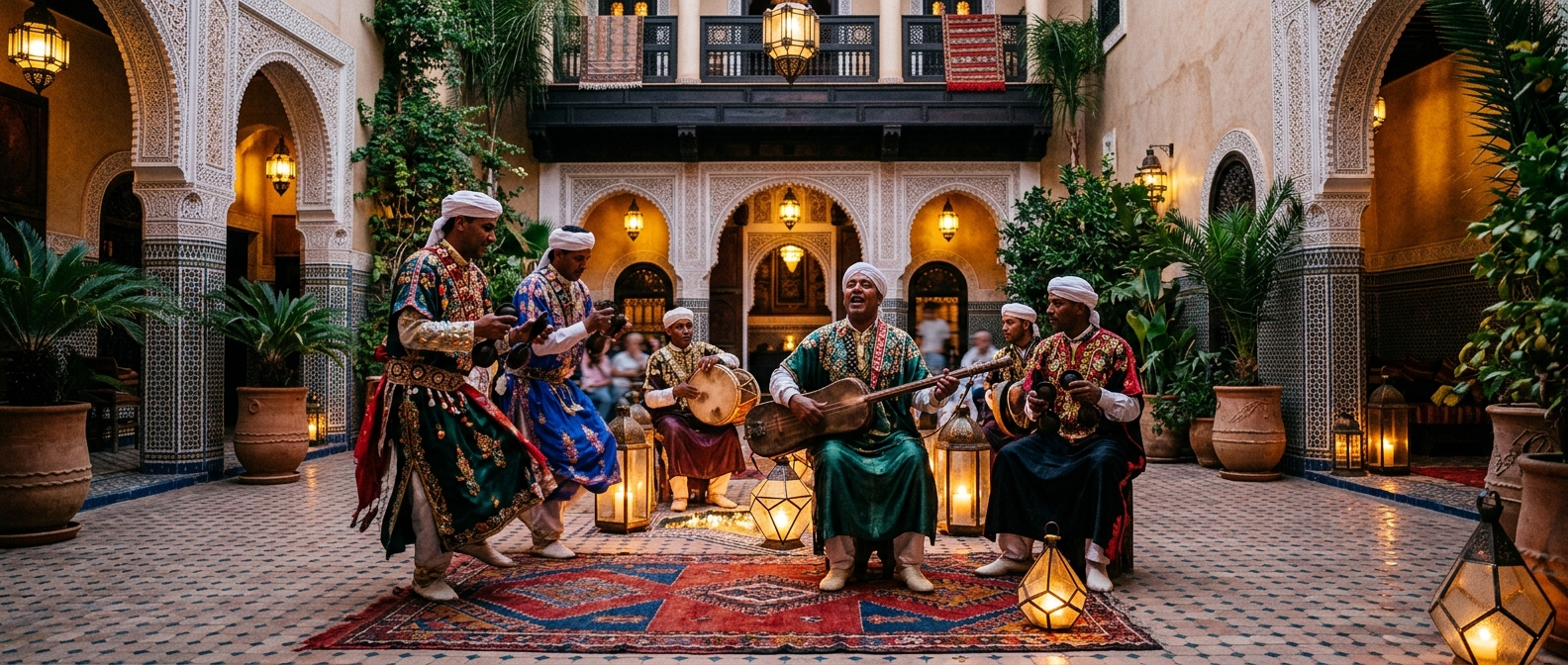
While the core rituals are shared nationwide, customs vary by region. In rural and Amazigh (Berber) areas, communal celebrations and traditional music may feature more prominently, and some villages hold collective meals.
In major cities like Casablanca, Rabat, Fez and Marrakech, the celebration blends tradition with modern life: people travel to family homes, public squares grow lively, and bakeries and pastry shops do a brisk trade in the days leading up to the feast.
Tips for Travelers During Eid al-Fitr
Eid al-Fitr is a public holiday, typically observed over two days, so government offices, banks and many businesses close. Some shops, restaurants and markets reduce hours or shut entirely, especially on the first day.
Transport can be very busy as Moroccans travel to be with family, so book trains and buses in advance. Visitors are warmly welcomed; offering "Eid Mubarak" and accepting tea or sweets when invited is appreciated. The atmosphere is festive and family-focused rather than tourist-oriented.
| Aspect | Details |
|---|---|
| Local name | Eid el-Seghir (the smaller feast) |
| Marks | End of Ramadan fasting |
| Calendar | Lunar Hijri; date confirmed by moon sighting |
| Public holiday | Typically 2 days |
| Key rituals | Zakat al-Fitr, morning Eid prayer, family visits |
| Typical foods | Chebakia, sellou, msemen, mint tea, sweets |
Eid al-Fitr at a glance in Morocco
FAQ
When is Eid al-Fitr in Morocco?
It falls at the end of Ramadan on the lunar Islamic calendar, moving about eleven days earlier each Gregorian year. The exact date is officially confirmed in Morocco only after the new crescent moon is sighted.
Is Eid al-Fitr a public holiday in Morocco?
Yes. It is an official public holiday, generally observed over two days, during which government offices, banks and many businesses close.
What do Moroccans eat for Eid al-Fitr?
After a month of fasting, families enjoy sweets like chebakia, sellou and gazelle horns, alongside flatbreads such as msemen and beghrir, all served with plenty of Moroccan mint tea.
Loved this? Useful? React below — your feedback helps other readers.