Eid al-Adha in Morocco: The Sheep, the Feast and the Family Customs of Eid El Kebir
What Eid al-Adha commemorates
Eid al-Adha marks the culmination of the Hajj pilgrimage season and commemorates the story of the Prophet Ibrahim (Abraham), who, according to the Quran, saw a recurring dream instructing him to sacrifice his son Ismail as a test of faith. The Quran describes Ismail accepting his father's decision with steadfastness, saying he would be found patient if God willed it. Just as Ibrahim prepared to carry out the act, God intervened and provided a ram to be sacrificed in the boy's place, sparing Ismail's life.
Muslims worldwide reenact that moment of submission and divine mercy by sacrificing an animal, most commonly a sheep in Morocco, and sharing the meat with family, neighbors and those in need. The Arabic word closest to the ritual, qurbani, is related to the idea of nearness or closeness to God, and the underlying lesson taught in mosques and homes across Morocco is one of obedience, gratitude and generosity rather than the act of slaughter itself.
In Morocco the holiday is popularly called Eid El Kebir, the "Big Eid," to distinguish it from Eid al-Fitr, the smaller feast that ends Ramadan. Because the Islamic calendar is lunar, Eid al-Adha shifts earlier by roughly ten to eleven days every year, cycling slowly through every season over the decades. In 2026, Morocco's Ministry of Islamic Affairs confirmed the date after conducting its official crescent-moon sighting, announcing that Eid al-Adha would fall on May 27, in step with Saudi Arabia's calculation for the same year.
The kabsh: buying and sacrificing the sheep
Weeks before Eid, buying the kabsh, or sacrificial sheep, becomes the defining household errand of the season. Rural livestock markets (souks) and improvised urban lots fill with animals; in cities, temporary pens nicknamed "sheep hotels" spring up in parking lots and empty plots so families can buy early and have the animal fed and cared for until Eid morning. It is common to see a sheep riding home on the back of a motorcycle, in the trunk of a car, or led on foot through city streets in the days before the feast.
Because sheep prices are a genuine household budget concern, they are also a recurring national conversation. Morocco's government tracks livestock supply closely: an August 2025 national herd census counted roughly 23.1 million sheep among a broader flock of over 30 million sheep and goats, a supply base that officials and market analysts linked to unusually strong rainfall over the 2025-2026 winter, among the wettest the country had recorded since 1981, which replenished pasture after several dry years. To help small breeders rebuild their herds, the state also disbursed direct financial support to hundreds of thousands of livestock breeders in the months before the 2026 Eid to help cover feed costs, part of a broader effort to keep sheep affordable and supply stable heading into the holiday.
On the morning of Eid, families attend congregational prayers, exchange the greeting "Eid Mubarak," and then perform or arrange the sacrifice, generally after the animal designated for the King's own sacrifice has been slaughtered, a gesture of respect for the monarch's traditional role as Amir al-Muminin, Commander of the Faithful. The meat is then split, by long custom, into three roughly equal portions: one for the immediate household, one for members of the extended family, and one set aside for neighbors and those in need, a division meant to keep charity and generosity built into the holiday rather than treated as an afterthought.

Boulfaf, mrouzia and the days-long feast
Moroccan Eid cooking follows a deliberate sequence built around which cuts of meat spoil fastest. On the first afternoon, families grill the organ meats immediately: boulfaf, strips of liver wrapped in caul fat, seasoned with cumin, salt and chili, then grilled over charcoal until sizzling, is the signature first-day dish, often eaten straight off the fire with flatbread and mint tea. Alongside it come kouah (skewered liver), grilled heart and kidney, mokh (brain simmered in a tomato-based mchermel-style sauce) and kercha, a slow-cooked tripe stew, all dishes meant to use up the organs before anything else.
As the days pass, the menu shifts toward the cuts that keep and improve with time. Mrouzia, considered one of Morocco's great festive tagines, is made from bone-in mutton, usually neck or shoulder, marinated in a mixture of ras el hanout, saffron and ginger, then slow-cooked for two to three hours with smen (aged clarified butter), honey, cinnamon, raisins and almonds until the sauce turns thick, dark and sweet-savory. Because of the honey and the way the fat preserves the meat, mrouzia was traditionally prepared to last for days or even weeks after the feast, a practical answer to a household suddenly holding far more meat than it can eat at once.
Other days bring couscous topped with the sheep's head or trotters, hergma (a long-simmered trotter and chickpea stew), harira soup, and mechoui-style roasted cuts for gatherings later in the week. A popular custom called khaylouta sees children and neighbors gather to grill and share meat together outdoors over shared coals, turning the sacrifice into a communal, days-long event rather than a single meal.

New clothes, Eidiya and family reunions
Eid al-Adha is, above all, a family holiday, and Moroccan households prepare for it socially as much as they do culinarily. In the weeks before the feast, parents and grandparents buy new djellabas, kaftans and other traditional dress for children, and clothing markets add dedicated children's sections for the occasion. On the day itself, families dress in their finest traditional clothing for the morning prayer, a visible marker that this is a formal, joyous occasion rather than an ordinary weekend.
Children look forward to Eidiya, small gifts of money given by parents, grandparents and relatives, a custom that mirrors similar traditions around Eid al-Fitr and turns the day into a rare treat for younger family members. After prayers, it is customary to visit parents or grandparents first, a gesture of respect that reaffirms family hierarchy before the wider socializing begins.
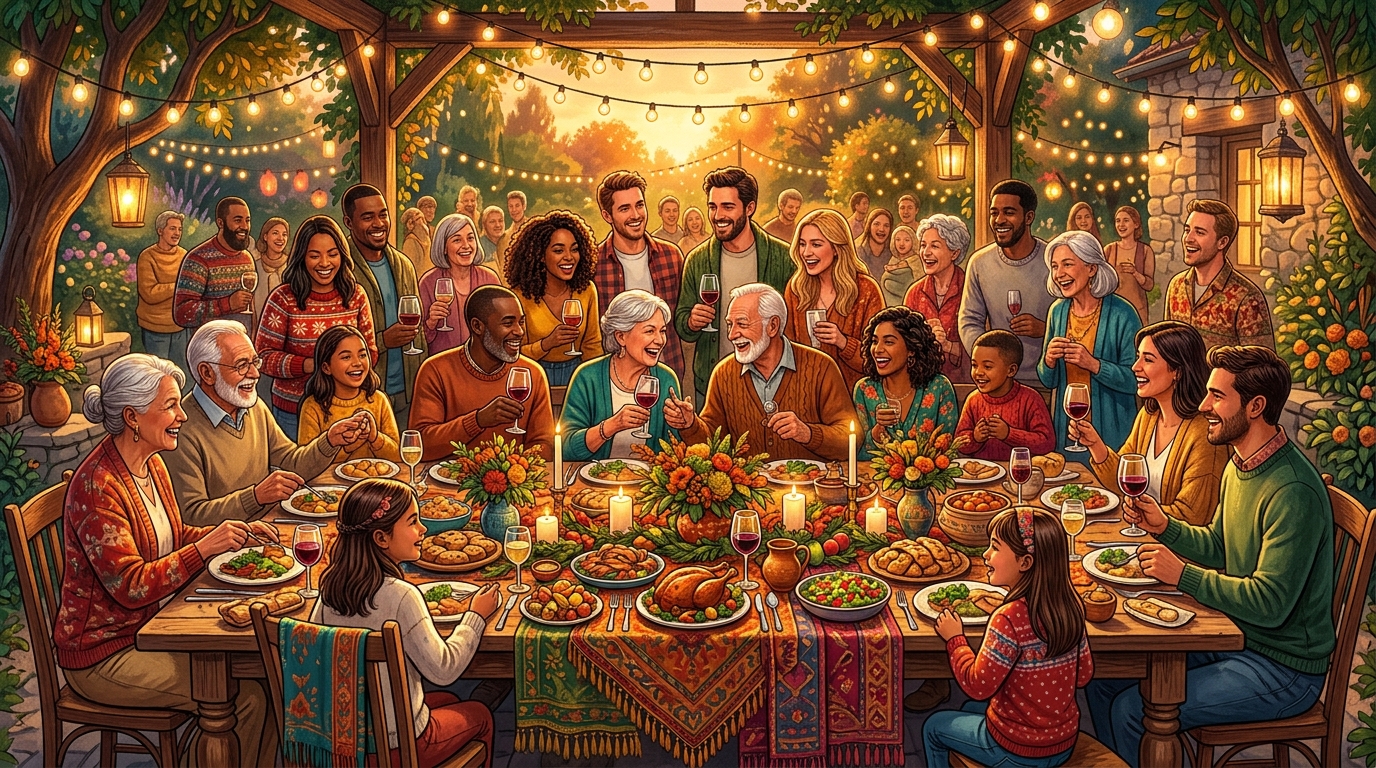
Because Eid al-Adha typically falls outside any single school or work calendar constraint, it is one of the few times of year when extended families make a point of traveling back to ancestral hometowns and villages, gathering around low communal tables for meals that stretch long into the afternoon and evening. For many Moroccan families, especially those living abroad, Eid al-Adha remains one of the two or three occasions each year built around returning home.
When the state steps in: drought, price and the sacrifice
Because the sacrifice depends on a healthy and affordable national sheep flock, the Moroccan monarchy has, on a handful of historic occasions, intervened directly. Under King Hassan II, the Eid sacrifice was suspended by royal call three times, in 1963 after the economic strain of the Sand War with Algeria, in 1981 amid a severe drought that devastated livestock, and again in 1996 following consecutive years of drought that had led Morocco to declare 1995 a national disaster year for agriculture. In each case the reasoning was the same: protecting ordinary households from the financial burden of buying an animal at inflated prices during a period of genuine hardship, though some Moroccans chose to perform the sacrifice privately regardless.
That history explains why sheep supply and pricing remain a genuine annual news story in Morocco rather than a minor footnote. In 2025, King Mohammed VI made a similar call for Moroccans to forgo the sacrifice that year, citing the national context, an unprecedented step during his own reign and a reminder that the custom is tied as closely to agricultural and economic conditions as it is to religious observance.
Entering the 2026 Eid season, the picture looked considerably brighter: exceptionally strong winter rainfall had replenished pastures nationwide, the national herd census showed a large rebound in the sheep population, and authorities had distributed direct financial support to hundreds of thousands of breeders to help stabilize supply, all factors that analysts expected to keep prices more accessible than in recent, harder years. The underlying lesson is a distinctly Moroccan one: a religious feast whose timing is set by a moon sighting, but whose affordability is watched as closely as any economic indicator.
Frequently asked
What does Eid al-Adha commemorate?
Eid al-Adha commemorates the Prophet Ibrahim's willingness to sacrifice his son Ismail in obedience to God, and God's mercy in providing a ram to be sacrificed instead. Muslims mark the story by sacrificing an animal and sharing the meat with family and those in need.
Why is Eid al-Adha called Eid El Kebir in Morocco?
Eid El Kebir means the "Great Feast" or "Big Eid" in Moroccan Arabic (Darija), a name used to distinguish it from Eid al-Fitr, the smaller feast that follows Ramadan. Both names are used interchangeably across Morocco.
How is the date of Eid al-Adha determined in Morocco?
Morocco's Ministry of Islamic Affairs conducts an official sighting of the crescent moon marking the start of Dhu al-Hijjah, the final month of the Islamic calendar. Since Eid al-Adha falls on the tenth day of that month, the sighting fixes the date, which shifts roughly ten to eleven days earlier each year on the Gregorian calendar.
What is the kabsh and why do families buy one before Eid?
The kabsh is the sacrificial sheep purchased in the weeks before Eid al-Adha. Families buy it early from livestock markets or temporary urban pens known as "sheep hotels" so it can be fed and cared for until the morning of the feast, when it is sacrificed.
How is the sacrificial meat traditionally divided in Morocco?
Custom divides the meat into three roughly equal parts: one portion for the immediate household, one for extended family, and one set aside as charity for neighbors and people in need, keeping generosity built into the holiday.
What is boulfaf?
Boulfaf is grilled liver wrapped in caul fat and seasoned with cumin, salt and chili, then cooked over charcoal. It is the classic first-day Eid al-Adha dish in Morocco, eaten with bread and mint tea, since organ meats are prepared before they spoil.
What is mrouzia and when is it eaten?
Mrouzia is a sweet-and-savory Moroccan tagine made from bone-in mutton slow-cooked with ras el hanout, saffron, smen, honey, cinnamon, raisins and almonds. Because the honey and fat help preserve it, mrouzia is traditionally cooked to be eaten over the days following the sacrifice, not just on the first day.
Do Moroccan children get gifts during Eid al-Adha?
Yes. Children traditionally receive new clothes, often a djellaba or kaftan bought specifically for the holiday, along with small monetary gifts from parents and relatives known as Eidiya.
Has the Moroccan government ever suspended the Eid al-Adha sacrifice?
Yes, on more than one occasion. King Hassan II suspended the sacrifice in 1963, 1981 and 1996 due to economic hardship and drought, and King Mohammed VI made a similar call in 2025, all aimed at easing the financial burden on households during difficult agricultural years.
Why do Moroccan authorities monitor sheep prices before Eid al-Adha?
Because the sacrifice is a near-universal household expense, sheep supply and pricing are treated as a public concern. Authorities track the national herd through periodic census counts and have provided direct financial support to breeders in years when rainfall and feed costs threatened to push prices out of reach for ordinary families.
- Morocco World News — Morocco to celebrate Eid al-Adha 2026 on May 27 ↗
- Taste of Maroc — Eid al-Adha (Eid El Kebir) traditions and dishes in Morocco ↗
- Morocco World News — Gathering over a table of boulfaf: Eid al-Adha the Moroccan way ↗
- Hespress — Eid al-Adha canceled three times under Hassan II, King Mohammed VI's historic first ↗
- Wikipedia — Mrouzia ↗
- MAwebzine — Eid al-Adha 2026: sheep prices in Morocco ↗
Video via official YouTube embeds; photos via Wikimedia Commons under their stated licenses. All rights belong to the respective owners; 212 Daily claims no ownership.