Morocco for Digital Nomads: Cities, Cost & WiFi
Why Morocco Appeals to Remote Workers
Morocco sits just a short flight from major European hubs, shares a timezone close to Western Europe (GMT/GMT+1), and offers warm weather, rich culture and a much lower cost of living than the EU. That combination has made it a rising star on the digital nomad map.
The country also offers huge variety in a compact area: surf towns on the Atlantic, ancient medinas, mountain villages in the Atlas, and the Sahara within reach. For remote workers this means you can change your scenery without changing your timezone or your budget dramatically.
Best Cities and Towns for Nomads
Marrakech is the most popular hub, with the widest choice of coworking spaces, cafes, riads and an international airport. Taghazout and nearby Tamraght draw surfers and a younger nomad crowd with a laid-back beach lifestyle.
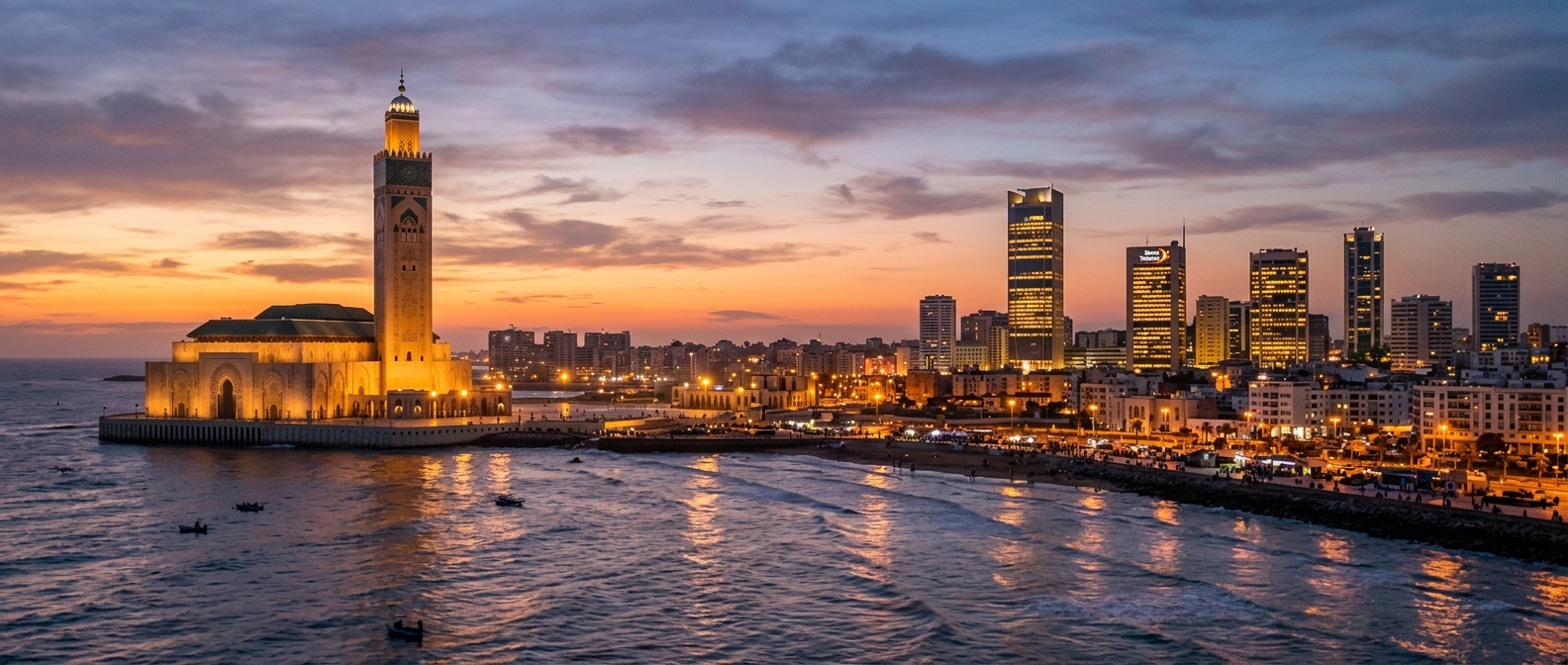
Essaouira offers a breezy, walkable medina by the sea; Tangier connects easily to Europe and has a growing creative scene; and Rabat and Casablanca suit those who want bigger-city amenities and the most reliable infrastructure. Chefchaouen, the blue city, is a scenic option for shorter stays.
Internet, WiFi and Coworking
Internet has improved significantly, with fibre available in major cities and reliable 4G nearly everywhere; 5G is being rolled out. WiFi in cafes and riads can be inconsistent, so most nomads buy a local SIM (Maroc Telecom, Orange or Inwi) with a generous data plan as a backup hotspot.
Coworking spaces are well established in Marrakech, Casablanca, Rabat and Taghazout, offering fast wired connections, meeting rooms and a community. For video calls, a coworking day pass or a fibre-equipped apartment is the safest bet.
Cost of Living
Morocco is affordable by Western standards. A solo nomad can live comfortably on roughly USD 1,000-1,800 per month, depending on city and lifestyle, with Marrakech and the coast slightly higher than smaller towns.
Rent for a furnished one-bedroom in a nomad-friendly area often runs USD 350-700 per month, local meals cost a few dollars, and coworking memberships are modest. Eating local, using shared taxis and renting monthly all stretch a budget further.
Visas and Practical Tips
Citizens of many countries, including the US, UK, EU and Canada, can enter Morocco visa-free for up to 90 days. There is currently no dedicated long-term digital nomad visa, so longer stays usually involve a border run or applying for residency.
Practical tips: carry some cash as many small businesses are card-shy, learn a few words of Darija or French, dress modestly outside tourist zones, and factor in that Friday is the main prayer day when some businesses slow down.
| Expense | Budget | Comfortable |
|---|---|---|
| Rent (furnished 1BR) | $350-450 | $550-700 |
| Food & groceries | $200-300 | $350-450 |
| Coworking / WiFi | $60-100 | $120-180 |
| Local SIM & data | $15-25 | $20-35 |
| Transport & extras | $100-200 | $250-400 |
| Estimated total | ~$1,000-1,200 | ~$1,500-1,800 |
Estimated monthly budget for a digital nomad in Morocco (USD)
FAQ
Does Morocco have a digital nomad visa?
Not currently. Most nomads use the visa-free entry of up to 90 days available to many nationalities, then do a border run or pursue residency for longer stays.
Is the internet good enough for remote work in Morocco?
In major cities and coworking spaces, yes. Fibre is common in Marrakech, Casablanca and Rabat, and 4G is widely reliable. A local SIM as a hotspot backup is recommended for video calls.
How much does it cost to live in Morocco as a nomad?
Roughly USD 1,000-1,800 per month for a single person, depending on the city and lifestyle. Smaller towns are cheaper than Marrakech and the popular coastal spots.
What is the best city in Morocco for digital nomads?
Marrakech is the most popular for its infrastructure and coworking scene, while Taghazout and Essaouira suit those wanting a relaxed coastal lifestyle, and Tangier offers easy access to Europe.
Loved this? Useful? React below — your feedback helps other readers.