Darija vs Standard Arabic: 15 Key Differences
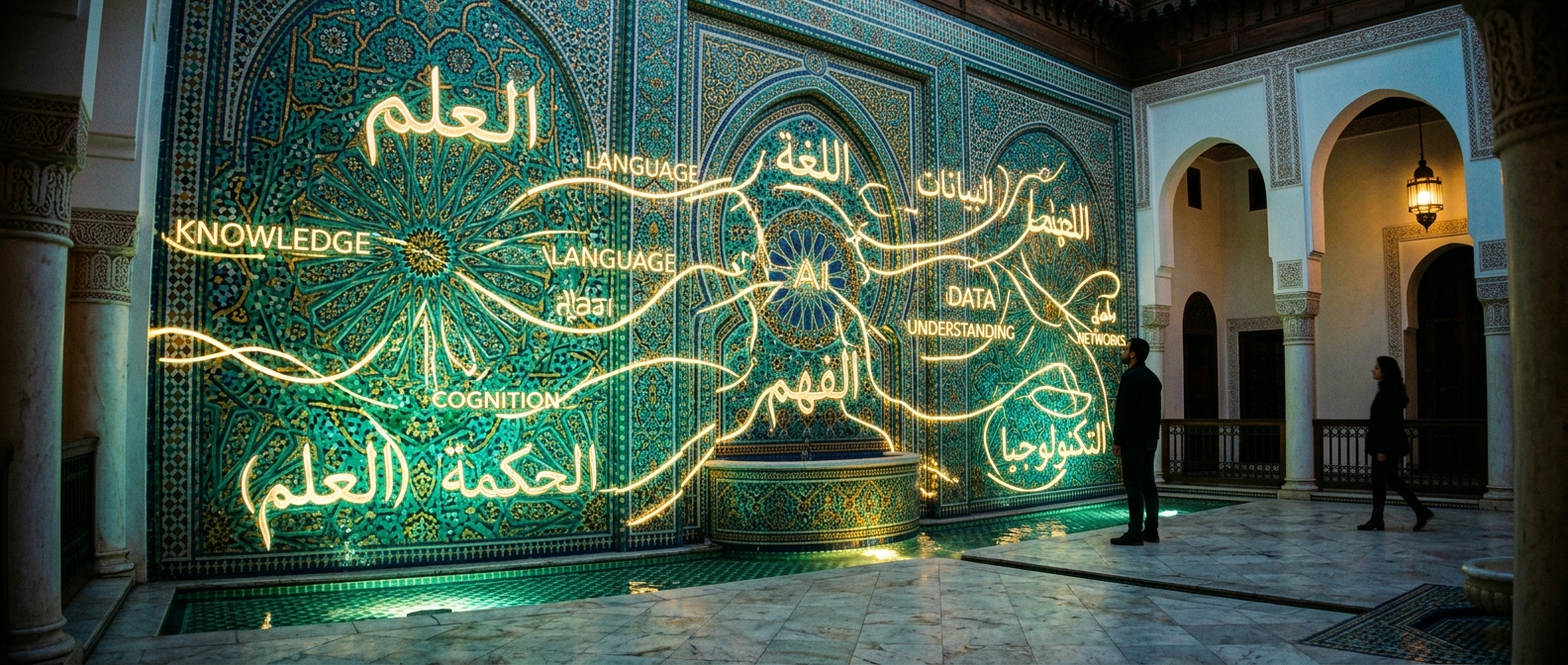
Two Languages, One Country
In Morocco, almost everyone uses two forms of Arabic. The formal one is Modern Standard Arabic, known locally as 'fos7a' (الفصحى). It is the language of newspapers, official speeches, the Quran, and the classroom. Nobody speaks it at home — it is learned, not native.
The other is Darija (الدارجة), the everyday spoken Moroccan dialect. It is the true mother tongue of most Moroccans, used at home, in the street, in songs and on social media. The gap between the two is so wide that linguists treat them almost as separate languages.
Vocabulary: Where the Words Come From
MSA vocabulary is pure classical Arabic, shared with Egypt, the Gulf and the Levant. Darija, by contrast, is a melting pot. It keeps an Arabic core but layers in Tamazight (Berber) words, a large amount of French, and Spanish in the north. The word for table is 'tabla' (from Spanish), the word for cheese is 'fromaj' (from French).
This means an Egyptian or Saudi reading MSA will understand a Moroccan newspaper perfectly, but will be lost listening to two Moroccans chatting. Many common Darija words simply do not exist in MSA.
Pronunciation and Dropped Vowels
One of the biggest differences is sound. MSA pronounces full short vowels, so the word for 'I wrote' is 'katabtu'. In Darija it becomes 'ktebt' — the short vowels collapse and you get clusters of consonants that sound very compressed to outsiders.
This vowel-dropping is why Darija sounds fast and clipped compared to the flowing rhythm of MSA. Letters are also pronounced differently in places, and some sounds shift entirely between the two registers.
Grammar: Simpler in Darija
Darija strips away much of MSA's complex grammar. MSA has detailed case endings (the i'rab) that change the end of nouns — Darija ignores these completely. MSA has dual forms for exactly two of something; Darija mostly drops the dual and just uses plurals.
Verb conjugation is also lighter. Darija adds a prefix 'ka-' or 'ta-' to mark the present continuous, something MSA does not do. So 'I am writing' is 'kanekteb' in Darija, a construction you will never see in formal Arabic.
Writing and Status
MSA has a long, prestigious written tradition spanning 1,400 years. Darija, until recently, was almost never written. People who wanted to text in Darija used 'Arabizi', spelling Arabic sounds with Latin letters and numbers (3 for ع, 7 for ح, 9 for ق).
This is changing. Today Darija appears in advertising, songs, TV dramas, and online, increasingly written in Arabic script. But it still carries less formal prestige than fos7a, which remains the language of education and religion.
Which Should You Learn First?
If your goal is to talk to Moroccans, travel, or live in Morocco, learn Darija. It is what people actually speak, and locals will warmly reward any attempt. MSA will not help you order food or chat with a taxi driver.
If your goal is to read Arabic literature, work across the Arab world, or understand religious texts, learn MSA. Many learners eventually do both: Darija for daily life and fos7a for formal reading. The good news is that knowing one gives you a strong head start on the other.
| English | Darija | Arabic |
|---|---|---|
| I want | bghit | بغيت |
| I want (MSA) | ureed | أريد |
| A lot | bzzaf | بزاف |
| A lot (MSA) | katheer | كثير |
| Now | daba | دابا |
| Now (MSA) | al-aan | الآن |
| How | kifash | كيفاش |
| How (MSA) | kayfa | كيف |
| Good | mzyan | مزيان |
| Good (MSA) | jayyid | جيد |
| Table | tabla | طبلة |
| What | ash / shnu | آش / شنو |
| What (MSA) | madha | ماذا |
| Money | flous | فلوس |
| Why | 3lash | علاش |
Key vocabulary differences between Darija and Standard Arabic
FAQ
Can Standard Arabic speakers understand Darija?
Not easily. While Moroccans understand Standard Arabic from school and media, speakers from other Arab countries often cannot follow spoken Darija because of its French and Tamazight vocabulary and dropped vowels.
Is Darija a dialect or a separate language?
Technically Darija is classified as a dialect of Arabic, but the differences in vocabulary, grammar and pronunciation are so large that many linguists treat it as nearly a separate language.
What does 'fos7a' mean?
'Fos7a' (الفصحى) is the Moroccan name for Modern Standard Arabic, the formal classical Arabic used in writing, news, education and religion across the Arab world.
Should I learn Darija or Standard Arabic first?
Learn Darija if you want to speak with Moroccans in daily life or travel in Morocco. Learn Standard Arabic if your goal is reading, formal work, or communicating across the whole Arab world.
Loved this? Useful? React below — your feedback helps other readers.