Chefchaouen Deep Guide: Exploring Morocco's Magical Blue City
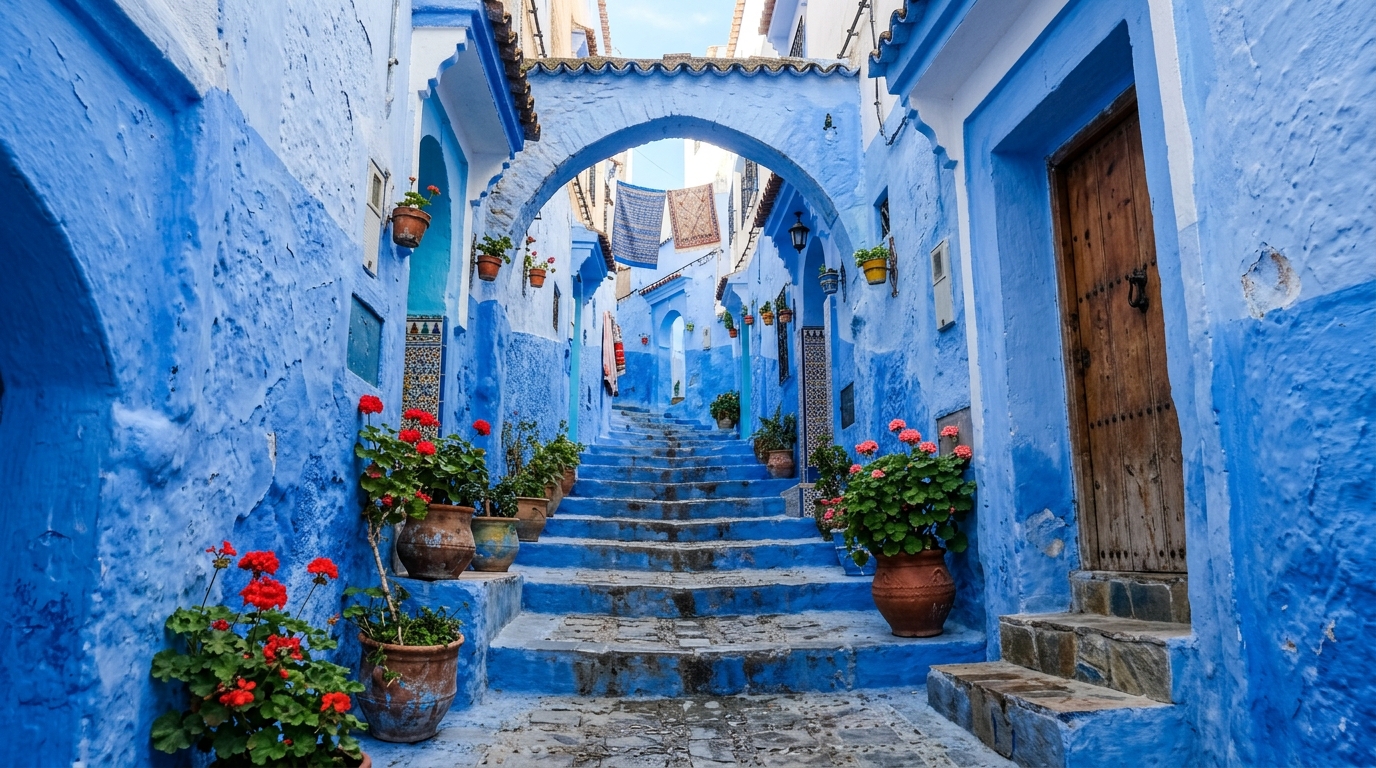
The Town That Painted Itself Blue
Tucked into the folds of the Rif Mountains in northern Morocco, Chefchaouen, often shortened to Chaouen, is unlike anywhere else in the country. Its medina is washed almost entirely in shades of blue, from pale powder to deep cobalt, creating a dreamlike townscape that has made it one of the most photographed places in the Arab world. Set against green mountain slopes at around 600 meters of elevation, the blue city feels like a place out of a storybook.
Founded in 1471 as a small fortress to defend against Portuguese incursions, Chefchaouen later became a refuge for Muslims and Jews fleeing the Spanish Reconquista. That mixed Andalusian heritage shaped its architecture, with red-tiled roofs, arched doorways and a layout that recalls southern Spain more than the imperial cities of the Moroccan interior. For centuries the town was effectively closed to outsiders, which preserved its distinctive character.
Today Chefchaouen has fully embraced its identity as the blue pearl of Morocco. Yet despite its fame, it retains a slower, gentler rhythm than Marrakech or Fez. The cool mountain air, the absence of aggressive souk crowds, and the sheer visual serenity of the place make it many travelers' favorite stop in the entire country, a peaceful counterpoint to the sensory overload elsewhere.
Why Is Chefchaouen Blue?
The question every visitor asks has no single definitive answer, and the competing theories are part of the town's charm. The most widely cited explanation traces the blue to the Jewish community that settled here after fleeing Spain. In Jewish tradition, blue, or tekhelet, symbolizes the sky and heaven and serves as a reminder of the divine, and the refugees are said to have painted the buildings to reflect that spiritual significance.
Other explanations are more practical. One popular theory holds that the blue wash repels mosquitoes and insects, keeping the narrow streets more comfortable. Another suggests the color simply keeps homes cooler in the summer heat by reflecting sunlight. Still others point to the calming, cooling psychological effect of the color in a hot climate.
Whatever the original motivation, the blue is now a living tradition actively maintained by residents, who repaint their walls regularly to keep the hues vivid. The practice has also become an economic engine, drawing tourists and the income they bring. The truth is likely a blend of heritage, practicality and, increasingly, deliberate cultivation of the town's signature look. The mystery only adds to the magic.
Wandering the Blue Medina
The chief pleasure of Chefchaouen is simply to wander. The medina is compact and far less labyrinthine than those of Fez or Marrakech, so getting lost here is a delight rather than a stress. Every corner reveals another photogenic scene: blue staircases trailing potted plants, weathered wooden doors set in azure frames, cats dozing on cobalt steps, and laundry strung between buildings the color of the sky.
The heart of town is Plaza Uta el-Hammam, a charming square shaded by trees and lined with cafes, perfect for a leisurely mint tea while people-watching. Overlooking it stands the Kasbah, a restored 15th-century fortress with peaceful gardens, a small museum and a tower offering views over the rooftops. The adjacent Grand Mosque, with its unusual octagonal minaret, anchors the square.
Shopping in Chefchaouen is refreshingly low-pressure. The town is known for woven wool blankets and garments, leather goods, and locally made handicrafts, often sold by artisans who are happy to chat rather than hustle. The mountain setting also makes the local produce and honey worth seeking out. Photographers should aim for early morning, when the light is soft, the streets are quiet, and the blues glow at their most ethereal before the day-trip crowds arrive.
Hikes and Views Around Town
Chefchaouen's mountain setting makes it a fine base for walking, and the most popular short hike leads to the Spanish Mosque. Perched on a hill across the valley, this small abandoned mosque is reached in about thirty to forty minutes on foot from the medina. The destination is pleasant enough, but the real reward is the panoramic view of the entire blue city spread out below, especially magical at sunset when the light turns golden over the rooftops.
For a more ambitious adventure, the Akchour waterfalls in the Talassemtane National Park lie a short drive away and offer one of northern Morocco's best day hikes. Trails follow a river through a lush gorge to a series of cascades and natural pools, passing the dramatic God's Bridge, a natural stone arch. The walk to the big waterfall is moderately challenging and best tackled with proper footwear and an early start.
The surrounding Rif Mountains and Talassemtane National Park hide further trails through cedar and fir forests, home to Barbary macaques and rich birdlife. Local guides can arrange longer treks for those who want to venture deeper. Even visitors with no appetite for serious hiking will appreciate the cooler mountain climate, a welcome relief in summer and a reminder that Chefchaouen offers far more than its famous blue walls.
Food, Stays and Local Life
Chefchaouen's dining scene is modest but satisfying, with a mountain-town accent. Goat cheese is a local specialty, often served fresh and tangy, reflecting the pastoral surroundings. Expect the Moroccan staples done well, hearty tagines, harira soup, grilled meats and abundant fresh bread, frequently enjoyed on rooftop terraces with views over the blue rooftops and green hills beyond. Cafes around Plaza Uta el-Hammam are perfect for lingering over tea.
Accommodation ranges from simple guesthouses to characterful small riads and pensions, many housed in traditional blue buildings within the medina. Because the town is compact, almost everything is within easy walking distance, and staying inside the medina lets you enjoy the streets in the quiet hours before and after the day-trippers. Budget travelers will find Chefchaouen notably gentle on the wallet.
A note on local customs and the region: the Rif is a conservative rural area, so modest dress is appreciated, particularly for women. Visitors may notice that the surrounding hills are associated with cannabis cultivation, and travelers are frequently approached with offers; politely declining is the wise and lawful course. None of this should overshadow the town's overwhelming friendliness. Chefchaouen runs on a relaxed, hospitable rhythm that quickly wins over even the most jaded traveler.
Getting There and Planning Your Visit
Chefchaouen sits off the main rail network, so reaching it requires a bus or road transfer, but it is well connected by good roads. The town is roughly a two-and-a-half to three-hour drive from Tangier and around four hours from Fez, which is why it slots so naturally into a northern Morocco itinerary linking those two cities. Comfortable intercity buses serve the route, and many travelers opt for a private transfer or a guided day or overnight trip.
While day trips from Fez or Tangier are common, they do the town a disservice. Spending at least one night, and ideally two, lets you experience Chefchaouen at its best: the hushed early mornings, the golden-hour glow on the walls, and the gentle evening buzz around the square, all without the midday crowds. The blue city transforms entirely once the tour buses depart.
Plan your visit around comfortable weather; spring and autumn are ideal, summer can be warm but is tempered by the elevation, and winter brings chilly mountain nights and occasional rain. Pack comfortable walking shoes for the steep, uneven streets and any hikes you intend to do. Above all, build in unhurried time. Chefchaouen is not a place to tick off a checklist; it is a place to slow down, wander, and let one of Morocco's most enchanting towns reveal itself at its own gentle pace.
| Detail | Information |
|---|---|
| Region | Rif Mountains, northern Morocco |
| Founded | 1471 |
| Drive from Tangier | ~2.5–3 hours |
| Drive from Fez | ~4 hours |
| Recommended stay | 1–2 nights |
| Top free activity | Hike to the Spanish Mosque for sunset views |
Chefchaouen trip essentials
FAQ
Why is Chefchaouen painted blue?
There is no single confirmed reason. Popular theories include Jewish heritage, where blue symbolizes the sky and the divine, the belief that blue repels mosquitoes, and the idea that it keeps homes cooler. Today residents maintain the blue as a cherished tradition.
How long should I spend in Chefchaouen?
One to two nights is ideal. While many visit on a day trip from Fez or Tangier, staying overnight lets you enjoy the medina in the quiet early mornings and at sunset, when the blue city is at its most beautiful and the crowds are gone.
How do I get to Chefchaouen?
Chefchaouen is not on the train network, so you travel by bus, private transfer or guided tour. It is about a 2.5 to 3 hour drive from Tangier and roughly 4 hours from Fez, fitting naturally into a northern Morocco itinerary.
What are the best things to do in Chefchaouen?
Wander and photograph the blue medina, relax in Plaza Uta el-Hammam, visit the Kasbah, hike up to the Spanish Mosque for sunset views, and take a day trip to the Akchour waterfalls in Talassemtane National Park.
Is Chefchaouen safe for tourists?
Yes, Chefchaouen is generally safe and very welcoming. The main thing to know is that the surrounding Rif region is associated with cannabis cultivation, so you may be offered drugs; politely declining is the safe and lawful choice.
Loved this? Useful? React below — your feedback helps other readers.