Best Time to Visit Chefchaouen
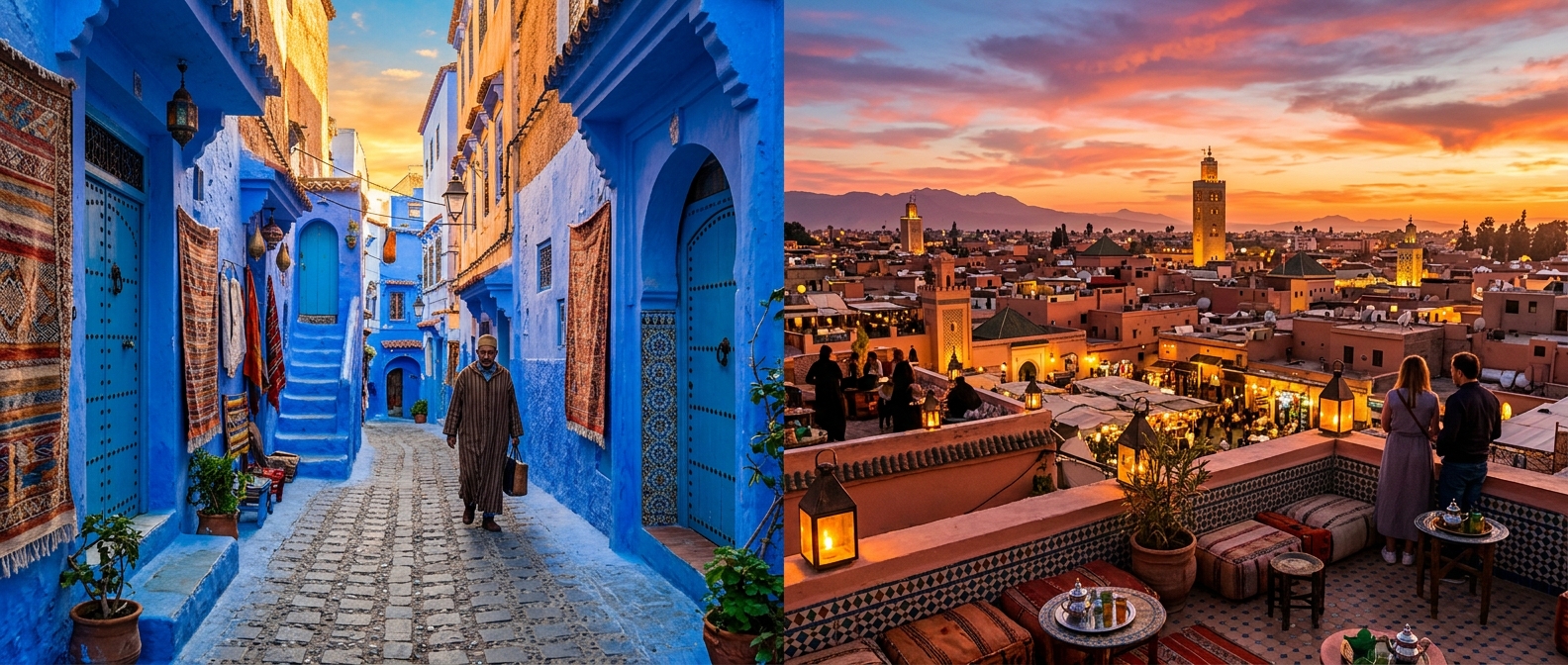
Chefchaouen's Mountain Climate
Chefchaouen, the famous blue city, sits in the Rif Mountains of northern Morocco at around 600 metres elevation. This gives it a cooler, wetter climate than the southern interior, more Mediterranean and mountainous in character, with greener surroundings and a noticeable winter rainy season.
Because it is in the north and at altitude, the town avoids the extreme summer heat of Marrakech and the desert but pays for it with cool, damp winters. Timing your visit around this mountain climate makes a real difference to the experience.
Spring: The Ideal Window
April to June is the prime time to visit. Winter rains have eased, the hills are lush and green, wildflowers bloom, and temperatures are comfortably mild, around 20-26C by day. The famous blue walls look their best under clear spring light, ideal for photography.
Spring also offers good conditions for the easy hikes around town, such as to the Spanish Mosque viewpoint or the Akchour waterfalls in the nearby national park, where the rivers run full from snowmelt.
Autumn: Mild and Quieter
September and October are equally lovely. Summer heat and crowds fade, the air is clear and mild, around 22-28C, and rain has not yet set in. The light is warm and the surrounding landscape, still green from the season, photographs beautifully.
Autumn tends to be a little quieter than the summer peak, making it easier to enjoy the photogenic medina without the densest crowds. It is an excellent, often underrated window for a relaxed visit.
Summer: Warm and Busy
July and August are warm but rarely extreme, with highs around 30-32C, far more comfortable than the baking interior. This makes Chefchaouen a popular summer escape, but it is also the busiest period, with tour groups and day-trippers crowding the narrow blue lanes.
If you visit in summer, arrive early in the day to photograph the medina before the crowds and tour buses appear, and consider staying overnight to enjoy the quieter mornings and evenings after day visitors leave.
Winter: Cool, Wet and Atmospheric
December to February is the wettest, coolest season. Days are cool, around 13-16C, nights are cold, and rain is frequent in this northern, mountainous setting. Mist sometimes shrouds the surrounding peaks, and snow can dust the higher Rif slopes, lending the town a moody atmosphere.
Winter is low season, so it is quiet and inexpensive, but pack warm and waterproof layers and confirm heating in your guesthouse. Slippery, steep cobbled streets call for shoes with good grip. It is atmospheric but the least comfortable season.
Planning Your Visit
Chefchaouen is often visited as part of a northern Morocco loop with Tangier, Fez, or Tetouan, and the mountain roads to reach it are scenic but winding, so allow travel time. Two nights lets you enjoy the medina, viewpoints, and a nearby hike without rushing.
For the best balance of weather, scenery, and manageable crowds, target late April to June or September to October. Whatever the season, mornings offer the calmest, most photogenic experience of the blue streets before day visitors arrive.
| Season | Avg High (C) | Rain | Crowds | Rating |
|---|---|---|---|---|
| Spring (Apr-Jun) | 20-26 | Easing | Moderate | Best |
| Summer (Jul-Aug) | 30-32 | Minimal | Busiest | Good (early starts) |
| Autumn (Sep-Oct) | 22-28 | Low | Quieter | Excellent |
| Winter (Dec-Feb) | 13-16 | Frequent | Quiet | Atmospheric but cold/wet |
Chefchaouen weather and crowds by season
FAQ
When is the best time to visit Chefchaouen?
Spring (April to June) and autumn (September to October), when the Rif mountain weather is mild and dry, around 20-28C, the hills are green, and crowds are more manageable than in summer.
Does it rain a lot in Chefchaouen?
Yes, more than southern Morocco. Sitting in the Rif Mountains, it has a wet winter from December to February with frequent rain, mist and occasional snow on surrounding peaks.
Is Chefchaouen crowded in summer?
Yes, summer is the busiest season as it is a popular cool escape from the interior heat. Visit early in the day to photograph the blue medina before tour groups and day-trippers arrive.
Loved this? Useful? React below — your feedback helps other readers.