Canada's World Cup 2026 Run to the Round of 16: Marsch, Davies, David and Why They Are Dangerous vs Morocco

Canada's run to the Round of 16: the co-hosts who refuse to stop dreaming
When the draw for the 2026 FIFA World Cup was made, Canada were the co-hosts almost everyone expected to be swept aside once the tournament got serious. A men's national team with a single World Cup goal to its name before this summer, a program still carrying the scars of three straight defeats at Qatar 2022, was widely written off as a ceremonial host filling out the bracket. Instead, Jesse Marsch's side have delivered the deepest run in the country's football history, reaching the Round of 16 and setting up a blockbuster date with Morocco at NRG Stadium in Houston on Saturday, July 4, 2026, with kickoff at 1:00 p.m. Eastern Time.
This is no longer a feel-good cameo. Canada have won a knockout tie at a World Cup for the first time ever, they have a returning superstar in Alphonso Davies gathering match sharpness at exactly the right moment, and they are carried by a red wave of support that has grown louder with every round. On the other side of the tie stands a Morocco team that reached the Qatar 2022 semifinals and just survived a penalty-shootout epic against the Netherlands. It is favourite against underdog, pedigree against belief, and it is one of the most compelling ties of the entire last 16.
This is the story of how Canada got here: the group stage that hardened them, the injury-time drama that broke their World Cup duck, the coach who rebuilt their identity from the ground up, and the players who make them genuinely dangerous. It is also an honest look at why, for all Morocco's experience, the Atlas Lions should treat this co-host with real respect on Independence Day weekend in Texas.
For a country that has spent decades in the shadow of its CONCACAF neighbours, the symbolism is enormous. A generation of Canadian fans grew up without a single home World Cup memory to hold onto. Now they have a team one win from a quarterfinal, playing on North American soil, in front of the loudest support the program has ever known. Whatever happens in Houston, the run itself has already changed what Canadian soccer believes is possible.
From Mexico 1986 to Houston 2026: how far Canada have travelled
To understand what this run means, you have to understand where Canadian men's football has been. Before this tournament, the men's national team had appeared at only two World Cups. At Mexico 1986 they went home after three matches without scoring a single goal, a debut that summed up decades of near-misses and underachievement. It would be thirty-six years before they returned to the biggest stage at all.
That return, at Qatar 2022, was supposed to be the breakthrough. Canada qualified in style, topping the CONCACAF final round, and Alphonso Davies scored the country's first-ever World Cup goal against Croatia. But the tournament itself was brutal: three defeats in three games, a harsh lesson in the gap between qualifying with flair and competing at the sharp end of a World Cup. The talent was obvious; the ruthlessness was not yet there.
Everything about 2026 was framed by that experience. As co-hosts alongside the United States and Mexico, Canada were guaranteed their place, but the pressure of a home World Cup cut both ways. There would be no hiding, no soft landing, no excuse of an unfamiliar environment. The nation wanted more than participation. It wanted a team that could win a knockout game, and for the first time in its history, it now has one.
The contrast between 1986 and 2026 is the whole point. A program that once could not score a goal at a World Cup has now scored freely, won a knockout tie, and reached the last 16 as hosts. The distance travelled is measured not just in results but in belief: Canadian players no longer walk out expecting to lose to bigger names. That mental shift, more than any single result, is what separates this generation from every one before it.
The group stage: a statement win, a costly slip, and a team that grew up
Canada's group stage told you everything about this team's ceiling and its rough edges. The signature moment was a thunderous performance against Qatar, a comprehensive victory that announced to the tournament that the co-hosts had come to play, not to make up the numbers. It was the kind of result that settles nerves, builds goal difference, and tells a young squad that its attacking talent can hurt anyone on the right day.
But the campaign was not flawless, and Marsch has never pretended otherwise. A defeat to Switzerland in the group stage cost Canada control of their own destiny, denying them the top spot that would have kept their knockout path closer to home. It was a reminder that this Canada side, for all its energy, can still be punished by a disciplined, tournament-savvy European team when the margins tighten. That lesson would matter enormously heading into the knockouts.
What impressed most was the response. Rather than letting the Switzerland setback deflate them, Canada absorbed it, adjusted, and carried a hardened edge into the Round of 32. Marsch's post-match honesty after both the highs and the lows became a feature of the run, a coach refusing to sugarcoat the defeats while never letting belief drain from the group. It was a team learning, in real time, how to survive a World Cup.
By the time the group stage closed, Canada had shown both faces of a serious tournament side: the capacity to blow a team away and the resilience to recover from a chastening night. Plenty of hosts have flattered to deceive at their own World Cup. This one had banked a marquee win, learned a painful lesson, and arrived at the knockout rounds tougher for the experience rather than broken by it.


The night Canada broke their duck: Eustaquio's injury-time winner over South Africa
The defining moment of Canada's tournament, and arguably of the program's modern history, came in the Round of 32 against South Africa at SoFi Stadium near Los Angeles. For long stretches it was tense, cagey and nerve-shredding, exactly the kind of knockout game that has undone Canadian sides before. Then, deep into injury time, Stephen Eustaquio struck to settle it 1-0 and send Canada into the Round of 16 for the first time ever.
It is impossible to overstate the weight of that goal. A country that had never won a World Cup knockout match, that had never even reached the last 16, did it with a stoppage-time winner from its midfield leader, on North American soil, in front of a partisan crowd. The scenes at full time, players and staff pouring onto the pitch, captured a program crossing a threshold it had chased for decades.
The manner of the win mattered as much as the fact of it. Canada showed they could absorb pressure, stay disciplined, and strike decisively at the death rather than wilting. That is the profile of a team built for knockout football, and it is a template Marsch will want to repeat against Morocco: stay in the game, trust the fitness and the belief, and back yourself to land the decisive blow late.
There was a bonus, too. The South Africa game marked the tournament debut of Alphonso Davies, introduced from the bench as Canada chased the win. Getting their talisman meaningful minutes without over-exposing a body still building back from a serious injury was, in hindsight, a perfectly managed piece of squad planning. Canada broke their World Cup duck and got their superstar up to speed in the same night.

Jesse Marsch's rebuild: how an American coach reshaped Canada
None of this happens without Jesse Marsch. When the American coach took charge of Canada in 2024, he inherited a talented but bruised squad still processing the disappointment of Qatar 2022 and searching for an identity. What he has built since is a team cast firmly in his own image: aggressive, high-energy, emotionally invested, and utterly unafraid of bigger reputations.
Marsch has never hidden his philosophy. Schooled in the intense, vertical, pressing traditions of the modern game, he wants his team to hunt the ball high, transition at speed, and impose chaos on more technical opponents. He has spoken openly, memorably, about bringing a certain American self-belief to a Canadian dressing room that he felt needed to stop apologising for its ambition. Humility, in his telling, does not build champions.
That confidence has been backed by results and, crucially, by buy-in from the players. This is a squad that visibly believes in its coach and its method, a group that presses for each other and refuses to fold when matches tighten. The late winner over South Africa was, in many ways, the purest expression of a Marsch team: relentless to the final whistle, rewarded for its persistence, and emotionally all-in on the cause.
Marsch also understands the psychology of a host nation. He has framed every round as house money for a program with everything to gain and little to lose, deliberately loading the pressure onto more decorated opponents. Against Morocco, a semifinalist expected to handle a co-host that had never previously won a knockout tie, that framing is a weapon. Canada will walk out in Houston as underdogs who genuinely fancy the upset, and that is exactly how their coach wants it.

Alphonso Davies: the returning superstar who changes everything
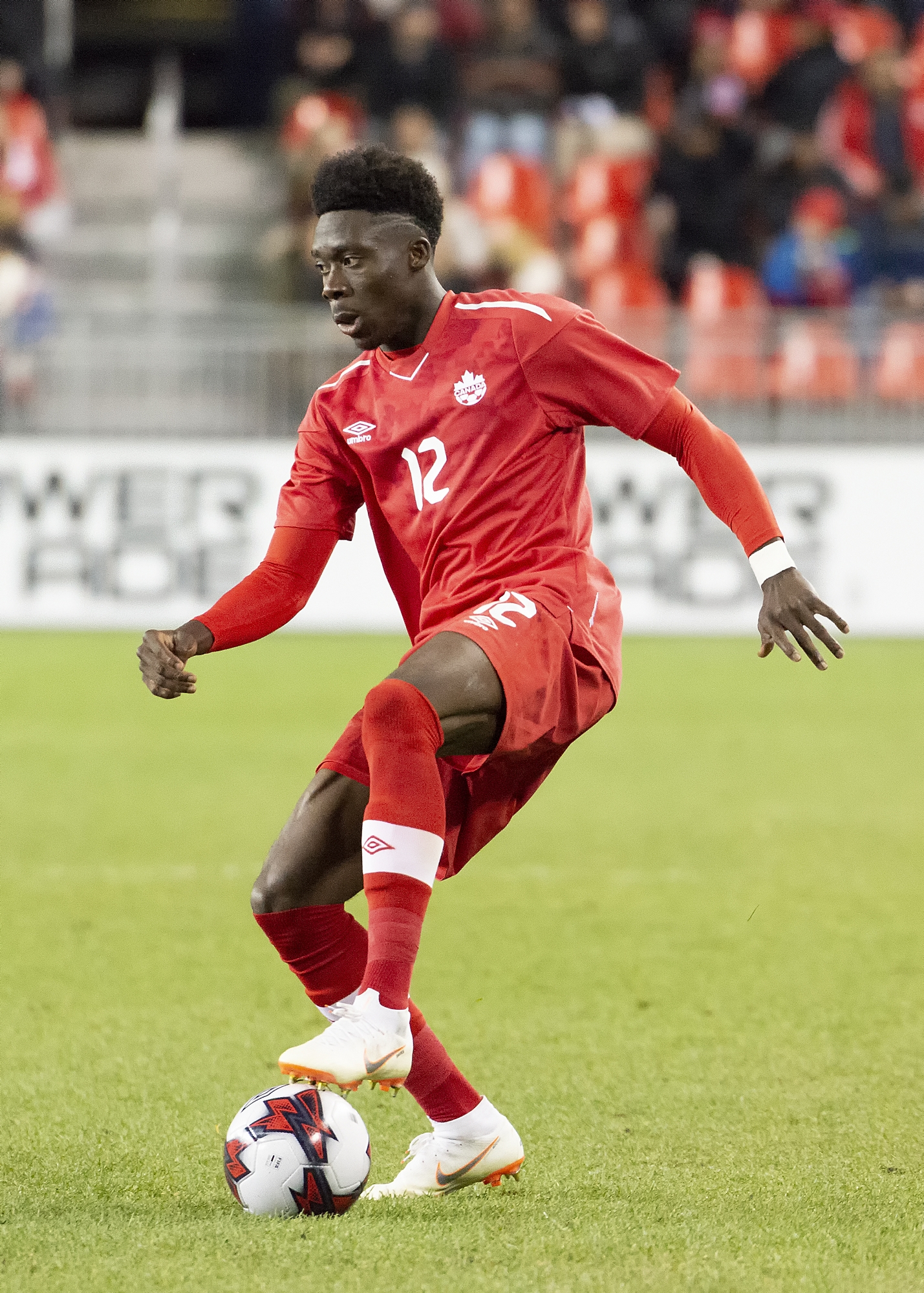
Every conversation about Canada's ceiling begins and ends with Alphonso Davies. The Bayern Munich left-back is one of the most electrifying players in world football, a blend of raw acceleration, close control and end-to-end running that can unbalance any defence on the planet. When he is fully fit and sharp, Canada are a fundamentally different, and far more dangerous, team.
The subplot of his tournament has been fitness and rhythm. Davies suffered a serious knee injury in early 2025 that kept him out for months, and Canada managed his return with obvious care through the group stage before handing him his first minutes of the World Cup off the bench against South Africa. The plan was clear: protect the body, build the sharpness, and have him peaking as the knockout rounds arrived. By the time Morocco come around, a fitter, more match-ready Davies is exactly the weapon Canada were saving.
His importance is both tactical and symbolic. Tactically, he is a one-man transition machine down the left, capable of carrying the ball seventy yards and turning defence into attack in a heartbeat, which suits Marsch's counter-pressing style perfectly. Symbolically, he is the face of Canadian football, the man who scored the country's first-ever World Cup goal and who now embodies its belief that it belongs on this stage.
For Morocco, Davies is a genuine planning headache. His duel with captain Achraf Hakimi down that flank is one of the marquee individual battles of the entire Round of 16, two of the fastest, most dangerous full-backs in the tournament on a collision course. If Davies arrives in Houston sharp and hungry, he is capable of deciding the tie on his own, and that possibility alone changes the calculus of the game.
Jonathan David: the finisher who gives Canada a cutting edge
If Davies is the spark, Jonathan David is the finisher. One of the most prolific strikers Canada has ever produced, David has spent years scoring consistently at a high level in European club football, and he brings the kind of cold, reliable finishing that knockout tournaments demand. Chances are scarce in the last 16; David is the man Canada trust to bury the ones that come.
His game is built on intelligent movement as much as raw power. David drifts into pockets, times his runs off the shoulder of the last defender, and is equally comfortable dropping to link play or spinning in behind. That versatility makes him difficult to mark for ninety minutes, and against a Morocco defence that will sit deep and compact, his ability to find half a yard in a crowded box could be decisive.
David also carries the experience of scoring in big moments, the sort of pedigree that steadies a team when nerves fray. For a Canadian side whose historical weakness was converting promising positions into goals, having a genuinely elite penalty-box operator is transformative. He is the difference between a team that creates chances and a team that takes them.
The tactical fit with Davies and Canada's runners is obvious. Marsch wants quick, vertical transitions, and David is the natural end point of them, the striker who turns a Davies burst or an Eustaquio pass into a goal. If Canada are to break down Morocco and avoid the shootout lottery that so favours the Atlas Lions, it is most likely David who provides the moment that does it.

Buchanan, Larin, Eustaquio: the supporting cast that makes Canada tick
Behind the two headline names is a supporting cast that gives this Canada side its balance and its spine. Tajon Buchanan is the kind of dynamic, direct wide player Marsch's system thrives on, an athlete who can beat a man, stretch a defence, and contribute at both ends of the pitch. His energy on the flank complements Davies and gives Canada a second source of chaos in wide areas.
Cyle Larin brings a different kind of value. One of the most prolific goalscorers in the history of the Canadian men's team, Larin is a physical, experienced forward whose presence, whether from the start or off the bench, gives Marsch a focal point and an aerial threat. Against a Morocco side that will defend crosses and set pieces in numbers, an option like Larin is exactly the sort of weapon that can force a mistake or win a decisive header.
Then there is Stephen Eustaquio, the metronome and emotional leader whose injury-time winner against South Africa underlined his importance to everything Canada do. He sets the tempo, breaks up play, progresses the ball, and carries himself with the calm of a player schooled at a serious European club. In a midfield battle likely to decide the Morocco tie, his composure and leadership are indispensable.
The depth around these players matters just as much. Marsch has built a squad, not just a starting eleven, with runners and pressers who can maintain intensity when legs tire and games open up. That collective athleticism is central to Canada's plan against a Morocco side carrying the fatigue of an extra-time-plus-penalties marathon, and it is why Canada believe the final half hour in Houston could be theirs.
Canada's tactical identity: press, transition, and controlled chaos
Tactically, Canada under Marsch are everything you would expect from a coach steeped in the high-pressing school. They defend from the front, hunt the ball in packs, and look to win possession high up the pitch before opponents can settle. When they turn the ball over, they attack the space in behind immediately, using the pace of Davies, Buchanan and the runs of David to punish teams before defences reorganise.
This is a physically and emotionally demanding style, and it suits Canada's profile. They are athletic, energetic and, under Marsch, deeply committed to the collective effort of pressing for one another. On their best days, they drag opponents into a frenetic, end-to-end rhythm that favours the fitter, hungrier team, exactly the kind of contest a technical, possession-minded side wants to avoid.
The risk, of course, is the flip side of the aggression. A high press invites space in behind, and against a counter-attacking specialist like Morocco, with Hakimi bombing forward and quick forwards ready to break, over-committing can be fatal. Marsch's challenge in Houston is to find the balance between pressing intensity and defensive discipline, choosing the right moments to squeeze and the right moments to stay compact.
Expect Canada, then, to try to turn the tie into a transition contest. They will not need to dominate possession to win; they will want turnovers in dangerous areas, quick strikes, and a tempo that unsettles a tired opponent. If they can force Morocco into a physical, chaotic slog rather than a controlled, patient game, they will believe the occasion, the fitness and the crowd tilt the odds their way.
Home advantage: the red wave and the co-host factor
Home advantage at a World Cup is one of the most powerful forces in the sport, and Canada intend to lean on it hard. Although the Morocco tie is in Houston rather than on Canadian soil, this is a North American tournament, and Canadian support has travelled in impressive numbers throughout the competition. The red shirts, the anthems, the noise: all of it lifts the team and can unsettle opponents in the tightest moments.
The co-host status has shaped the whole run. Playing in familiar time zones, close to home, in front of sympathetic crowds, has given Canada a platform no previous generation enjoyed. For a young squad, the energy of a supportive stadium is a genuine competitive asset, feeding the high-tempo, emotional style Marsch demands and helping to carry the team through the physical demands of a tournament run.
There is a counter-current worth acknowledging honestly. Morocco are among the best-supported nations at this World Cup, their vast global diaspora capable of turning supposedly neutral venues into a sea of red and green. Houston, with its large and diverse population, is likely to feature a substantial Moroccan and Arab-American contingent, so Canada's home-crowd edge may be more diluted in Texas than it was earlier in the run.
Even so, the broader point stands. A July 4 weekend knockout tie involving a co-host nation, in a marquee American stadium, guarantees a charged, partisan atmosphere with plenty of Canadian voices in it. Marsch's team feeds off exactly that energy, and the belief that the occasion is theirs to seize is a real, if intangible, part of why Canada arrive in Houston convinced they can spring the upset.
Why Canada are dangerous for Morocco on July 4
For all Morocco's pedigree, there are concrete reasons this Canada side is dangerous, and the Atlas Lions know it. The first is the fitness differential. Morocco reached the Round of 16 by surviving a 1-1 draw with the Netherlands and a 3-2 penalty shootout, a full extra-time-plus-spot-kicks marathon, before a quick turnaround into a midday game in Houston heat. Canada, by contrast, won inside ninety-plus minutes against South Africa. Those extra minutes in Moroccan legs could matter enormously late on.
The second is Canada's style. A high-pressing, transition-heavy team is precisely the sort of opponent that can exploit tired legs, forcing turnovers and racing into space before a fatigued defence recovers its shape. If the Houston heat and the Netherlands hangover combine, Canada's frenetic tempo becomes a genuine threat, and the final half hour could be where the tie is won.
The third is the returning superstar. A fitter, sharper Alphonso Davies down the left is a nightmare for any defence, and his duel with Hakimi could tilt the balance of the entire game. Add a clinical finisher in Jonathan David, a leader in Eustaquio, and a coach who relishes the underdog role, and Canada have a credible, coherent path to an upset rather than a hopeful prayer.
The fourth, and least measurable, is psychology. Canada play with the freedom of a team house-money deep, every round pure upside, while Morocco carry the weight of a semifinal nation expected to progress. That asymmetry, favourites with everything to lose against underdogs with nothing to fear, is one of the subtle currents that decides knockout football, and it is exactly the kind of edge Marsch will try to press.
The key duel: Alphonso Davies versus Achraf Hakimi
The marquee individual battle of this tie is the one neutrals cannot wait to see: Alphonso Davies against Achraf Hakimi. On one flank stands Morocco's captain and talisman, the Paris Saint-Germain right-back who is among the best attacking full-backs on the planet, a relentless overlapping threat with elite pace and a habit of producing decisive moments. On the other stands Canada's crown jewel, the Bayern Munich left-back whose acceleration and dribbling make him one of the game's most explosive players.
The geometry of the pitch sets them on a collision course. Hakimi attacks down Morocco's right; Davies attacks down Canada's left. When Morocco have the ball, Hakimi will look to bomb into the space Davies vacates. When Canada break, Davies will try to isolate and burn whoever Morocco station in front of him. Whoever wins that individual duel could decide which team controls the wide areas that so often unlock knockout ties.
Freshness is the wild card. Davies is building sharpness after his injury layoff and his managed reintroduction, arriving with relatively fresh legs and a point to prove. Hakimi, by contrast, has the miles of a draining shootout in his legs and the responsibility of captaining a fatigued side. In a flat-out foot race between two of the tournament's fastest men, that fitness gap could be as important as the raw talent.
It is also a duel of contrasting responsibilities. Hakimi must balance his attacking instincts with the defensive duty of containing Davies, a genuine tactical dilemma for Morocco. If they push Hakimi forward, they invite Davies to exploit the space; if they pin him back to deal with Davies, they blunt one of their own most potent weapons. That tension, right down Canada's most dangerous side, could shape the entire ninety minutes.
What the form guide says heading into Houston
Strip away the narratives and the form guide frames an intriguing contest. Canada arrive having shown they can dominate a game emphatically, having learned a hard lesson in defeat, and having proven they can win the tight, tense knockout match that previous generations lost. That is a healthy, well-rounded body of evidence for a team playing at its first Round of 16.
Morocco arrive with deeper tournament pedigree and a spine forged in the fire of Qatar 2022 and the Netherlands shootout. They are organised, compact, ferociously committed defensively, and lethal in transition and from set pieces. Crucially, they have a goalkeeper in Yassine Bounou who has turned shootouts into a Moroccan specialty, which hangs over any tie that threatens to go the distance.
The single biggest variable is one no form table captures precisely: recovery. Morocco have played an extra block of football in their last outing and must turn around quickly for a midday game in Texas heat. Canada won more economically and, with a fitter Davies now available, may be the fresher side over the full course of a potentially gruelling afternoon. That freshness could be worth more than any ranking.
There is also almost no head-to-head history to lean on. Morocco and Canada have rarely met competitively, so there is no rivalry, no recent run of results, no in-the-flesh evidence of how each handles the other in a high-stakes knockout. That blank canvas suits a Canada side with nothing to lose and tests Morocco's ability to handle an unfamiliar, energetic opponent on a charged occasion.
The stakes: a first-ever World Cup quarterfinal on home soil
The reward for winning in Houston is staggering for Canada: a place in the quarterfinals of a home World Cup, uncharted, era-defining territory for a program that had never before won a knockout tie. It is the kind of achievement that reshapes a nation's relationship with the sport, inspiring a generation and validating years of investment in a golden crop of players.
For Morocco, the stakes are different but no less real. As Qatar 2022 semifinalists, the Atlas Lions arrive with expectation attached: anything short of the latter stages now risks feeling like a step back. A return to the last eight would reaffirm their status among the world's elite tournament teams, while an early exit to a co-host that had never won a knockout tie would sting deeply.
The quarterfinal itself would come quickly, and the exact opponent depends on results elsewhere in this half of the bracket. Fans should treat the precise last-eight matchup as to be confirmed until the other Round of 16 ties are resolved. What is certain is the magnitude: a World Cup quarterfinal is the threshold of true contention, the point at which a run stops being a great story and becomes a genuine tilt at the latter stages.
That asymmetry of pressure is part of what makes the tie so delicately poised. Canada play free, chasing history with the crowd behind them; Morocco play burdened, expected to progress and knowing the watching world assumes they will. One of these stories ends on Independence Day weekend in Texas. The other earns the right to dream a little longer, deep into the biggest World Cup ever staged.
Morocco's warning: respect the co-host, or pay for it
Morocco under Mohamed Ouahbi, who replaced Walid Regragui in early 2026, will not underestimate this Canada side, precisely because they have been the underdog who shocked giants themselves. The Atlas Lions know better than anyone how a fearless, well-organised team riding a wave of belief can topple more decorated opponents, because that is the story they wrote at Qatar 2022 and refreshed against the Netherlands.
The Morocco blueprint is clear and battle-tested: sit compact, cede possession to opponents who want it, defend the box and the set piece in numbers, and strike ruthlessly on the counter through Hakimi and quick forwards. Against Canada's high press, that patience could be doubly effective, inviting Marsch's team to over-commit and then punishing the space they leave in behind. The danger is if fatigue dulls the sharpness of those transitions.
The looming presence of Bounou is Morocco's insurance policy. If the tie drifts toward penalties, few teams in world football would fancy their chances against a goalkeeper who eliminated Spain in 2022 and saved a decisive spot-kick against the Netherlands. Canada's clearest route to victory is to win inside ninety or a hundred and twenty minutes and never hand the game to Morocco's shootout specialist.
The overriding message for Morocco is respect. A co-host with a returning superstar, a clinical finisher, a fearless coach and fresher legs, backed by a partisan crowd on a charged July 4 occasion, is not a team to be taken lightly. Morocco remain favourites, and deservedly so, but the margins in a one-off knockout are thin, and Canada have already proven this summer that they can seize a decisive moment when it comes.
The bottom line: Canada arrive in Houston with belief, not just hope
Canada's run to the Round of 16 is no fluke and no charity. They have blown a team away, recovered from a chastening defeat, and won the tightest kind of knockout game with an injury-time winner, all while carefully bringing their biggest star back to full sharpness for exactly this moment. That is the profile of a team built to cause problems, not one simply happy to be here.
Against Morocco they will be underdogs, and rightly so: the Atlas Lions have the deeper pedigree, the more decorated spine, and a goalkeeper who has made knockout football an art form. But underdog is not the same as no-hoper. With a fitter Davies, a clinical David, a leader in Eustaquio, a fearless coach in Marsch, a fresher set of legs, and a crowd that will roar them on, Canada have a coherent, credible path to the biggest upset of their footballing history.
The tie kicks off at 1:00 p.m. Eastern Time on Saturday, July 4, 2026, at NRG Stadium in Houston, with a place in the World Cup quarterfinals on the line. For Canada it is the biggest match the men's program has ever played. For Morocco it is a test of whether a semifinal nation can shake off fatigue and see off a co-host that refuses to stop believing.
Whatever the result, the direction of travel is unmistakable. A country that once could not score a goal at a World Cup now stands ninety minutes from a quarterfinal, on home soil, with its best players peaking at the right time. Win or lose in Houston, Canada have already announced that they belong, and that the story of Canadian football at this home World Cup is only just beginning.
Frequently asked
When and where do Morocco and Canada play in the Round of 16?
Morocco vs Canada is on Saturday, July 4, 2026 at NRG Stadium in Houston, Texas, kicking off at 1:00 p.m. Eastern Time (12:00 noon local Central Time). It is a 2026 FIFA World Cup Round of 16 knockout tie.
How did Canada reach the Round of 16 at the 2026 World Cup?
Canada qualified automatically as co-hosts, navigated the group stage with a big win over Qatar and a defeat to Switzerland, and then beat South Africa 1-0 in the Round of 32 thanks to Stephen Eustaquio's injury-time winner. It is Canada's first-ever World Cup Round of 16.
Is this the deepest run in Canadian men's soccer history?
Yes. Before 2026, Canada had never won a World Cup knockout match or reached the Round of 16. Their previous appearances were Mexico 1986 (three defeats, no goals) and Qatar 2022 (three defeats). Reaching the last 16 as co-hosts is the deepest run in the program's history.
Will Alphonso Davies play against Morocco?
Davies has been carefully managed back from a knee injury and made his tournament debut off the bench in the Round of 32 win over South Africa. A fitter, sharper Davies for the knockout rounds is one of Canada's biggest advantages heading into the Morocco tie.
Who are Canada's key players against Morocco?
Watch Alphonso Davies and his duel with Achraf Hakimi, striker Jonathan David, midfield leader Stephen Eustaquio, winger Tajon Buchanan and experienced forward Cyle Larin. Coach Jesse Marsch's high-pressing style ties them together.
Who is Jesse Marsch and how did he rebuild Canada?
Jesse Marsch is the American coach who took charge of Canada in 2024 and built an aggressive, high-pressing, emotionally driven team in his own image. His confident, underdog-embracing approach and the buy-in of his players have driven Canada's historic 2026 run.
Why are Canada considered dangerous against Morocco?
Canada are fresher, having won in normal time while Morocco survived extra time and penalties against the Netherlands. Their high-pressing, transition-heavy style can exploit tired legs, they have a returning superstar in Davies, a clinical finisher in David, and the freedom of an underdog with nothing to lose.
How did Morocco reach the Round of 16?
Morocco beat the Netherlands 3-2 on penalties on June 29, 2026 after a 1-1 draw, with Issa Diop equalizing in the 90+1 minute, Yassine Bounou saving Crysencio Summerville's penalty and Ismael Saibari scoring the decisive spot-kick. Mohamed Ouahbi is Morocco's head coach.
What is at stake in Morocco vs Canada?
The winner advances to the 2026 World Cup quarterfinals. For Canada it would be a first-ever quarterfinal on home soil; for Morocco, a return to the last eight after their 2022 semifinal run. The quarterfinal opponent depends on other Round of 16 results still to be confirmed.
- Canada Soccer — official ↗
- FIFA — Canada at the 2026 World Cup ↗
- CBC Sports — soccer coverage ↗
- TSN — Canada Soccer coverage ↗
- Wikipedia — Canada men's national soccer team ↗
- Wikimedia Commons — Alphonso Davies (photo: Chris McPhee, CC BY 2.0) ↗
- Wikimedia Commons — Jonathan David (photo: Bryan Berlin, CC BY-SA 4.0) ↗
- 212daily — Morocco vs Canada Round of 16 preview
- 212daily — How Morocco beat the Netherlands
Video via official YouTube embeds; photos via Wikimedia Commons under their stated licenses. All rights belong to the respective owners; 212 Daily claims no ownership.