Buying a Moroccan Caftan
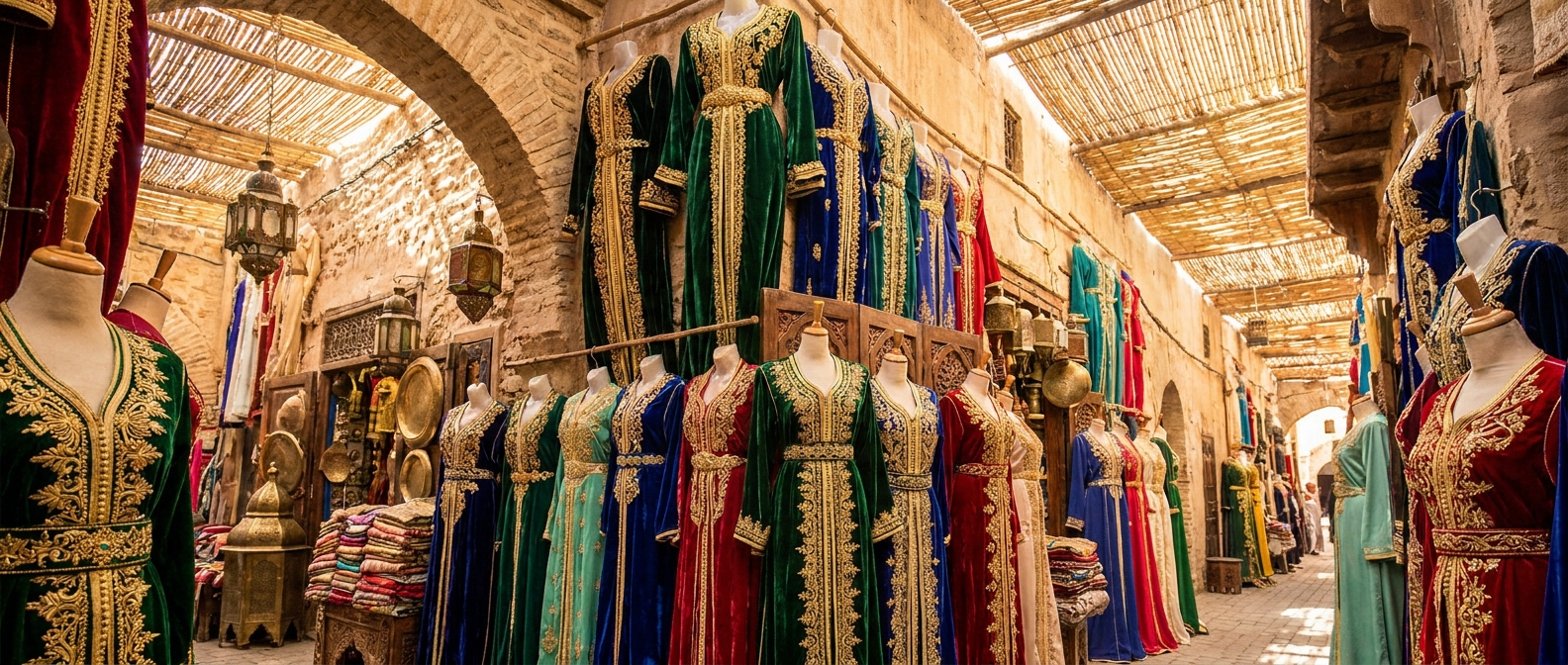
Caftan vs Takchita vs Djellaba
A caftan (qaftan) is a single-layer long robe, often elegant and worn for celebrations. A takchita is the more formal two-piece version: an under-dress plus an ornate overlayer cinched with a wide belt (mdamma), worn at weddings and major events. A djellaba is a more everyday hooded robe, usually less ornate.
Knowing which garment you want is the first step. Caftans suit both casual-elegant and formal wear depending on fabric and detailing, while takchitas are statement formalwear with a higher price tag.
Fabrics and What They Mean
Caftans come in many fabrics: lightweight chiffon and crepe for flowy summer styles, silk and satin for sheen, and heavy brocade or jacquard for formal richness. Higher-quality natural fabrics drape better, breathe more, and feel substantial; cheap polyester can look shiny in an artificial way and feel stiff or sweaty.
Check the fabric weight and hand-feel. Hold it to the light to see weave density, and look at how it falls, good fabric drapes gracefully. The lining should be smooth and fully finished, not scratchy or unfinished at the seams.
The Handwork: Sfifa, Aqad, and Embroidery
The signature of a quality caftan is its passementerie: sfifa (decorative braid trim) framing the neckline and front, and aqad (handmade knotted button-and-loop closures). On fine pieces this is done by hand and is crisp, even, and securely attached.
Inspect the trim closely: handmade sfifa has subtle regularity with neat stitching, while glued-on or loosely machine-attached trim is a sign of lower quality. Embroidery (tarz) should be dense and clean on the front and tidy on the back, with no loose threads or puckering. The handwork is where most of the value and labor lies.
Sizing and Fit
Caftans are generally loose and forgiving, but length and shoulder width matter. Many traditional pieces are made to standard regional sizes or custom-tailored; check measurements (chest, length, sleeve) against your own rather than relying on S/M/L labels, which vary.
For takchitas, the belt should sit comfortably at the waist and the layers should hang evenly. If buying online, request a measurement chart. In Morocco, tailors can custom-make or alter a caftan, which is often the best way to get a perfect fit at a fair price.
Price Ranges and Where to Buy
Simple, machine-made caftans start around $40-$80. Mid-range pieces with quality fabric and some handwork run $100-$250. Elaborate takchitas with extensive handmade sfifa, beadwork, and fine fabric can reach $300-$800 or more, and bespoke designer pieces far higher.
Buy from caftan boutiques and tailors in cities like Fez, Marrakech, and Rabat, or from reputable online sellers who detail the fabric, show close-ups of the trim and closures, and provide measurements. Be cautious of very cheap fast-fashion caftans marketed as traditional; the handwork is what makes them authentic.
Care and Occasions
Delicate fabrics and handwork often require dry cleaning or careful hand-washing; check care guidance and avoid wringing embellished pieces. Store on padded hangers to protect the shoulders and keep beaded areas from snagging.
Caftans work for weddings, Eid, henna parties, and formal evenings, and lighter styles can be everyday elegant wear. A well-chosen caftan is versatile and, with the right fabric and handwork, becomes a treasured wardrobe piece you can wear for years.
| Factor | Tip |
|---|---|
| Fabric | Natural silk, satin, or quality brocade that drapes well |
| Sfifa trim | Handmade braid, crisp and securely stitched, not glued |
| Aqad closures | Handmade knotted button-and-loop, neat and even |
| Lining | Smooth, fully finished seams, comfortable against skin |
| Price | Simple ~$40-$80; ornate takchita $300-$800+ |
What to look for
FAQ
What is the difference between a caftan and a takchita?
A caftan is a single-layer long robe, while a takchita is the formal two-piece version with an under-dress, an ornate overlayer, and a fitted belt. Takchitas are dressier and more expensive.
How do I know a caftan is good quality?
Check the fabric (natural fibers drape and breathe better than cheap polyester) and the handwork: the sfifa braid and aqad closures should be handmade, even, and securely attached, with clean embroidery and a finished lining.
Can I get a caftan tailored to fit me?
Yes. In Morocco, tailors regularly custom-make or alter caftans, which is often the best way to get an ideal fit. If buying online, compare your measurements to the seller's chart rather than relying on generic sizes.
Loved this? Useful? React below — your feedback helps other readers.