The Wall Strikes Again: How Yassine Bounou's Penalty Save Sank the Netherlands and Sent Morocco Into the World Cup 2026 Last 16
The Save That Stopped a Nation
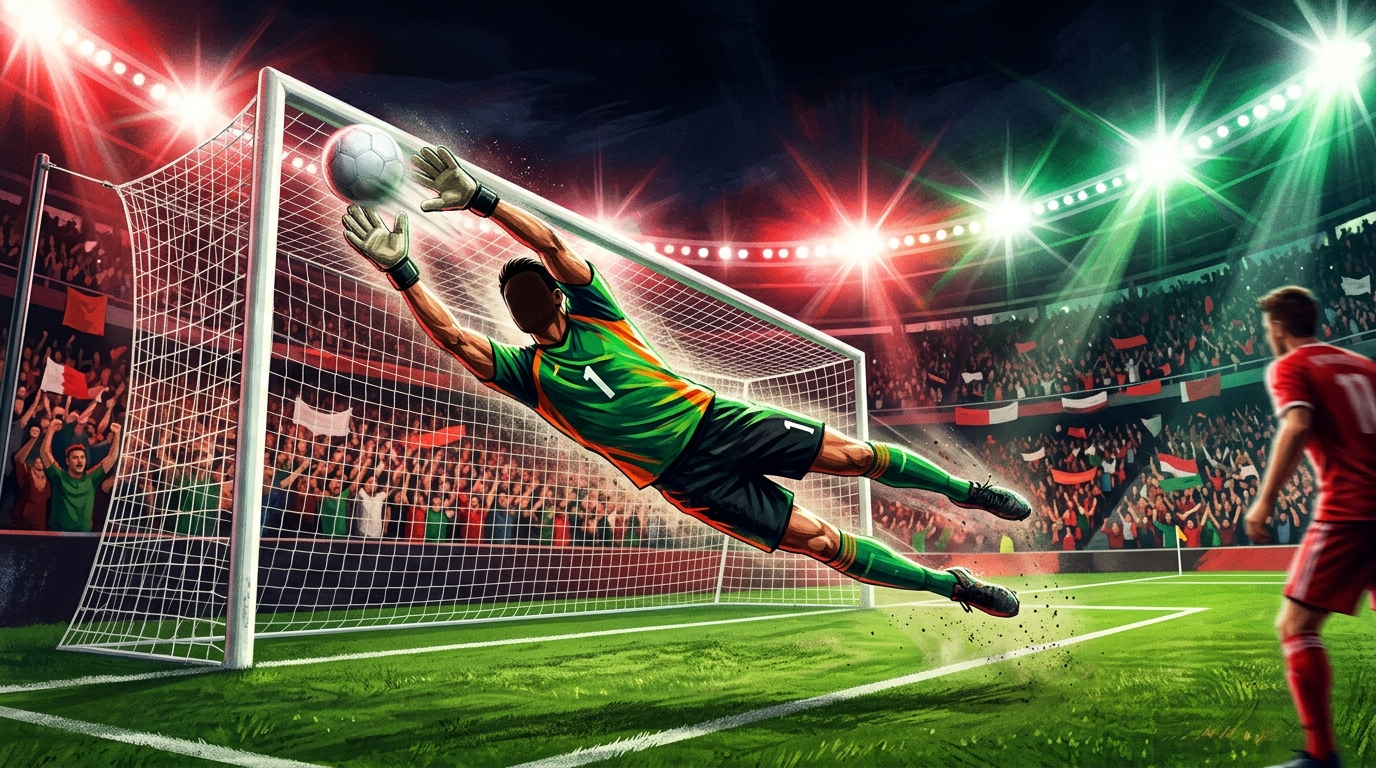
There is a particular silence that descends on a stadium in the instant before a decisive penalty. The crowd inhales together. The ball sits on the spot. And then, on June 29, 2026, that silence belonged entirely to Yassine Bounou. The Netherlands needed Crysencio Summerville to score. Morocco needed their goalkeeper to be exactly who he has always been in these moments. Bono dived to his left, flung out a hand, and batted the ball away. In that single motion, a World Cup dream died for one nation and roared into life for another.
Morocco had drawn the match 1-1 after 120 minutes and would win the shootout 3-2. But statistics never capture what a save like that actually means. Summerville's penalty was not a poor one. It was struck with intent, aimed for the corner, the kind of effort that beats most goalkeepers most of the time. Bounou is not most goalkeepers. He read it, committed to it, and reached it with his left hand, sending the ball away from goal and the Netherlands toward the exit.
Moments later Ismael Saibari stepped up and buried the spot-kick that confirmed Morocco's place in the last 16 of the 2026 World Cup. The Atlas Lions had done it again. And once again, at the centre of the celebrations, was a tall, composed figure in goalkeeper's gloves who barely changed expression. Bono does not roar. He does not beat his chest. He simply does the impossible and then walks back to his teammates as if it were the most ordinary thing in the world.
For Moroccan supporters watching across the globe, the scene was achingly familiar. They had lived this story before, in Qatar in 2022, when the same man turned a quarter-final dream into reality against Spain. Four years on, against another European heavyweight, the script had not changed. Bounou had once more become the difference between elimination and glory.
How the Match Reached the Brink
To understand the weight of Bounou's save, you have to understand how close Morocco came to never reaching the shootout at all. For long stretches of the Round of 32 tie, the Netherlands looked the more likely winners. Ronald Koeman's side carried the greater attacking threat and finally broke through in the 72nd minute when Cody Gakpo scored to put the Dutch ahead. With less than 20 minutes remaining, Morocco's World Cup looked to be slipping away.
What followed was the kind of refusal to lose that has come to define this generation of Moroccan players. As the clock ticked into stoppage time, a cross was floated into the Netherlands box and Issa Diop rose to meet it, his header finding the corner of the net. The equaliser arrived in the dying seconds of normal time, an act of defiance that dragged the match into extra time and, eventually, to the lottery of penalties.
Extra time produced no further goals, but it produced something just as important: it delivered the contest into the one arena where Morocco hold a psychological edge over almost anyone on earth. The moment the referee signalled for a shootout, the dynamic shifted. The Netherlands had to walk to the spot knowing that the man between the Moroccan posts had built an entire legend out of these exact circumstances.
Morocco are not simply a team that survives shootouts. They are a team that expects to win them, and that expectation flows directly from the figure in goal. Diop's late header bought Morocco the chance. Bounou would make sure they did not waste it.
The Shootout, Kick by Kick
Penalty shootouts are often remembered only for their final image, but their drama lives in the sequence. This one swung on both nerve and misfortune. The Netherlands missed through Quinten Timber, whose effort flew wide of the target, a costly error from a player who will replay that moment for a long time to come. For Morocco, even their own captain was not immune to the pressure: Achraf Hakimi, the Paris Saint-Germain star, struck the post.
With the shootout balanced at 2-2 after four rounds apiece, the margins had narrowed to almost nothing. Each remaining kick carried the full weight of a World Cup. It was at precisely this point that the contest found its decisive fork. Summerville advanced for the Netherlands, needing to score to keep his nation alive and to pile the pressure back onto Morocco. Instead, he found Bounou.
The save itself was a study in goalkeeping under maximum stress. Bono held his line, waited as long as he dared, and then exploded to his left, reaching the ball with a strong left hand and pushing it clear. There was no fortunate deflection, no scuffed penalty gifting him the stop. He simply out-thought and out-reached the taker in the most pressurised second of the entire tournament so far.
That save handed Morocco the initiative, and Saibari did not flinch. He stepped forward and converted with conviction to seal a 3-2 shootout victory. The arithmetic was brutal in its simplicity. Two European misses, one inspired goalkeeper, and Morocco were through while the Netherlands were going home. Koeman's side had needed Summerville to convert, and Bounou had made certain they could not.
Why Bounou Is Morocco's Shootout Specialist
Calling Yassine Bounou a good penalty stopper undersells the matter. He is, by any reasonable measure, one of the finest the game has produced in the modern era, and he has the body of evidence to prove it. This is not a keeper who got lucky once on a famous night. This is a keeper who has turned penalty-stopping into a defining feature of his career, at club and international level alike.
The numbers tell part of the story. In the 2021 calendar year alone, while at Sevilla, Bounou saved five of the 13 penalties he faced, an extraordinary rate in a discipline where goalkeepers are statistically expected to be beaten far more often than they save. In September 2021 he stopped two penalties in a single Champions League match against Salzburg, the kind of feat that most goalkeepers never achieve once in an entire career.
What separates Bono from other talented shot-stoppers is the combination of physical gifts and emotional control. He is tall and rangy, with the reach to cover both corners, but he pairs that frame with a stillness that unsettles takers. He does not dance on his line or try to intimidate through theatrics. He stands, he watches, and he forces the taker to make the first decision. In a shootout, that patience is a weapon.
Above all, Bounou seems immune to the fear that grips others in these moments. While penalty takers are weighed down by the prospect of being the villain, Bono carries no such burden. For a goalkeeper, a shootout is the rare situation where he is expected to lose. Every save is a bonus, every stop a moment of glory with no downside. Bounou has learned to live inside that freedom better than almost anyone.
The Night He Broke Spanish Hearts in 2022
No account of Bounou the penalty king is complete without returning to December 2022, to the Education City Stadium in Qatar, and to the round-of-16 night when he announced himself to the world. Morocco faced Spain, a footballing superpower, in a tie that finished goalless after 120 minutes. It went to penalties, and what unfolded turned Bounou into a national hero and a global story.
Spain, masters of possession and technique, simply could not beat him. Pablo Sarabia, brought on specifically for the shootout, struck the post with their first attempt, and even then Bounou had read it and dived the correct way. Carlos Soler stepped up next, and Bono saved. Then came Sergio Busquets, a veteran of countless high-pressure occasions, and Bounou saved again. Spain missed all three of their penalties. Morocco won the shootout 3-0.
The symbolism was impossible to ignore. Bounou had spent years in Spanish football, starring for Sevilla in La Liga, and here he was eliminating Spain on the biggest stage with the very calm and reading of the game that Spanish football had helped to refine in him. He knew those takers. He understood that culture. And he used every ounce of that knowledge to end Spain's World Cup.
That night carried Morocco into the quarter-finals for the first time in their history, the launchpad for a run that would take them all the way to the semi-finals, the first African and Arab nation ever to reach the last four of a World Cup. At the heart of it stood Bounou, the man who made the saves that made history possible. The 2026 save against Summerville did not come from nowhere. It came from a foundation laid in Qatar.
Born in Montreal: The Canadian Beginning of a Moroccan Legend
Here is the detail that gives the next chapter of this story its extraordinary edge. Yassine Bounou was born in Montreal, Quebec, to Moroccan parents. The goalkeeper who has become the symbol of Moroccan footballing pride first drew breath in Canada, the very nation Morocco will now face in the Round of 16.
The family did not stay long in Canada. When Bounou was around three years old, his parents returned to Morocco and settled in Casablanca, the great coastal city where his footballing journey would truly begin. He grew up Moroccan in every sense that mattered, immersed in the culture and the game of his ancestral home, and it was there that his talent first took shape.
Yet the Montreal birth is more than a piece of trivia. It is a thread that connects two football nations now hurtling toward each other in the knockout rounds of a World Cup. Bono could, in another version of his life, have grown up entirely within the Canadian system. Instead, fate and family carried him back to Morocco, where he would become an Atlas Lion and one of the most celebrated goalkeepers his country has ever produced.
On July 4, when Morocco line up against Canada, the man in the Moroccan goal will be a son of Montreal preparing to stand in the way of the country where he was born. Few storylines in this tournament carry that kind of poetic charge. For Bounou, it will be a homecoming of a strange and bittersweet kind, returning to face the nation of his birthplace while wearing the colours that define his soul.
From Wydad Casablanca to the Streets of Spain
Every legend has a starting point, and Bounou's was Wydad AC, one of the most storied clubs in Moroccan and African football. It was in the youth ranks of Wydad, in Casablanca, that the goalkeeper learned his craft and first showed the qualities that would carry him to Europe. Wydad is a club of fierce tradition and enormous expectation, and growing up in that environment forged a competitive resilience that has never left him.
The leap from Moroccan football to the elite of Europe is one that swallows many promising careers. Bounou made it. He moved to Spain and joined the Atletico Madrid system, spending two seasons with Atletico Madrid B and making 47 appearances as he adapted to a new country, a new language and a far more demanding standard of football. It was the patient, unglamorous grind that builds a top-level professional.
From there his career wound through Spanish football in the way that the best apprenticeships often do, with loan spells and moves that tested and toughened him. He spent time at Real Zaragoza and then Girona, sharpening his game in the competitive cauldron of Spanish football's lower and upper tiers alike. Each stop added something to his understanding of the position and his composure under pressure.
By the time he was ready for the very top, Bounou had paid his dues in full. He had earned over 50 appearances in the Segunda Division and would go on to make more than 150 in La Liga itself. This was not a player handed a smooth path. He climbed it rung by rung, and that climb explains a great deal about the unflappable figure who now dominates World Cup shootouts.
The Sevilla Years: Trophies, Zamora and European Glory
Bounou's move to Sevilla in the summer of 2019 marked the moment his career reached its full European height. At Sevilla he was no longer a developing talent or a squad option. He became a genuine top-tier goalkeeper, the last line of defence for one of European football's most consistent overachievers, and he repaid the faith with silverware and individual honours.
The crowning individual recognition came in the 2021-22 season, when Bounou won the Zamora Trophy, awarded to the goalkeeper with the best goals-to-games ratio in La Liga. It was the first time in Sevilla's history that one of their goalkeepers had claimed the award, a landmark achievement that underlined just how good Bounou had become in one of the toughest leagues in the world.
Collective success followed in abundance. Bounou helped Sevilla win the UEFA Europa League, a competition the club has made its own, lifting the trophy in 2020 and again in 2023. Those European nights, played under enormous pressure against elite opposition, were the proving ground for the temperament that the world would later see on display at the World Cup.
By the time he left Spain, Bounou had transformed himself from a young Moroccan keeper learning his trade into a continental champion and an award-winning No. 1. The Sevilla years gave him the polish, the trophies and the reputation. They also confirmed something his teammates had long known: that in the biggest moments, with the most at stake, Yassine Bounou was the man you wanted standing behind you.
Al-Hilal and the Saudi Chapter
In August 2023, Bounou wrote the next chapter of his career by joining Al-Hilal, the Riyadh giants at the heart of Saudi Arabian football's dramatic rise, on a three-year contract. The move took him out of the European spotlight and into one of the most ambitious football projects on the planet, a league pouring vast resources into attracting elite talent from across the globe.
For some observers, the move to the Saudi Pro League raised questions about whether a player could maintain peak international form away from Europe's top competitions. Bounou has answered those questions in the most emphatic way possible: with his performances for Morocco on the world stage. The shootout heroics against the Netherlands in 2026 are proof that his standards have not slipped an inch.
At Al-Hilal, Bounou is a central figure in a star-studded squad competing for major honours both domestically and across Asian club football. The pressure at a club of Al-Hilal's stature is constant, the expectation to win relentless. For a goalkeeper who thrives under exactly that kind of weight, it is an environment that suits him, keeping him sharp for the demands of international tournaments.
The Saudi chapter also reflects Bounou's standing in the world game. Al-Hilal do not sign goalkeepers lightly, and the three-year commitment they made spoke to his reputation as a proven winner and a reliable presence at the highest level. Whatever debates surround the broader project, Bounou's own form has remained unimpeachable, as the Netherlands discovered to their cost.
The Science of Why Goalkeepers Win Shootouts
Penalty shootouts are often described as a lottery, but that description does a disservice to the goalkeepers who consistently shape their outcomes. There is a genuine craft to penalty-saving, a blend of preparation, psychology and split-second athleticism, and Bounou embodies almost every element of it. Understanding that craft helps explain why he keeps producing these moments.
The first weapon is psychological. In a shootout, the penalty taker carries virtually all of the pressure. He is expected to score, and a miss makes him the villain. The goalkeeper, by contrast, is expected to be beaten, so every save is pure upside. Bounou has mastered the art of living inside that imbalance, projecting a calm that transfers the anxiety entirely onto the man on the spot.
The second is preparation. Elite goalkeepers and their staff study takers exhaustively, mapping tendencies, preferred corners and the subtle tells that betray a penalty's destination. Bono's years in European football gave him an intimate knowledge of countless players, and his reading of body shape and run-up allows him to commit early and decisively rather than guessing blindly. Against Spain in 2022, that knowledge was lethal.
The third is the simple, brutal matter of reach and timing. A goalkeeper can do everything right mentally and still need the physical tools to reach the ball. Bounou's height and span let him cover ground that smaller keepers cannot, and his ability to delay his dive until the last possible instant maximises the information he gathers before committing. Put those three elements together and you have a shootout specialist. Put them in Bounou and you have a phenomenon.
The Calm: Inside Bounou's Mentality
If one quality defines Yassine Bounou beyond his shot-stopping, it is his temperament. He is, by nature, an introverted and reserved figure, content to operate in the background rather than seek the spotlight. In a sport that often rewards the loudest personalities, Bono has built a legend on quiet, almost serene self-possession, and it is precisely that calm that makes him so formidable.
His own description of penalty-saving captures the philosophy perfectly. Reflecting on his heroics, Bounou once said it is about instinct, a bit of luck and that there is not much else to it. There is a deliberate humility in that framing, a refusal to claim that he has solved a problem that no goalkeeper can fully control. Yet beneath the modesty lies an iron confidence, the confidence of a man who trusts his instincts because they have so rarely failed him.
Teammates and observers describe a player who commands his defence through presence rather than noise. He does not shout to assert authority. He organises with economy, leads by the steadiness of his own performances, and earns trust through consistency. In the chaos of a World Cup knockout match, that kind of unshakeable centre of gravity is worth more than any amount of vocal bravado.
This temperament is not an accident of personality alone. It is the product of a long, demanding journey, of years spent climbing through Spanish football, of European finals and title races and the relentless pressure of being a top club's last line. By the time Bounou reaches a World Cup shootout, he has been hardened by a thousand smaller tests. The calm the world sees is the calm of a man who has earned it.
Bounou Among the Great Penalty Keepers
Football history is studded with goalkeepers who became immortal through their shootout exploits, and Bounou now belongs firmly in that conversation. The names that define the genre, the keepers who turned the penalty spot into their personal stage, set a high bar. What is striking is how comfortably Bounou's record stands alongside them, particularly given that he has produced his finest moments on the very biggest occasions.
The great shootout keepers share certain traits: an aura that unsettles takers, a knack for the decisive save and the temperament to deliver it when everything is on the line. Some have leaned on gamesmanship and theatrics to gain an edge. Bounou has taken a different route, achieving the same results through stillness and reading rather than provocation. His method is quieter, but the outcomes are every bit as devastating.
What elevates Bounou is the stage on which he has performed. Saving two penalties to eliminate Spain at a World Cup, then years later saving the decisive penalty to eliminate the Netherlands at the next World Cup, is a body of work few can match. These were not low-stakes domestic shootouts but knockout ties at football's grandest tournament, against elite European nations, with a continent's hopes riding on every dive.
For Morocco and for African and Arab football more broadly, Bounou has become a symbol of what is possible. He has shown that a goalkeeper from Casablanca, by way of Montreal and the Spanish football pyramid, can stand toe to toe with the best the game has to offer and come out on top when it matters most. In the pantheon of penalty kings, his place is secure, and he is still adding to the legend.
What This Means for Morocco's 2026 Campaign
Beyond the individual brilliance, Bounou's save against the Netherlands carries enormous significance for Morocco's wider ambitions at the 2026 World Cup. The Atlas Lions arrived at this tournament carrying the weight of expectation, having stunned the world by reaching the semi-finals in 2022. Surviving the Netherlands and reaching the last 16 keeps that ambition firmly alive.
A deep run at a World Cup is built on knockout football, and knockout football is won by the teams who hold their nerve in the tightest moments. Morocco have now demonstrated, yet again, that they possess exactly that quality. Having a goalkeeper capable of winning shootouts changes the entire psychology of a tournament campaign. It means Morocco can take any match to penalties knowing they hold the trump card.
The victory also reinforced the identity that defines this Morocco side: resilience, organisation and an absolute refusal to accept defeat. Issa Diop's late equaliser and the composure shown in the shootout are the hallmarks of a team that believes it belongs among the elite. Under coach Mohamed Ouahbi, Morocco have carried forward the spirit that made them the story of 2022.
Now the path opens before them. A place in the last 16 is secured, and beyond it lies the prospect of another quarter-final, another shot at the kind of history they made in Qatar. With Bounou in this form, no opponent can feel entirely safe against Morocco, because every Moroccan supporter knows that if it comes down to penalties, they have the best man in the world standing between the posts.
Next Up: Canada, and a Homecoming of Sorts
Morocco's reward for surviving the Netherlands is a Round of 16 clash with Canada, scheduled for July 4 in Houston at NRG Stadium, with a 1 p.m. ET kick-off. For most of the squad it is simply the next obstacle on the road to the quarter-finals. For Yassine Bounou, it is something far more personal, a meeting with the nation of his birth.
The narrative writes itself. Bounou, born in Montreal, will line up against the Canadian national team, defending the Moroccan goal against the country whose passport he could so easily have carried. It is the kind of coincidence that tournaments occasionally throw up, and it adds a layer of emotional intrigue to what is already a compelling tactical contest between two ambitious sides.
Canada arrive as a team on the rise, energetic and increasingly fearless on the international stage, eager to make their own World Cup history on home-continent soil. They will know exactly what awaits them if the match is tight: the looming threat that any draw could deliver them into a shootout against the most dangerous penalty goalkeeper in the world. That knowledge alone is a psychological burden.
For Bounou, the occasion will surely stir complicated feelings, a return to face the land where his life began, now as the symbol of another nation's hopes. But if Morocco's recent history is any guide, sentiment will not soften his focus. When the whistle blows in Houston, the son of Montreal will be doing everything in his power to break Canadian hearts and carry Morocco one step closer to the World Cup quarter-finals.
The Legend Grows: Bounou's Place in Moroccan History
Sport remembers its heroes through the moments they create, and Yassine Bounou has now created enough of them to be assured a permanent place in Moroccan footballing history. He is no longer simply a very good goalkeeper. He is a national icon, a figure whose name is invoked whenever Moroccans dream of the impossible becoming real on a football pitch.
His journey gives the legend its richness. From a Montreal birth to a Casablanca childhood, from the youth ranks of Wydad to the academies of Atletico Madrid, from the grind of Spanish football to European trophies with Sevilla and a new life with Al-Hilal, Bounou's path is one of patience, persistence and relentless self-improvement. It is the kind of story that inspires the next generation of Moroccan goalkeepers to believe.
The on-field record is the foundation of it all. The saves against Spain in 2022 that launched a historic run. The Zamora Trophy. The Europa League titles. And now the save against the Netherlands in 2026 that keeps another World Cup dream alive. Each of these is a thread in a tapestry that depicts one of the most accomplished goalkeepers his country, and his continent, has ever produced.
What makes Bounou special, in the end, is not just what he does but how he does it. The calm, the humility, the quiet certainty that he will be there when his team needs him most. Morocco have built a golden era of football on a foundation of belief, and few players embody that belief more completely than the man they call Bono. As long as he stands in their goal, Morocco will walk to every shootout as favourites, and their supporters will dream of how much further this remarkable story can still go.
The Wider Symbolism of a Bounou Save
Great sporting moments often resonate far beyond the result they decide, and Bounou's heroics carry meaning that stretches well past the scoreline. For African football, his success is another emphatic statement that the continent's best can compete with and defeat the traditional European powers on the sport's biggest stage. The 2022 run shattered old assumptions; the 2026 shootout reinforced that the shattering was no fluke.
For Arab football, too, Bounou stands as a source of immense pride. Morocco's achievements have galvanised supporters across the Arab world, and the goalkeeper's role as the decisive figure in the most dramatic moments has made him a unifying symbol. When Bono saves a penalty at a World Cup, the celebrations ripple far beyond Morocco's borders, embraced by millions who see their own aspirations reflected in his success.
There is a generational dimension as well. Young goalkeepers from Casablanca to Marrakesh now have a model to emulate, proof that the path from local football to global stardom is real and navigable. Bounou's calm professionalism offers a template not just for how to play the position but for how to carry oneself, how to handle pressure, how to keep climbing when the next step seems impossibly high.
And for the neutral observer, Bounou's saves are simply a reminder of why knockout football is the most thrilling theatre the game offers. In an era of relentless statistics and tactical complexity, the shootout strips everything back to its most human core: one player, one ball, one goalkeeper, and the nerve to decide a nation's fate. Yassine Bounou has made that arena his own, and football is richer for it.
A Goalkeeper Built for the Moment
If you wanted to design a goalkeeper for the precise demands of World Cup knockout football, you might well end up with something very close to Yassine Bounou. The physical attributes are there: the height, the reach, the agility to cover his goal. But the rarer ingredients are the ones that cannot be coached into most players, the temperament and the timing that turn a good keeper into a decisive one.
Bono's career has been a steady accumulation of exactly the experiences that prepare a player for these nights. Title races in Spain. European finals. The pressure of a club like Sevilla and then a club like Al-Hilal. International tournaments under the gaze of an entire nation. Each of these stripped away a little more of the fear that undoes lesser goalkeepers, until what remained was the serene operator the world now knows.
It is worth remembering, too, that none of this came quickly or easily. Bounou's was not a meteoric rise but a long climb, full of loans, setbacks and the unglamorous work of proving himself again and again at each new level. That journey instilled a resilience that shows in every shootout, the quiet conviction of a man who has overcome too much to be rattled by a single penalty.
So when the ball was placed on the spot against the Netherlands, and the Summerville penalty represented the entire weight of two nations' hopes, Bounou was exactly where a career of preparation had destined him to be. He saved it, as he has saved so many before, and as he may well save more before this World Cup is done. He is, in the truest sense, a goalkeeper built for the moment, and the moment keeps finding him.
The Golden Generation Standing in Front of Him
Bounou's heroics do not happen in isolation. They are the final, dramatic act of a collective effort by a Moroccan side widely regarded as the finest in the nation's history. The team that survived the Netherlands is built on the same golden generation that stunned the world in 2022, blending European-honed quality with a fierce, unshakeable sense of national identity. Bono is the last line of a structure that is formidable from front to back.
Achraf Hakimi, the Paris Saint-Germain full-back and captain, is among the best in the world in his position, an attacking force and a leader who carries enormous responsibility for this team. That he could miss from the spot against the Netherlands, striking the post, only underlines how heavy the pressure of a World Cup shootout truly is, and how vital it is to have a goalkeeper capable of covering for even the finest outfield players in their rare fallible moments.
Across the side, Morocco possess players plying their trade at elite clubs throughout Europe, a defensive organisation that frustrates the best attacks and a midfield capable of controlling tempo against anyone. Issa Diop's stoppage-time header against the Netherlands was a reminder that goals can come from anywhere in this team, and that the collective belief runs deep. It is a squad with no obvious weakness and an abundance of character.
Within that framework, Bounou's role is both specific and symbolic. He is the safety net that allows the rest of the team to play with freedom, the assurance that even the tightest matches can be navigated. A great goalkeeper liberates a team, and Bono's presence gives Morocco a psychological edge in every knockout tie. The golden generation in front of him is brilliant; the man behind them makes them close to unbreakable.
The Captain's Burden and the Keeper's Calm
The contrast between Hakimi's missed penalty and Bounou's match-winning save tells a quiet story about the nature of pressure in a shootout. Hakimi is one of the most accomplished players in the squad, a captain accustomed to the biggest stages, and yet the penalty spot reduced even him to a fallible figure as his effort struck the post. It is a reminder that no reputation offers immunity from the unique cruelty of the shootout.
For the takers, every penalty is a referendum on their nerve, a moment in which a lifetime of brilliance can be overshadowed by a single miss. The weight of expectation is crushing precisely because scoring is the expected outcome. Hakimi will have felt that weight as acutely as anyone, and his miss is a measure not of his quality but of the sheer psychological difficulty of the task.
Bounou operates in the inverse of that reality. Where the taker is burdened by expectation, the goalkeeper is liberated by its absence. Bono is not supposed to save the penalty, so when he does, it is pure triumph with no attached blame. He has built his entire shootout persona around exploiting that asymmetry, channelling the freedom it grants into the decisive, fearless dives that have come to define him.
That is why, even on a night when his own captain faltered, Morocco could still walk away victorious. The team had a man whose calm grew as the pressure rose, who saw the shootout not as a threat but as an opportunity. In the delicate balance between the burden of the taker and the calm of the keeper, Morocco hold a decisive advantage, and his name is Yassine Bounou.
The End of the Road for the Netherlands
For the Netherlands, the defeat marked a painful and premature end to a World Cup that had promised far more. Ronald Koeman's side had taken the lead through Cody Gakpo and looked, for long stretches, like the team more likely to progress in normal time. To surrender that advantage in stoppage time and then lose the shootout is the kind of result that lingers for years in a nation's footballing memory.
The Dutch will reflect on the fine margins that decided their fate. Quinten Timber's penalty flew wide, a miss that opened the door, and Crysencio Summerville's effort, though well struck, found a goalkeeper at the peak of his powers. Football can be unforgiving in these moments, and the Netherlands learned that even a strong performance counts for nothing once the contest reaches the spot and an opponent like Bounou is waiting.
There is no shame in losing to a goalkeeper of Bounou's calibre in a shootout, but that will offer little comfort to a Dutch side that genuinely believed it could go deep into the tournament. Their elimination removes a major footballing nation from the 2026 World Cup and reshapes the bracket, opening opportunities for the teams who remain. For Koeman, the post-mortem will be a difficult one.
The Netherlands now join the list of European heavyweights undone by Morocco on the biggest stage. After Spain in 2022 and Portugal in the same tournament, the Dutch in 2026 become the latest to discover that this Moroccan side, and this Moroccan goalkeeper, must be taken with the utmost seriousness. The Atlas Lions march on; the Netherlands head home to ponder what might have been.
Beyond the Saves: Bounou's All-Round Game
It would be a disservice to Bounou to reduce him purely to a penalty specialist, however spectacular that aspect of his game may be. Across 120 minutes against the Netherlands, and across countless matches for club and country, he has demonstrated the complete range of a modern elite goalkeeper. The penalty saves grab the headlines, but they rest on a foundation of consistent, high-level all-round goalkeeping.
Bounou is comfortable with the ball at his feet, capable of contributing to his team's build-up play in the manner that the contemporary game demands of its goalkeepers. He commands his penalty area with authority, claiming crosses and organising his defence through presence rather than constant noise. His shot-stopping during open play is every bit as reliable as his work from the spot, and his positioning frequently prevents dangerous situations before they fully develop.
His leadership, too, is a crucial if understated part of his value. He is not a vocal, demonstrative captain-type, but he commands respect through the steadiness of his performances and the calm he radiates from the back. Defenders trust a goalkeeper who is reliable behind them, and that trust allows a back line to push higher and play with greater confidence, knowing the last line is secure.
All of this means that even in matches that never reach a shootout, Bounou is shaping outcomes. The penalty heroics are the dramatic peak, but the everyday excellence is what keeps Morocco competitive in the first place. A team needs to reach the shootout before its goalkeeper can win it, and Bono's all-round game is a significant reason Morocco so often find themselves still standing when the decisive moments arrive.
Conclusion: One Save, Endless Story
When the history of the 2026 World Cup is written, the image of Yassine Bounou pushing away Crysencio Summerville's penalty will stand as one of its defining moments. It was the save that eliminated the Netherlands, the save that carried Morocco into the last 16, and the save that confirmed, beyond any remaining doubt, that Bono is the supreme penalty goalkeeper of his generation.
Yet the save itself is only the visible tip of a much deeper story. Behind it lie the years in Casablanca and the Spanish football pyramid, the trophies at Sevilla, the Zamora Trophy, the unforgettable night against Spain in Qatar, and the quiet, unbreakable temperament that ties it all together. The save against the Netherlands was not a moment of magic from nowhere. It was the inevitable expression of everything Bounou has become.
Now the journey continues, and it carries a twist worthy of the man himself. Morocco's path leads to Canada in Houston on July 4, a meeting between the Atlas Lions and the nation where their goalkeeping hero was born. The son of Montreal will stand in Morocco's goal, ready once more to be the difference, ready to add another chapter to a legend that grows with every tournament.
Whatever happens next, one truth has been established beyond argument. When the stakes are highest and the margins are thinnest, Morocco have a weapon that few teams on earth can claim. They have Yassine Bounou, the wall, the penalty king, the calm in the storm. And as long as he stands between the posts, the Atlas Lions will believe that no dream is beyond their reach.
Frequently asked
Did Bounou save a penalty against the Netherlands?
Yes. In the World Cup 2026 Round of 32 shootout on June 29, 2026, Yassine Bounou saved Crysencio Summerville's penalty, batting it away with his left hand. With Quinten Timber having missed and Achraf Hakimi having hit the post, the save proved decisive, and Ismael Saibari then converted to win the shootout 3-2 and send Morocco into the last 16.
How many penalties has Bounou saved at World Cups?
Bounou has produced multiple decisive World Cup shootout saves. At the 2022 World Cup against Spain, he saved spot-kicks from Carlos Soler and Sergio Busquets (and dived the right way for Pablo Sarabia's effort, which hit the post), helping Morocco win 3-0. At the 2026 World Cup he saved Crysencio Summerville's penalty against the Netherlands. That makes him one of the most successful penalty-saving goalkeepers in recent World Cup history.
Where was Bounou born?
Yassine Bounou was born in Montreal, Quebec, Canada, to Moroccan parents. When he was around three years old, his family returned to Morocco and settled in Casablanca, where he grew up and began his footballing journey. The Montreal connection adds a remarkable storyline ahead of Morocco's Round of 16 match against Canada, the country of his birth.
What club does Bounou play for?
Bounou plays for Al-Hilal, the Riyadh-based Saudi Pro League club he joined in August 2023 on a three-year contract. Before that he spent most of his senior career in Spain, most notably with Sevilla, whom he joined in 2019 and with whom he won the Zamora Trophy and two UEFA Europa League titles.
What was the final score of Morocco vs Netherlands?
The match finished 1-1 after 120 minutes. Cody Gakpo put the Netherlands ahead in the 72nd minute, and Issa Diop equalised for Morocco in stoppage time to force extra time. Morocco then won the penalty shootout 3-2, with Bounou's save of Summerville's penalty and Ismael Saibari's converted spot-kick proving decisive.
Who scored the winning penalty for Morocco?
Ismael Saibari scored the decisive penalty for Morocco. After Yassine Bounou saved Crysencio Summerville's effort, Saibari stepped up and converted to seal a 3-2 shootout victory and a place in the World Cup 2026 Round of 16.
How did Bounou become a penalty specialist?
Bounou combines physical reach with a calm, patient temperament that unsettles takers. He studies opponents closely and tends to commit late to maximise his reading of the kick. His record speaks for itself: in 2021 he saved five of 13 penalties faced, including two in a single Champions League match against Salzburg, and he has since produced decisive shootout saves at two World Cups.
What did Bounou say about saving penalties?
Reflecting on his penalty heroics, Bounou described the discipline as being about instinct, a bit of luck, and that there is not much else to it. The humble framing reflects his understated personality, but it sits alongside an iron confidence built on a long record of stopping spot-kicks in the biggest moments.
Who does Morocco play next in the World Cup?
Morocco face Canada in the Round of 16 on July 4, 2026, at NRG Stadium in Houston, with a 1 p.m. ET kick-off. The fixture carries extra intrigue because Bounou was born in Montreal, meaning Morocco's goalkeeper will face the nation of his birth. Morocco's head coach for the tournament is Mohamed Ouahbi.
What clubs has Bounou played for in his career?
Bounou began in the youth ranks of Wydad AC in Casablanca before moving to Spain, where he progressed through Atletico Madrid B and played for the Atletico Madrid senior side, Real Zaragoza and Girona. He joined Sevilla in 2019, winning major honours there, and then moved to Al-Hilal in Saudi Arabia in 2023.
Is Bounou the same as Bono?
Yes. Bono is the popular nickname for Yassine Bounou. He is widely known by both names, and Moroccan supporters and commentators frequently refer to him simply as Bono.
How does Bounou compare to other great penalty goalkeepers?
Bounou ranks among the finest shootout goalkeepers of his era, distinguished by the fact that he has delivered his biggest saves on the grandest stage. Eliminating Spain on penalties in 2022 and the Netherlands in 2026 places him in elite company. Unlike keepers who rely on gamesmanship, Bounou unsettles takers through stillness, reading and reach, making him one of the most respected penalty specialists in the modern game.