Botola History & All-Time Champions
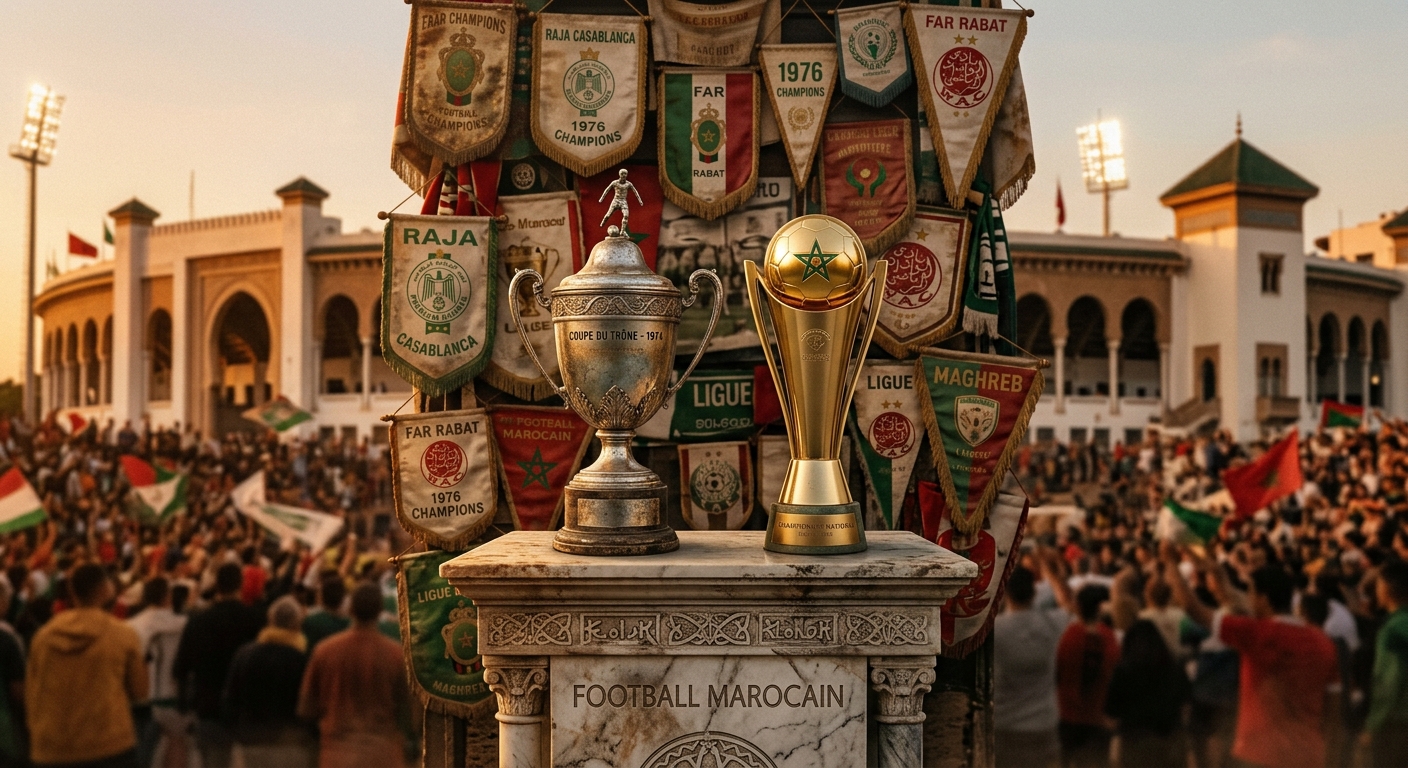
The Founding of the Championship
The Botola, Morocco's national football championship, traces its modern origins to 1956, the year Morocco regained its independence. With sovereignty restored, the newly independent nation set about establishing its own football competition to crown a genuinely Moroccan champion rather than a colonial one.
Organised football in Morocco predated independence, with competitions run during the French protectorate, but the championship of the independent era marked a new beginning. It became a symbol of national identity and a vehicle for the football passion that had been building for decades.
The early championships were contested by clubs that had emerged during the protectorate period, several of which — including Wydad and Raja of Casablanca — would go on to dominate the competition for generations. These clubs carried both sporting ambition and national significance.
From this foundation in 1956, the Botola grew into the centrepiece of Moroccan club football, a competition whose history mirrors the development of the modern Moroccan nation and its football culture.
The Early Decades
In the decades following independence, the Botola was shaped by the rise of the clubs that would become Morocco's traditional giants. Wydad, founded in 1937, and Raja, established in 1949, brought the football passions of Casablanca to the heart of the championship.
AS FAR Rabat, the army club founded in 1958, quickly became a dominant force, leveraging its institutional backing to assemble strong squads and capture multiple titles, particularly through the 1960s and beyond. The capital's club established itself as one of the championship's leading names.
The early decades also saw provincial clubs make their mark. Sides from cities such as Kénitra, Fès and elsewhere captured championships, demonstrating that the Botola's elite was not confined to Casablanca and Rabat in these formative years.
This era established the competitive patterns that would define the Botola: the dominance of the big clubs punctuated by the achievements of ambitious provincial sides, creating a championship with both a recognisable elite and room for surprise.
The Casablanca Dynasties
Over the course of the Botola's history, the two Casablanca clubs came to dominate the all-time honours roll. Wydad and Raja between them have accumulated the largest share of league titles, their rivalry driving each to sustained periods of success.
Wydad's collection of championships places it among the most successful clubs in the history of the competition, while Raja's haul of titles confirms its status as one of the two pillars of Moroccan club football. Their dominance has been the defining feature of the league.
The competition between the two clubs for the championship has produced some of the Botola's most memorable seasons, with the title frequently passing between green and red and the Casablanca Derby often carrying championship implications.
This Casablanca dominance, sustained across decades, has made the two clubs the standard-bearers of the Botola and the focal point of its all-time records, even as other clubs have periodically interrupted their supremacy.
AS FAR and the Capital
AS FAR Rabat stands as the third member of Morocco's traditional big three and a major presence on the Botola's all-time honours list. The army club's collection of championships, particularly concentrated in its dominant decades, places it firmly among the competition's most successful sides.
AS FAR's success gave the capital a champion to rival the Casablanca giants, ensuring that the Botola's elite was not monopolised by a single city. The club's titles are a key part of the competition's history and of Moroccan football's geographic balance.
The club's institutional backing and disciplined organisation underpinned its championship successes, and its periodic returns to the top of the table in the modern era have kept AS FAR among the Botola's leading names.
Together with Wydad and Raja, AS FAR forms the trio that has shaped the Botola's history and dominated its records, the three clubs whose names recur most frequently in the list of Moroccan champions.
The Provincial Champions
While the big three have dominated, the Botola's history is enriched by the provincial clubs that have broken through to lift the title. These champions from outside the Casablanca-Rabat axis are an important part of the competition's story and a testament to its competitive depth.
MAS Fès, the club of the imperial city, captured the championship and brought the title to one of Morocco's most historic cities. KAC Kénitra, Olympique Khouribga and FUS Rabat are among the other clubs that have claimed the national crown, each adding to the diversity of the honours list.
These provincial triumphs demonstrate that the Botola, while dominated by its giants, has always offered the possibility of success to ambitious clubs from across the country. Such champions are celebrated as proof of the competition's openness.
The achievements of the provincial champions ensure that the Botola's history is not solely a tale of the big three, but a richer story encompassing clubs from cities across Morocco who seized their moment to become national champions.
Professionalisation in 2011
A pivotal moment in the Botola's history came in 2011, when the league adopted professional status. This restructuring aimed to modernise the competition's governance, finances and infrastructure, aligning Moroccan club football with continental and international standards.
The professionalisation drive sought to improve the quality and stability of the league, introducing more rigorous structures around contracts, club management and competition organisation. It represented a significant step in the maturation of Moroccan football.
The reform coincided with broader investment in Moroccan football, as the country began positioning itself as a footballing nation of ambition. The professionalised league was intended to provide a stronger foundation for both domestic competition and continental success.
The 2011 professionalisation marked the transition of the Botola from its post-independence amateur and semi-professional roots into a modern professional competition, setting the stage for the developments of the contemporary era.
The Modern Era
In the professional era the Botola has continued to be shaped by its traditional powers while also witnessing the emergence of new contenders. RS Berkane, the orange club from the east, rose to become a continental force and a domestic challenger, broadening the competitive landscape.
The modern Botola has seen the Casablanca giants and AS FAR continue to compete for honours, joined by ambitious clubs investing to break the established order. This evolving competition has kept the championship dynamic and unpredictable at the top.
The wave of investment in stadiums, infrastructure and youth development has lifted the standard of the competition, while the global spotlight on Moroccan football following the national team's success has raised the league's profile.
The modern era thus blends continuity — the enduring strength of the traditional giants — with change, as new powers emerge and the competition modernises in line with Morocco's broader footballing ambitions.
The Throne Cup and Other Honours
Alongside the league championship, Moroccan club football features the Throne Cup, the country's premier knockout competition, which has its own rich history and roll of winners. The big clubs have dominated the cup as they have the league, but it has also produced surprise winners.
The Throne Cup offers an alternative route to silverware and, importantly, to continental qualification, with its winner typically entering the CAF Confederation Cup. This gives the competition added significance within the Moroccan football calendar.
Together the league and cup form the core of domestic honours, and the most successful Moroccan clubs are those that have collected both. The combination of league titles and cups defines the all-time greats of Moroccan football.
These domestic competitions, alongside continental success, make up the full picture of Moroccan club football's honours, with the Botola championship standing as the most prestigious and historically significant of them all.
The Botola's Legacy
The Botola's history is intertwined with the story of modern Morocco, from independence in 1956 through professionalisation in 2011 to the contemporary era of footballing ambition. The championship has been a constant feature of Moroccan public life for generations.
The competition has produced great clubs, legendary players and unforgettable seasons, while serving as the foundation of Morocco's domestic football and a contributor to the national team's eventual rise to the world stage.
The all-time champions — led by Wydad, Raja and AS FAR, enriched by the provincial winners — represent a roll of honour that captures the depth and history of Moroccan club football across nearly seven decades.
As Morocco prepares to co-host the 2030 World Cup, the Botola's legacy as the heart of the country's club football stands stronger than ever, a competition with a proud history and a promising future at the centre of a rising footballing nation.
The Future of the Championship
The future of the Botola looks bright against the backdrop of Morocco's footballing rise. Continued investment in infrastructure, the professionalised structure of the league and the global attention on Moroccan football create favourable conditions for growth.
The emergence of new contenders alongside the traditional giants promises a more competitive and unpredictable championship, enhancing the appeal of the league for fans at home and abroad. The diversity of competitive clubs strengthens the competition.
The challenge for Moroccan football's administrators is to convert the momentum of national-team success and major-tournament hosting into a more financially sustainable and consistently high-quality league that retains its best talent.
If these ambitions are realised, the Botola — with its rich history and roll of all-time champions — is well placed to become one of Africa's flagship competitions, building on the legacy established since 1956.
| Era / Club type | Detail |
|---|---|
| Championship founded | 1956 (independence era) |
| Professionalisation | 2011 |
| Casablanca giants | Wydad AC, Raja CA (most titles) |
| Capital power | AS FAR Rabat (army club) |
| Provincial champions | MAS Fès, KAC Kénitra, Olympique Khouribga, FUS Rabat |
| Modern challenger | RS Berkane |
| Knockout competition | Throne Cup |
| Governing body | Royal Moroccan Football Federation (FRMF) |
Botola history milestones and notable champions
FAQ
When was the Botola championship founded?
The modern Botola, Morocco's national football championship, was established in 1956 following the country's independence, replacing colonial-era competitions with a genuinely Moroccan championship.
Which clubs have won the most Botola titles?
The Casablanca giants Wydad and Raja, along with AS FAR Rabat, are the most successful clubs in Botola history, dominating the all-time honours roll across the decades.
Have any provincial clubs won the Botola?
Yes. Clubs from outside Casablanca and Rabat, including MAS Fès, KAC Kénitra, Olympique Khouribga and FUS Rabat, have all won the Moroccan championship, enriching the competition's history.
When did the Botola turn professional?
The Botola adopted professional status in 2011, a major reform aimed at modernising the league's governance, finances and infrastructure in line with continental and international standards.
What is the Throne Cup?
The Throne Cup is Morocco's premier knockout football competition, running alongside the Botola league. Its winner typically qualifies for the CAF Confederation Cup, and the big clubs have historically dominated it.
Loved this? Useful? React below — your feedback helps other readers.