Best Time to Visit Marrakech
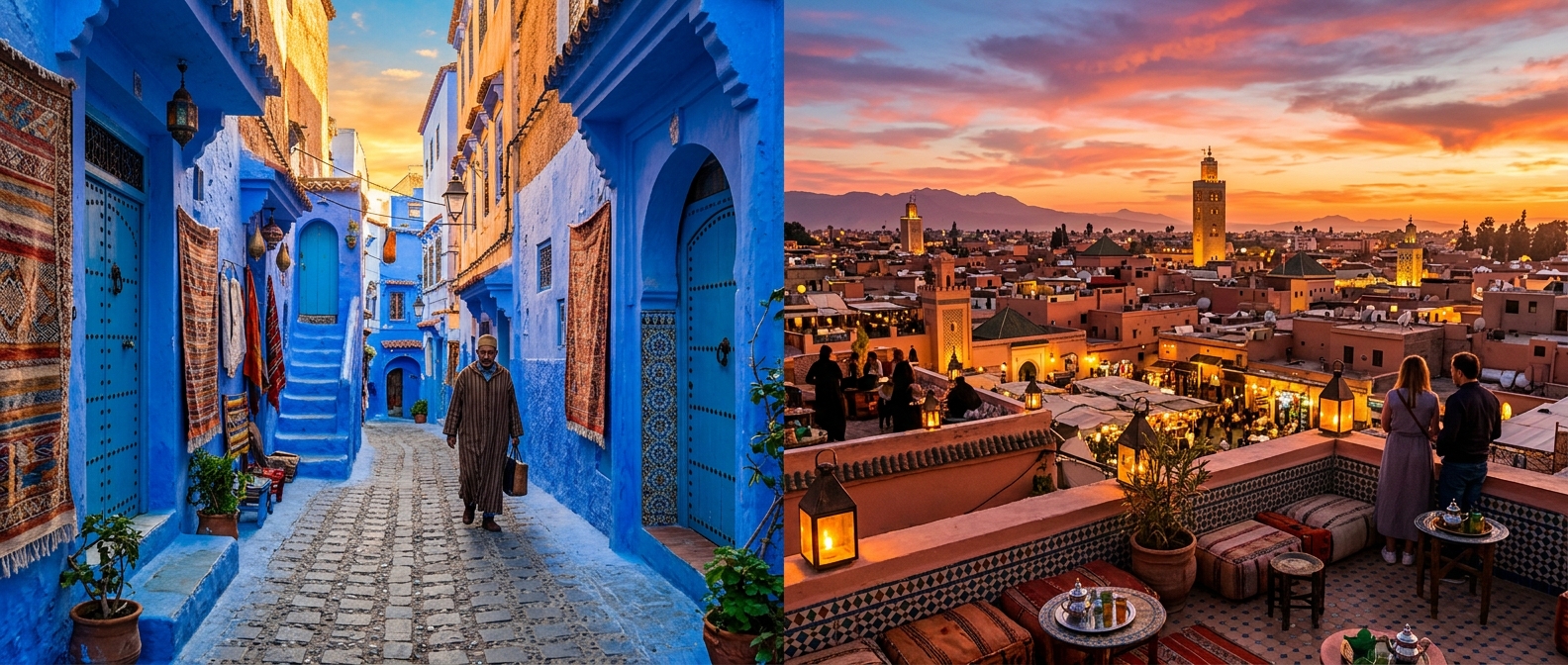
Spring (March to May): the top season
Spring is widely considered the single best window for Marrakech. Daytime highs climb from the low 20s in March to the high 20s by May, gardens such as the Majorelle and Menara are in bloom, and the surrounding High Atlas still wears a cap of snow that makes for dramatic photos from the rooftops.
This is also peak demand, so riad prices and flight fares rise, especially around Easter. Book accommodation several weeks ahead and reserve popular restaurants and hammams in advance.
Autumn (September to November): the quiet favourite
Autumn rivals spring for comfort. The fierce summer heat breaks in September, and by October and November you get warm, dry days around 24-28C with cool, comfortable evenings, ideal for long medina walks and day trips to the Ouzoud waterfalls or the Agafay desert.
Crowds thin compared with spring, and prices ease slightly outside major holidays. November can bring the first short rain showers, but full days of rain are rare.
Summer (June to August): hot and cheap
Summer in Marrakech is genuinely intense, with highs of 38-45C and occasional heat spikes above that. The dry heat is more bearable than humid climates, but midday sightseeing is exhausting, so locals and savvy visitors rest indoors from roughly noon to 4pm.
If you travel in summer, prioritise a riad with a plunge pool, plan activity for early morning and evening, and consider pairing the city with the cooler Atlantic coast at Essaouira, which stays around 25C.
Winter (December to February): mild days, cold nights
Winter days are pleasant, often 18-20C and sunny, perfect for walking, but nights drop sharply to 5-8C and many riads have limited heating. Pack layers and a warm jacket for the evenings.
Winter is also the season for snow in the nearby Atlas, and the Oukaimeden ski resort, under two hours away, can be combined with a Marrakech base. Christmas and New Year see a price surge.
Ramadan and major events
During Ramadan (dates shift roughly 11 days earlier each year on the Gregorian calendar) daytime life slows, some cafes and restaurants close until sunset, and the city comes alive after the iftar meal. It can be an atmospheric time to visit, but plan around reduced daytime services.
Festivals worth timing a trip around include the Marrakech International Film Festival (usually late November to December) and the Marrakech Popular Arts Festival in summer.
Quick verdict by traveller type
For first-timers wanting the best all-round balance of weather, light and atmosphere, target April-May or October. For budget travellers happy to work around heat, June and July offer the lowest prices.
For desert excursions to Merzouga or Zagora, spring and autumn are ideal because the Sahara is too hot in summer and cold at night in deep winter.
| Season | Avg daytime high | Crowds | Price level |
|---|---|---|---|
| Spring (Mar-May) | 20-28C | High | High |
| Summer (Jun-Aug) | 38-45C | Low-Medium | Low |
| Autumn (Sep-Nov) | 24-30C | Medium | Medium |
| Winter (Dec-Feb) | 18-20C (cold nights) | Medium | Medium-High at holidays |
Marrakech by season: weather, crowds and price
FAQ
What is the hottest month in Marrakech?
July and August are the hottest, with daytime highs commonly 40-45C and occasional spikes higher. Plan indoor rest at midday and outdoor activity for early morning or evening.
Does it rain much in Marrakech?
No. Marrakech is semi-arid with very low rainfall concentrated in late autumn through early spring. Even then, full rainy days are uncommon, though short showers can occur in November to March.
Is winter a good time to visit Marrakech?
Yes for sightseeing, as days are mild and sunny around 18-20C. Just pack warm layers because nights drop to 5-8C and many riads have minimal heating.
Loved this? Useful? React below — your feedback helps other readers.