The Best Time to Visit Morocco in 2026 (Month-by-Month)
Spring and Autumn: The Sweet Spots
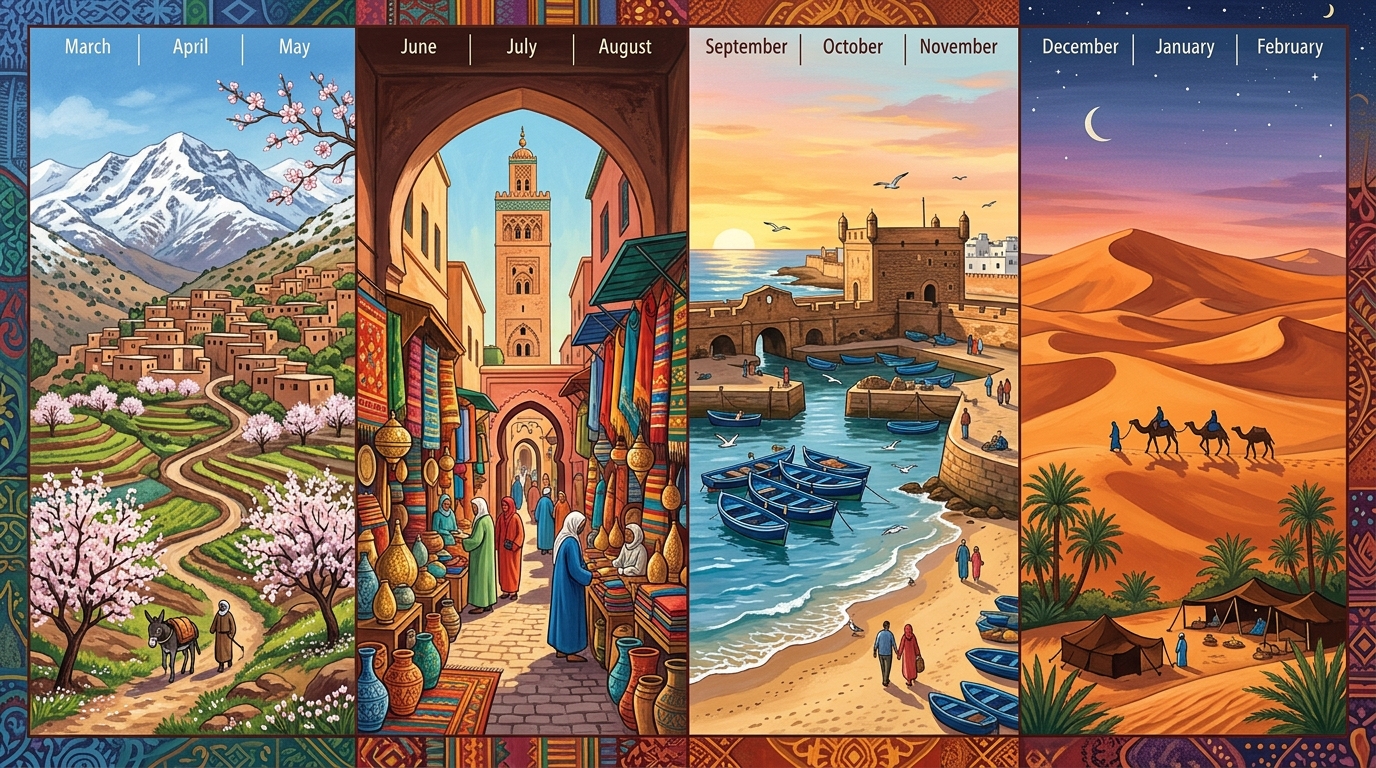
For a first trip that mixes cities, the desert and a bit of mountain scenery, aim for March to May or September to November. Daytime temperatures in Marrakech and Fez sit around a comfortable 20-28 degrees C (68-82 F), the countryside is green after winter rains in spring, and the Sahara is warm by day without the brutal summer heat. These shoulder seasons give you the widest range of activities in one trip.
April and October are often singled out as the single best months. Rainfall is low, days are long and sunny, and crowds are lighter than the European summer holiday peak. The trade-off is that these months are popular, so book riads and desert camps a few weeks ahead, especially around Easter and the early-October rush.
Summer: Hot Inland, Lovely on the Coast
From June to early September, inland cities bake. Marrakech and Fez regularly push past 38-40 degrees C (100-104 F), and many Sahara desert camps near Merzouga close because the heat is genuinely unsafe for camel treks and overnight camping. If you only have summer dates, plan early-morning sightseeing and long midday breaks.
Summer is, however, prime time for the Atlantic coast. Essaouira, Agadir and Taghazout stay breezy and mild thanks to the sea, making them ideal for surfing, seafood and escaping the inland furnace. The High Atlas mountains also offer cool relief for trekking when the cities are too hot.
Winter: Cities, Snow and Quiet Desert
December to February is cool and can be wet, particularly in the north around Fez, Chefchaouen and Tangier. Nights get cold, and many traditional riads lack central heating, so pack layers and check that your accommodation has heating. The upside is fewer tourists and lower prices in the imperial cities.
Winter is surprisingly good for the desert. Daytime Sahara temperatures are pleasant, the light is gorgeous, and camps reopen, though desert nights are genuinely cold. The High Atlas, including Oukaimeden near Marrakech, even gets snow, so you can ski in the morning and wander a warm-ish medina the same week.
Match the Month to Your Trip
If the Sahara is your priority, target October, November, February or early March, when the dunes are comfortable by day and camps are open. For the medinas of Marrakech and Fez, almost any month outside the July-August peak works, with spring and autumn the most pleasant for walking the souks for hours.
Also factor in Ramadan, whose dates shift each year. During Ramadan some restaurants keep limited daytime hours and the rhythm of cities changes, which can be a fascinating cultural experience but requires a little extra planning around meals.
Frequently asked
What is the single best month to visit Morocco?
April and October are the most reliable all-round months: warm, dry, long days and the desert is comfortable. Both are popular, so book accommodation a few weeks ahead.
Is it too hot to visit Morocco in summer?
Inland cities like Marrakech and Fez can exceed 40 degrees C (104 F) and many Sahara camps close. Summer is best spent on the cooler Atlantic coast or in the High Atlas mountains.
Can you visit the Sahara desert in winter?
Yes. Daytime desert temperatures are pleasant in winter and camps are open, but nights are cold, so bring warm layers for overnight stays at Merzouga or Zagora.