15 Best Places to Visit in Morocco
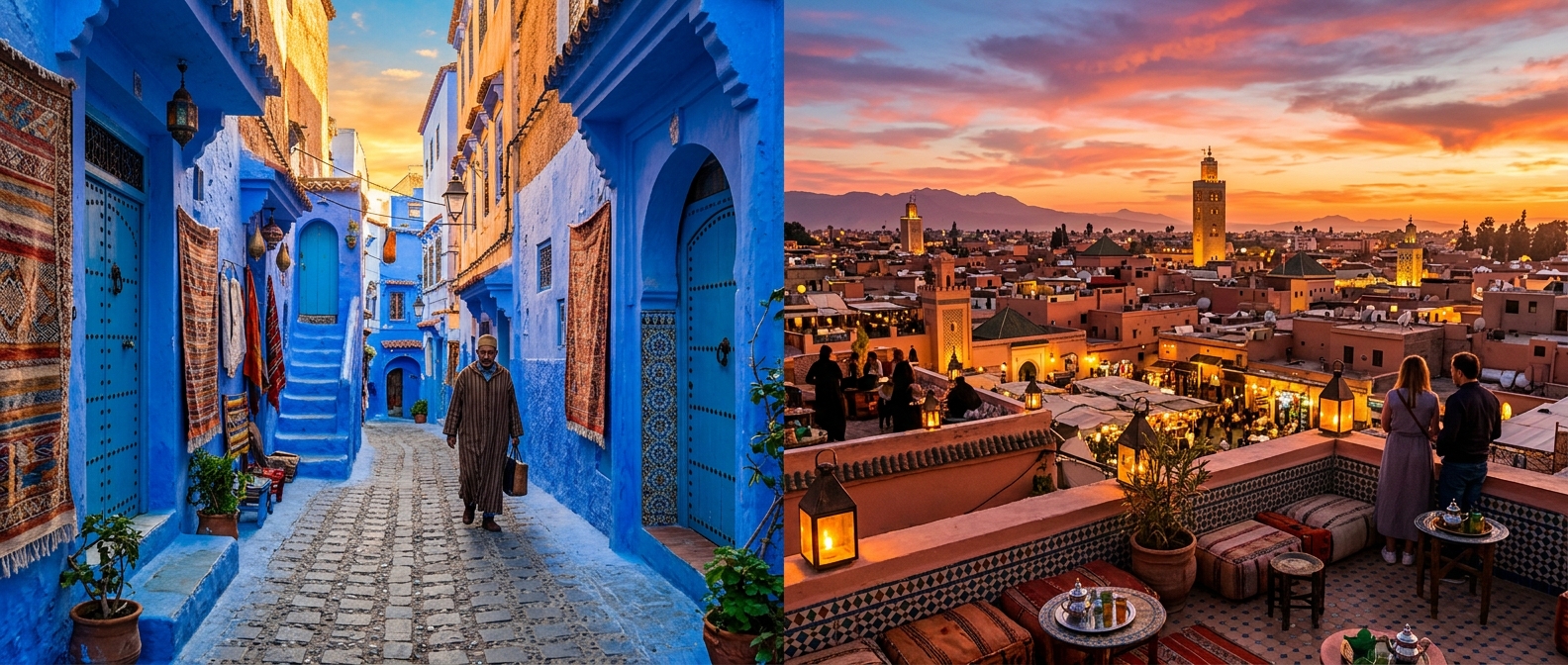
Imperial Cities: Marrakech, Fes, Meknes and Rabat
Morocco's four imperial cities anchor most itineraries. Marrakech is the country's tourism capital, famous for Jemaa el-Fnaa square, the Koutoubia Mosque, Bahia Palace and Majorelle Garden. Fes holds the oldest and largest medieval medina in the world, with the Chouara tanneries and the Al-Qarawiyyin, often cited as the world's oldest continually operating university.
Meknes offers monumental gates like Bab Mansour and the nearby Roman ruins of Volubilis, while Rabat, the modern capital, pairs the Hassan Tower and Kasbah of the Udayas with a relaxed, walkable feel. Together these cities tell the story of Morocco's dynasties and craftsmanship.
Desert and Mountains
The Sahara at Merzouga and the Erg Chebbi dunes is the signature Moroccan adventure, reached by 4x4 and camel and best experienced on an overnight stay in a desert camp. Ait Ben Haddou, a UNESCO-listed fortified kasbah on the old caravan route, is a popular stop on the way.
The High Atlas Mountains rise just south of Marrakech, offering Berber villages, the Toubkal trek to North Africa's highest peak (4,167 m), and the dramatic Todra and Dades gorges. These regions provide cooler air and a slower pace away from the busy medinas.
Coast and Blue City
Essaouira is a breezy, laid-back Atlantic port with ramparts, fresh seafood and strong winds that draw kitesurfers. Chefchaouen, tucked into the Rif Mountains, is the famous Blue City, where lanes and walls are painted in countless shades of blue.
Other coastal highlights include Casablanca, home to the vast Hassan II Mosque, and Tangier, the gateway between Africa and Europe. For beaches and surf, Taghazout near Agadir is a year-round favorite.
How to Combine Them
A 10 to 14 day trip can comfortably link Marrakech, the Atlas, the Sahara, Fes and Chefchaouen, returning via the coast. Trains run efficiently between Casablanca, Rabat, Fes and Marrakech, while the desert and mountains are best reached by organized tour or private driver.
Spring (March to May) and autumn (September to November) offer the most comfortable weather nationwide, avoiding both desert heat and mountain cold.
| Destination | Known For | Ideal Stay |
|---|---|---|
| Marrakech | Jemaa el-Fnaa, palaces, souks | 2-3 days |
| Fes | World's largest car-free medina | 2 days |
| Chefchaouen | The Blue City | 1-2 days |
| Merzouga (Sahara) | Erg Chebbi dunes, desert camps | 2 days |
| Atlas Mountains | Toubkal trek, Berber villages | 1-3 days |
| Essaouira | Atlantic ramparts, seafood | 1-2 days |
Top Moroccan destinations at a glance
FAQ
How many days do you need to see Morocco?
Ten to fourteen days lets you combine the imperial cities, the Sahara, the Atlas Mountains and a coastal town without rushing. A one-week trip can cover Marrakech, the desert and one or two extra stops.
What is the best time to visit Morocco?
Spring (March-May) and autumn (September-November) offer the most pleasant weather, with mild temperatures for cities, mountains and the desert alike. Summer is very hot inland and in the Sahara.
Is Morocco safe for tourists?
Morocco is generally safe and welcoming for travelers. Normal precautions apply in crowded medinas and markets, where polite firmness with persistent guides and vendors is the main thing to manage.
Loved this? Useful? React below — your feedback helps other readers.