Best Restaurants in Marrakech by Neighborhood
How to Navigate Marrakech Dining
Marrakech offers some of Morocco's most varied dining, but the city is divided into distinct zones with very different scenes. Knowing which neighborhood suits your mood, whether a candlelit riad, a chic bistro or a sizzling food stall, saves you wandering the labyrinthine alleys hungry.
Prices range widely, from a few dirhams for a bowl of harira at a stall to elaborate multi-course riad dinners. Tipping around ten percent is customary, and many of the finest medina restaurants require advance booking and have no street signage.
The Medina and Riad Terraces
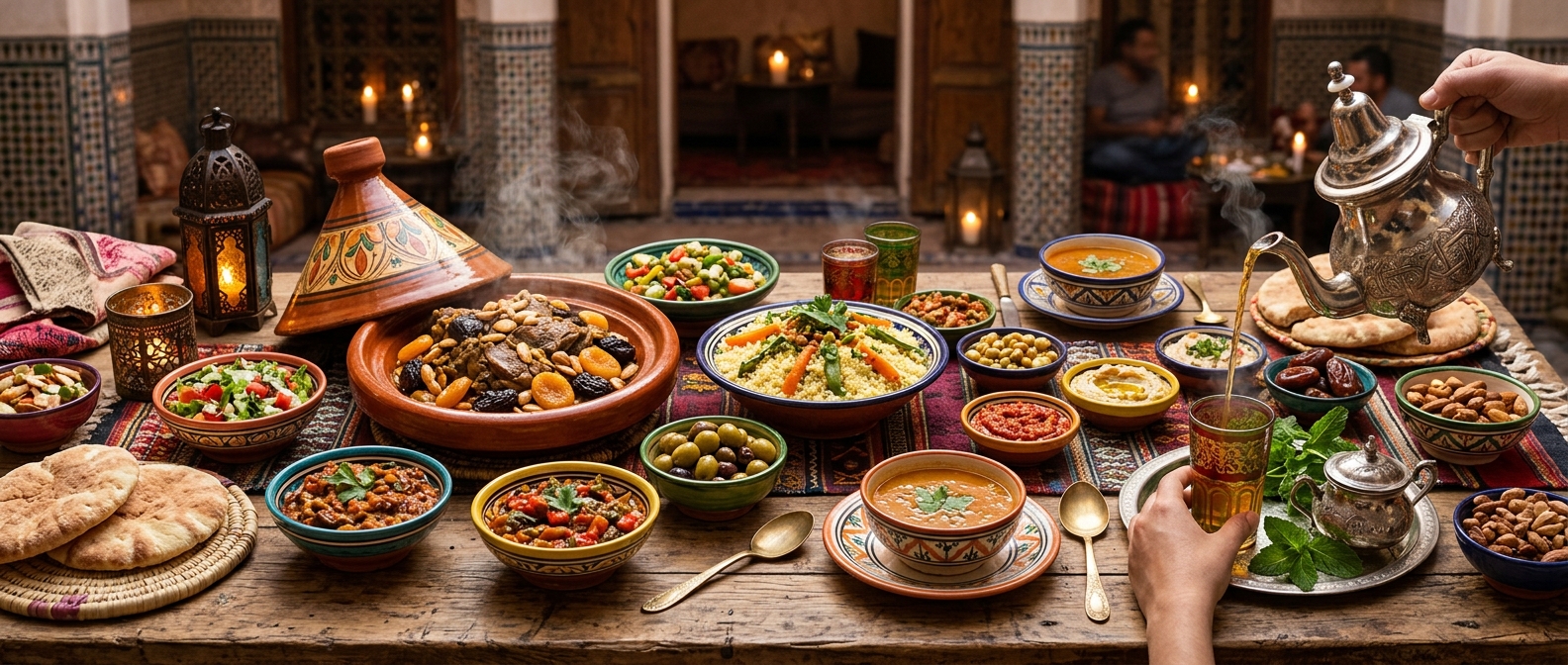
Inside the old walled city, dining is about atmosphere as much as food. Restored riads open their rooftop terraces and courtyards for traditional Moroccan menus, tagines, couscous and pastilla served under lanterns and stars.
These hidden gems are often unmarked and reached through narrow derbs, so book ahead and ask your riad for directions or an escort. The setting, with zellij tilework and trickling fountains, is part of the experience and worth the premium.
Gueliz, the Modern Quarter
Gueliz is the French-built new town, full of boulevards, galleries and a cosmopolitan dining scene. Here you find contemporary Moroccan fusion, Italian trattorias, sushi bars, brunch cafes and fine-dining tables with wine lists.
It is the place to go when you want a break from tagine or an air-conditioned, modern setting. The neighborhood is also more walkable and grid-like than the medina, making restaurant-hopping easy.
Jemaa el-Fnaa Street Food
As dusk falls, the main square transforms into a vast open-air food court, with numbered stalls firing up grills under clouds of smoke. This is where to try grilled meats, merguez sausage, snails in spiced broth, fried fish and fresh orange juice.
The scene is chaotic and the vendors are persistent, so agree on prices before ordering and choose busy stalls with high turnover for freshness. It is an essential, lively and inexpensive Marrakech experience despite the hustle.
Hivernage and Beyond
Hivernage, between Gueliz and the medina, is the upscale hotel district known for glamorous restaurants, lounges and nightlife. It suits a dressy night out with refined cuisine and cocktails.
Further out, the Palmeraie and the road toward the Atlas foothills host destination restaurants and garden venues, often paired with pools or sunset views. These require a taxi but reward with space, calm and scenery the city center cannot offer.
Practical Tips for Eating Out
Many medina restaurants do not serve alcohol, while Gueliz and Hivernage venues usually do; check ahead if that matters to you. Lunch is generally cheaper than dinner, and a long lunch on a riad terrace is a lovely way to escape the midday heat.
Carry small change for street food, as vendors rarely break large notes. For special dinners, reserve a day or two ahead in high season, since the best riad tables are tiny and fill quickly.
| Neighborhood | Best for | Typical price level |
|---|---|---|
| Medina / riads | Traditional tagines, atmosphere | Mid to high |
| Gueliz | Modern, international, brunch | Mid to high |
| Jemaa el-Fnaa | Street food, grills, juice | Low |
| Hivernage | Upscale dining, nightlife | High |
| Palmeraie / outskirts | Garden venues, sunset views | High |
Marrakech dining by neighborhood
FAQ
Do I need to reserve restaurants in Marrakech?
For the best riad and fine-dining restaurants, yes, especially in high season. Many medina restaurants are small, unmarked and fill quickly, so book a day or two ahead.
Is street food at Jemaa el-Fnaa safe?
Generally yes if you choose busy stalls with high turnover and freshly cooked food. Agree on prices before ordering, as vendors can be aggressive with tourists.
Where can I find restaurants serving alcohol?
Gueliz, Hivernage and many hotel restaurants serve alcohol, while traditional medina restaurants often do not. Check in advance if it matters to you.
What is the most authentic neighborhood to eat in?
The medina offers the most traditional Moroccan dining in atmospheric riads, while Jemaa el-Fnaa delivers the most authentic street-food experience after dark.
Loved this? Useful? React below — your feedback helps other readers.