Best Cities to Visit in Morocco
Marrakech: The Red City
Marrakech is Morocco's most visited city and the gateway most travelers choose for a first trip. Its walled medina, painted in ochre and red, surrounds the legendary Jemaa el-Fna square, which fills each evening with food stalls, musicians and storytellers.
Beyond the square, the Koutoubia Mosque, the Saadian Tombs, Bahia Palace and the Jardin Majorelle give the city a mix of monuments, gardens and shopping that easily fills three or four days.
Fes: The Cultural and Spiritual Heart
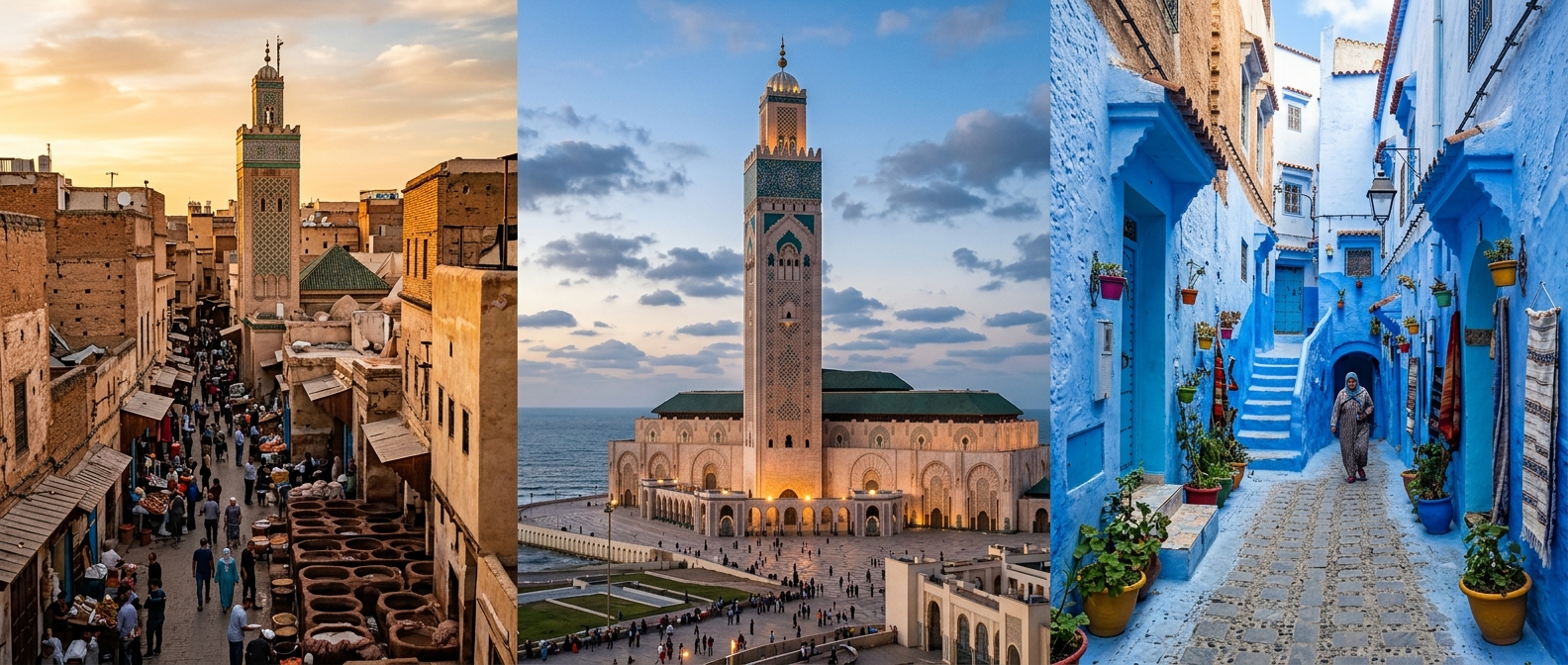
Fes is home to Fes el-Bali, often called the world's largest car-free urban area, a maze of thousands of lanes. Founded in the 9th century, it holds the University of al-Qarawiyyin, one of the oldest continuously operating universities in the world.
The Chouara tanneries, the Bou Inania and Al-Attarine madrasas and the artisan workshops make Fes the place to understand traditional Moroccan craft and scholarship.
Chefchaouen: The Blue Pearl
Tucked into the Rif Mountains, Chefchaouen is famous for its blue-washed walls and stairways. The relaxed pace, mountain air and photogenic streets make it a favorite stop in the north.
It pairs naturally with a visit to the Mediterranean coast or with the Roman ruins of Volubilis on the way south.
Essaouira: Atlantic Breeze
Essaouira is a fortified port town on the Atlantic, known for its windswept ramparts, fresh grilled fish at the harbor and a laid-back arts and music scene. The Skala de la Ville sea bastions are a highlight.
Strong winds make it a kitesurfing and windsurfing hub, while the compact, walkable medina is far less crowded than Marrakech.
Rabat: The Calm Capital
Rabat, the national capital, blends government grandeur with a manageable medina and ocean views. The Hassan Tower, the Mausoleum of Mohammed V and the picturesque Kasbah of the Udayas are its signature sights.
It is cleaner and quieter than the larger cities, and the nearby Chellah necropolis adds Roman and Marinid ruins to the mix.
Tangier: Where Two Seas Meet
Tangier sits at the meeting point of the Mediterranean and the Atlantic, just across from Spain. Long a magnet for writers and artists, it has a revitalized waterfront, a historic kasbah and an international feel.
It works well as an entry point for travelers arriving by ferry from Europe.
Casablanca: The Modern Metropolis
Casablanca is Morocco's economic capital and largest city. Its standout sight is the Hassan II Mosque, one of the largest mosques in the world, built partly over the Atlantic with a towering minaret.
The city also offers Art Deco architecture, a corniche of seafront restaurants and a vibrant contemporary dining scene.
Meknes and Volubilis
Meknes, one of Morocco's four imperial cities, is quieter than Fes but rich in monumental gates such as Bab Mansour and the grand granaries of the Heri es-Souani.
Nearby Volubilis preserves the best Roman ruins in Morocco, with intricate mosaics still in place, making the pair an excellent day combination.
How to Combine Them
A classic first trip links Marrakech, Fes and one coastal or mountain town. Trains connect Tangier, Rabat, Casablanca, Meknes and Fes efficiently, while Marrakech and Essaouira are linked by frequent buses.
Allow at least a week to see two or three cities without rushing, and longer if you add the desert or the Atlas Mountains.
| City | Known For | Suggested Stay |
|---|---|---|
| Marrakech | Jemaa el-Fna, palaces, gardens | 3-4 days |
| Fes | Largest medina, crafts, history | 2-3 days |
| Chefchaouen | Blue streets, Rif Mountains | 1-2 days |
| Essaouira | Atlantic port, wind sports | 1-2 days |
| Rabat | Capital, kasbah, calm | 1-2 days |
| Casablanca | Hassan II Mosque, modern life | 1 day |
Top Moroccan cities at a glance
FAQ
Which Moroccan city is best for first-time visitors?
Marrakech is the most popular starting point thanks to its iconic medina, easy flights and wide range of sights, riads and day trips.
How many cities can I see in one week?
In a week you can comfortably visit two or three cities, such as Marrakech plus Fes and one coastal or mountain town.
Are Moroccan cities connected by train?
Yes. Tangier, Rabat, Casablanca, Meknes and Fes are linked by a reliable train network, including a high-speed line between Tangier and Casablanca.
Loved this? Useful? React below — your feedback helps other readers.