Atlas Mountains Trekking Guide
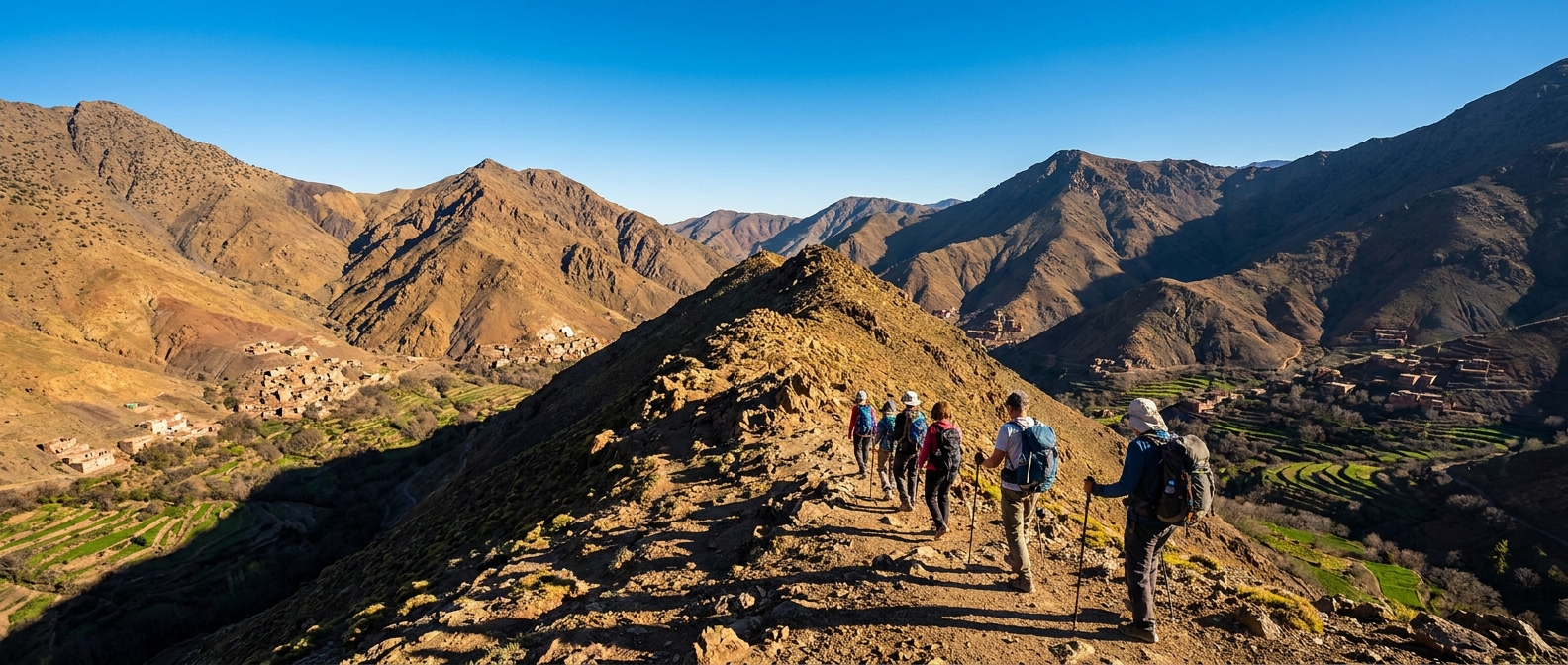
Understanding the Atlas Ranges
The Atlas Mountains are not a single range but a vast system stretching some 2,500 kilometres across Morocco, Algeria and Tunisia. Within Morocco they divide into three distinct zones: the High Atlas, the Middle Atlas and the Anti-Atlas. Each has its own character, altitude profile and trekking style.
The High Atlas is the dramatic centrepiece, containing Toubkal at 4,167m and most of the country's iconic treks. The Middle Atlas to the north is greener and gentler, dotted with cedar forests and lakes, while the Anti-Atlas to the south is arid, rocky and remote, fringing the Sahara.
The High Atlas: Heart of Moroccan Trekking
The High Atlas holds the country's highest peaks and its most famous walking. Beyond Toubkal, classic objectives include the M'Goun massif, the Aït Bougmez valley, and long traverses linking remote villages over high passes called tizis.
This range is where Berber mountain culture is most vivid, with mud-brick villages, terraced fields, and walnut groves clinging to steep valleys. Trekkers pass through working agricultural communities, often staying in family guesthouses or gîtes that offer an authentic window into mountain life.
Middle and Anti-Atlas Alternatives
The Middle Atlas, around Azrou and Ifrane, is forested and milder, famed for cedar woodlands and Barbary macaques. It suits walkers seeking shorter, greener hikes and cooler summer temperatures, and it works well as a quieter alternative to the busy High Atlas.
The Anti-Atlas, near Tafraoute and Jbel Sirwa, offers stark volcanic and granite landscapes, palm-filled gorges and almond blossom in late winter. Its lower altitude makes it ideal for trekking in months when the High Atlas is snowbound, particularly from November to March.
Popular Routes and Itineraries
For first-timers, a two- to four-day loop from Imlil covering Berber villages and a summit attempt is the most popular introduction. Those wanting variety often choose the Aït Bougmez 'Happy Valley' or the multi-day M'Goun traverse for spectacular gorges and high plateaus.
Longer expeditions can link multiple valleys over a week or more, crossing several high passes and ending near the Saharan foothills. Day-walkers based in Marrakech can also enjoy shorter excursions in the Ourika or Ouirgane valleys without committing to overnight camps.
Berber Culture and Mountain Villages
Trekking the Atlas is as much a cultural journey as a physical one. The mountains are the homeland of the Amazigh (Berber) people, whose villages, language and hospitality define the experience. Mint tea, communal tagines and home-stays are central to most treks.
Hiring local guides and muleteers, and staying in village gîtes, channels tourism income directly into these communities. Respecting local customs, dressing modestly, and learning a few Berber or Arabic greetings goes a long way toward warm welcomes on the trail.
Seasons and When to Trek
The High Atlas is best from April to October, with summer offering snow-free high routes despite valley heat. Winter transforms the high peaks into a snowy alpine environment for experienced mountaineers only.
The Anti-Atlas and lower valleys come into their own in winter and early spring, when temperatures are pleasant and the High Atlas is closed by snow. Spring brings blossom and meltwater streams, while autumn delivers stable weather and clear skies across all ranges.
Planning, Guides and Logistics
Most Atlas treks are arranged through agencies in Marrakech or local guides in trailhead villages like Imlil. Packages typically include a licensed guide, mules for baggage, accommodation in gîtes or camps, and full board, which removes most logistical worry.
Independent trekking is possible on well-marked valley routes, but a guide is mandatory for Toubkal and strongly advised for remote high-altitude crossings. Carry cash, as villages have no ATMs, and always check current weather before heading high.
| Range | Character | Best season |
|---|---|---|
| High Atlas | Highest peaks, Toubkal, Berber villages | April to October |
| Middle Atlas | Cedar forests, lakes, gentler hills | Spring and autumn |
| Anti-Atlas | Arid, volcanic, palm gorges | November to March |
The three Atlas ranges compared
FAQ
Where do most Atlas treks start?
Most High Atlas treks start from Imlil, about 90 minutes by road from Marrakech. Other hubs include Aït Bougmez for M'Goun and Tafraoute for the Anti-Atlas. Marrakech is the main gateway city.
How high are the Atlas Mountains?
The High Atlas contains the highest peaks, topped by Mount Toubkal at 4,167m, the highest in North Africa. The Middle and Anti-Atlas are lower, generally ranging from around 1,500m to 3,300m.
Can beginners trek the Atlas Mountains?
Yes. Many short valley walks and two- to four-day village loops suit beginners with reasonable fitness. High-altitude summits like Toubkal are strenuous but non-technical in summer with a guide.
Loved this? Useful? React below — your feedback helps other readers.