Atlas Lions Ultras & Fan Culture
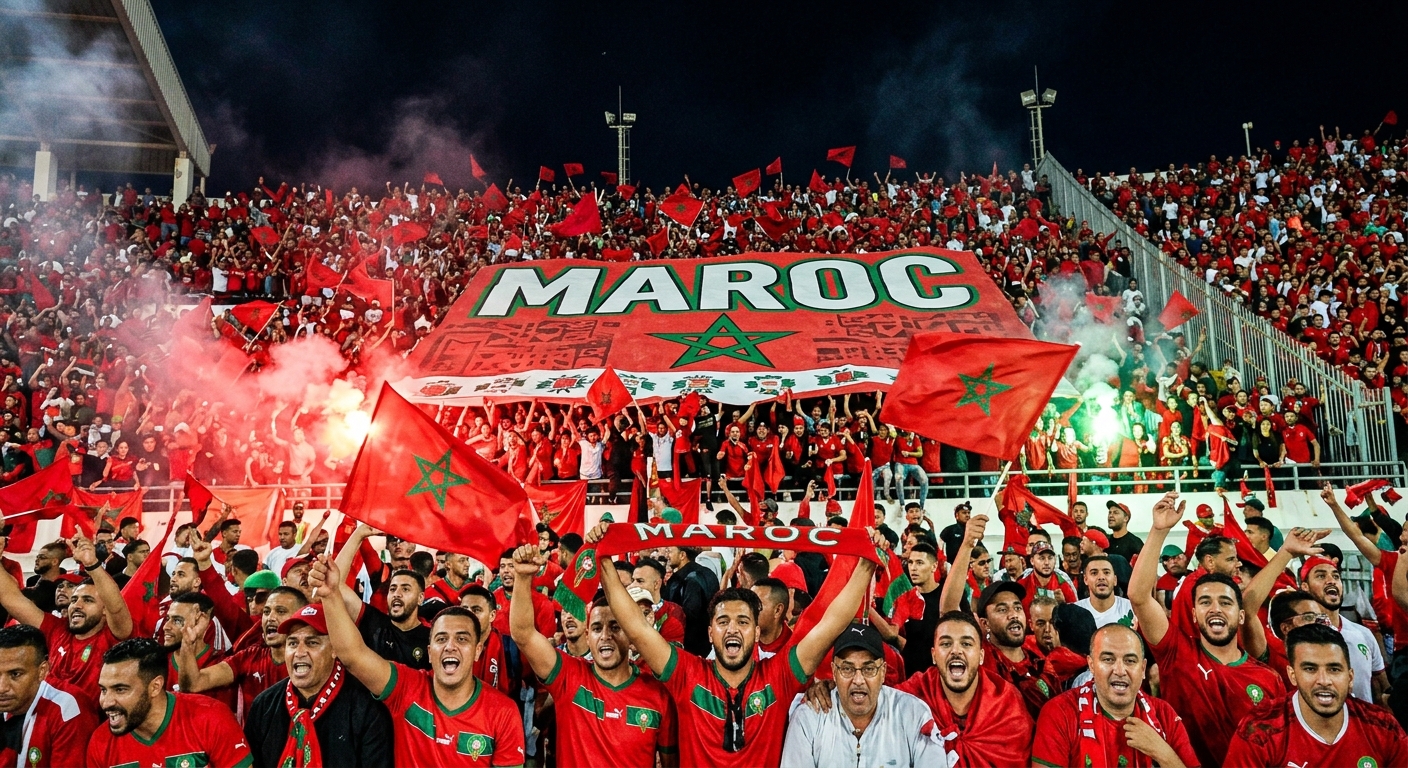
A Nation United by Football
Few nations express their footballing passion as vividly as Morocco. From the raucous terraces of Casablanca to the streets of European cities filled with the Moroccan diaspora, the support for the Atlas Lions and the country's great clubs is a force of nature that captivates observers worldwide.
Moroccan fan culture is a rich tapestry of organized ultras movements, deeply rooted club rivalries, creative tifo displays, and powerful musical traditions. It is a culture that blends the local intensity of domestic football with the global reach of a vast, devoted diaspora.
The 2022 World Cup brought this culture to the attention of the entire world, as Moroccan supporters turned host stadiums into cauldrons of noise and color and celebrated their team's historic run with an emotion that resonated far beyond the football pitch. This article explores the depth and diversity of Moroccan football fandom.
What makes Moroccan support so distinctive is that it operates simultaneously on two stages. At home, it is anchored in the great domestic clubs and the structured, militant world of the ultras, who treat match days as collective rituals of devotion. Abroad, it lives in the diaspora communities scattered across Europe and beyond, where second and third generations have kept their connection to Morocco vivid through the national team. The two stages feed one another, and together they produce a fan culture of extraordinary breadth and intensity.
Crucially, this passion is not reserved for moments of triumph. Moroccan supporters fill stadiums and decorate streets regardless of results, treating loyalty to the Atlas Lions and to their clubs as a matter of identity rather than mere entertainment. That unconditional quality is part of what neutrals found so compelling when the world finally turned its full attention to Moroccan fandom, and it is what gives the culture its enduring depth.
The Birth of Moroccan Ultras
Organized ultras culture took root in Morocco in the mid-2000s, inspired by the European, particularly Italian, ultras movements but rapidly developing its own distinctive identity. Groups formed around the country's biggest clubs, dedicating themselves to supporting their teams with relentless energy and creativity.
These ultras groups became known for their elaborate choreographies, sustained singing throughout matches, and fierce loyalty. They organized themselves with structure and dedication, turning match days into spectacles and the stands into arenas of artistic and emotional expression.
The Moroccan ultras scene quickly became one of the most vibrant in Africa and the Arab world. What began as an imported concept evolved into a uniquely Moroccan phenomenon, deeply intertwined with youth identity, social expression, and the powerful emotions that football inspires across the country.
The timing of the movement's emergence was significant. The mid-2000s coincided with the spread of internet access and digital communication among young Moroccans, allowing ultras groups to organize, share ideas, and coordinate displays with growing sophistication. They drew on the European blueprint of relentless vocal support and visual spectacle, but they fused it with local language, melodies, and concerns, producing something unmistakably their own.
For many young people, joining an ultras group offered far more than a way to watch football. It provided belonging, structure, and a sense of collective purpose, a channel for energy and creativity within a youthful and rapidly urbanizing society. The movement quickly became one of the most visible expressions of youth culture in the country, with its songs, slogans, and rivalries spilling well beyond the stadium walls and into everyday life.
The Casablanca Giants and Their Ultras
The two great clubs of Casablanca, Raja and Wydad, sit at the heart of Moroccan ultras culture. Their supporters are among the most passionate and numerous in Africa, and the groups associated with these clubs have set the standard for fan creativity and intensity across the continent.
Raja Casablanca's ultras and Wydad Casablanca's supporters are renowned for their massive, intricate tifo displays that can cover entire stands, their deafening atmospheres, and their unwavering devotion. The rivalry between the two clubs, expressed through their fans, produces some of the most electric derbies in world football.
The Casablanca derby, contested before enormous, fervent crowds, is a centerpiece of the Moroccan football calendar and a showcase for the ultras' artistry and passion. These clubs and their supporters have also enjoyed continental success, carrying Moroccan fan culture onto the African stage.
The scale of support these clubs command is difficult to overstate. Raja and Wydad each count vast followings that extend across Morocco and into the diaspora, and their ultras groups number among the largest and most organized in Africa. Match days transform the city, with supporters converging on the stadium hours in advance, and the noise generated by their combined ranks can be genuinely overwhelming for visiting teams.
Both clubs have also carried their support onto the continental stage, contesting and winning major African club competitions. Those campaigns exported the spectacle of Casablanca's terraces across the continent, earning admiration for the artistry and volume of the support. In doing so, the two giants became ambassadors for Moroccan fan culture, demonstrating to the rest of Africa what organized, creative devotion could look like at its most intense.
Tifos: Art on the Terraces
One of the most striking features of Moroccan fan culture is the tifo, the large-scale visual display created by ultras in the stands. Moroccan tifos are renowned for their ambition, artistry, and emotional power, often covering entire sections of a stadium with coordinated cards, banners, flags, and painted scenes.
These displays are the product of meticulous planning and collective effort, with ultras groups investing significant time and resources to create them. They convey messages of pride, defiance, social commentary, and devotion, transforming the terraces into a canvas for collective expression.
Moroccan tifos have earned international admiration, frequently ranked among the most impressive in world football. They represent the creative pinnacle of the ultras movement and demonstrate that football fandom can be a genuine art form, capable of stirring deep emotion in players and spectators alike.
The logistics behind a major tifo are formidable. Groups must design the artwork, fund the materials, manufacture banners and thousands of colored cards, and choreograph the precise moment of unveiling so that the full image snaps into view in seconds. This demands organization, fundraising, and discipline on a scale that resembles a small production company, all driven by volunteers motivated purely by devotion to the cause.
The themes of these displays range widely, from celebrations of club history and heroes to pointed messages of social commentary and defiance. A tifo can mark an anniversary, mourn a loss, taunt a rival, or voice the frustrations and hopes of a generation. This expressive range is what elevates the Moroccan tifo beyond decoration into a genuine medium of communication, one through which the terraces speak to the club, the city, and sometimes the nation at large.
The Power of Football Songs
Music is central to Moroccan football culture, and the chants and songs of the ultras are an integral part of the matchday experience. These are not simple chants but often elaborate, melodic compositions with meaningful lyrics that address themes of loyalty, struggle, identity, and hope.
One song in particular transcended the terraces to become a global phenomenon. 'Rajawi Filistini', a song originating from Raja Casablanca's ultras, gained worldwide attention for its powerful melody and socially conscious lyrics, becoming a viral sensation and a symbol of Moroccan football culture's depth and creativity.
These songs reflect the way football intertwines with broader social and cultural currents in Morocco. They give voice to the emotions and concerns of young people, blending entertainment with expression and turning stadiums into spaces where culture, identity, and football converge.
The structure of these songs reflects their seriousness as cultural artifacts. Many are built around memorable melodies and verses passed down and adapted over years, performed by thousands in unison so that the sound rolls around the stadium in waves. The best of them achieve a hymn-like quality, capable of swelling into something genuinely moving, and they form the sonic backbone of the matchday experience.
The reach of 'Rajawi Filistini' beyond the terraces illustrated how potent this tradition had become. Originating with Raja Casablanca's ultras, it spread far beyond football through its evocative melody and socially conscious lyrics, finding an audience that stretched well past supporters of any single club. Its success demonstrated that Moroccan football songs were not throwaway chants but compositions capable of carrying meaning and emotion to a global audience.
This musical dimension connects the terraces to wider currents in Moroccan society and youth expression. The songs blend football allegiance with reflections on hardship, hope, friendship, and identity, giving voice to the experiences of young people. In this way, the stadium becomes a space where popular culture is created and shared, and where football is interwoven with the broader life of the community.
The Diaspora and Global Support
A defining feature of Moroccan football fandom is the vast global diaspora that supports the national team with extraordinary fervor. Large Moroccan communities across Europe, in countries such as France, the Netherlands, Belgium, Spain, and beyond, provide a worldwide network of passionate supporters.
This diaspora support means that the Atlas Lions effectively enjoy home advantage wherever they play. At major tournaments, Moroccan fans travel in enormous numbers and are joined by local diaspora communities, filling stadiums and surrounding cities with red flags, chanting, and celebration.
The connection between the diaspora and the national team is profound, reflecting deep ties of identity and belonging. Many of the players themselves emerged from these communities, creating a powerful bond between the squad and the global Moroccan family that supports them with such intensity.
The roots of this diaspora run deep, built over generations of migration to the industrial heartlands and cities of Western Europe. Within these communities, support for the Atlas Lions has become a vital thread of connection to a homeland that younger generations may know only through family visits. Wearing the red shirt and following the national team is, for many, an affirmation of an identity that bridges two worlds.
The footballing consequences of this are profound. Because so many of Morocco's own players grew up within these same diaspora communities before choosing to represent the country of their heritage, the bond between team and supporters carries an unusually personal charge. When the Atlas Lions take the field, diaspora fans see something of their own story reflected back at them, and that shared journey lends the support a depth of feeling that few other nations can match.
At tournaments, this translates into a travelling support that can dominate the atmosphere even far from home. Combined with the willingness of fans to journey across borders in huge numbers, the diaspora effectively guarantees Morocco a partisan crowd almost anywhere, turning ostensibly neutral venues into seas of red and green and giving the team a genuine competitive lift.
The 2022 World Cup: A Global Phenomenon
The 2022 World Cup in Qatar was the moment Moroccan fan culture conquered the world. As the Atlas Lions embarked on their historic run to the semi-finals, Moroccan supporters created some of the most memorable atmospheres of the entire tournament, turning match after match into home games for their team.
Qatar's proximity to Morocco and the large regional Arab population meant that Moroccan fans were present in overwhelming numbers, and they were joined by Arab and Muslim supporters across the world who adopted the Atlas Lions as their team. The result was a wave of support unlike anything seen at a World Cup.
Images of jubilant Moroccan fans, of players celebrating with their mothers, and of spontaneous street celebrations in cities around the globe became defining moments of the tournament. Moroccan fan culture, long celebrated within the country, had become a worldwide phenomenon admired by neutrals everywhere.
The convergence of factors in Qatar created a perfect storm of support. The tournament's location in the Arab world, only a short flight from Morocco, allowed unprecedented numbers of fans to attend, and they were swelled by the vast regional population and by the diaspora who travelled from Europe. As Morocco kept winning, the bandwagon grew, drawing in Arab and Muslim supporters who embraced the Atlas Lions as a collective standard-bearer.
The atmospheres generated were among the defining images of the entire World Cup. Stadiums shook with coordinated chanting, and each Moroccan match felt less like a neutral fixture than a home game staged thousands of miles away. Opponents and observers alike remarked on the relentless wall of sound, and the support visibly lifted the team through the most demanding moments of its historic run.
Beyond the stadiums, the phenomenon spilled into streets and squares around the world. From European cities with large Moroccan communities to capitals across the Arab world, victories triggered spontaneous mass celebrations. The sight of these jubilant, joyful crowds, repeated after each famous win, turned Moroccan fandom into one of the enduring stories of the tournament, admired by neutrals far beyond any prior reputation it had held.
Family, Faith, and Identity
Moroccan football culture is distinguished by its strong connections to family, faith, and national identity. During the 2022 World Cup, the heartwarming images of players celebrating with their mothers on the pitch became iconic, capturing a culture in which family bonds are central and openly cherished.
Expressions of faith, such as players performing prostrations of gratitude after victories, also featured prominently and were embraced as authentic reflections of the team's identity. These moments resonated deeply with supporters at home and across the diaspora and Muslim world.
This blend of football, family, and faith gives Moroccan fan culture a distinctive warmth and depth. It is a culture in which the success of the team is experienced as a collective, communal joy that extends well beyond the sport itself, binding together communities and generations.
The images of players seeking out their mothers at the final whistle became some of the most cherished of the entire tournament. Rather than rushing first to teammates or cameras, several Morocco players celebrated their greatest moments in the arms of their mothers on the pitch, a gesture that spoke to a culture in which family honor and gratitude are openly and proudly expressed. These scenes resonated worldwide precisely because of their sincerity.
Expressions of faith were woven into the team's identity with the same authenticity. Acts of gratitude after victories were embraced by supporters as natural reflections of who the players were, and they connected the team to the values of communities at home and across the Muslim world. Far from being performative, these moments were experienced as genuine, deepening the emotional bond between the squad and those who followed them.
Taken together, the threads of family, faith, and national identity give Moroccan fan culture a warmth that distinguishes it from many other footballing traditions. The success of the team is not consumed as individual spectacle but lived as collective, communal joy, shared across generations and across the diaspora. This communal quality is central to why the culture feels so distinctive and so deeply felt.
Challenges Within Fan Culture
Like ultras movements worldwide, Morocco's fan culture has faced challenges, including incidents of crowd trouble, tensions with authorities, and the difficulties of managing such intense passion within stadiums. These issues have at times led to restrictions and friction between supporters and officials.
The relationship between ultras groups and the football and civil authorities has been complex, reflecting broader social dynamics. Balancing the freedom of expression and energy that make the culture so compelling with the need for safety and order remains an ongoing challenge.
Despite these difficulties, the overwhelming character of Moroccan fan culture is one of creativity, passion, and pride. The challenges are real but do not define the movement, which continues to be celebrated as one of the most vibrant and admired expressions of football fandom in the world.
These tensions are not unique to Morocco; they mirror the difficulties faced by ultras movements across Europe and the wider world, where the same intensity that produces breathtaking displays can occasionally tip into disorder. Pyrotechnics, confrontations, and clashes with authorities have at times marred fixtures, prompting bans, stadium restrictions, and a complicated, sometimes adversarial relationship between organized fan groups and officialdom.
The challenge for the authorities lies in preserving the energy and creativity that make the culture so compelling while ensuring the safety of the wider public. Heavy-handed responses risk alienating a movement that is overwhelmingly a positive social force, while a lack of structure can allow flashpoints to escalate. Striking that balance remains an ongoing negotiation, reflecting deeper questions about youth, public space, and expression in society.
For all these difficulties, it would be a serious distortion to define Moroccan fan culture by its occasional troubles. The dominant character of the movement is one of artistry, loyalty, and joy, and the incidents of disorder are the exception rather than the rule. The culture's global reputation, cemented at the 2022 World Cup, rests on its creativity and passion, not on its problems.
The Enduring Spirit of the Atlas Lions' Fans
Moroccan football fan culture stands as one of the great expressions of the sport's emotional and communal power. From the artistry of the tifos to the soulfulness of the songs, from the intensity of the Casablanca derby to the global wave of diaspora support, it is a culture of remarkable richness and depth.
The 2022 World Cup elevated this culture to global prominence, but its roots run deep and its spirit endures regardless of results. For Moroccans at home and abroad, supporting the Atlas Lions and their clubs is an expression of identity, belonging, and shared joy.
As Morocco continues its golden era and prepares to host major tournaments, its fans will once again take center stage. The world has come to know and admire the passion of Moroccan supporters, and that passion shows no sign of fading. It is, quite simply, one of the most compelling fan cultures the game has to offer.
The strength of this culture is that it does not depend on any single tournament or result for its vitality. Long before the world took notice in 2022, the terraces of Casablanca were already producing some of football's most spectacular scenes, and they will continue to do so regardless of how the national team fares. The global spotlight confirmed what Moroccans had always known about the depth of their footballing passion.
Looking ahead, that passion is poised to take center stage once more as Morocco prepares to host major tournaments on home soil. The prospect of the world's best teams playing before Moroccan crowds, with their tifos, their songs, and their unbreakable devotion, promises atmospheres that will once again capture the global imagination. The fans, as much as the players, will be central to those occasions.
| Element | Significance |
|---|---|
| Ultras movement | Emerged mid-2000s, vibrant and creative |
| Casablanca clubs | Raja and Wydad set the standard for support |
| Tifos | Large-scale visual art among world's best |
| Football songs | 'Rajawi Filistini' became a global hit |
| Diaspora | Massive global support across Europe |
| 2022 World Cup | Moroccan fans became a worldwide phenomenon |
Pillars of Moroccan football fan culture
FAQ
When did ultras culture begin in Morocco?
Organized ultras culture took root in Morocco in the mid-2000s, inspired by European movements but rapidly developing a distinctive Moroccan identity centered on the country's biggest clubs.
Which clubs have the most famous ultras in Morocco?
Raja Casablanca and Wydad Casablanca have the most renowned ultras, famous for massive tifo displays, deafening atmospheres, and the fiercely contested Casablanca derby.
What is the song 'Rajawi Filistini'?
It is a football song originating from Raja Casablanca's ultras that became a global viral sensation for its powerful melody and socially conscious lyrics, symbolizing the depth of Moroccan fan culture.
Why did Moroccan fans stand out at the 2022 World Cup?
Thanks to Qatar's proximity, a huge regional and global diaspora, and support from across the Arab and Muslim world, Moroccan fans created home-game atmospheres and became a worldwide phenomenon.
What makes Moroccan fan culture distinctive?
Its blend of creative tifos, soulful songs, intense club rivalries, vast diaspora support, and strong connections to family, faith, and national identity give it remarkable warmth and depth.
Loved this? Useful? React below — your feedback helps other readers.