From Cult Hero to Global Brand: How the Atlas Lions Conquered the World's Imagination
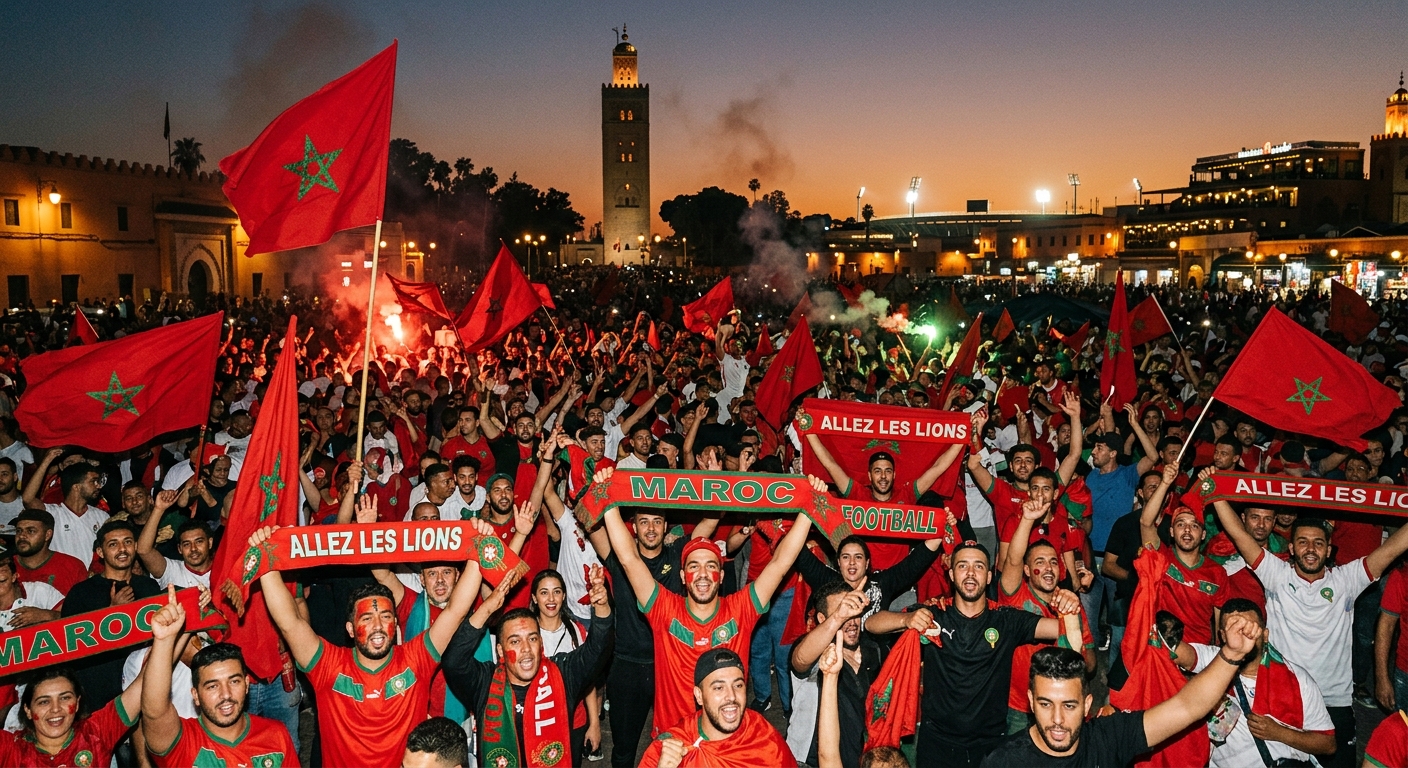
The Night the World Fell in Love
Football brands are rarely built in a boardroom. The Atlas Lions became a global phenomenon on a series of nights in Qatar in late 2022, when an unfancied Moroccan side dismantled the expectations of the football world. Topping a group with Croatia and Belgium was impressive; beating Spain on penalties was a shock; eliminating Portugal to become the first African and Arab nation in a World Cup semifinal was the moment a regional team became a worldwide story.
What made it resonate beyond results was the emotion. Players celebrating with their mothers on the pitch, an entire stadium turned into a red-and-green cauldron, and a sense that this was a triumph for everyone who had ever been overlooked. The images travelled instantly across the globe, and a team that many casual fans could not have named weeks earlier became a symbol that millions adopted as their own.
Brands, in the modern sense, are built on stories and feeling as much as logos and revenue. In a single tournament, Morocco acquired a story so powerful that it transcended football: the underdog from Africa and the Arab world who refused to know their place. That narrative is now the foundation of everything the Atlas Lions brand has become.
The Power of the Diaspora
Few national teams enjoy the geographic reach of Morocco's support. A large Moroccan diaspora across Europe, particularly in France, Belgium, the Netherlands, Spain and Italy, and growing communities in North America, means the Atlas Lions effectively carry home support to almost any city they play in. In Qatar, Moroccan crowds were among the largest and loudest of any nation.
This diaspora is not a passive fanbase; it is an active amplifier. Many of the team's players themselves emerged from this diaspora, raised in European cities before choosing to represent Morocco, which gives the squad a hybrid identity that resonates across borders. When those players succeed, they validate the choices and pride of millions of dual-heritage families.
Commercially and culturally, this reach is extraordinary. It means Atlas Lions matches draw crowds and viewership far beyond Morocco's borders, that merchandise and engagement spread across multiple wealthy markets, and that the team's cultural moments ripple through major European and North American cities. For 2026, hosted in nations with significant immigrant populations, this diaspora advantage could turn neutral venues into something close to home grounds.
An Identity That Travels
Strong brands have clear identities, and the Atlas Lions have a vivid one. The red home shirt with its green pentagram, drawn from the national flag, is instantly recognisable. The lion symbolism, evoking the Barbary lions that once roamed North Africa, gives the team a name and image with genuine resonance rather than marketing invention.
The team's identity also carries layered meaning: it is simultaneously Moroccan, African, Arab and, through the diaspora, European. Few national teams sit at the intersection of so many proud communities, and that multiplicity is a feature rather than a confusion. Different fans see different reflections of themselves in the same team, broadening its appeal without diluting its core.
There is also the on-pitch identity established in 2022: organised, resilient, fearless against bigger names. A footballing brand needs a recognisable style as much as a visual one, and Morocco's reputation as the team that no giant wants to face is a competitive identity that travels and endures. It frames every future match with a built-in storyline.
Going Viral: The Social Media Engine
The Atlas Lions arrived at global brand status in the social media age, and that timing was transformative. The 2022 run generated a torrent of shareable moments: the celebrations, the defiant defending, the off-pitch family scenes, the explosions of joy in cities worldwide. These clips spread organically across platforms, reaching audiences who would never watch a full match.
Social media collapses the distance between a team and a global audience. A young fan in Jakarta, Lagos, Toronto or São Paulo could follow Morocco's run in real time and feel part of it, adopting the team without any prior connection. This is precisely how modern sporting brands scale beyond their traditional base, and Morocco rode that wave better than almost any national team in recent memory.
The challenge for any viral phenomenon is converting a moment into a durable following. The Atlas Lions have advantages here: a recurring stage in major tournaments, a recognisable identity, and the diaspora to keep engagement alive between events. The 2026 World Cup is the next great test of whether the 2022 surge has crystallised into a permanent global fanbase or was a spike to be sustained through continued success.
Soft Power Wearing Boots
A successful, beloved national team is one of the most efficient instruments of soft power a country can possess, and Morocco understands this. The Atlas Lions project an image of the kingdom as dynamic, talented, resilient and globally relevant, an image that money cannot easily buy and that reaches audiences indifferent to traditional diplomacy.
This soft power dovetails with Morocco's broader ambitions: hosting the 2030 World Cup, leading African football and positioning itself as a bridge between continents. The team's global affection is a diplomatic and economic asset, smoothing the path for tourism, investment and the relationships that underpin the kingdom's strategy. When the world loves your team, it is more inclined to visit, invest in and partner with your country.
The team also carries representational weight for Africa and the Arab world more broadly. The 2022 run was widely embraced as a victory against the long-standing marginalisation of these regions in elite football. That symbolic role deepens the team's meaning and its support base, but it also raises the emotional stakes of every campaign, binding sporting results to questions of pride and recognition far beyond the pitch.
Sustaining the Brand Beyond One Tournament
The great risk for any team that breaks through spectacularly is that the magic proves to be a single moment. Brands built on one tournament can fade if the team recedes. The Atlas Lions face this test directly: 2026 and the home World Cup in 2030 will determine whether 2022 was the birth of an era or its peak.
Sustaining the brand requires continued competitiveness, the emergence of new star players to carry the identity forward, and the maintenance of the emotional connection that made the team so beloved. It also requires institutional investment, in youth development, domestic football and the structures that turn talent into a reliable pipeline rather than a fortunate generation.
Hosting the 2030 World Cup is the ultimate brand-building opportunity, placing the Atlas Lions at the centre of a global event on home soil, with the full attention of the world and the emotional charge of a nation finally hosting football's biggest stage. Few teams will ever get a platform like it. The brand the Atlas Lions have built in the imagination of the world will be theirs to cement, or to let slip.
The Lions and the Long Game
The transformation of the Atlas Lions from respected regional side to global football brand is one of the defining sporting stories of the decade. It was forged in the heat of Qatar, amplified by an unmatched diaspora, anchored by a vivid identity and accelerated by the viral mechanics of the social media age.
What separates a lasting brand from a passing craze is the long game, and here Morocco's broader strategy aligns neatly with its team's appeal. The investment in football infrastructure, the hosting of major tournaments and the deliberate cultivation of the team's global image all serve to keep the Atlas Lions in front of the world for years to come.
If the football keeps delivering, the Atlas Lions could become a permanent fixture in the global football consciousness, a team that fans around the world keep an emotional stake in regardless of nationality. That is the rarest and most valuable thing in sport: not just a great team, but a team the world chooses to love. Morocco has built the beginnings of exactly that, and the coming tournaments will decide how far the lions can roar.
| Pillar | Source of strength | Brand effect |
|---|---|---|
| The story | 2022 semifinal run, first for Africa/Arab world | Powerful underdog narrative with global resonance |
| Diaspora | Large Moroccan communities across Europe and North America | Home support in almost any host city |
| Identity | Red shirt, green pentagram, lion symbolism, resilient style | Instantly recognisable and emotionally layered |
| Social media | Viral celebrations and emotional moments in 2022 | Reach far beyond traditional fanbase |
| Soft power | Beloved team projecting national image | Boost to tourism, investment and diplomacy |
The pillars of the Atlas Lions global brand
FAQ
Why are Morocco's team called the Atlas Lions?
The nickname references the Barbary lions that once roamed North Africa, including the Atlas Mountains region, giving the national team a powerful and recognisable identity.
How did the 2022 World Cup boost Morocco's global brand?
Morocco's run to the 2022 semifinal, beating Spain and Portugal, created a worldwide underdog story and viral cultural moments that turned the team into a globally beloved football brand.
Why is the Moroccan diaspora important for the team?
Large Moroccan communities across Europe and North America provide loud, numerous support in almost any host city and produced many of the players themselves, giving the team a hybrid, far-reaching identity.
How is the Atlas Lions team a form of soft power?
A successful, beloved national team projects an image of Morocco as dynamic and globally relevant, supporting the kingdom's ambitions in tourism, investment and diplomacy more effectively than traditional messaging.
Can Morocco sustain its football brand beyond 2022?
Sustaining the brand depends on continued competitiveness at the 2026 and home 2030 World Cups, the emergence of new stars and ongoing investment in youth development and domestic football.
Loved this? Useful? React below — your feedback helps other readers.