Anti-Atlas Trekking
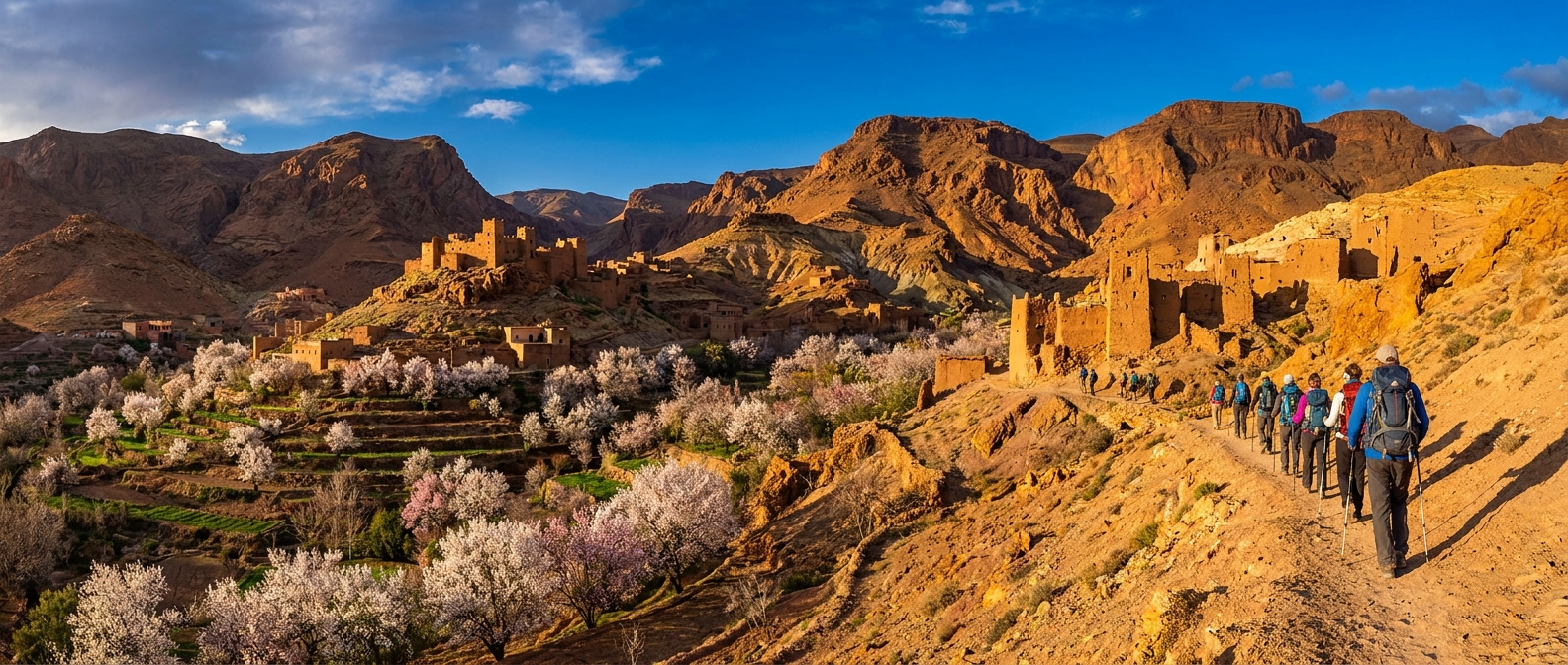
Morocco's Quiet Desert Mountains
The Anti-Atlas is the southernmost of Morocco's mountain ranges, a sun-baked barrier between the High Atlas and the Sahara. Lower and drier than its northern neighbours, it offers a starkly beautiful landscape of granite peaks, rocky plateaus, palm-filled gorges and scattered oasis villages.
Far less visited than the High Atlas, the Anti-Atlas rewards trekkers with solitude and authenticity. Its low altitude and mild winters make it a superb cold-season destination, and its unique geology and culture give it a character all its own.
Tafraoute and the Granite Country
The hub of Anti-Atlas trekking is Tafraoute, a relaxed town set among extraordinary pink and ochre granite. The surrounding Ameln Valley is ringed by dramatic peaks and dotted with traditional villages, making it an ideal walking base.
Nearby curiosities include the Painted Rocks, a cluster of boulders famously daubed in blue and other colours by an artist, and countless natural granite formations. Day and multi-day walks fan out from Tafraoute into palm groves, villages and the rocky heights.
Jbel Sirwa: The Volcanic Summit
The highest point of the wider Anti-Atlas region is Jbel Sirwa (Siroua) at 3,304 metres, a volcanic massif linking the Anti-Atlas to the High Atlas. Its ascent is a rewarding multi-day trek through remote villages, saffron-growing terraces around Taliouine, and stark volcanic terrain.
Sirwa offers genuine high-country walking without the crowds or altitude extremes of Toubkal. The summit gives sweeping views, and the route showcases a transitional landscape between the green High Atlas and the desert south, with rich cultural encounters along the way.
Almond Blossom and Oases
One of the Anti-Atlas's great seasonal draws is the almond blossom, which carpets the valleys in white and pink during February and into March. The Tafraoute area is especially renowned, even hosting a celebrated almond blossom festival.
Throughout the range, palm-filled gorges and oasis villages provide green relief amid the arid rock. Walking from oasis to oasis, past argan and palm trees and stone villages, is a highlight, particularly in the gentle light of the cooler months.
Culture and Village Life
The Anti-Atlas is home to Amazigh communities with distinctive architecture, including fortified granaries (agadirs) perched on hilltops, and a heritage tied to argan oil, saffron and oasis farming. Trekking here offers close contact with this traditional rural life.
Villages are welcoming but conservative, so modest dress and respectful behaviour are important. Local guides illuminate the culture, history and geology, and gîte or homestay accommodation provides an authentic and hospitable base for exploration.
When to Trek the Anti-Atlas
The prime season is winter and early spring, roughly November to April, when temperatures are mild and pleasant for walking. February stands out for almond blossom, while spring brings the most agreeable all-round conditions.
This makes the Anti-Atlas, like Jbel Saghro, a key destination when the High Atlas is snowbound. Summer is intensely hot and best avoided for serious trekking, with shade and water scarce across the exposed terrain.
Logistics and Access
Tafraoute is reached by road from Agadir, while Jbel Sirwa treks are typically accessed via Taliouine on the Marrakech–Ouarzazate–Agadir axis. Both areas can be combined into a southern Morocco itinerary.
Treks range from independent day walks around Tafraoute to fully supported multi-day Sirwa expeditions with guide and mules. Carry cash and ample water, pack for warm days and cold desert nights, and use local guides for remote routes where navigation and water sources matter.
| Detail | Information |
|---|---|
| Main hub | Tafraoute (Ameln Valley) |
| Highest summit | Jbel Sirwa, 3,304 m |
| Landscape | Pink granite, oases, plateaus |
| Seasonal draw | Almond blossom (February) |
| Best season | November to April |
| Difficulty | Easy to moderate |
Anti-Atlas trekking at a glance
FAQ
When is the best time to trek the Anti-Atlas?
Winter and early spring (November to April) are best, with mild temperatures. February is famous for almond blossom around Tafraoute. Summer is too hot for serious trekking in this exposed range.
What is the highest peak in the Anti-Atlas region?
Jbel Sirwa (Siroua), a volcanic massif at 3,304m, is the highest point of the wider region, linking the Anti-Atlas to the High Atlas. Its multi-day ascent passes saffron terraces and remote villages.
Is the Anti-Atlas good for beginner trekkers?
Yes. Its low altitude and mild winter climate make it accessible, with easy to moderate walks around Tafraoute. The volcanic Jbel Sirwa offers a tougher multi-day option for fitter trekkers.
Loved this? Useful? React below — your feedback helps other readers.