Morocco's Andalusian Heritage
The Legacy of al-Andalus
For nearly eight centuries, much of the Iberian Peninsula was part of the Islamic world, known as al-Andalus. This was a flourishing civilization renowned for its scholarship, art, science, and refined urban culture, where Muslims, Jews, and Christians lived in close contact.
As Christian kingdoms gradually reconquered Spain and Portugal, culminating in the fall of Granada in 1492 and later expulsions, large numbers of Muslims and Jews crossed into North Africa. Morocco received many of these refugees, who brought with them the sophisticated culture of al-Andalus.
Cities Shaped by Andalusian Migrants
Several Moroccan cities were profoundly shaped by Andalusian settlers. Fez had welcomed Andalusian migrants for centuries, with an entire district known as the Andalusian quarter. The newcomers brought architectural styles, crafts, and learning that enriched the city's renowned cultural life.
Tetouan in the north was rebuilt largely by refugees from Granada and became a showcase of Andalusian urban design. Rabat and its neighbor Salé also absorbed Andalusian and Morisco populations, while the famous blue town of Chefchaouen was founded by exiles from Spain.
Architecture and Urban Design
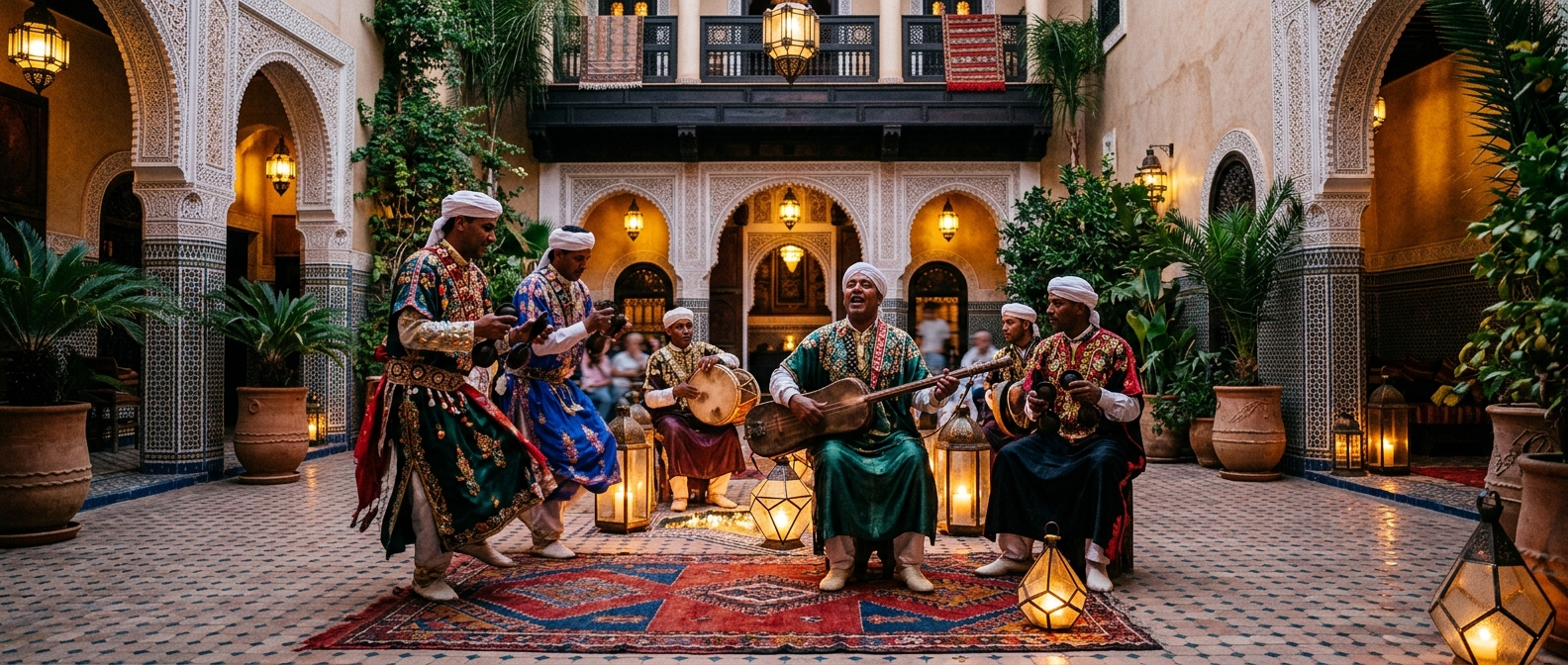
Andalusian influence is visible in Morocco's built environment, from the layout of medinas to the decoration of homes and mosques. The horseshoe arches, courtyard gardens, tilework, and carved plaster that define Moroccan architecture share deep roots with the great monuments of Cordoba, Seville, and Granada.
The whitewashed houses, tiled fountains, and intricate craftsmanship of cities like Tetouan and Chefchaouen reflect the aesthetic carried across the sea. This shared heritage links the architecture of Morocco to the Alhambra and the Great Mosque of Cordoba.
Andalusian Music
One of the most cherished aspects of this heritage is Andalusian classical music, a refined tradition of orchestral song with origins in medieval Spain. Known in Morocco as al-Ala, it features poetic lyrics, stringed instruments, and intricate suites called nubat.
Preserved and developed over centuries, Andalusian music remains a living art form performed at concerts, weddings, and cultural festivals. Cities such as Fez and Tetouan are centers of this tradition, keeping alive melodies that connect modern Morocco to its Iberian past.
Crafts, Cuisine, and Daily Life
Andalusian migrants were skilled artisans, and their expertise enriched Moroccan crafts including ceramics, leatherwork, embroidery, and metalwork. Many of the techniques and motifs still used by Moroccan craftspeople carry this Andalusian inheritance.
The influence extends to the table as well. Certain dishes, ingredients, and culinary refinements are attributed to Andalusian tradition, blending into the broader Moroccan cuisine. Gardens, perfumes, and gracious customs of hospitality also reflect this cultural exchange.
A Living Connection
The Andalusian heritage is not a distant memory but an active part of Moroccan identity. Many families proudly trace their ancestry to al-Andalus, and the cultural ties between Morocco and Spain remain strong, expressed through festivals, scholarship, and tourism.
This heritage represents a story of loss and renewal: the end of a great civilization in Iberia gave new life to Moroccan cities and culture. Today it stands as a bridge across the Mediterranean, linking two shores through a shared and treasured past.
| City | Andalusian legacy |
|---|---|
| Fez | Andalusian quarter, music, crafts, and scholarship |
| Tetouan | Rebuilt by refugees from Granada; Andalusian urban design |
| Chefchaouen | Founded by Spanish exiles; famed blue old town |
| Rabat / Salé | Absorbed Andalusian and Morisco populations |
Moroccan cities with strong Andalusian heritage
FAQ
What is Morocco's Andalusian heritage?
It is the cultural legacy left by Muslims and Jews who migrated from Islamic Spain, especially after 1492, shaping Moroccan architecture, music, crafts, and cuisine.
Which Moroccan cities are most Andalusian?
Fez, Tetouan, Chefchaouen, and Rabat-Salé were strongly shaped by Andalusian migrants and preserve much of their architecture and culture.
What is Andalusian music?
Andalusian music, known in Morocco as al-Ala, is a refined classical tradition of orchestral song with poetic lyrics and elaborate suites, rooted in medieval Spain.
Loved this? Useful? React below — your feedback helps other readers.