Amazigh and Arab in Morocco: Understanding a Complicated Shared Identity
Two histories that became one country
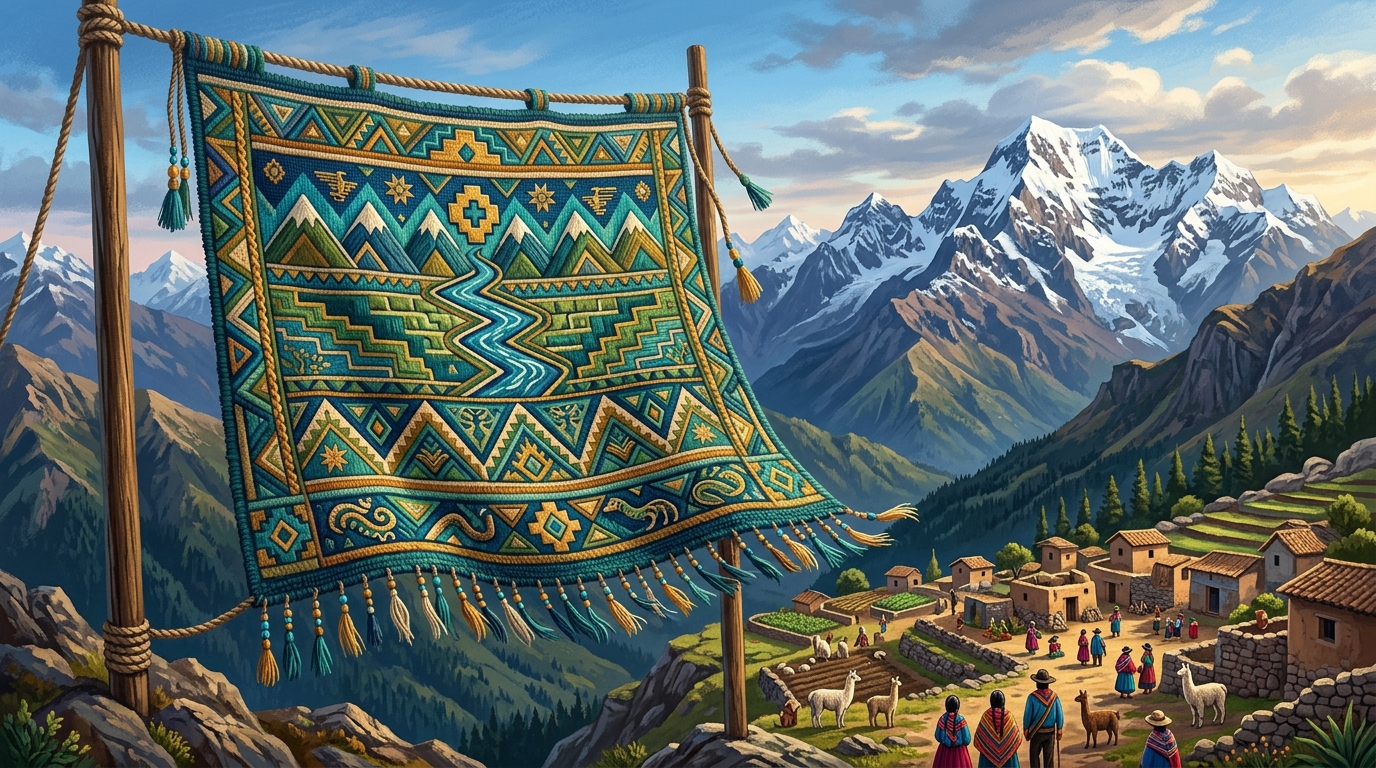
The Amazigh (the preferred term for the people historically called Berbers, a word many consider a colonial-era exonym rooted in the Greek for "barbarian") are recognized as the indigenous population of North Africa, with a documented presence in the region going back millennia, well before the Arab and Islamic conquests. Arab tribes began arriving in what is now Morocco starting around the seventh century with the initial Islamic conquest, with further waves — notably Arab tribal groups such as the Ma'qil — arriving as late as the thirteenth and fourteenth centuries.
Over the following centuries, extensive intermarriage, religious conversion to Islam among Amazigh populations, and the gradual spread of Arabic as a language of religion, administration, and trade produced what scholars describe as significant Arabization: many originally Amazigh communities and individuals came to speak Arabic and identify as Arab, or as a blend of both, without a single, clean historical dividing line ever separating the two groups into permanently distinct populations.
That long history of mixing is precisely why modern Morocco cannot be accurately described as simply "Arab" or simply "Amazigh." Both identities are deeply, continuously present, and a large share of Moroccans who identify primarily as Arab today have documented or assumed Amazigh ancestry somewhere in their family history, a reality that specialists studying Moroccan identity return to repeatedly rather than treating the two labels as describing wholly separate, unmixed populations.
Why nobody agrees on the numbers
Ask what percentage of Moroccans are Amazigh, and you will get wildly different answers depending on who is asked and how the question is framed. Morocco's official state statistics agency, the Higher Planning Commission, does not collect ethnic demographic data at all, citing the practical difficulty of drawing a clean line between Arab and Amazigh identity even among people who speak an Amazigh language at home. That absence of an official ethnic census is itself a major reason estimates vary so widely.
Reference works such as Encyclopaedia Britannica have offered breakdowns along the lines of roughly 44% self-identifying as Arab, 24% as Arabized Berbers, and 21% as Berbers — figures frequently cited but treated by many specialists as approximate rather than authoritative. Amazigh cultural and political associations, by contrast, dispute these figures sharply and argue the real Amazigh-descended share of the population is far higher, with some claims reaching as high as 80 to 85 percent of Moroccans having Amazigh ancestry, a figure that reflects the deep historical mixing described above rather than a competing precise headcount.
This disagreement is not simply academic point-scoring — it reflects a real and long-running political question about how much weight Amazigh identity and language should carry in Moroccan public life, education, and government, a debate the absence of hard official data has arguably kept unresolved rather than settled.
Language as the clearest — if still imperfect — marker
Because ethnic self-identification is so contested, language is often used as a more measurable, if still imperfect, proxy for the Amazigh-Arab picture in Morocco. Nearly all Moroccans speak Darija, Moroccan Arabic, as a first or dominant everyday language — Moroccan officials have cited figures suggesting roughly 92% of the population speaks Darija — while a smaller, though still substantial, share speaks one of Morocco's three main Amazigh language varieties (Tarifit in the north, Tamazight in the central Atlas, and Tashelhit in the south) as a mother tongue or home language, with a 2024 government estimate from Morocco's education minister putting that figure at around 25%.
These two numbers are not strictly opposites, since many Moroccans are functionally bilingual, speaking an Amazigh language at home or in their region while also using Darija in wider daily life, commerce, media, and increasingly in cities regardless of family background. That overlap is another reason a simple percentage-of-population figure struggles to capture the reality on the ground — someone can grow up speaking Tashelhit at home, identify strongly as Amazigh, and still be functionally fluent and comfortable in Darija for everything outside the household.
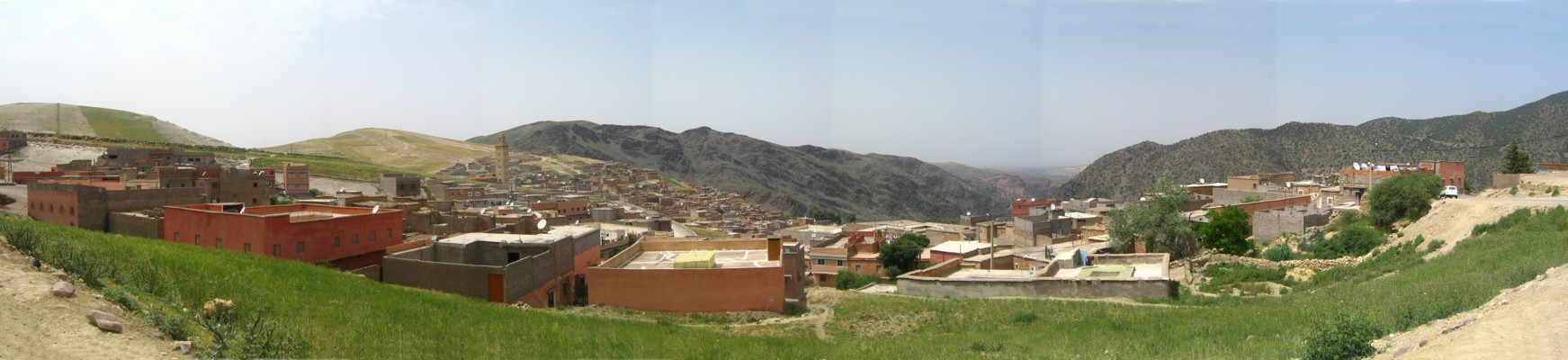
Regionally, Amazigh-language speakers remain more concentrated in Morocco's mountainous and southern areas — the Rif in the north, the Middle and High Atlas ranges, and the Sous region and pre-Saharan south — reflecting historical patterns in which Arabization spread more thoroughly through lowland, coastal, and urban areas over the centuries, while mountain and desert-edge communities retained Amazigh languages more continuously.
What changed with the 2011 constitution
For decades after independence in 1956, Morocco's constitution and official state identity emphasized Arab and Islamic character, with Amazigh language and identity receiving no official recognition and, at various points, facing outright discouragement in education and public administration. That changed with the 2011 constitutional reform, passed by referendum amid the wider wave of regional protest movements that year, after demonstrations in Morocco's own 20 February Movement — in which protesters carried both Moroccan and Amazigh flags — pushed for broader political and cultural reforms.
Article 5 of the resulting 2011 constitution formally made Tamazight an official language of the Moroccan state alongside Arabic, describing it explicitly as "the common heritage of all Moroccans without exception." The same constitutional text describes Moroccan national identity as built on the "convergence of its Arab-Islamist, Amazigh and Saharan-Hassanic components," a deliberate, explicit statement that the country's identity is composed of multiple threads rather than a single Arab-Islamic core with Amazigh identity as a minority add-on.
That constitutional language marked a genuine shift in official framing, even though implementation has moved more slowly and unevenly than the text itself might suggest — Amazigh language instruction in schools, Tifinagh script use in public life, and broadcast media in Amazigh languages have all expanded since 2011, but Amazigh activists and researchers continue to describe the pace of practical, on-the-ground change as lagging behind the constitutional promise.

Yennayer and the slow pace of further recognition
One clear example of that uneven pace is Yennayer, the Amazigh New Year, observed around January 12-13 by Amazigh communities across Morocco, Algeria, Tunisia, Libya, and Egypt, based on an agrarian calendar considered to predate the Islamic and Gregorian calendars used officially in the region. For years after the 2011 constitutional change, Amazigh activists and cultural organizations continued pushing specifically for Yennayer to be recognized as an official, paid national holiday, arguing that language recognition alone was an incomplete gesture without recognition of Amazigh cultural practice more broadly.
That specific goal was not achieved until 2023: Morocco's Royal Cabinet announced on May 3, 2023, that Yennayer would become an official, paid national holiday, more than a decade after Tamazight itself had gained constitutional status as an official language. The gap between the 2011 language milestone and the 2023 holiday recognition is often cited by Amazigh advocates as evidence of exactly the slow, incremental nature of the broader recognition process — real progress, but consistently later and more gradual than campaigners have pushed for.
Advocacy continues on further fronts, including calls for deeper Amazigh-language integration in secondary and higher education, broader use of Tifinagh script in daily public life, and continued attention to the specific situation of the Sahrawi and other communities in Morocco's south whose own identity questions intersect with, but are not identical to, the broader Amazigh-Arab conversation.
Why the binary framing itself is misleading
Perhaps the most important takeaway from Morocco's demographic and identity data is how poorly a strict Amazigh-versus-Arab binary actually fits Moroccan reality. Centuries of intermarriage, shared religious practice, regional variation, and bilingualism mean that a great many Moroccans do not experience their identity as a forced choice between two separate categories, but as a blend shaped by family history, region, language use at home, and personal or political emphasis — someone might identify as Arab by language and broader cultural participation while still describing specific ancestors, customs, or regional roots as Amazigh, and vice versa.
Outside observers, including international travel and news coverage, sometimes default to describing Morocco simply as an "Arab country" for convenience, which Amazigh advocates and many scholars argue understates a foundational part of the country's population, history, and now-constitutional self-description. The more accurate framing, reflected in Morocco's own 2011 constitutional language, treats Arab-Islamic, Amazigh, and Saharan-Hassanic identity as interconnected components of one national identity rather than as competing, mutually exclusive labels — even as real debates continue, within Morocco, over how fully that formal balance is reflected in everyday politics, education, and public life.
Frequently asked
What is the difference between Amazigh and Arab identity in Morocco?
Amazigh (often called Berber) refers to the indigenous peoples of North Africa, present in the region for thousands of years before Arab tribes arrived starting in the seventh century. Over centuries of intermarriage and cultural exchange, the two identities have deeply overlapped, so many Moroccans today hold blended or context-dependent Arab and Amazigh identities rather than belonging to two entirely separate groups.
What percentage of Moroccans are Amazigh?
There is no official figure, since Morocco's state statistics agency does not collect ethnic data. Reference estimates range from around 21% self-identified Berber (with another 24% identifying as Arabized Berber) according to some encyclopedic sources, to Amazigh associations claiming a much higher share, sometimes cited as 80% or more, reflecting how contested and imprecise these numbers are.
Is Amazigh the same as Berber?
They refer to the same peoples, but Amazigh is the term generally preferred by the community itself and used in Morocco's constitution and official documents, while "Berber" is an older, externally applied term with roots some consider pejorative, historically linked to the Greek word for "barbarian."
When did Amazigh become an official language of Morocco?
Tamazight (the Amazigh language) became an official language of Morocco under Article 5 of the 2011 constitution, adopted by referendum after the 20 February protest movement, which described it as "the common heritage of all Moroccans without exception."
What percentage of Moroccans speak an Amazigh language?
A 2024 estimate cited by Morocco's education minister put the figure at roughly 25% speaking an Amazigh language, compared with about 92% who speak Darija (Moroccan Arabic), though many people speak both, since these figures are not mutually exclusive.
What are the three main Amazigh languages spoken in Morocco?
Tarifit, spoken mainly in the northern Rif region; Tamazight (Central Atlas Tamazight), spoken in the Middle and High Atlas; and Tashelhit, spoken mainly in the south, including the Sous region and parts of the pre-Saharan area.
What is Yennayer and when was it officially recognized?
Yennayer is the Amazigh New Year, marked around January 12-13 based on a traditional agrarian calendar. Morocco's Royal Cabinet officially recognized it as a paid national holiday on May 3, 2023, more than a decade after the 2011 constitutional recognition of the Amazigh language.
Does Morocco's constitution describe the country as Arab or Amazigh?
Neither exclusively. The 2011 constitution describes Moroccan national identity as based on the "convergence" of Arab-Islamic, Amazigh, and Saharan-Hassanic components, explicitly presenting these as combined threads of one national identity rather than competing categories.
Why don't population statistics on Amazigh identity in Morocco agree?
Morocco's official statistics bureau does not collect ethnic demographic data, citing the historical difficulty of clearly distinguishing Arab from Amazigh identity given centuries of intermarriage and cultural blending. Different organizations and sources therefore rely on differing estimates, self-identification surveys, or language data, producing a wide range of cited figures.
Can a Moroccan identify as both Arab and Amazigh?
Yes, and many effectively do, whether through mixed ancestry, bilingual upbringing, or simply identifying differently depending on context. Scholars and Morocco's own constitutional language treat Arab, Amazigh, and Saharan-Hassanic identity as overlapping components of a shared national identity rather than mutually exclusive categories.
- The New Arab — Morocco's Complex Identity: African, Amazigh, and Arab ↗
- Wikipedia — Moroccans ↗
- Morocco World News — Morocco's Language Dilemma: Benmoussa Says 92% Speak Darija, Only 25% Amazigh ↗
- Al Jazeera — Morocco's Amazigh Push for Official Recognition of Their New Year ↗
- The New Arab — The Long Journey to Recognising Amazigh Identity in Morocco ↗
- IWGIA — The Indigenous World 2024: Morocco ↗
Video via official YouTube embeds; photos via Wikimedia Commons under their stated licenses. All rights belong to the respective owners; 212 Daily claims no ownership.