Amazigh (Berber) Culture: Morocco's First People
Who Are the Amazigh?
The Amazigh (Imazighen, meaning free people) are the indigenous inhabitants of North Africa, predating the Arab arrival in the region. In Morocco they form a foundational part of national identity, with communities concentrated in the Rif, the Atlas Mountains, the Souss valley, and the pre-Saharan south.
The term Berber comes from outside the culture and is still widely used, but many people prefer Amazigh (singular) or Imazighen (plural), which is the community's own name for itself. The Amazigh include many regional communities with distinct dialects and customs.
The Tamazight Language
Tamazight is the Amazigh language, encompassing several major regional varieties in Morocco, including Tarifit in the north, Tamazight in the central Atlas, and Tashelhit (Shilha) in the south. It is written in an ancient script called Tifinagh, whose distinctive symbols appear on signage across the country.
In a landmark step, Morocco's 2011 constitution recognized Tamazight as an official language of the state alongside Arabic. Tifinagh script and Amazigh language education have since gained greater public presence, reflecting a broader cultural revival.
Art, Symbols, and Craft
Amazigh visual culture is rich with geometric symbols, woven into carpets, etched in silver jewelry, and painted on pottery. The free-man symbol (aza) is a widely recognized emblem found on the Amazigh flag.
Craftsmanship is central: handwoven rugs from the Middle Atlas, chunky silver-and-amber jewelry, and intricate door and ceiling carving all carry Amazigh aesthetics. Each motif can encode meaning related to protection, fertility, nature, or community.
Music, Festivals, and Daily Life
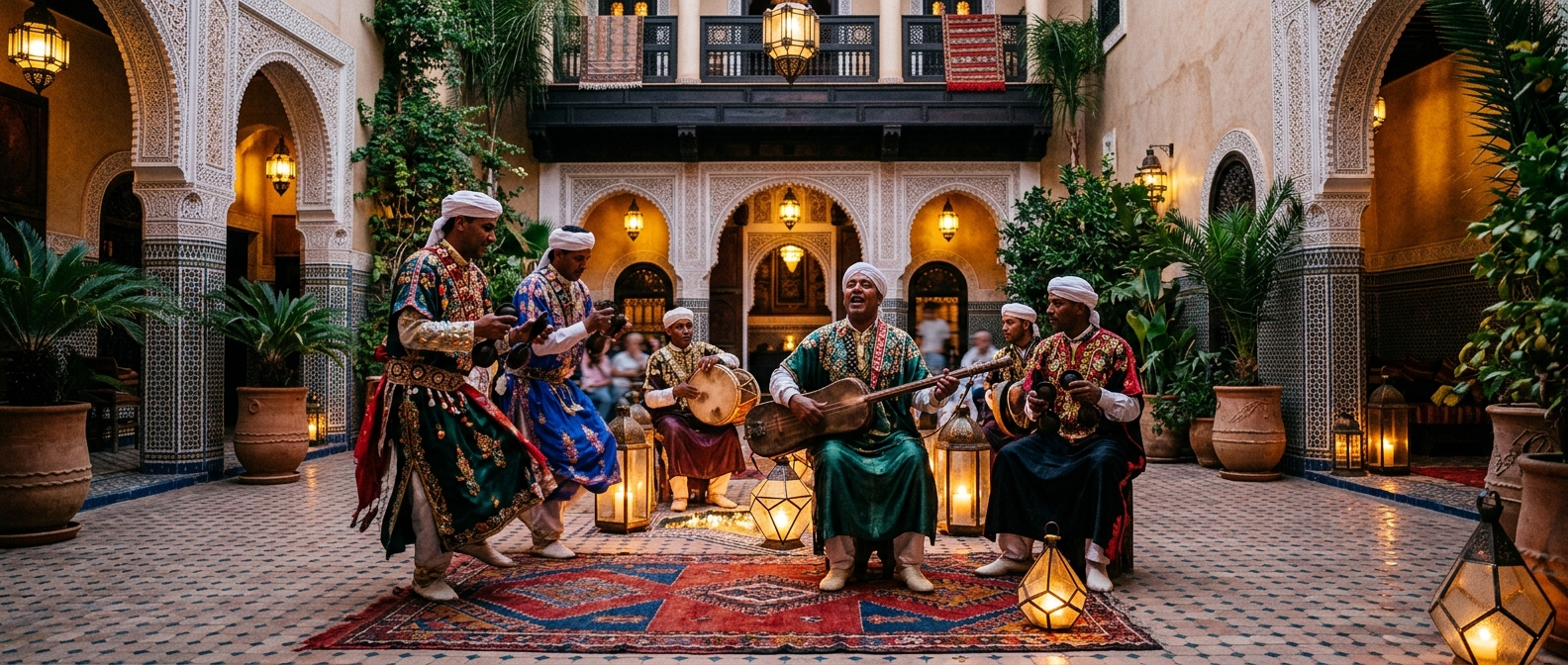
Amazigh music ranges from the hypnotic Ahwash and Ahidous communal dances of the Atlas to the poetic songs of itinerant performers. The instruments, rhythms, and call-and-response singing are integral to weddings, harvests, and seasonal gatherings.
Yennayer, the Amazigh New Year, is celebrated in January with special meals and family gatherings and is now recognized as a national holiday in Morocco. Across rural life, Amazigh values of hospitality, community solidarity, and connection to the land remain strong.
| Aspect | Detail |
|---|---|
| Name | Amazigh / Imazighen (free people) |
| Language | Tamazight, official since 2011 |
| Script | Tifinagh |
| Main varieties | Tarifit, Tamazight, Tashelhit |
| New Year | Yennayer, celebrated in January |
Amazigh language and culture at a glance
FAQ
Is Berber or Amazigh the correct term?
Both are used, but Amazigh (plural Imazighen) is the community's own name and is often preferred. Berber comes from outside the culture and remains common in everyday and historical usage.
Is Tamazight an official language in Morocco?
Yes. Morocco's 2011 constitution recognized Tamazight as an official language of the state alongside Arabic, supporting its use in education, signage, and public life.
What is Yennayer?
Yennayer is the Amazigh New Year, celebrated in January with festive meals and family gatherings. It is now recognized as a national holiday in Morocco.
Loved this? Useful? React below — your feedback helps other readers.