Al Haouz Earthquake Recovery: How Morocco Is Rebuilding After September 2023
What Happened on 8 September 2023
Shortly after 11 pm local time on Friday, 8 September 2023, a powerful magnitude 6.8 earthquake ruptured beneath the High Atlas Mountains, with its epicentre in the Al Haouz province roughly 70 kilometres southwest of Marrakech. The quake struck at a relatively shallow depth, which intensified the shaking at the surface and explained the severity of the destruction across the region's mountain villages.
It was the deadliest earthquake to strike Morocco in over six decades and the most powerful recorded in the area in more than a hundred years. The tremor was felt as far away as Casablanca, Rabat and even neighbouring countries, sending residents into the streets in the middle of the night. In Marrakech, parts of the historic medina, a UNESCO World Heritage site, sustained damage, including sections of the old city walls.
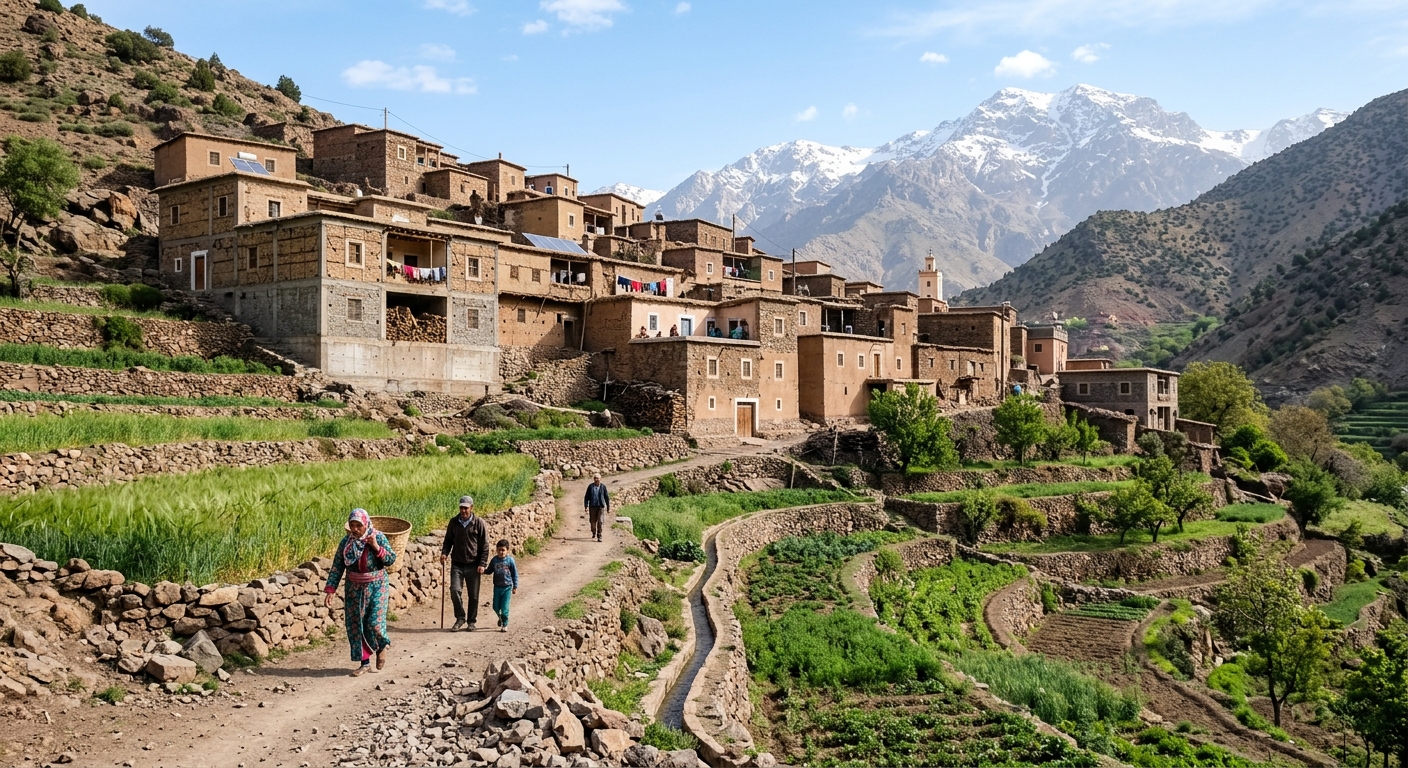
The human toll was severe. Official figures recorded close to 3,000 deaths and several thousand injuries, with the overwhelming majority of casualties concentrated in the remote, hard-to-reach villages of the High Atlas. Many of these settlements were built from traditional rammed earth, adobe and stone, materials poorly suited to withstanding seismic forces, which contributed to the high number of collapsed homes.
Why the Mountain Villages Were Hit Hardest
The geography of the disaster explains much of its tragedy. The worst-affected communities sat high in the Atlas, connected to the outside world by narrow, winding mountain roads that landslides and rockfalls blocked within minutes of the quake. Rescue teams faced enormous challenges reaching survivors, and in the first critical days, villagers often had to dig through rubble with their bare hands and basic tools.
Construction methods compounded the vulnerability. For generations, High Atlas villages were built using locally sourced earth, mud brick and stone, techniques perfectly adapted to the climate and economy but offering little resistance to lateral seismic shaking. When the ground moved violently, heavy roofs and unreinforced walls collapsed inward, which is the leading cause of death in earthquakes of this type.
The remoteness that made these villages so picturesque also made them economically fragile. Many depended on subsistence farming, livestock and seasonal tourism from trekkers heading toward Mount Toubkal, North Africa's highest peak. The earthquake destroyed not only homes but also the agricultural terraces, livestock shelters and small guesthouses that underpinned local livelihoods.
The Emergency Response
In the immediate aftermath, the Moroccan armed forces, gendarmerie, civil protection units and medical teams mobilised to reach the disaster zone, establishing field hospitals and airlifting the seriously injured to hospitals in Marrakech. The scale of the damage in inaccessible terrain meant that the response, while substantial, took time to penetrate the most isolated valleys.
Moroccan civil society responded with remarkable solidarity. Citizens across the country donated blood, food, blankets and tents, and convoys of volunteers drove supplies into the mountains. The outpouring of national unity became one of the defining features of the crisis, with ordinary Moroccans organising grassroots aid alongside official channels.
Internationally, offers of assistance came from around the world, and Morocco accepted aid from a select number of countries in the early phase, prioritising coordinated, effective help over an unmanageable influx of teams. The government's measured approach to accepting foreign aid drew some commentary at the time, but it reflected a desire to keep the response organised and focused on the specific needs on the ground.
The Reconstruction Programme
Within weeks of the disaster, Moroccan authorities announced an ambitious, multi-year reconstruction and aid plan covering the affected provinces. The programme combined direct financial support to families who lost their homes with a broader strategy to rebuild infrastructure, schools, health centres and roads across the High Atlas region.
A central principle of the rebuilding effort has been resilience. Rather than simply restoring what was lost, the plan emphasises earthquake-resistant construction standards and improved building techniques so that rebuilt homes can better withstand future seismic events. This includes guidance and support for using reinforced materials while, where possible, respecting the traditional architectural character that gives these villages their identity.
Reconstruction at this scale and in such difficult terrain is inevitably slow and complex. Reaching scattered hamlets, transporting materials up mountain roads, and ensuring that aid actually reaches the families who need it most are persistent challenges. Progress has been real but uneven, and rebuilding entire communities to higher standards in remote mountains is a process measured in years rather than months.
How Tourism Fits Into Recovery
Tourism is woven into the long-term recovery of the region. The High Atlas has long been a magnet for trekkers, climbers and travellers seeking authentic Berber village experiences, and that visitor economy supports guides, muleteers, guesthouse owners and craftspeople. When tourism stalls, an important income stream for recovery disappears.
Crucially, Marrakech itself remained open and largely functional after the earthquake, with its tourism infrastructure intact and quickly back to normal operation. Travellers worried about visiting in the aftermath sometimes cancelled trips out of caution or sensitivity, but local businesses widely encouraged responsible tourism to continue, because the income directly supports the very communities affected.
For travellers, the most meaningful contribution is to visit responsibly: book locally owned guesthouses and guides in the Atlas, buy crafts directly from artisans, and choose operators that channel money into affected communities. Trekking routes toward Toubkal and the Ourika and Imlil valleys remain among the most rewarding experiences in Morocco, and visitor spending is a practical, dignified form of support that goes well beyond one-off charity.
Lessons, Resilience and the Road Ahead
The Al Haouz earthquake exposed the vulnerability of traditional construction in seismic zones, a lesson that is now shaping building practice across rural Morocco. The disaster has accelerated awareness of seismic risk and the importance of resilient design, even in remote areas where modern building codes were historically difficult to enforce.
It also showcased the resilience of mountain communities themselves. Berber villages in the High Atlas have endured hardship for centuries, and the response to the earthquake, from neighbours sheltering one another to the rapid mobilisation of national solidarity, reflected a deep cultural capacity to endure and rebuild. Reconstruction is not only about bricks and roads but about restoring the social and economic fabric of these places.
Years on, the recovery continues. Some families have moved into new, sturdier homes; others still wait. Schools and clinics are being rebuilt, roads repaired, and livelihoods slowly restored. For the wider world, the most respectful response is sustained attention rather than fleeting sympathy: continuing to support reconstruction, choosing responsible travel, and remembering that recovery from a disaster of this magnitude is a long, ongoing effort that deserves patience and solidarity.
| Detail | Figure |
|---|---|
| Date | 8 September 2023, ~11 pm local time |
| Magnitude | 6.8 |
| Epicentre region | Al Haouz province, High Atlas, SW of Marrakech |
| Approximate deaths | Nearly 3,000 |
| Hardest-hit areas | Remote High Atlas mountain villages |
| Recovery focus | Earthquake-resistant rebuilding, family aid, infrastructure |
Al Haouz earthquake key facts
FAQ
How strong was the Al Haouz earthquake?
The earthquake measured magnitude 6.8 and struck at a relatively shallow depth on 8 September 2023, with its epicentre in the Al Haouz province of the High Atlas Mountains. It was the strongest quake recorded in the region in more than a century and the deadliest in Morocco in over six decades.
Is it safe and appropriate to visit Morocco after the earthquake?
Yes. Marrakech and Morocco's major tourist areas are fully operational and safe to visit. Local businesses and communities actively encourage responsible tourism, because visitor spending directly supports the guides, guesthouses and artisans in and around the affected High Atlas region.
What is Morocco doing to rebuild the affected areas?
Morocco launched a multi-year reconstruction programme that combines direct financial aid to affected families with the rebuilding of homes, schools, clinics and roads. A core principle is using earthquake-resistant construction so that rebuilt structures can better withstand future seismic events.
Why were so many villages destroyed?
The worst-hit villages were remote High Atlas settlements built largely from traditional earth, adobe and stone, which offer little resistance to seismic shaking. Narrow mountain roads blocked by landslides also delayed rescue efforts, compounding the loss of life in isolated communities.
How can travellers help the recovery responsibly?
The most effective help is to travel responsibly: book locally owned guesthouses and guides in the Atlas, buy crafts directly from artisans, and choose operators that channel income into affected communities. Trekking the Imlil, Ourika and Toubkal areas keeps money flowing to the people who need it most.
Loved this? Useful? React below — your feedback helps other readers.