Achraf Hakimi Owns the Flank in Houston: Captain Drives Morocco Past Canada 3-0 — Now France, Mbappe and His PSG Brothers Await
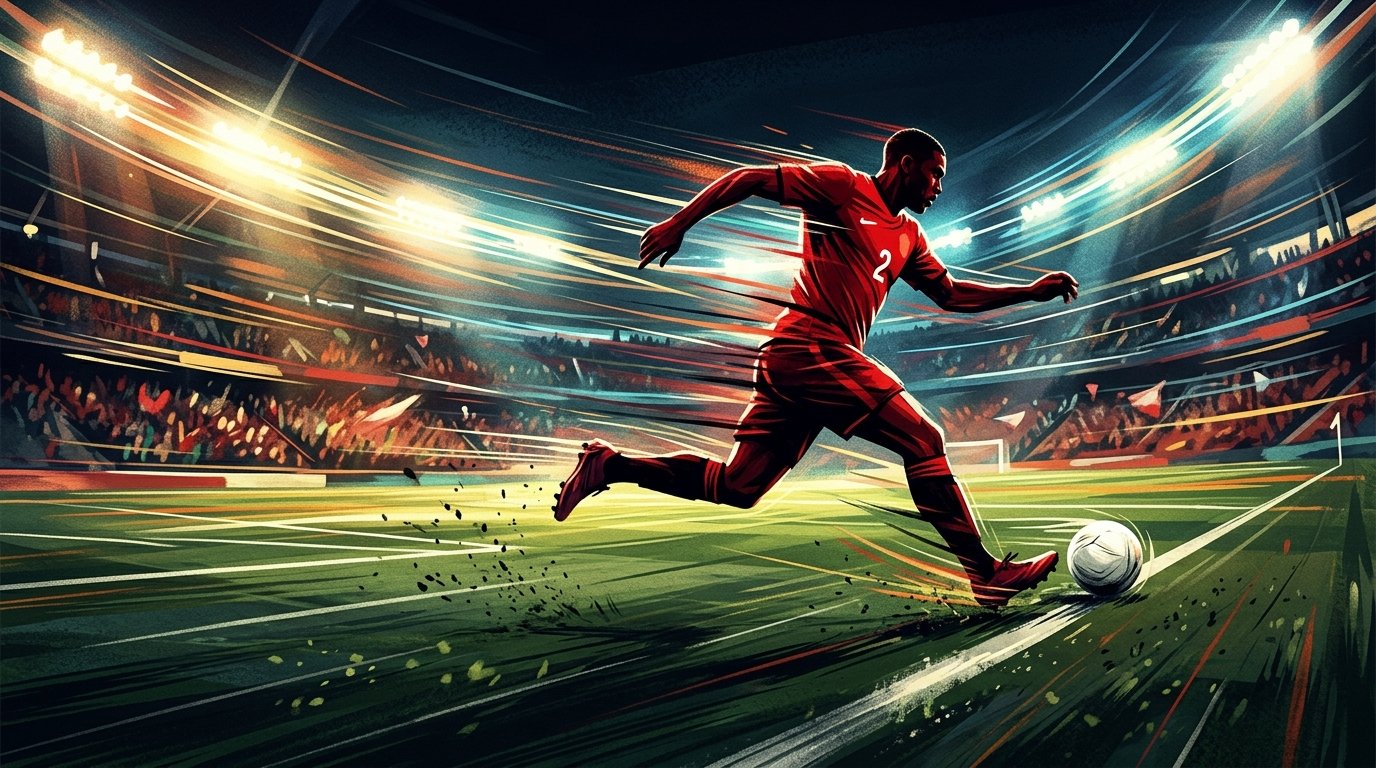
A Captain's Night in Houston: How Hakimi Set the Tone
There are matches where leadership shows up on the scoresheet, and matches where it shows up everywhere else. In Houston on July 4, Achraf Hakimi delivered both. In front of 68,777 fans at NRG Stadium, Morocco's captain produced the pass that unlocked a stubborn, physical Canada side, patrolled his flank with total authority, and dragged the Atlas Lions through the ugliest stretch of the game — a first half that produced more yellow cards than shots.
The final score, 3-0, flatters nobody's memory of the opening 45 minutes. Canada started brightly and, by most neutral accounts, had the better of the entire first half. Jonathan David forced Yassine Bounou into a sharp close-range save early on, and the co-hosts pressed with the desperation of a team playing for its history. Morocco absorbed it, scrapped through it, and then took the game away after the break.
The turning point came five minutes into the second half. From a free-kick position on the right, Hakimi played the ball to Azzedine Ounahi, who curled a finish into the bottom-right corner past Maxime Crepeau. One moment of quality in a match starved of them, and it belonged — in its creation — to the captain.
Ounahi doubled the lead in the 82nd minute, taking full advantage of a stretched Canadian defence on a rapid breakaway to blast a shot into the top-right corner. Then, in the eighth minute of stoppage time, Brahim Diaz slid in substitute Soufiane Rahimi to make it three — a record-setting assist, Diaz's fourth at World Cups, the most ever by an African player.
Morocco coach Mohamed Ouahbi summed up the transformation simply: his team, he said, reacted very well in the second half in the second balls and the duels. Duels. That word matters, because the biggest duel of all was supposed to happen on Hakimi's side of the pitch — and it tells its own story that it never really did.

The Davies Duel That Never Was — and the Verdict Anyway
For a week, this match was billed as one of the great individual matchups of the round: Achraf Hakimi against Alphonso Davies, two of the fastest and most decorated attacking full-backs of their generation, colliding on the same wing. It was the duel Canada needed to happen — and the duel that never came.
Davies was left out of Canada's starting XI. Head coach Jesse Marsch explained afterwards that the Bayern Munich star didn't feel right to start, as he continues to manage a hamstring issue — though an MRI had come back clear. It was the continuation of a frustrating tournament for Davies, who had already been eased through it with extreme care after the ACL tear in his right knee in March 2025 that wiped out the rest of his 2024-25 season.
The comeback timeline explains everything about Canada's caution. Davies only returned to action for Bayern on December 9, 2025, in a Champions League win over Sporting CP, and by April 2026 he was scoring again in the Bundesliga. But at this World Cup, he was an unused substitute in all three of Canada's group games, managed only a lively 15-minute cameo in the 1-0 Round of 32 win over South Africa, and then — with a place in the quarterfinals on the line — could not be trusted from the start against Morocco.
So the verdict on the flank duel writes itself, even without the head-to-head. One of these two wing kings arrived at the knockout rounds at the absolute peak of his powers: back-to-back Champions League titles with Paris Saint-Germain, the 2025 Africa Cup of Nations won on home soil, the 2025 African Footballer of the Year award, and the captain's armband of a team that keeps making history. The other arrived held together by medical staff and hope.
Hakimi's night was not spotless — no genuinely great captain's performance in a knockout war ever is. Around the 40th minute he was booked after an off-the-ball push on Richie Laryea escalated into a brief scuffle, one flashpoint in a bad-tempered match that produced eight yellow cards, the most in any game at this tournament. But that edge is part of the package. Hakimi plays knockout football like a man who remembers exactly how far this team went in 2022, and exactly what it cost.
Whoever Canada sent down that left side, the outcome was the same: Morocco's right flank was a dead end for the co-hosts and a launch pad for the Atlas Lions. The duel verdict, rendered in absentia: Hakimi by knockout.
The Moment: A Free-Kick, a Pass, and Ounahi's Curler
Great knockout matches often turn on a single act of clarity, and this one belonged to the Hakimi-Ounahi connection. Five minutes into the second half, with the game still scoreless and nerves fraying on both benches, Morocco won a free-kick in a promising position. Instead of a hopeful ball into the box, Hakimi picked out Azzedine Ounahi — and the midfielder did the rest, curling his finish into the bottom-right corner.
It was the goal Morocco's entire second-half surge was built on. Canada, who had defended with organization and bite for 50 minutes, suddenly had to chase the game, and the spaces that opened up were exactly the spaces Morocco's counter-attackers live in.
Ounahi's second, in the 82nd minute, was the punishment for that chase. With Canada's defence stretched thin on a rapid breakaway, he arrived in stride and blasted the ball into the top-right corner past Crepeau — a strike of real violence after the precision of his first.
The brace put Ounahi in the history books: he became the first Morocco player to score twice in a World Cup match since Salaheddine Bassir did it against Scotland in 1998. For a player whose touch and vision made the world fall in love with him at Qatar 2022, this was the scoring breakthrough on the biggest stage.
And still there was time for one more record. When Brahim Diaz set up Rahimi's stoppage-time third, it was Diaz's fourth World Cup assist — making him the most prolific African assist-maker in the history of the tournament. Morocco's attack is no longer a story of one or two stars; it is a production line of them.
Hakimi by the Numbers: Chasing Cafu
The assist against Canada was Achraf Hakimi's third at World Cups — a remarkable total for a defender. Among players in his position, only Daley Blind, Denzel Dumfries and the legendary Cafu have recorded more World Cup assists since 1966, with four each. One more at this tournament and Morocco's captain joins that table; two more and the right-back conversation starts and ends with him.
The context makes the number even better. Hakimi is not a full-back who occasionally wanders forward; he is, functionally, Morocco's most dangerous wide attacker and the defensive anchor of the right side at the same time. Against Canada he was asked to do both jobs in a match that turned into trench warfare — six yellow cards had been shown by half-time, against only five shots.
His club form arrived in Houston with him. Hakimi has just completed a season in which Paris Saint-Germain won a second consecutive Champions League, adding to a trophy cabinet that already includes five Ligue 1 titles from his Paris years, a Serie A title with Inter and a LaLiga title from his Real Madrid days. In 2025 he was crowned African Footballer of the Year, months after captaining Morocco to the Africa Cup of Nations title in front of their own fans.
That is the resume of a player at the summit of the sport — and at 27, in his prime years, at a World Cup partly hosted in North American stadiums that have felt like home fixtures every time the Moroccan diaspora fills them. Houston was red and green on July 4. Foxborough, on July 9, will be too.
There is also the intangible number: two. This is Hakimi's second deep World Cup run as a core leader of this golden generation. In 2022 he was the breakout star of the quarterfinal upset of Portugal. In 2026 he is the captain, the organizer, the man opponents plan around. The evolution from phenomenon to leader is complete.
Bounou's Wall and the Ugliest First Half of the Tournament
It should not be forgotten how uncomfortable this match was before Ounahi's opener. Canada, roared on by a huge travelling support and playing for the right to be the first co-host into the quarterfinals, made the first half a battle of fouls, second balls and set pieces. The statistics were absurd: at half-time the game had produced more yellow cards (six) than shots (five).
Morocco also had to survive a genuine scare between the posts — or rather, they had Yassine Bounou to survive it for them. The hero of the 2022 penalty shootout against Spain produced several important stops, none bigger than a close-range denial of Jonathan David in the first half, the save that kept the game scoreless while Morocco found their footing.
The Atlas Lions were dealt a real blow in the 22nd minute when Ismael Saibari — the match-winner against the Netherlands in the group stage — pulled up injured and had to be replaced. It was the kind of moment that derails knockout campaigns.
Instead, it produced a folk hero. Soufiane Rahimi, thrown on before the half-hour, ran himself into the ground for 70 minutes and got his reward in the eighth minute of stoppage time, finishing Brahim Diaz's pass to put the final, emphatic number on the scoreboard.
That is what tournament-winning squads look like: the starter goes down, the substitute scores. The manager asks for more in the duels, and the team delivers three goals. Whatever happens against France, this Morocco squad has depth and resilience that even the 2022 semifinalists could not always call on.
Canada's Proud Run Ends — First Co-Host Out
Respect where it is due: this was the greatest World Cup in Canadian men's soccer history, and it ended with heads high. Jesse Marsch's side reached the Round of 16 for the first time ever, beat South Africa in the Round of 32, and for 50 minutes in Houston looked every inch a quarterfinal team.
Marsch struck a defiant tone afterwards, saying his team had achieved tremendous success — even while acknowledging the hurt of watching Morocco celebrate instead of them. Canada become the first of the three co-hosts to exit the tournament, a footnote of history nobody in red wanted.
The Davies question will linger over Canadian soccer's summer. What could this team have done with a fully fit Alphonso Davies — not the carefully managed, cameo-limited version, but the force of nature who terrorized defences before the ACL injury? Marsch protected his player, and given the two-year injury nightmare, few can blame him. But World Cups on home soil do not come around twice in a career.
For Morocco, the win carried its own historical weight: the Atlas Lions became the first African nation ever to reach the quarterfinals of two World Cups, backing up the miracle of Qatar 2022 with a run that, this time, nobody dares call a miracle.
That is perhaps the biggest shift of all between 2022 and 2026. Four years ago, every Morocco win was a shock to the system of world football. Now, a 3-0 dismantling of a co-host in the knockout rounds is simply what this team is expected to do. Expectation is the tax on greatness — and Morocco pay it willingly, because the reward is the match everyone on the planet now wants to see.
Next: France in Foxborough — the Blockbuster of the Quarterfinals
A few hours after Morocco's win, the other half of the storyline fell into place in Philadelphia. France ground past a ferociously physical Paraguay 1-0 in their Round of 16 tie, Kylian Mbappe converting a 70th-minute penalty into the bottom corner for his seventh goal of the tournament. Not vintage France — but knockout France rarely is, and knockout France almost never loses these games.
The quarterfinal is set: Morocco vs France on Thursday, July 9, at Gillette Stadium in Foxborough, Massachusetts — branded Boston Stadium for the tournament — with kickoff scheduled for 4pm ET. It is a rematch of the 2022 semifinal, a collision of the tournament's best story and the tournament's most ruthless machine, and the most anticipated fixture of the round by a distance.
Mbappe's seven goals make him the obvious headline threat, but this France squad is deeper and younger than the 2022 vintage. Ousmane Dembele, the reigning winner of The Best FIFA Men's Player award, struck a first-half hat-trick against Norway in the group stage. Around them: Michael Olise, Desire Doue, Bradley Barcola, Rayan Cherki — an embarrassment of attacking riches.
And yet Morocco will not travel to Foxborough as tourists. This is a team that has still never been beaten in this tournament, that swatted a co-host aside 3-0, that beat the Netherlands in the group stage, and that owns the only knockout pedigree in African football history that includes wins over Spain and Portugal on the biggest stage.
Every previewed angle of this quarterfinal runs through one man. The captain. The Parisian. The Madrid-born Moroccan. Achraf Hakimi against France is not just a football matchup — it is a biography being written in real time.

Hakimi vs His Own Story: Madrid-Born, Paris-Made, Facing France
Achraf Hakimi was born in Madrid on April 4, 1998, to Moroccan parents — his mother cleaned houses, his father sold goods on the street, and their son grew up to graduate from Real Madrid's academy. He could have played for Spain. He chose Morocco, and became the greatest full-back the country has ever produced. Now, in an American football stadium outside Boston, he will lead Morocco against France — the country of his club, his city, his daily life.
Because Hakimi is Paris Saint-Germain. Since 2021 he has been the right side of the club's greatest-ever era, culminating in back-to-back Champions League triumphs. And the France squad he will face on July 9 is stocked with the men he shares a dressing room with every single week: Ousmane Dembele, Bradley Barcola, Desire Doue, Warren Zaire-Emery and Lucas Hernandez — five current PSG players wearing blue in this tournament.
Think about the geometry of that for a moment. Barcola and Doue, the wingers who may be running at Morocco's left side, celebrate Champions League titles with Hakimi. Zaire-Emery contests the midfield duels. Lucas Hernandez — younger brother of Theo Hernandez, the man who scored the goal that broke Moroccan hearts in 2022 — defends the opposite flank. Hakimi knows their runs, their habits, their tells. They know his.
And then there is Kylian Mbappe. The friendship between Hakimi and Mbappe was one of football's most visible bromances during their PSG years together — inseparable on and off the pitch. Mbappe left Paris in 2024, joining Real Madrid on a free transfer, where he remains under contract until 2029. The two closest friends now meet with a World Cup semifinal on the line: Mbappe, the Madrid superstar born in Paris; Hakimi, the Paris superstar born in Madrid. Screenwriters would reject it as too neat.
In 2022, their semifinal duel was the axis of the match — Mbappe's movement repeatedly dragging Morocco's defence out of shape, including in the build-up to both French goals. Hakimi, playing through the pain of a tournament-long injury crisis around him, chased his friend all night. Four years later, both are at the height of their powers, and this time the duel comes with four years of interest.

Ghosts of Al Bayt: The 2022 Semifinal and the Revenge Narrative
December 14, 2022. Al Bayt Stadium, Al Khor, Qatar. Morocco, the first African and first Arab nation ever to reach a World Cup semifinal, against defending champions France. The dream died 2-0 — and every Moroccan fan can still narrate both goals from memory.
The first came after only five minutes. A move involving Antoine Griezmann and Kylian Mbappe ended with a deflected ball dropping at the far post, where Theo Hernandez elevated and volleyed a left-footed scissor kick past Yassine Bounou. Morocco chased the game with courage for over an hour — Jawad El Yamiq's overhead kick clipping off the post remains one of the near-misses of the tournament — but the wall of Varane, Konate and Lloris held.
The second was the killer. In the 79th minute, Mbappe wriggled through a forest of defenders in the box, and his blocked shot fell perfectly for Randal Kolo Muani, who had been on the pitch for barely a minute. 2-0. France went on to the final; Morocco went to the bronze-medal match and went home as the fourth-best team in the world — and the most loved.
That match created a debt that this generation of Moroccan players has carried for four years. Not a grievance — France were worthy winners on the night — but unfinished business. Morocco proved in Qatar they belonged among the elite. What they never got to prove is that they could beat the very best of the elite in a knockout. Spain fell, Portugal fell; France escaped.
Now the rematch arrives with the roles subtly rewritten. Morocco 2026 are stronger than Morocco 2022 — deeper, more experienced, African champions, unbeaten in this tournament and scoring freely. France remain France. But this time the Atlas Lions do not arrive as a fairytale hoping to survive. They arrive as the first African nation ever to reach two World Cup quarterfinals, with a captain who has spent four years preparing for exactly this game.
Revenge is a dangerous word in football; it makes teams emotional, and emotional teams lose to France. The healthier framing — and the one Morocco's camp will use — is completion. Qatar 2022 was the proof of concept. Foxborough 2026 is the chance to finish the story.

What Morocco Must Fix Before Thursday
Beating France requires a cleaner performance than the one Morocco produced for the first 50 minutes in Houston. The Atlas Lions were second-best for long stretches of that first half, and against Mbappe, Dembele and Olise, a slow start does not cost you a nervous half-time — it costs you the tie.
The discipline problem is real. Eight yellow cards flew in the Canada match, the most in any game at this tournament, and Hakimi himself is walking the disciplinary tightrope after his booking for the Laryea scuffle. France are masters at drawing fouls in dangerous areas, and a suspension or an early card for a key defender against this attack would be catastrophic.
The Saibari situation looms over team selection. The PSV forward's injury after 22 minutes forced an early reshuffle, and his status for Thursday is the biggest fitness question in the squad. The consolation is Rahimi's readiness — a goal off the bench in a World Cup knockout is the best possible audition — and the form of Brahim Diaz, whose record fourth assist confirmed him as one of the tournament's most productive creators.
Then there is the Bounou factor, the great equalizer. Morocco's goalkeeper has been here before: a clean sheet run in Qatar that included stoning Spain in a shootout, and now crucial saves in every knockout round of this tournament. Against a France side that converted its one big chance against Paraguay from the penalty spot, having the tournament's premier big-game goalkeeper matters enormously.
And tactically, the blueprint exists. Morocco's 2022 semifinal was lost in the first five minutes and in one 60-second lapse late on; for the other 84 minutes, they were France's equals. Add four years of growth, a genuine goal threat that the 2022 side lacked, and a partisan Foxborough crowd — the Moroccan diaspora has turned every venue at this World Cup into Casablanca — and the gap has never been thinner.
One step from a second consecutive semifinal. One opponent standing where the fairytale ended last time. Whatever happens Thursday at 4pm ET, Achraf Hakimi and this golden generation have already changed what African football is allowed to dream about. Now they get the chance to change what it is allowed to win. Dima Maghrib.
Frequently asked
What was the final score of Morocco vs Canada in the 2026 World Cup Round of 16?
Morocco beat Canada 3-0 at NRG Stadium in Houston on July 4, 2026, in front of 68,777 fans. Azzedine Ounahi scored twice (50th and 82nd minutes) and substitute Soufiane Rahimi added a third in the eighth minute of stoppage time.
Did Alphonso Davies play against Morocco?
Davies was not in Canada's starting XI. Head coach Jesse Marsch said the Bayern Munich star didn't feel right to start as he manages a hamstring issue, although an MRI came back clear. Davies had been carefully managed all tournament following his March 2025 ACL tear, appearing only as a substitute.
What did Achraf Hakimi do in the win over Canada?
Hakimi provided the assist for Ounahi's opening goal in the 50th minute, playing the ball from a free-kick position for Ounahi to curl home. It was his third career World Cup assist — among defenders, only Cafu, Daley Blind and Denzel Dumfries have more (four each) since 1966. He also picked up a yellow card in a first-half scuffle with Richie Laryea.
When and where is the Morocco vs France quarterfinal?
Morocco face France on Thursday, July 9, 2026, at Gillette Stadium in Foxborough, Massachusetts — branded Boston Stadium for the World Cup — with kickoff scheduled for 4pm ET. It is a rematch of the 2022 World Cup semifinal.
How did France reach the quarterfinal against Morocco?
France beat Paraguay 1-0 in a physical Round of 16 match in Philadelphia on July 4, with Kylian Mbappe converting a 70th-minute penalty — his seventh goal of the tournament.
Is Kylian Mbappe still Hakimi's PSG teammate?
No. Mbappe left Paris Saint-Germain in 2024, joining Real Madrid on a free transfer, and remains under contract in Madrid until 2029. He and Hakimi were extremely close teammates and friends during their PSG years, which adds a personal edge to the quarterfinal.
Which current PSG players will Hakimi face in the France squad?
Five of Hakimi's current PSG teammates are in France's 2026 World Cup squad: Ousmane Dembele, Bradley Barcola, Desire Doue, Warren Zaire-Emery and Lucas Hernandez. PSG is the most represented club in the France squad.
What happened when Morocco played France at the 2022 World Cup?
France won the semifinal 2-0 at Al Bayt Stadium in Qatar on December 14, 2022. Theo Hernandez scored a scissor-kick volley after five minutes and substitute Randal Kolo Muani added the second in the 79th minute, roughly a minute after coming on. Morocco finished the tournament fourth.
Why is Hakimi's background such a storyline against France?
Hakimi was born in Madrid on April 4, 1998, to Moroccan parents and came through Real Madrid's academy before starring for Dortmund, Inter and PSG. He chose to represent Morocco over Spain. Facing France means facing his club teammates, his former teammate Mbappe — now at Real Madrid, the club where Hakimi was raised — and the team that ended Morocco's 2022 dream.
What records did Morocco set by beating Canada?
Morocco became the first African nation ever to reach the quarterfinals of two World Cups (2022 and 2026). Ounahi became the first Moroccan to score twice in a World Cup match since Salaheddine Bassir against Scotland in 1998, and Brahim Diaz's assist for Rahimi was his fourth at World Cups — the most by an African player in tournament history.
Was Morocco vs Canada a dirty match?
It was extremely physical. The game produced eight yellow cards, the most in any match at the 2026 World Cup, and at half-time there had been more bookings (six) than shots (five). Only seven shots hit the target across the whole game.
Has an African team ever reached a World Cup semifinal?
Yes — Morocco became the first, at Qatar 2022, before losing 2-0 to France. A win in Foxborough on July 9 would send the Atlas Lions to a second consecutive semifinal, something no African nation has ever achieved.
- Sky Sports — Canada 0-3 Morocco match report ↗
- Opta Analyst — Canada 0-3 Morocco stats and records ↗
- FIFA — Paraguay 0-1 France, Round of 16 match centre ↗
- Wikipedia — Achraf Hakimi ↗
Video via official YouTube embeds; photos via Wikimedia Commons under their stated licenses. All rights belong to the respective owners; 212 Daily claims no ownership.