20 Best Things to Do in Morocco
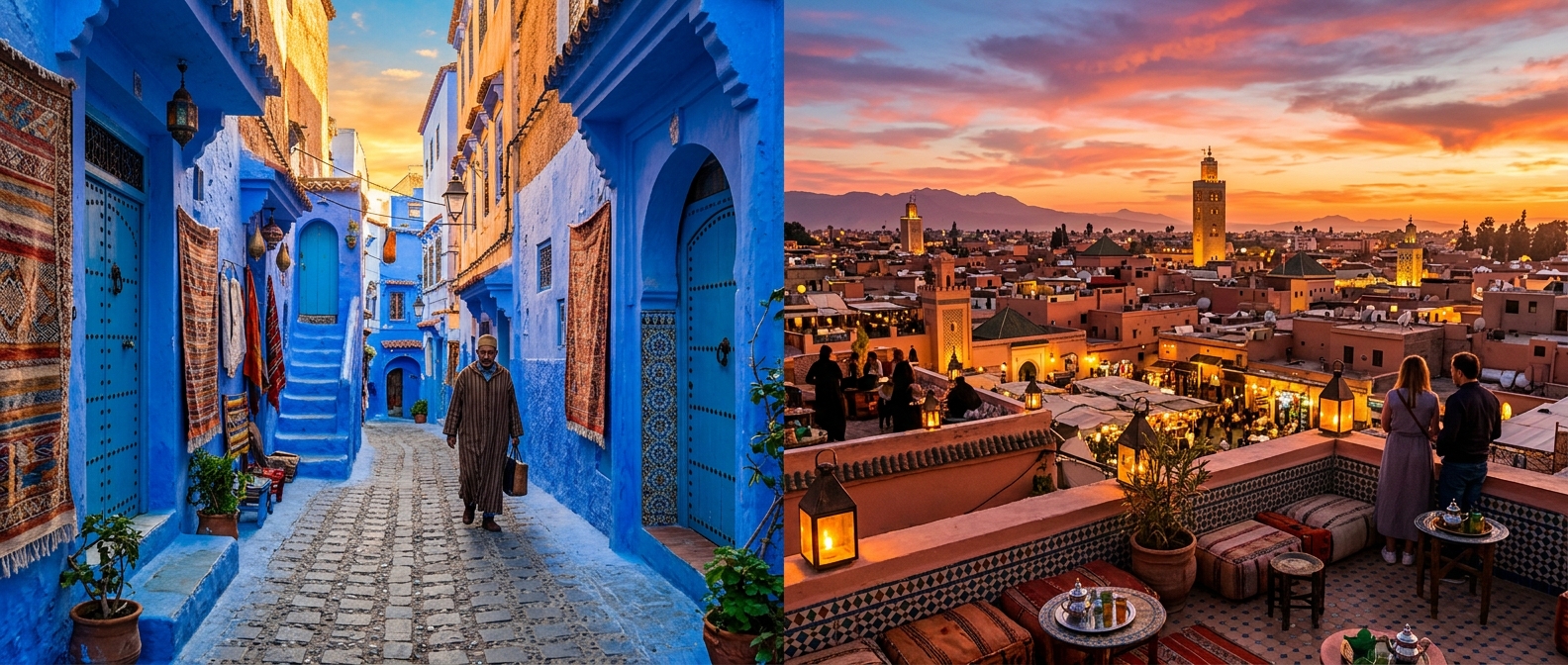
1. Explore the Jemaa el-Fnaa Square
Marrakech's beating heart, Jemaa el-Fnaa, transforms throughout the day from a market square into a lively open-air spectacle of food stalls, musicians, and storytellers by night.
Recognized by UNESCO for its intangible cultural heritage, it is the perfect place to soak up the energy of Morocco.
2. Spend a Night in the Sahara
Riding a camel into the dunes of Erg Chebbi and sleeping in a desert camp is a quintessential Moroccan experience.
Clear desert skies offer exceptional stargazing, and sunrise over the dunes is unforgettable.
3. Get Lost in the Fez Medina
Fez el-Bali is a vast, maze-like medieval city packed with workshops, mosques, and tanneries.
Hiring a local guide helps you navigate and uncover hidden courtyards and historic landmarks.
4. Wander the Blue Streets of Chefchaouen
The blue-washed alleys of Chefchaouen are among the most photographed in the country.
The relaxed mountain town is ideal for slow strolls and people-watching over mint tea.
5. Trek in the High Atlas Mountains
Hike to Berber villages, summit Mount Toubkal, or take a gentler walk in the Ourika Valley.
The mountains offer cooler air and authentic rural encounters within easy reach of Marrakech.
6. Visit Ait Benhaddou
This fortified earthen village along an old caravan route is a UNESCO World Heritage Site and a frequent film location.
Its layered kasbahs against the desert backdrop are strikingly photogenic.
7. Surf and Relax in Taghazout
This laid-back fishing village turned surf hub draws wave riders of all levels.
Beyond surfing, it offers yoga retreats, beach cafes, and a mellow coastal vibe.
8. Discover Essaouira
A windswept Atlantic port with whitewashed ramparts, fresh seafood, and a creative arts scene.
Its relaxed pace and strong winds make it popular with kitesurfers and artists alike.
9. Shop the Souks
Browse carpets, lanterns, leather, ceramics, and spices in the markets of Marrakech and Fez.
Bargaining is expected, so take your time and enjoy the negotiation.
10. Tour the Bahia Palace
This 19th-century Marrakech palace showcases ornate tilework, carved ceilings, and tranquil courtyards.
It is one of the finest examples of Moroccan craftsmanship open to visitors.
11. Visit the Majorelle Garden
Once owned by Yves Saint Laurent, this Marrakech garden features cobalt-blue buildings and exotic plants.
The adjoining Berber Museum and YSL museum add cultural depth to the visit.
12. Explore the Dades and Todra Gorges
These dramatic canyons in the southeast feature towering rock walls and winding roads.
Todra Gorge is a draw for rock climbers and offers refreshing palm-shaded riverbanks.
13. Relax in a Traditional Hammam
A visit to a hammam, the traditional steam bath, is a cleansing and cultural ritual.
Options range from local community baths to luxurious spa versions in riads and hotels.
14. Stroll Through Rabat
The capital blends history and calm, with the Kasbah of the Udayas, Hassan Tower, and the Chellah ruins.
Its oceanfront setting and orderly streets contrast with the busier imperial cities.
15. Experience Casablanca and the Hassan II Mosque
Morocco's largest city is home to the immense Hassan II Mosque, partly built over the Atlantic.
It is one of the few mosques in Morocco open to non-Muslim visitors on guided tours.
16. Drink Mint Tea with Locals
Sharing a glass of sweet mint tea is central to Moroccan hospitality.
Accept the offer when invited; it is a window into everyday culture and connection.
17. Visit the Tanneries of Fez
The Chouara tannery is a centuries-old leather-dyeing site best viewed from surrounding terraces.
The colorful dye pits offer a glimpse into a craft passed down through generations.
18. Take a Cooking Class
Learn to prepare tagine, couscous, and Moroccan salads in a hands-on class.
Many classes begin with a guided market tour to source fresh ingredients.
19. Explore the Ouzoud Waterfalls
These cascades in the Middle Atlas drop over 100 meters and are surrounded by olive groves.
Wild Barbary macaques often appear nearby, adding to the natural setting.
20. Watch the Sunset from a Rooftop Terrace
Rooftop cafes and riads across Moroccan cities offer prime sunset views over the medinas.
It is a peaceful way to end a busy day of exploring.
FAQ
How many days do you need in Morocco?
A week allows you to see highlights like Marrakech, the Atlas Mountains, and a desert excursion. Ten days to two weeks lets you add Fez, Chefchaouen, and the coast more comfortably.
Can you visit the Sahara as a day trip?
Reaching the main dunes near Merzouga from Marrakech typically requires an overnight trip due to the long drive. Multi-day tours of two to three days are the most popular way to experience the desert.
Is it easy to get around Morocco?
Yes. Trains connect major northern cities, buses cover most routes affordably, and grand taxis and private drivers are common. Hiring a driver or guided tour simplifies reaching remote areas.
Loved this? Useful? React below — your feedback helps other readers.