15 Moroccan Foods You Must Try
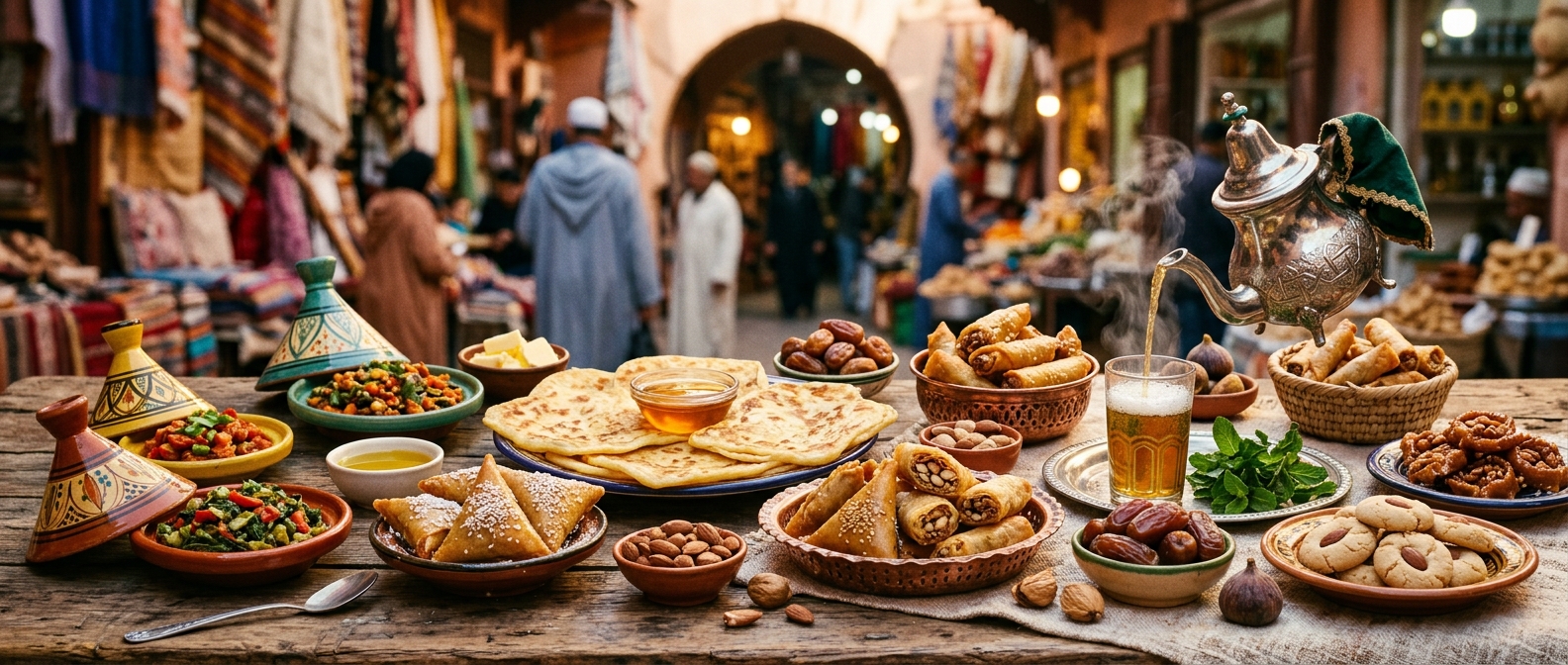
1. Tagine
Named after the conical clay pot it is cooked in, tagine is Morocco's signature slow-cooked stew. Common versions feature lamb with prunes, chicken with preserved lemon and olives, or vegetables.
The gentle steaming method keeps the meat tender and infuses everything with spices.
2. Couscous
Fluffy steamed semolina topped with meat and vegetables, couscous is traditionally served on Fridays after midday prayers.
Preparing it properly is an art, with the grains steamed multiple times for the right texture.
3. Pastilla
This savory-sweet pie wraps spiced poultry, almonds, and egg in thin warqa pastry, dusted with cinnamon and sugar.
Once reserved for celebrations, pastilla showcases the sophistication of Moroccan cuisine.
4. Harira
A hearty tomato-based soup with lentils, chickpeas, and herbs, harira is especially popular during Ramadan to break the fast.
It is filling, comforting, and often served with dates and pastries.
5. Brochettes
These grilled meat skewers, seasoned with cumin and spices, are a street-food favorite found across the country.
Served with bread and salad, they make a quick and satisfying meal.
6. Mechoui
Mechoui is whole lamb or shoulder slow-roasted until meltingly tender, often for special occasions.
It is typically eaten by hand and seasoned simply with salt and cumin.
7. Msemen
A flaky, layered square pancake, msemen is a breakfast staple served with honey, butter, or jam.
Its buttery folds make it a comforting accompaniment to mint tea.
8. Bissara
This thick fava bean or split pea soup is a warming breakfast, especially in cooler months.
Drizzled with olive oil and dusted with cumin, it is simple and nourishing.
9. Zaalouk
A smoky cooked salad of eggplant and tomato seasoned with garlic, cumin, and paprika.
It is usually served as a starter or side, scooped up with bread.
10. Khobz (Moroccan Bread)
Round, crusty khobz accompanies nearly every meal and serves as a utensil for scooping stews.
Bakeries and home ovens turn out fresh loaves daily across the country.
11. Rfissa
A comforting dish of shredded msemen or bread layered with chicken, lentils, and a fenugreek-spiced broth.
It is traditionally served to new mothers and at family gatherings.
12. Sardines
Morocco is one of the world's largest sardine exporters, and fresh grilled or stuffed sardines are a coastal delight.
In ports like Essaouira, they are eaten straight off the grill.
13. Moroccan Mint Tea
Sweet green tea infused with fresh mint, poured from height to create foam, is the national drink.
Offering tea is a gesture of hospitality found everywhere from homes to shops.
14. Chebakia and Sweets
Chebakia, a sesame-coated, honey-dipped pastry shaped like a flower, is popular during Ramadan.
Moroccan sweets like gazelle horns and almond cookies pair perfectly with tea.
15. Amlou
Sometimes called Moroccan Nutella, amlou is a rich spread of roasted almonds, argan oil, and honey.
Native to the argan-growing south, it is delicious on bread at breakfast.
FAQ
What is Morocco's national dish?
Couscous and tagine are both considered emblematic national dishes. Couscous is traditionally eaten on Fridays, while tagine is enjoyed throughout the week.
Is Moroccan food spicy?
Moroccan cuisine is aromatic and richly spiced but generally not hot. Spices like cumin, cinnamon, and saffron add flavor rather than heat, with harissa available on the side for those who want it.
Is it easy to eat vegetarian in Morocco?
Yes. Vegetable tagines, couscous, salads like zaalouk, lentil soups, and bread make vegetarian eating straightforward, though it helps to confirm dishes are meat-free.
Loved this? Useful? React below — your feedback helps other readers.